📝 Written 2 Jul 2026 · ✅ Fact-checked 3 Jul 2026 · prices and schedules can change — check with the operator before booking
Phitsanulok sits in the lower north as an easy-to-reach hub city, and its strength is variety — Phra Buddha Chinnarat at Wat Phra Si Rattana Mahathat (Wat Yai) is regarded as one of the most beautiful Buddha images that Thais travel to pay respects to; Phu Hin Rong Kla National Park and Thung Salaeng Luang offer rock fields, savanna grassland, and Kaeng Sopha waterfall; and the old town along the Nan River was the birthplace of King Naresuan.
Below we've picked the activities and attractions people review most often, along with the best times to visit and things to know before you go. Phu Hin Rong Kla and Thung Salaeng Luang have the best weather and views in the cool season (Nov–Feb), and some sections of the mountain road are winding, so check your vehicle's condition. Wat Yai and the old town can be visited year-round — mornings have fewer crowds.
Wat Phra Si Rattana Mahathat Woramahawihan (Wat Yai) — Paying Respects to Phra Buddha Chinnarat

Wat Phra Si Rattana Mahathat, known to locals simply as "Wat Yai," is the city's landmark temple, sitting on the banks of the Nan River right in the middle of town. It was built as far back as the Sukhothai period, around 1900 BE. What most people come for is to pay respects to Phra Buddha Chinnarat, a bronze Buddha image in the Bhumisparsha mudra, gilded in gold and standing roughly 3.75 metres tall, which many consider one of the most beautiful Buddha images in Thailand. Its distinctive features are the graceful lines of the body, the serene face, and the intricately carved flame-shaped halo arch behind it. The original image is enshrined in an old hall with a hushed, peaceful atmosphere, and light filtering in onto the Buddha image makes the sight in front of you more striking than any photo suggests.
Besides the main Buddha image, there's plenty to walk around and see, including the tall main prang with its ancient architecture, the hall and surrounding cloister, mother-of-pearl-inlaid doors crafted by royal artisans, and an on-site museum holding Buddha images and antiques. A little further out you reach the banks of the Nan River, with the riverside atmosphere typical of Phitsanulok. Mornings and evenings are quieter than midday, making it easier to pay respects and take photos. There's no admission fee here; anyone who wants to make merit can offer flowers, incense, and candles, or apply gold leaf, by donation. This spot is a great first stop on a Phitsanulok trip since it's right in the city centre, easy to reach, and doesn't take long to see everything.
A few things worth knowing honestly before you go: this is a sacred site with a steady stream of worshippers, so dress modestly — no tank tops, shorts above the knee, or sheer clothing. You must remove your shoes before entering the hall, and keep your voice down. Holidays, Buddhist holy days, and festivals get especially crowded, and getting a photo of the Buddha image without anyone in the way is nearly impossible then; if you want a quiet atmosphere, come early morning or close to evening. There are quite a few souvenir and amulet shops around the temple, some areas get crowded, so watch your valuables and look carefully before buying anything. Parking can be hard to find when it's busy — if you're driving yourself, allow extra time to find a spot, or public transport within the city is more convenient.
- You get to pay respects to Phra Buddha Chinnarat, which many consider one of the most beautiful Buddha images in Thailand — the real thing is even more striking than in photos
- Free entry, no admission fee, and you can make merit by donation — great value and accessible on any budget
- On the Nan River right in the city centre, easy to reach, and a great first stop on a Phitsanulok trip
- The grounds also have the main prang, an old hall, mother-of-pearl-inlaid doors, and a museum, all in one place
- Very crowded on holidays, Buddhist holy days, and festivals — getting a photo of the Buddha image without people in the way is difficult
- You must dress modestly and remove your shoes before entering the hall — visitors dressed inappropriately may be turned away or asked to cover up
- The souvenir and amulet shops around the temple can be quite crowded, and parking is hard to find when it's busy
Phu Hin Rong Kla National Park — Historical Communist-Era Trekking + Lan Hin Pum-Pha Chu Thong

Phu Hin Rong Kla is a national park on the upper Phetchabun mountain range, straddling the border of three provinces — Phitsanulok, Phetchabun, and Loei. What sets it apart from most national parks is its history: this area was once a major stronghold of the Communist Party of Thailand during the conflict with the Thai government decades ago. Today, remnants remain for visitors to explore, including the political and military school, the seat of authority, a hospital, and a water wheel once used in the daily life of those who lived on the mountain. Walking the trails, you'll find signs telling the story along the way, so a visit here combines trekking with understanding the area's past — a good fit for anyone who wants nature with a story, not just photo opportunities.
The natural highlight of Phu Hin Rong Kla is its two rock formations, shaped by erosion over a long time. Lan Hin Pum is a wide plateau dotted with rounded boulders poking up like knobs across the field, while Lan Hin Taek is a large slab of rock split into deep grooves you can walk along. Both spots are easy to reach and photogenic. Next comes Pha Chu Thong, a cliffside viewpoint overlooking a sweeping range of mountains as far as the eye can see, a favourite spot to watch the sunset and, on the right morning, a sea of fog. Being at altitude, the park stays cool almost year-round, and it's especially pleasant in the late rainy to early cool season, when cold-climate flowers like Kalanchoe bloom. Many visitors choose to camp overnight to enjoy the cool air and wake up to the morning mist.
A few honest things to know before you go: the mountain road is winding and steep in several sections, so drivers should be experienced and check their vehicle's condition, especially the brakes. Sedans can make the climb but require care. The attractions are spread fairly far apart, so having your own car or hiring a local driver is more convenient than waiting for public transport, which is scarce. During the cool season and long holidays, crowds build up and park accommodation fills quickly, so book lodging or a camping spot in advance and bring warm clothing. Some reviews note noise from maintenance work at certain times, and phone signal doesn't reach every spot. If you want peace and quiet, avoid major holidays and get to the viewpoints early for the best atmosphere.
- Combines trekking and history in one place, with remnants of the former Communist Party stronghold and signs explaining the area's past
- Lan Hin Pum and Lan Hin Taek are easy to reach and photogenic, while Pha Chu Thong offers sweeping mountain views and sunset watching
- At altitude, so it stays cool almost year-round, with a chance of a sea of fog and cold-climate flowers like Kalanchoe in the late rainy to early cool season
- Lodging and camping grounds let you stay overnight for the cool air and wake up to the morning mist
- The mountain road is winding and steep — drivers need experience and should check their vehicle's condition, especially the brakes, before setting out
- The attractions are spread apart and public transport is scarce, making your own car or a local driver almost essential
- During the cool season and long holidays, crowds build up and accommodation fills quickly, and some reviews mention noise disturbances and patchy phone signal
Thung Salaeng Luang National Park — Savanna Grassland + Kaeng Sopha Waterfall (Thung Salaeng Luang National Park, Phitsanulok)
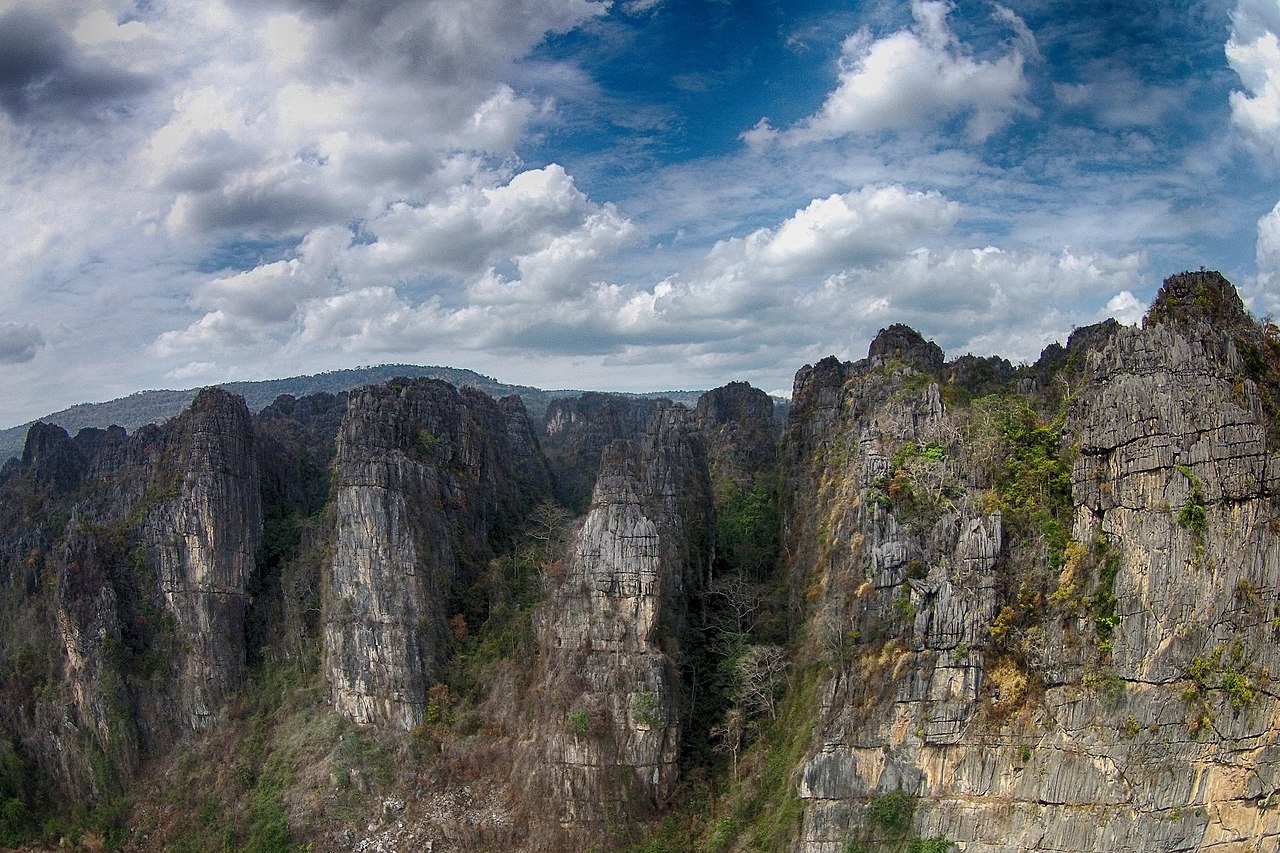
Thung Salaeng Luang is one of Thailand's largest national parks, its expanse spanning both Phitsanulok and Phetchabun. People often call it "Thailand's savanna," thanks to its wide grassland interspersed with pine forest — a landscape rarely seen in the tropics. The easiest spot to reach is Kaeng Sopha waterfall, right off Highway 12 between Phitsanulok and Lom Sak — park your car and it's a short walk down to see water cascading over rock ledges in stepped tiers, flowing nearly year-round and especially strong in the late rainy season. For anyone wanting the full grassland experience, you need to head into the Nong Mae Na unit, a camping ground and viewpoint popular for enjoying the cool air and morning mist overnight.
The charm of this place is its raw natural feel — walking the grassland and pine forest by day, cooling air by evening, and on cool-season mornings, low-lying mist that drifts over the fields, a scene many visitors come specifically to photograph. The main activities are camping under the stars, cycling around the grassland, walking through the pine forest, and stopping at Kaeng Sopha waterfall and other viewpoints in the park. Entry is charged at standard national park rates, with clearly separate fees for Thai and foreign visitors. If you're staying overnight, book lodging or a camping spot in advance, especially during the busy cool season — if you don't have your own tent, you can rent one at the unit. On review platforms like Tripadvisor, the park averages around 3.9 out of 5, with visitors mainly praising the wide grassland and pleasantly cool air.
A few honest things to know before you go. First, the grassland only turns green and thick with morning mist in the cool season through early in the year — during the dry season, roughly March to April, the grass turns brown and dry, and the atmosphere differs quite a bit from photos you see online. Second, the Nong Mae Na unit, the main grassland area, sits deep inside, and parts of the road are unpaved dirt track — slippery in the rainy season, so use a vehicle in good condition. Kaeng Sopha waterfall, right by the highway, is much easier to reach. Third, the rocks by the waterfall are very slippery when wet — wear shoes with good grip and be careful climbing on the rocks; in the rainy season, with strong currents, don't swim close to the falls. Fourth, facilities are basic park-style — shops and phone signal are limited, so bring water, food, supplies, and cash for fees, plus warm clothing if you're camping overnight in the cool season, since nights get genuinely cold.
- Wide savanna grassland interspersed with cold-climate pine forest, a rare sight in Thailand — especially beautiful with low-lying morning mist in the cool season
- Kaeng Sopha waterfall sits right off Highway 12, easy to reach with a short walk from the car park, flowing nearly year-round and strongest in the late rainy season
- Camping grounds and lodging in the Nong Mae Na area are great for stargazing and enjoying the cool air — no tent needed, as you can rent one on-site
- Park entrance fees are affordable for Thai visitors, making it a good trip for families, couples, and groups of camping friends
- The grassland only turns green with thick morning mist in the cool season — during the dry season (Mar–Apr) the grass turns brown and dry
- The main grassland area, the Nong Mae Na unit, sits deep inside, with stretches of unpaved dirt road that get slippery in the rainy season and require a vehicle in good condition
- The rocks by the waterfall are very slippery when wet, currents are strong in the rainy season, and shops and phone signal within the park are limited
Sgt. Maj. Thawee Folk Museum (Folk Artifacts Museum of Sergeant Major Thawee Buranaket), Phitsanulok

The Sgt. Maj. Thawee Folk Museum grew out of the personal collection of Sergeant Major Thawee Buranaket, who spent more than thirty years gathering everyday household items used by Thai villagers, then opened them for public viewing in the city of Phitsanulok. The collection is so extensive it fills several buildings — farming and fishing tools, woven baskets, jars and pots, kitchenware from grandparents' generations, old toys, sugarcane presses, and other livelihood tools, many of which are barely seen in daily life anymore. What sets this museum apart from most is how tangible and real everything feels — not just descriptive plaques, but actual objects Thai people once used in rural daily life.
Touring the exhibits takes roughly an hour and a half to two and a half hours if you look closely — the buildings are packed with items, giving the feeling of stepping back into an old village home. Admission is very affordable given what you get to see, with adults paying around fifty baht and children and students even less, making it a great fit for families wanting to show kids real examples of local wisdom, or anyone interested in handicrafts and local history. It's located in the city, near Wat Phra Si Rattana Mahathat (Wat Yai), so you can easily pair it with paying respects to Phra Buddha Chinnarat and a walk through the city market in a single day. On review platforms like Tripadvisor, the museum averages around 4.3 out of 5 from over a hundred reviews, and ranks among the top things to do in Phitsanulok, with most feedback praising it as a thorough, educational collection of folk artifacts.
A few honest things to know before you go. First, many sections of the buildings are open-air without air conditioning, so it gets fairly stuffy at midday in hot weather — go in the morning and dress comfortably. Second, the exhibits are extensive and densely packed, and many descriptive plaques are mainly in Thai, so foreign visitors may not catch every detail — if you want a deeper understanding, look up information beforehand or ask staff. Third, check the current opening hours and admission rate before you go, since this is a private museum that may adjust its schedule. Fourth, some corners of the collection are quite old and dusty given the sheer volume of items, so anyone sensitive to dust should be prepared. Overall, if you enjoy antiques and folk heritage, the atmosphere and volume of the collection here make it well worth the visit.
- Brings together a large collection of traditional Thai folk artifacts in one place — farming and fishing tools, woven baskets, toys, and old kitchenware
- Very affordable admission, around 50 baht for adults and even less for children and students — great for families and budget-conscious culture fans
- Located in the city near Wat Phra Si Rattana Mahathat (Wat Yai), easy to combine into a single-day trip
- Real reviews on Tripadvisor average around 4.3 out of 5, and it ranks among the top things to do in Phitsanulok
- Many buildings are open-air without air conditioning, making midday visits fairly stuffy in hot weather
- Most descriptive plaques are in Thai, so foreign visitors may not get the full detail
- The collection is extensive and densely packed, with some old and dusty corners — visitors sensitive to dust should be prepared
Chan Royal Palace + Historical Center (Ancient Site and Former Residence of King Naresuan, Phitsanulok)

Chan Royal Palace sits on the west bank of the Nan River in Phitsanulok city, next to King Naresuan the Great Military Camp. It's an old palace believed to have served as the residence of northern royalty from the Sukhothai period through Ayutthaya. When King Boromma Trailokkanat moved the capital to Phitsanulok, he resided here, and the palace is closely tied to King Naresuan the Great during his time in the twin-river city. What gives this site its historical value is that in 1992, old brick foundations were discovered during construction, prompting the Fine Arts Department to survey the site and register it as an ancient monument. Today, visitors can walk among the preserved walls and foundations laid out across an open plaza, getting a good sense of the palace's original layout. The atmosphere is shaded and peaceful, perfect for a slow stroll while reading the informational signs.
Within the same grounds is the King Naresuan the Great shrine, where locals and visitors alike regularly stop to pay respects and ask for blessings. Further along is the Chan Royal Palace Historical Center, an exhibition building telling the story of Phitsanulok across several hundred years, including King Naresuan's biography, royal craftsmanship of the twin-river city, and models of important temples within the old palace grounds. Photos, informational plaques, and models make it easy to understand — a good stop for bringing children or for anyone wanting background on the city before visiting Wat Phra Si Rattana Mahathat (Wat Yai) nearby. The clearest advantage here is that everything is free — the ancient site plaza, the shrine, and the historical centre — with no admission fee, convenient parking, and a city-centre location that makes it easy to fit in on the way to other stops.
A few honest things to know before you go. First, the historical centre (the exhibition building) is usually closed on Mondays and open roughly 9:00am–4:00pm, while the ancient site plaza and shrine are accessible at all times — if you intend to see the exhibits inside, avoid Mondays and come during opening hours. Second, most of the area is an open-air plaza with little shade, so it gets hot and sunny at midday — come in the morning or evening, and bring a hat, umbrella, and water. Third, what you'll see is a layer of foundations and low walls, not a fully intact palace building, so anyone expecting a grand castle or palace as seen in paintings may find it smaller than expected — visiting the historical centre first to see the models and understand the layout, then walking the actual grounds afterward, gives a richer experience. Fourth, since this is a site with a shrine and significant historical importance, dress modestly and be respectful, especially near the shrine, and since it's adjacent to a military camp area, park and walk only in designated spots, without entering restricted zones.
- Completely free — the ancient site plaza, the King Naresuan shrine, and the historical centre all have no admission fee
- An old palace tied to King Naresuan and the Ayutthaya-Sukhothai era, where you can walk among genuine excavated foundations and walls registered as an ancient monument
- The historical centre's exhibits are easy to follow, with informational plaques and models of important temples — good for learning about the twin-river city and bringing children
- Located in the city on the Nan River with convenient parking, easy to combine with Wat Phra Si Rattana Mahathat (Wat Yai) in one trip
- The historical centre building is usually closed on Mondays and open only during business hours — visiting on the wrong day means you'll only see the outdoor plaza
- Most of the area is an open-air plaza with little shade, getting hot and sunny at midday
- What you'll see is a layer of foundations and low walls rather than a fully intact palace, which may feel underwhelming to those expecting a grand structure
Wat Chulamani — An Ayutthaya-Era Laterite Prang on the Nan River (Old Song Khwae City Site)
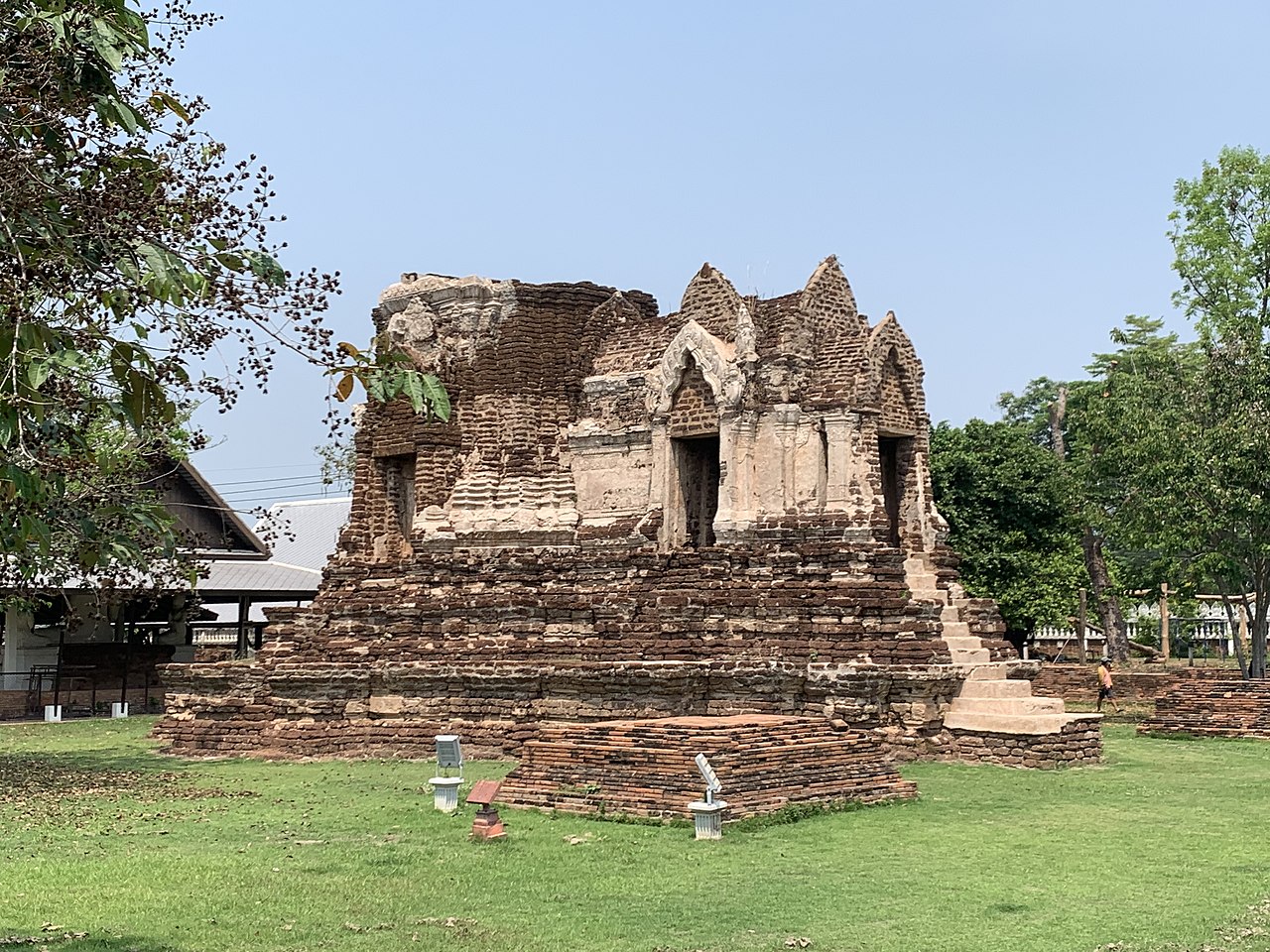
Wat Chulamani is one of the oldest temples in Phitsanulok, sitting on the east bank of the Nan River in Tha Thong Subdistrict, about 5 kilometres south of the city along Borommatrailokkanat Road. This area is believed to have once been the site of the old Song Khwae city before it relocated to found the newer city. The site's standout ancient monument is a prang built of laterite, with a base roughly 11 metres wide and 18 metres long, projecting forward in a tri-porch style and set on a three-tiered base — architecture that art historians classify as early Ayutthaya style. Anyone who enjoys walking among old brick remnants and laterite craftsmanship will get an up-close look at the work of artisans from that era, without the crowds found at more famous ancient sites elsewhere.
What gives this temple its place in the history books is that King Boromma Trailokkanat built the main hall here and was ordained as a monk at Wat Chulamani in 1464 BE, for a period of roughly eight months, with a large number of court officials ordaining alongside him. This episode has been passed down through generations, along with an inscription tied to the temple, making this not just an old temple but a landmark of a significant Ayutthaya-era event. Besides the prang, the temple grounds also feature an early-Ayutthaya-style hall and ordination hall, a pavilion enshrining a Buddha footprint replica, several bell-shaped stupas, and a surrounding boundary wall — all of which you can walk around in a short time, making it a good stop while touring Phitsanulok, where visitors typically focus mainly on paying respects to Phra Buddha Chinnarat at Wat Yai.
For devotees, the temple houses Luang Pho Phet and other Buddha images to pay respects to, and it's also known among Phitsanulok locals as a source of old amulets, so both worshippers and amulet collectors visit regularly. The overall atmosphere is quiet and shaded, easy to stroll through. Visiting here calls for modest dress, since it's both an active place of worship and a registered ancient monument — stay on the designated walkways, and don't climb on or touch the prang and laterite walls, since they're fragile antiques. Morning and evening have gentler sun, making walking more comfortable than midday, and since the area is fairly open with strong sun, bring a hat and water — and allow time to photograph the prang in morning or evening light, when the laterite blocks look more three-dimensional than at noon.
- An authentic early-Ayutthaya laterite prang you can walk right up to, without the crowds of more famous ancient sites elsewhere
- Clear historical significance — the site where King Boromma Trailokkanat was ordained as a monk in 1464 BE, a great fit for history lovers
- Free entry with on-site parking, featuring the prang, the Ayutthaya-era hall and ordination hall, the Buddha footprint pavilion, and surrounding stupas all in one place
- Not far from the city, easy to pair with Wat Yai (Phra Buddha Chinnarat) in a single trip, for both paying respects and viewing antiquities
- The ancient site area is open and exposed, getting quite hot at midday if you don't bring a hat and water
- It's a quiet temple with fewer facilities and shops than Wat Yai in the city
- You'll need your own car or a hired ride, since it's about 5 km outside the city and public transport isn't convenient here
Nan Riverside Stroll + Phitsanulok Walking Street + Tai Market (River Cruises Along the Nan River Embankment, Mueang Phitsanulok District)

The Nan River has always been the lifeblood of Phitsanulok. Along the central stretch of the riverbank, an embankment and walkway follow Wang Chan Road, running past a bridge crossing the river and in front of Chan Royal Palace, with views across the water to Wat Phra Si Rattana Mahathat (Wat Yai), home of Phra Buddha Chinnarat. Along the way you'll find street art, benches, and cafes and food stalls to stop and take in the atmosphere. In the evening, with shade and a breeze off the river, it's a favourite spot for locals to exercise, relax, and watch the sunset. The highlight of this area is that it's entirely free to explore — no tickets needed — and it brings several attractions within easy walking distance of each other.
If you come on a Saturday night, you'll find the Phitsanulok Walking Street on Sangkhabucha Road, stretching roughly five hundred metres and connecting Phutthabucha Road with Borommatrailokkanat Road, open from about 5:00pm to 10:00pm. It has a Thai cultural theme, with local food, Thai sweets, handmade goods, and occasionally a retro-style dance performance. Early risers shouldn't miss Tai Market, an old morning market tucked between Borommatrailokkanat Road and the Nan River, not far from the clock tower in the city centre. This area carries a story of riverside houseboat trading passed down for nearly two hundred years — a great place to see local life, buy local ingredients, and enjoy a bowl of noodles for breakfast. City river cruises run occasionally, especially lively during festivals; if you want to cruise, it's worth asking about schedules in advance since they don't run every day.
A few honest things worth keeping in mind before you go. First, timing needs planning — the walking street runs only on Saturday nights, Tai Market is liveliest in the morning and quiets down by late morning, and river cruises don't run daily; visiting on the wrong day may mean just a riverside walk. Second, Phitsanulok gets hot and sunny during the day, so walking the embankment in the afternoon can be tiring — go in the morning or evening instead, and bring water and a hat. Third, Saturday nights get crowded and parking near the walking street is hard to find — if you're staying in the city, walking or using a motorbike taxi is more convenient. Fourth, food at the market and walking street is mostly cash-only, and many small vendors don't accept transfers, so carry small bills, keep your valuables secure in crowded areas, and help keep the riverside clean by disposing of trash properly.
- Free entry throughout the area — stroll the Nan riverside at your own pace with no ticket required, great for budget trips and families
- Several attractions cluster within walking distance — the embankment, street art, the Saturday-night walking street, and Tai Market in the morning
- A wide variety of affordable local food and Thai sweets, letting you sample plenty of Phitsanulok specialties
- The riverside has a great atmosphere in the evening, with a cool breeze and views of Wat Yai across the water — a favourite local sunset spot
- Timing needs planning — the walking street runs only on Saturday nights, Tai Market is liveliest only in the morning, and city river cruises run only occasionally
- It gets hot and sunny during the day, making an afternoon walk along the embankment tiring, and Saturday nights get crowded with hard-to-find parking
- Small vendors at the market and walking street mostly deal in cash only, and many don't accept transfers, so bring your own small bills
Kaeng Sopha Waterfall, Thung Salaeng Luang National Park (Kaeng Sopha Waterfall, along the Phitsanulok-Lom Sak Route)

Kaeng Sopha is one of the largest waterfalls in Phitsanulok Province, located within Thung Salaeng Luang National Park along Highway 12, the route between Phitsanulok and Lom Sak. What draws so many visitors is its location right off the main road — drive roughly seventy-some kilometres from Phitsanulok city, turn into the car park, and a short walk brings you to water cascading down in tiers across a wide rock shelf. Drivers heading up to Khao Kho or Phu Thap Boek often stop here to stretch their legs along the way, since it doesn't require the long trek that many deeper waterfalls do. The falls have an upper tier of stepped rocky rapids and a lower tier where water drops into a pool, with pavilions and benches for a comfortable rest — a good fit for a short stop rather than a full day out.
Entry requires paying the Thung Salaeng Luang National Park admission fee, charged at clearly different rates for Thai and foreign visitors, plus a small additional vehicle fee. Since this is mainly a self-drive stop rather than a tour destination, having your own car or a rental is the most convenient option. Around the waterfall there are simple restaurants and snack stalls to refuel before continuing on. Many visitors include Kaeng Sopha as part of a Route 12 trip that also takes in Kaeng Song waterfall, Poi waterfall, and other viewpoints in a single day. On review platforms like Tripadvisor, Kaeng Sopha scores around 3.5 out of 5 from a modest number of reviews, with most praising it as a wide, tall waterfall with a pleasant roar of water and an easy walk around, though some reviews note that during low-water periods it looks less dramatic than expected.
A few honest things to know before you go. First, water volume depends heavily on the season — during the rainy season through early cool season, roughly July to November, the water runs high and the falls look their fullest, while during the dry season, roughly March to May, the water often thins to a light trickle across the rock shelf. Several reviews from dry-season visits agree the water was lower than expected. Second, the rock shelf and boulders near the water are very slippery, especially when wet or when the current runs strong — wear shoes with good grip and be careful walking close to the falls, and never climb out to stand mid-rapid when the water is high, since the current is strong and there have been accidents. Third, long holidays and the rainy season bring sizeable crowds, so parking and good photo spots may require waiting — if you want a quieter atmosphere with clearer water, come on a weekday morning. And remember that the fee for foreigners is several times higher than for Thai visitors, so bring cash for the entrance gate.
- A large multi-tiered waterfall over a wide rock shelf, right off Highway 12, making it easy to stop and stretch without a long hike
- A convenient stop on a Khao Kho-Phu Thap Boek trip, combining well with Kaeng Song and Poi waterfalls along the same route
- Pavilions, benches, restaurants, and snack stalls nearby, good for families wanting to stop and eat
- Real reviews on Tripadvisor score around 3.5 out of 5, with many praising the wide, tall falls, pleasant sound of rushing water, and easy walk around
- Water volume depends heavily on the season — during the dry season (Mar–May), water often thins to a light trickle, less dramatic than expected
- The rock shelf and boulders near the water are very slippery when wet, with strong currents during high water — care is needed walking close to the falls
- Requires paying a park entrance fee at separate Thai-foreign rates, and getting there requires your own vehicle since there aren't many dedicated tours
Old Town Ancient Site Cluster: Wat Nang Phaya-Wat Ratchaburana (Walkable, Right by Wat Yai on the Nan River)

If you've made it to Wat Phra Si Rattana Mahathat — known to locals simply as Wat Yai — two more temples right next door are worth the walk: Wat Nang Phaya and Wat Ratchaburana. All three sit in a row on the east bank of the Nan River within the old town, just a few minutes' walk from Wat Yai, so you can visit all three in a single trip without needing a car. Wat Ratchaburana is an old temple with an ancient stupa and hall, while Wat Nang Phaya is known nationwide among amulet collectors as the birthplace of the Nang Phaya amulet, believed to have been created during a restoration of Wat Ratchaburana centuries ago. The Fine Arts Department has registered the hall and corner-indented stupa of Wat Nang Phaya as an ancient monument. What makes touring here enjoyable is getting an up-close look at old temple architecture amid the still-living atmosphere of a riverside community.
The charm of walking this cluster of old temples is the quiet, unhurried feel — a contrast to the more crowded Wat Yai. Once you continue on to Wat Nang Phaya and Wat Ratchaburana, the crowds thin out and you can explore without the jostling. Many visitors who've paid respects at Wat Yai continue on to both temples to pay respects to the main Buddha images and pick up amulets, especially those specifically seeking out the birthplace of the Nang Phaya amulet. Around the temples are amulet shops and souvenir stalls worth browsing. All three temples sit conveniently in the city centre, and walking out toward the river brings you to the walking street and market at certain times — a great way to take in the old temples and riverside life of Phitsanulok in one visit. Entry to both temples is free, with only a donation box for merit-making.
A few honest things to know before you go. First, both temples are still active places of worship, not abandoned ruins open to explore everywhere — some areas are monks' quarters or restricted zones, so be respectful and check signage before entering. Second, on dress: wear modest clothing, avoid sleeveless tops and short trousers or skirts, and remove your shoes before entering the hall or ordination hall, per custom. Third, parking in the city centre is limited, and it gets especially crowded on holidays or Buddhist holy days — if you'd rather not circle for parking, walking over from Wat Yai is the more convenient option. Fourth, midday sun can be quite strong since the temple grounds are open — come in the morning or evening when it's cooler and the light is nicer, bring an umbrella or hat and water, and keep cash on hand for merit-making or buying amulets and souvenirs around the temples, since many shops still only accept cash.
- Right next to Wat Yai, just a few minutes' walk away — see three old city-centre temples in a single trip without needing a car
- Free entry, no ticket required, just a donation box — great value for anyone who enjoys touring old temples
- Fewer crowds than Wat Yai, letting you explore ancient stupas and prangs and pay respects at a relaxed pace
- Wat Nang Phaya is the birthplace of the Nang Phaya amulet, known nationwide among collectors, with amulet and souvenir shops nearby to browse
- These are active places of worship, with some areas reserved for monks — you can't explore every corner, and should be respectful
- Modest dress and removing shoes before entering the hall are required, with no sleeveless tops or short trousers/skirts allowed
- Parking in the city centre is limited, getting crowded on holidays or Buddhist holy days, and the open temple grounds get quite sunny at midday
Khao Samo Khlaeng + Wat Phra Phutthabat Khao Samo Khlaeng (City Viewpoint + Reclining Buddha Footprint, Wang Thong District, Phitsanulok)

Khao Samo Khlaeng is a low hill on the outskirts of Phitsanulok, rising roughly 200 metres above the plain, along the Phitsanulok-Lom Sak road in Wang Thong District — about a 20-30 minute drive from the city. The most-visited spot is Wat Phra Phutthabat Khao Samo Khlaeng at the base of the hill, which has a naga staircase leading up to a reclining Buddha footprint, a footprint positioned on its side, a form found in only a handful of places in Thailand. Atop the hill are also ancient ruins, including a truncated-spire stupa and remnants of structures where numerous antiquities have been found, suggesting this has been sacred ground since ancient times. Around the hill there's also a shrine and a Guanyin statue you can visit in the same trip — a good fit for anyone who wants both devotion and a walk through historical remains.
Another appeal of Khao Samo Khlaeng is that it's one of the easiest city viewpoints to reach in Phitsanulok, since you don't need to drive up a tall mountain or hike far like larger peaks. Once you reach the plaza at the top, you'll see the Wang Thong lowlands and Phitsanulok city stretching out below. Early morning and evening before sunset are the best times for light and cool air. Many visitors come to photograph the old stupa against the mountain backdrop, or simply sit and enjoy the breeze after paying respects. Since there's no admission fee and it's far less crowded than Wat Yai in the city centre, it's a well-suited stop for anyone with half a day free who wants a peaceful atmosphere, a city view, and merit-making all in one place.
A few honest things to know before you go. The naga staircase up to the temple has nearly two hundred steps and is fairly steep — anyone with knee issues or bringing elderly family members should take it slowly and rest along the way. Midday sun is strong and shade at the top plaza is limited, so avoid coming around noon if you'd rather skip the heat. Some of the ancient ruins haven't been fully restored, and informational signage is limited, so anyone wanting to understand the history in depth may need to research beforehand or find a local guide. This is also a temple and sacred site, so dress modestly, remove your shoes when entering the worship area, and keep your voice down where people are praying. Parking is available, but crowds pick up during long holidays or major Buddhist holy days, so allow extra time to find a spot.
- Easy to climb and close to Phitsanulok city (about 17 km), combining a city viewpoint and a hilltop temple in one place
- Features a reclining Buddha footprint, found in only a handful of places in Thailand, plus ancient stupa ruins to explore
- Free entry, with a quieter atmosphere than Wat Yai in the city — good for both devotees and photographers
- A shrine and Guanyin statue around the hill make for an easy add-on visit in the same trip
- The naga staircase to the temple has nearly two hundred steep steps — anyone with knee issues or elderly visitors should take it slowly
- Midday sun is strong with limited shade at the top plaza
- Some of the ancient ruins haven't been fully restored, and informational signage is limited
Where to Stay in Phitsanulok
Choose a hotel in Phitsanulok city near Wat Yai and the Nan River, or lodging up in the mountains — compare prices across 3 sites before booking
Search Hotels on AgodaBook Activities & Tickets in Advance
Lodging and camping spots at Phu Hin Rong Kla and Thung Salaeng Luang fill up fast in the cool season — booking ahead is more convenient
💡 Know Before You Go to Phitsanulok
Wat Phra Si Rattana Mahathat (Phra Buddha Chinnarat) draws worshippers all day long — visiting in the morning avoids the crowds. Dress modestly; the temple grounds have a market and souvenirs nearby
Phu Hin Rong Kla and Thung Salaeng Luang have the best weather and views from Nov–Feb. The mountain road has winding sections, so check your brakes and tires, and book lodging/camping spots in advance
Kaeng Sopha waterfall along the Phitsanulok-Lom Sak road has high water and looks its best from the rainy season through early cool season — watch for slippery rocks
Chan Royal Palace, Wat Chulamani, and the ancient site cluster sit along the Nan River — walk or drive between them, and enjoy the walking street and riverside market in the evening
How to Plan a Worthwhile Phitsanulok Trip
With 2 days: spend day one in the city — Wat Yai (Phra Buddha Chinnarat), Chan Royal Palace, the Sgt. Maj. Thawee Folk Museum, and an evening riverside walk — then head up to Phu Hin Rong Kla or Thung Salaeng Luang (Kaeng Sopha) on day two. If you're short on time, a single day covering just the temples and old town works too. Phitsanulok pairs well with Sukhothai or Phetchabun in the same trip.
Ready to visit Phitsanulok? Start by choosing where to stay in the city
See Hotels in Phitsanulok →