📝 Written 2 Jul 2026 · ✅ Fact-checked 3 Jul 2026 · prices and schedules can change — check with the operator before booking
Sisaket sits in southern Isan against the Dangrek mountain range and the Cambodian border, with a varied landscape of plains and cliffs. The highlight is Pha Mo E Dang, a cliff-edge viewpoint looking out over Cambodian territory (near the Thai side of Khao Phra Wihan National Park); Wat Lan Khuat (Wat Pa Maha Chedi Kaew), decorated with millions of glass bottles; volcanic-soil durian and fruit orchards in Khun Han town; and the Khmer temple of Prasat Sa Kamphaeng Yai.
Below we've picked the activities and sights people mention most often in reviews, along with the best time to visit and what to know before you go. Check the situation and official announcements before visiting Pha Mo E Dang and the border area. Volcanic durian season runs roughly June–July, while the cool season is best for outdoor sightseeing. Attractions are spread out beyond the city, so having a car helps.
Pha Mo E Dang + Khao Phra Wihan National Park (border cliff viewpoint · bas-relief carvings · twin stupas)

Pha Mo E Dang is a roughly 300-metre sandstone cliff within Khao Phra Wihan National Park in Kantharalak District, Sisaket Province, set along the Dangrek mountain range that marks the border between Thailand and Cambodia. Its main draw is the wide viewpoint looking down over the Cambodian plain below. In the late rainy season and early cool season, many visitors come to watch the morning sea of mist blanket the valley, and in the evening you can watch bats fly out of a cave beneath the cliff. The viewpoint itself is an easy walk, connected by a short nature trail to other key spots in the same area, so you can see everything in half a day without too much walking.
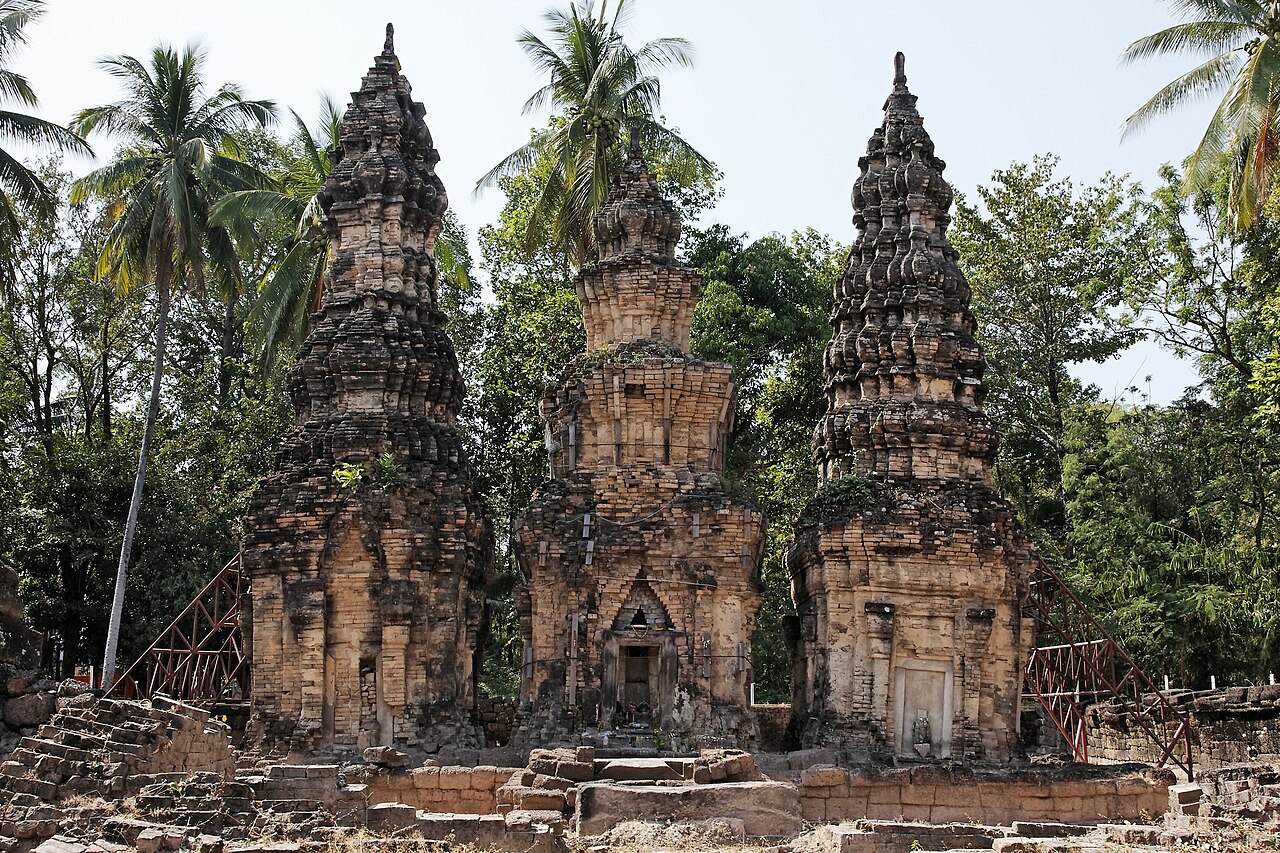
What sets Pha Mo E Dang apart from an ordinary viewpoint is that it also holds ancient monuments. Carved into the sandstone cliff face are three bas-reliefs, believed to date from around the 10th–11th centuries — some of the oldest carvings of this kind still clearly visible on a cliff face. Not far away stand twin stupas built of reddish sandstone, another historic landmark that's popular for photos. Being able to take in the cliff view, the ancient carvings, and the twin stupas in a single trip makes this spot appealing to anyone who wants both nature and history, not just scenic photos. The viewing area has information signs and reasonably good spots to rest.
One thing to say plainly before you plan a visit: Pha Mo E Dang sits right on the Thailand–Cambodia border, so it opens and closes depending on the security situation. It has been temporarily closed before during periods of border tension — for example, in 2025 the park announced a closure of the viewpoint until the situation returned to normal. So before setting out, check the latest status with Khao Phra Wihan National Park or the National Parks Department's page to make sure it's open — don't drive all the way out without calling ahead first. Once inside, stay on the marked trails and designated areas, and never cross fences or warning signs, since this is a border zone that calls for extra caution. Bring a hat, drinking water, and comfortable walking shoes. Early morning or evening has the best weather, with less intense sun than midday.
- A cliff viewpoint with a wide view over the Cambodian plain; in the late rainy/early cool season there's a chance of a morning sea of mist
- You get the cliff view, ancient bas-relief carvings, and sandstone twin stupas all in one area
- A short trail makes the viewpoint easy to reach — you can see it all in half a day, good for families
- The national park fee for Thai visitors is inexpensive, and there are informational signs on the history
- Right on the Thailand–Cambodia border, it opens and closes depending on the security situation and has been temporarily closed before — check ahead every time
- Far from Sisaket town; you need your own car and to plan your travel time, as there's no convenient public transport
- Strong midday sun and little shade around the cliff-top area — avoid midday and bring sun protection
Wat Lan Khuat (Wat Pa Maha Chedi Kaew) — a temple built and decorated with millions of glass bottles, Khun Han District, Sisaket

Wat Lan Khuat, officially known as Wat Pa Maha Chedi Kaew, sits in Khun Han District in the south of Sisaket Province, near the Dangrek mountain range that forms the border with Cambodia. What makes this temple stand out is the idea of using used glass bottles as building and decorative material — for walls, pillars, archways, right down to the chedi and pavilions, adding up to millions of bottles in total. Most of the bottles are green and brown, from various drinks, collected over the years by local villagers and devotees and donated to the temple. When the bottle bottoms are set into the plaster, they create patterns and surfaces that shimmer in the sunlight, giving the buildings a look clearly unlike an ordinary temple, and turning it into a striking example of turning waste material into something worthwhile that many people make a special trip to see for themselves.
For anyone planning a Sisaket trip, Wat Lan Khuat is usually grouped with other sights in the Khun Han and Kantharalak side of the province, such as seasonal fruit orchards and hillside viewpoints. The easiest way to get there is by your own car or a rental from Sisaket town, since the distance is fairly far and public transport doesn't run often. Entry is free, and anyone who wants to make merit or donate can do so as they wish. Inside the temple there's a main building, a chedi, and pavilions to walk around and photograph. The atmosphere is that of a quiet forest temple, better suited to a stop along the way than a full-day destination — most people spend around one to two hours seeing it all.
A few things worth knowing plainly before you go: first, this is a working place of worship, not a commercial attraction, so dress modestly — no sleeveless tops or short shorts/skirts, and be respectful while on temple grounds. Second, the midday heat around Khun Han is intense, and the glass-bottle surfaces reflect the sun, making the temple courtyard even hotter — go in the morning or late afternoon, and bring a hat and drinking water. Third, the distance from town is considerable and some signage is unclear, so use GPS navigation and allow extra travel time. Fourth, facilities and shops around the temple are limited, so fill up on fuel and snacks beforehand. Wat Lan Khuat suits anyone interested in unusual architecture and creative reuse of materials more than someone expecting the full amenities of a major attraction.
- Unusual architecture built and decorated with millions of glass bottles; walls and archways shimmer in the sunlight, making it a photo spot you won't find elsewhere
- Free entry, no admission fee, merit-making or donations as you wish — good for a half-day or en-route stop
- A quiet forest-temple atmosphere with a main building, chedi, and pavilions to explore, suited to families and merit-makers alike
- A striking example of turning waste material to good use, drawing in people interested in design and creative work
- About 60-70 km from Sisaket town; public transport is infrequent, so a car or rental is needed, and some signage is unclear
- Midday sun is intense and the glass-bottle surfaces reflect heat, making the temple grounds even hotter — avoid midday and bring a hat and water
- This is a working place of worship, so dress modestly and behave respectfully; facilities and shops around the temple are limited
Visit the volcanic durian and fruit orchards of Khun Han, Sisaket (taste and buy on-site, June–July season)

Khun Han District is Sisaket's main durian-growing area. What sets the durian here apart from elsewhere is the ancient volcanic soil at the foot of the Dangrek mountains — reddish, well-draining, and mineral-rich soil that gives the Monthong durian grown here a drier flesh, a milder aroma, and a distinctive sweet-bitter balance. It's earned Geographical Indication (GI) registration under the name Sisaket Volcanic Durian. The season when fruit ripens and orchards open for tasting runs from around mid-June to late July, coinciding with the Khun Han Fruit and Good Products Festival held in the district. Besides durian, many orchards also grow rambutan, mangosteen, longkong, and salak in the same plots, so you can taste several fruits in one trip.
The typical visit involves driving to an orchard, walking the growing plots, listening to the owner explain how to tell a ripe durian from an unripe one, then picking the fruit you like for the orchard staff to open and let you taste before buying. Some orchards charge by the kilogram based on grade; others offer a tasting set or all-you-can-eat priced per person. Volcanic Monthong durian typically runs around one hundred eighty to two hundred fifty baht per kilogram in a normal season, depending on grade and early or late timing. Since the orchards are spread across several subdistricts — Phran, Phu Fai, Bak Dong, and Kantharom — having your own car is most convenient, or you can book through the provincial tourism industry council, which runs seasonal orchard tour programs. Call ahead to check which days an orchard is open and whether the fruit is ripe enough to taste.
A few things to keep in mind plainly before you go. First, seasonality: durian ripens naturally only once a year, so if you go before or after the peak the fruit may not be ripe yet or the orchard may be sold out. In years with unusual weather, the harvest can shift too — always call ahead. Second, during festivals and long holidays it gets very crowded, the best-grade durian sells out fast, and prices rise — go in the morning or book ahead if you want good fruit. Third, the orchards are outside town and some access roads are dirt or narrow, which can get slippery in the rainy season — drive carefully and check the route beforehand. Fourth, bring cash, since many orchards don't accept cards yet, and if you're taking fruit back somewhere far away, ask about ripeness timing and packing methods so it's ready to eat when you get there.
- Taste volcanic-soil Monthong durian right at the source; drier flesh, milder aroma, and a distinctive sweet-bitter balance that's earned GI registration for Sisaket
- Pick and check ripeness yourself in the orchard, with the owner opening samples to taste before you buy — fresher than buying from a roadside stall
- Many orchards also grow rambutan, mangosteen, longkong, and salak in the same plots, so you can taste several seasonal fruits in one trip
- A shaded hillside orchard setting for walking and photos, good for a family trip or group of friends during durian season
- Only visitable during the ripening window, roughly mid-June–July; in years with unusual weather the season can shift, so always call ahead
- Crowded during festivals and long holidays; the best-grade durian sells out fast and prices rise
- Orchards are spread across several outlying subdistricts, some access roads are narrow or unpaved and can get slippery in the rain, and many orchards accept cash only
Prasat Sa Kamphaeng Yai (Prasat Sri Bhuritsavara), Uthumphon Phisai District

Prasat Sa Kamphaeng Yai, formerly known as Prasat Sri Bhuritsavara, is the largest Khmer temple in Sisaket Province, located within Wat Sa Kamphaeng Yai in Uthumphon Phisai District, about 25-30 km from town. The temple is believed to have been built around the 11th century in the Baphuon style of Khmer art. It was originally a Hindu shrine dedicated to Shiva, before being converted into a Buddhist site around the 13th century. The main draw is the three brick prangs standing together on a single laterite base, with the central prang built of sandstone and brick and surrounded by a gallery and gateways — giving a clearer sense of a Khmer temple's layout than many other ancient sites in southern Isan.
What sets this site apart from smaller temples is the collection of more than a dozen carved lintels found here, some still attached to the structure and others kept in a small museum within the temple grounds. Notable lintels depict Vishnu reclining on the ocean of milk, Indra riding the elephant Erawan above a kala face, and other scenes from Hindu mythology. Anyone who enjoys reading stories carved in stone will find plenty to see, as each panel tells a different tale. Excavations here also uncovered a naga-sheltered Buddha image and bronze artifacts, some of which are on display. A visit doesn't take long, making it a good stop if you're driving the Sisaket-Surin route, or paired with another Khmer temple in southern Isan in the same trip.
One thing worth mentioning honestly is that this is an open-air ancient site with little shade — midday sun can be quite strong, so go in the morning or late afternoon and bring a hat, sunglasses, and drinking water. Information signage exists but is fairly limited in detail; if you want to really understand the stories on the lintels, read up beforehand or find a local guide. The temple sits within active temple grounds, so dress modestly and behave respectfully, as people come here to make merit. It's not as crowded with tourists as the famous temples in Buriram — the upside is a quiet, relaxed visit, but that also means facilities like shops and restrooms are limited. Take care of anything you need from town before heading out, and check the temple's opening hours in advance, since the lintel museum is sometimes closed.
- The largest Khmer temple in Sisaket, with a clearly visible layout of three brick prangs and a surrounding gallery
- More than a dozen carved lintels depicting Hindu mythology, both on the structure itself and in the temple's museum
- Free entry, no admission fee, and uncrowded — a quiet, relaxed visit
- Right along the Sisaket-Surin route, easy to pair with other Khmer temples in southern Isan in the same trip
- An open-air ancient site with strong sun and little shade — bring a hat and water
- Detailed information signage is limited; read up beforehand or find a guide if you want to understand the lintels
- Facilities like shops and restrooms are limited, and the lintel museum is sometimes closed — check hours before you go
Prasat Wat Sa Kamphaeng Noi (roadside Arogyasala), Uthumphon Phisai District, Sisaket

Prasat Sa Kamphaeng Noi stands within Wat Sa Kamphaeng Noi, along the Sisaket-Uthumphon Phisai road (Highway 226) — an easy Khmer temple stop en route, with barely any walk from the car park. The site consists of a main prang and a hall built of laterite, with a large pond in front, all enclosed by a laterite wall with a gateway facing east. One thing many visitors shouldn't miss is the carved stonework and traces of ancient craftsmanship still visible today. The site was originally a religious shrine dating to around the 10th century, and later, under the reign of Jayavarman VII around the 12th century, it was converted or expanded into an "Arogyasala" — a hospital chapel or community health station of the era — making it evidence of the network of hospital chapels that Jayavarman VII commissioned across the ancient Khmer realm.
The charm of this site is seeing an ancient Khmer temple sitting alongside a working modern wat in the same space — the old laterite prang stands next to still-in-use temple buildings, giving it a different feel from a temple standing alone in an open field that requires driving deep in. The pond in front of the prang is considered a sacred water source, and its water has reportedly been used in the royal Coronation bathing ceremony, giving it both historical and spiritual significance. Spiritually minded visitors passing through often stop to pay respects and ask for blessings while touring the ancient site at the same time. It doesn't take long — about half an hour to forty-five minutes covers it all — making it a good stop along the route into Sisaket town or on the way to Prasat Sa Kamphaeng Yai in the same district.
Before you go, keep in mind honestly that this is a smaller ancient site, not a grand temple like Phanom Rung or Phimai. Parts of the prang and hall show wear from age, and information signage is limited — anyone wanting a deeper understanding of the history should read up beforehand or find a local guide. The area is an open courtyard with little shade, and midday sun can be fairly strong, so it's best to visit in the morning or late afternoon and bring a hat and drinking water. As it's within temple grounds, dress modestly and behave respectfully when entering the religious site. There's no convenient public transport here, so having your own car or a rental is the most practical option — treat it as a short stop rather than the main destination for the day.
- Right along Highway 226 and easy to reach — park and walk just a few steps to the temple, a good stop en route
- An Arogyasala (hospital chapel) from the reign of Jayavarman VII with real historical value — see the genuine laterite prang and carved details
- Free entry, no admission fee, and doesn't take long — about half an hour covers it all
- The pond in front of the temple is a sacred water source with both historical and spiritual significance, appealing to history lovers and spiritual travellers alike
- A smaller ancient site, with parts of the prang and hall showing wear from age — not as grand as Phanom Rung or Phimai
- On-site information signage is limited; anyone wanting a deeper understanding of the history has to read up beforehand or find a guide
- The open courtyard has little shade, midday sun is strong, and there's no convenient public transport — you'll need your own car
Somdet Phra Sri Nakarin Park, Sisaket (natural forest and lake in the heart of town)

Somdet Phra Sri Nakarin Park, Sisaket is a natural-forest public park in the town centre — something you don't often find in a medium-sized city. Its highlight is a thick stand of Lamduan trees numbering in the tens of thousands (Lamduan is Sisaket Province's provincial flower), mixed with local plant species, surrounding a large lake in the middle of the park. This makes the atmosphere shaded and cool even while being right in town. Locals treat it as the city's green lung, coming to exercise, cycle around the lake, jog in the morning, or relax under the trees in the evening. Entry is free with no admission fee, there's parking available, and it's near the old town district and the train station, making it easy for both residents and passing visitors to stop by.
The most popular activity in the park is walking or cycling one loop around the lake, along a path shaded by tree canopy the whole way. Along the route is a royal monument to Her Royal Highness Princess Srinagarindra the Princess Mother (Somdet Ya), where you can stop to pay respects, plus lakeside pavilions for resting and a spot for feeding fish that kids love. At times there's bicycle and pedal-boat rental service on the lake, priced from tens to a couple hundred baht depending on the vendor and time of day. Visit from late December to early January, the Lamduan blossom season, and you'll catch the soft fragrance of Lamduan flowers drifting through the park — some years the park hosts one of the province's Lamduan Blossom Festival venues.
The most pleasant time to walk is early morning, roughly six to nine, and evenings from four o'clock onward, since midday heat and humidity typical of Isan can be intense. Bring drinking water, wear comfortable walking shoes, and pack mosquito repellent, since it's a forested area with a lake. Most paths are smooth enough for cycling, but some spots near the lake may have fallen leaves or damp, slippery ground — walk carefully. Restrooms and shops within the park are limited, so families should bring their own snacks. Since this is a public park rather than a paid activity attraction, anyone expecting rides or full amenities may find it simple, but if you're after a peaceful, nature-close spot without spending anything, it does the job well.
- Free entry, no admission fee, with parking, and located within Sisaket town — easy to stop by for both locals and travellers
- A genuinely shaded Lamduan forest in the middle of town with a large lake, good for walking, cycling, and jogging
- Family-friendly spots such as fish feeding, pedal boats, lakeside pavilions, and a royal monument to Somdet Ya to pay respects at
- Late December to early January is the Lamduan blossom season, with fragrant flowers and sometimes a provincial festival
- Midday sun and humid heat are strong — avoid coming around noon; walking is most comfortable in the morning and evening
- A simple public park without rides or extensive amenities; restrooms and shops within the park are limited
- A forested area with a lake means some mosquitoes at certain times, and paths near the lake can occasionally be damp and slippery
Wat Maha Phuttharam (Wat Phra To) — pay respects to Luang Pho To, Sisaket's guardian Buddha image, in the town centre

Wat Maha Phuttharam, better known by its old name Wat Phra To, is an ancient temple regarded as the guardian temple of Sisaket, standing in the town centre along Khukhan Road, just a two-minute walk north of Sisaket railway station. Legend has it that when Sisaket town was relocated to this site more than two hundred years ago, locals happened upon a large Buddha image standing in a red forest. Townspeople then built a temple on the spot where the image was found, calling it Wat Phra To or Wat Pa Daeng, before it was later renamed Wat Maha Phuttharam. Today it serves both as a spiritual centre for Buddhists in the province and as the province's meditation practice centre.
The highlight that draws visitors to pay respects is Luang Pho To, a large Buddha image in the Maravijaya posture, standing about 6.85 metres from base to crown with a lap width of about 3.50 metres. It's believed to be an ancient image of great age, and has become a sacred image that people from Sisaket and neighbouring provinces travel to worship for blessings. Beyond the main Buddha image, the ordination hall and vihara also feature murals and gilded patterns worth exploring in detail. The temple grounds are shaded by large trees, with a spacious car park and clean restrooms. Real reviews on Tripadvisor give it an average rating of around 4.4 out of 5, with most praising it as peaceful, beautiful, and the province's main temple worth a visit — thanks to its location right in the town centre, many people make it their first stop for merit-making before heading elsewhere in town.
Some things worth knowing plainly before you go: this is a sacred site and meditation practice centre, so dress modestly — no shorts or sleeveless tops — and consider bringing a shawl or wrap just in case. Before entering the ordination hall, you must remove your shoes and behave respectfully — no loud talking or pointing at the Buddha image. When taking photos, avoid turning your back to the image or standing higher than it. Midday sun in Sisaket town can be fairly strong, so morning or late afternoon is more comfortable for walking. Since the temple sits next to the market district, parking out front can get crowded on holidays or Buddhist holy days — arriving by train or walking from accommodation in town is more convenient. Allow enough time to walk the grounds and pay respects at every point without rushing.
- Sisaket's guardian temple, home to Luang Pho To, a large Buddha image about 6.85 metres tall, sacred and revered by people across the province
- Right in the town centre, about a 2-minute walk north from Sisaket railway station — easy to visit while waiting for a train or touring the town
- A peaceful, shaded atmosphere with large trees, an ordination hall, vihara, and gilded murals to explore, plus a spacious car park and clean restrooms
- Real reviews on Tripadvisor average around 4.4 out of 5, with most praising it as beautiful, peaceful, and the province's must-visit main temple
- A sacred site and meditation practice centre requiring modest dress, removed shoes before entering the ordination hall, and respectful behaviour — not ideal for casual attire
- Next to the market district in town — parking out front can get crowded on holidays or Buddhist holy days
- Midday sun in town is strong; walking the grounds around noon can feel hot — best to avoid the middle of the day
Samrong Kiat Waterfall, Khun Han District (hiking and swimming in the Dangrek range)

Samrong Kiat Waterfall lies within Khao Phra Wihan National Park on the Khun Han District side of Sisaket Province, tucked into a valley of the Dangrek mountain range that forms the Thailand-Cambodia border. Its appeal is a waterfall cascading down in tiers amid lush green forest, with pools and rock ledges where you can actually get in and cool off, not just look from a distance. What draws people here is that the walk from the car park to the falls isn't far — a short walk along a shaded forest trail gets you there — making it a good spot to experience a forest waterfall without a hard climb. It suits families bringing kids to swim, groups of friends on a picnic, and anyone who enjoys nature photography. The area around the falls has shade for resting, with a quiet atmosphere unlike more crowded attractions.
The best time to visit is the rainy season, roughly July through October, when water volume is high, the flow is strong, and the surrounding forest is especially green — quite different from the dry season, when water often runs low and the falls can look like a thin trickle. The most convenient way to reach Samrong Kiat Waterfall is with your own car or a rental, since it's fairly far from Sisaket town and public transport is hard to access. Many people plan a full day around Khun Han covering several spots — for example, the waterfall in the morning, then a viewpoint or temple in the same area. You'll need to pay the Khao Phra Wihan National Park entrance fee first, charged at different rates for Thai and foreign visitors — bring cash for the gate and a bit extra for parking.
A few things worth knowing plainly before you go. First, the rocks along the water and in the stream get very slippery when wet — wear shoes with good grip and take care when climbing or crossing the stream. Second, in the rainy season, while the water looks beautiful, the current can be strong and water levels can rise quickly after heavy rain — check conditions and avoid swimming where the current is fast, especially if bringing young children, who need close supervision. Third, in the dry season, roughly March to May, water is often low, and some visitors during this period may be disappointed by the volume — check water conditions before setting out. Fourth, this is a forest area, so leeches and mosquitoes may be present after rain — wear enclosed shoes and bring insect repellent, and take your rubbish back out with you since this is national park land that needs everyone's help to keep clean.
- You can actually swim in the pool beneath the falls, amid a lush green forest setting in the Dangrek range — not just a lookout spot
- A short walk from the car park to the falls, good for families and anyone who doesn't want a hard climb
- In the rainy season, high water volume, strong flow, and lush green surroundings make it especially scenic for photographers
- Quiet, uncrowded compared to major attractions, and easy to combine with other spots in Khun Han District in one day
- Rocks along the water and in the stream are very slippery when wet — take care when climbing or crossing the stream
- In the dry season, roughly March to May, water is often low and the falls can look like a thin trickle — check conditions before going
- Far from town with hard-to-access public transport, essentially requiring your own car, plus separate Thai/foreign national park fees
Wat Prai Phatthana (Luang Pu Sruang, the "walking angel") — pay respects at Luang Pu Sruang's body and the Khmer-style prang, Phu Sing District
Wat Prai Phatthana is a temple of deep faith highly revered across southern Isan, located in Prai Phatthana Subdistrict, Phu Sing District, along the Thailand-Cambodia border. It was originally where Luang Pu Sruang lived and practised as a monk. He was widely admired by people on both sides of the border for his simple life and his help to those in need, earning him the nickname "the walking angel." After he passed away in 1999, his body did not decompose, so the temple has preserved it in a glass casket for devotees to pay their respects. Today a steady stream of both merit-makers and spiritual visitors come here, especially during long holidays and festivals, when queues to pay respects can get very long.
The temple's highlight is the Luang Pu Sruang prang, a temple-style building constructed of red brick in the ancient Khmer style, standing prominently at the centre of the grounds and used to house his preserved body. The interior and surrounding area are finely decorated, with patterns and details that draw many visitors to take photos. Besides the prang, there's also a large statue of Luang Pu Sruang for worship and blessings, plus a spot for rituals tied to local belief, such as crawling beneath the glass casket for good fortune. Most visitors come to ask for blessings in luck, career, and health, before fulfilling vows with offerings or merit-making as they intended. The overall atmosphere is peaceful yet lively with visitors, with stalls selling flowers, incense, offerings, souvenirs, and local food lined up in front of the temple.
Some things worth knowing plainly before you go: the temple is fairly far from Sisaket town, and the route into Phu Sing District runs along a rural road that's somewhat isolated in places, so driving yourself is the most convenient option, since public transport is hard to access and infrequent. Allow extra travel time and fill up on fuel beforehand. On holidays it gets crowded and parking can fill up, while midday sun is fairly strong since the temple courtyard is open. Bring an umbrella or hat and drinking water. Most importantly, dress modestly, since this is a sacred site where people come with genuine devotion — no sleeveless tops, shorts, or overly form-fitting clothing — and behave and speak respectfully while within the prang area. It's best to plan your visit for the morning or late afternoon, when the sun is milder and crowds are thinner, for a more comfortable visit and better photos.
- Pay respects to Luang Pu Sruang's preserved body in a glass casket and worship the large statue — a temple of deep faith highly revered across southern Isan
- The red-brick Khmer-style prang is beautiful and photogenic from many angles, a check-in spot many visitors praise
- Free entry, merit-making as you wish, with souvenir and local food stalls to visit in front of the temple
- Rituals tied to local belief, such as crawling beneath the glass casket for good fortune, appealing to spiritual and merit-making visitors
- Far from Sisaket town in Phu Sing District along the border, with hard-to-access public transport — best suited to those driving themselves
- Crowded during long holidays and festivals, with long queues to pay respects at the body and parking that can fill up
- The temple courtyard is open and sunny during the day, and modest dress is required per temple rules
Walk Sisaket's old town + Isan food market + Wat Chiang I Si Mongkhon Wararam

If you have half a day in Sisaket town, walking the old town is an unhurried way to get to know the city. Walk from the clock tower roundabout area along the old streets, stopping at a fresh market still bustling with local vendors. Isan food here ranges from sticky rice, som tam, and grilled chicken to grilled pork skewers, local sweets, and seasonal fruit, all at small-town market prices. Keep walking and you'll come across small coffee shops and old shophouses that still hold onto the town's character. The popular endpoint is Wat Chiang I Si Mongkhon Wararam, a royal temple that's a town landmark, on Sri Sumang Road in Mueang Tai Subdistrict — a short walk or motorbike ride from the market. The whole route is free, no admission tickets, just pay for food and merit-making as you like.
Wat Chiang I Si Mongkhon Wararam is an old temple dating back to the early Rattanakosin period. The name "Chiang I" comes from the local Suay ethnic language, meaning "sick elephant," tied to a local legend about an elephant in the area. Inside the temple grounds are an ordination hall, a vihara, and Buddha images to pay respects to, with a shaded, relaxed atmosphere for admiring the architecture and taking photos. Most travellers who've reviewed it say it's a clean, peaceful temple, good for paying respects while touring the town, and a spot where locals regularly come to make merit. During festivals or Buddhist holy days it gets busier and livelier than usual. If you want beautiful photos with soft light, come in the morning or evening before sunset.
The advantage of a walking trip like this is flexibility — plan it around your own time and energy, linger over food, or rest at a coffee shop as you like. But keep in mind that Isan midday heat and sun can be intense, so bring a hat, umbrella, and drinking water for extended outdoor walking. The fresh market is liveliest early morning and in the evening — come at midday and some stalls may be closed or sold out. Getting around town is easiest by motorbike taxi or rental, since the various spots aren't all right next to each other. As for the temple, it's a sacred site, so dress modestly, remove your shoes before entering buildings, and keep quiet when people are praying or making merit. This kind of trip isn't flashy, but it shows you the real everyday rhythm of Sisaket, and fills you up on local food for just a few hundred baht.
- The whole route is free — pay only for food and merit-making, so you can do the whole trip on a budget of a few hundred baht
- Taste authentic Isan food at the local market, at affordable prices, with a wide variety of savoury and sweet options
- Wat Chiang I Si Mongkhon Wararam is clean, shaded, and peaceful — travellers' reviews say it's worth visiting to pay respects
- Flexible timing, walk it at your own pace — good for families, couples, and solo travellers alike
- Isan midday heat and sun are intense; extended outdoor walking requires sun protection and water
- The fresh market is only lively in the morning and evening — come at midday and some stalls may be closed or sold out
- The various spots in town aren't next to each other, requiring a motorbike taxi or rental to connect them
Where to stay when visiting Sisaket?
Choose a hotel in Sisaket town, comparing prices across 3 sites before booking
Search hotels on AgodaBook activities & tickets in advance
Sisaket's attractions are spread out beyond town, and some sit right on the border — booking a car or package in advance makes things easier
💡 Know before you visit Sisaket
Pha Mo E Dang and the area near Khao Phra Wihan National Park sit along the Thailand-Cambodia border. Check the situation and official announcements before going, and follow staff instructions
Sisaket's volcanic durian season runs roughly June-July, when Khun Han's fruit orchards open for tasting and buying. Check the season with the orchard's page before you go
Wat Pa Maha Chedi Kaew (Wat Lan Khuat), decorated with countless glass bottles, is a place of religious practice. Dress modestly and stay on the marked paths
Sisaket's attractions are outside town, spread across different districts, with limited public transport. Rent a car or hire a local driver to cover several spots in one day
How to plan a worthwhile Sisaket trip
With 2 days: spend day one at Pha Mo E Dang for the cliff view, then the Khun Han area (seasonal fruit orchards); day two visit Wat Lan Khuat, Prasat Sa Kamphaeng Yai, and Somdet Park in town. That covers nature, ancient temples, spirituality, and food. Sisaket can be combined with Ubon Ratchathani-Surin in one trip.
Ready to visit Sisaket? Start by picking your hotel in town
See Sisaket hotels →