📝 Written 2 Jul 2026 · ✅ Fact-checked 3 Jul 2026 · prices and schedules can change — check with the operator before booking
Trat sits at the far eastern edge of Thailand, bordering Cambodia. Its main draw is a cluster of Gulf of Thailand islands with clear water and far fewer crowds. Besides Koh Chang, Trat's largest island (which we cover in a separate activity guide), there's Koh Kood with white beaches and clear water plus Klong Chao Waterfall, quiet Koh Mak that's great for cycling, grassy Koh Kradad, and snorkeling tours around the smaller islands.
Below we've picked the activities and sights that come up most often in reviews, along with the best time to go, rough costs, and what to know before you go. Island trips depend on sea conditions — the calm season, roughly October to May, is best. During monsoon season many boats stop running and some accommodations close, so check boat schedules and book lodging ahead.
Koh Kood Snorkeling & Island-Hopping Day Trip (with transfer and lunch included)

Koh Kood is Thailand's fourth-largest island (after Phuket, Koh Samui, and Koh Chang), sitting at the far end of Trat province near the Cambodian border. Its appeal is fine white sand, turquoise-clear water, and still-lush forest. Taking a snorkeling boat tour around the island is a good way to see many sides of Koh Kood's sea in a single day. Boats usually depart from the Ao Phrao or Bang Bao piers, then loop around snorkel spots near Koh Kood before continuing to the Ko Rang area of Mu Ko Chang National Park, where several reefs are in better condition. Each stop has shallow coral where you can float and watch fish without needing to be a strong swimmer. Join-group boat tours are popular because the per-person price is affordable, life jackets are provided, and they suit families or adults who aren't confident swimmers. Anyone who wants more privacy and to pick their own spots can book a speedboat or private charter instead, though the price goes up accordingly.
The per-person price for join-group boat tours usually already includes lunch, drinking water, and snorkel gear (mask and snorkel). Many operators also offer pickup from resorts on Koh Kood. Booking through an online platform ahead of time makes it easier to compare what's included, how many stops there are, and what languages the crew speaks. On review platforms like Tripadvisor, one of the most talked-about snorkeling tour operators departing from Koh Kood averages around 4.9 out of 5 from more than 120 reviews. Most reviewers praise the attentive crew, comfortable boats, and beautiful snorkel spots. It's worth checking how many islands the itinerary covers and whether it goes as far as Ko Rang, since routes and time at each stop vary. National park entrance fees are usually charged separately from the tour price, with different rates for Thai and foreign visitors, so keep cash on hand for that. The calmest sea and best snorkeling conditions run roughly from October to May in the dry season; during monsoon season the waves are rougher, underwater visibility drops, and many boats stop running.
To be upfront about what to expect: Koh Kood is far from the mainland, and getting to the island takes time — you'll need to take a ferry or speedboat from Laem Sok Pier or Dan Kao Pier first. Once on the island, the ride out to snorkel spots can still hit rough patches. If you get seasick easily, take motion-sickness medication in advance and sit toward the middle of the boat. Around midday, many tour boats converge on the same spots, especially around Ko Rang, so some areas get crowded and the water gets stirred up by snorkelers. Some coral shows signs of bleaching and degradation from weather and heavy use, so avoid stepping on or touching coral, and use reef-safe sunscreen. Getting to the first stop early, before other boats arrive, means clearer water and fewer people. Bring a long-sleeve rash guard, a hat, and shoes that can get wet to stay comfortable all day.
- See multiple sides of Koh Kood's sea in one day, snorkeling coral and fish schools at several spots; the coral is shallow enough to view just by floating, no strong swimming needed
- Join-group boat tours are affordable per person, usually including lunch, drinking water, snorkel gear, and resort pickup on the island
- The most frequently reviewed operator averages around 4.9 out of 5 on Tripadvisor from more than 120 reviews, praised for attentive crew and beautiful snorkel spots
- Both budget join-group boats and speedboat/private charter options are available depending on your budget and privacy preference
- Koh Kood is far from the mainland — you need to take a ferry or speedboat from Laem Sok/Dan Kao Pier first, and the ride to some snorkel spots can still be rough; bring your own motion-sickness medication if you get seasick
- Around midday, many tour boats converge on the same spots, especially around Ko Rang, making some areas crowded with stirred-up water
- Some coral shows signs of bleaching and degradation, and the national park fee is charged separately from the tour price, with different rates for Thai and foreign visitors
Klong Chao Waterfall, Koh Kood + swimming in the clear pool
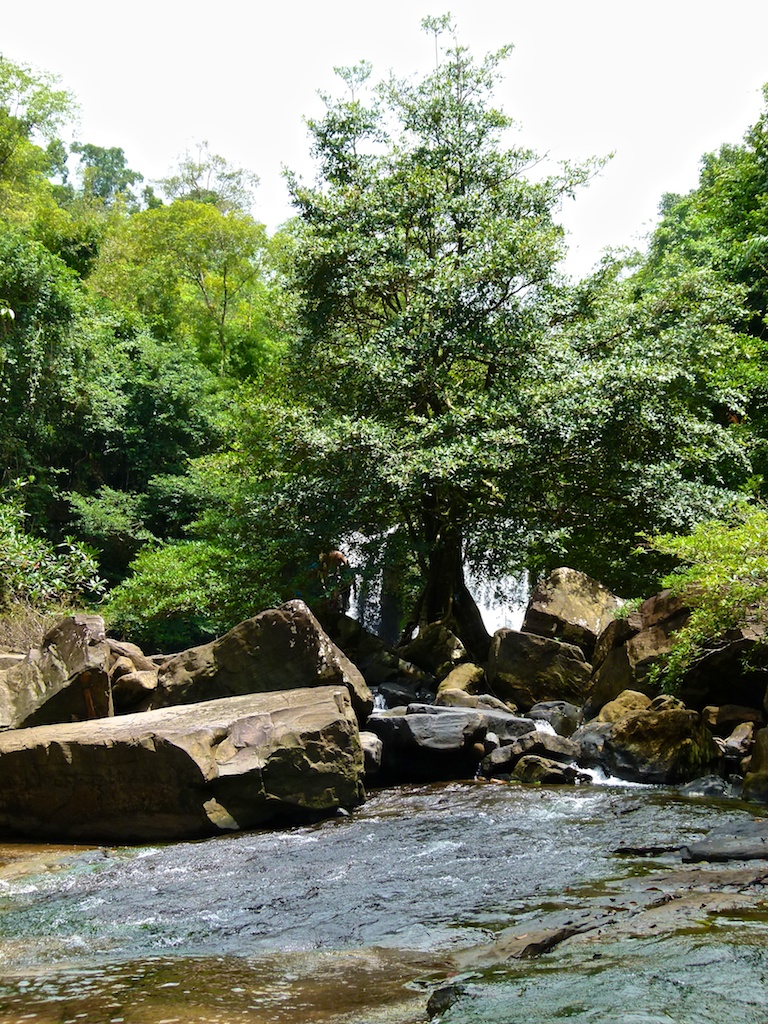
Klong Chao Waterfall is Koh Kood's biggest and most talked-about waterfall, located at the headwaters of the Klong Chao stream, which flows down to Klong Chao Bay on the island's west side. What draws people here is a wide, clear pool right beneath the falls that you can actually swim in — it's not just a lookout spot like many waterfalls. Water cascades down a tiered rock face into the pool below, cold and clear enough to see the rocks underwater. Many people jump in from the rocks or float around to cool off after a day baking on the beach. From the parking area it's about a ten to fifteen minute walk along a forest trail; the path isn't too steep and stays shaded, making it an easier walk than many waterfalls on other islands.
What makes Klong Chao Waterfall pair so well with the beach is its location. Klong Chao Bay is a long, quiet stretch of beach with emerald-clear water, lined with accommodations and restaurants. People staying in this area often build a day around swimming at the beach in the morning, then riding a motorbike or car up to the waterfall in the afternoon — getting both saltwater and freshwater in one day without traveling far. If you don't have your own transport, many Koh Kood island tours already include Klong Chao Waterfall in the itinerary, typically stopping at the waterfall, a viewpoint, and a nice beach in one trip with hotel pickup included, which is more convenient than finding your own way since parts of Koh Kood's roads are still narrow and hilly.
A few honest things to know before you go. First, water volume depends heavily on the season. During the dry season, roughly February to April, the water can thin to a trickle and the pool gets shallower. If you want to see the falls at full flow and swim properly, go toward the end of the rainy season into early winter. Second, the rocks along the water and inside the pool get very slippery when wet, especially where there's algae — wear shoes with good grip and be careful climbing or jumping, since depth varies from spot to spot. Third, during monsoon season, roughly May to October, Koh Kood sees rough seas, ferries reduce their schedules or stop running, and some accommodations close for the season, so check weather and boat schedules before planning your trip. Finally, after rain there may be leeches and mosquitoes along the trail, so bring insect repellent and wear closed shoes for peace of mind.
- Koh Kood's biggest waterfall, with a wide clear pool beneath it you can actually swim and cool off in, not just look at
- Only about a 10-15 minute walk in from the parking area, on a shaded, gentle trail — good for families and anyone who doesn't want a long hike
- Close to Klong Chao Beach, which is clear and quiet, so you can do a morning at the beach and an afternoon at the waterfall in one day without traveling far
- Free entry much of the year, or easy to combine with an island tour that includes transfer if you don't have your own transport
- Water volume depends on the season — during the dry season (Feb-Apr) water often runs low, making the falls a thin trickle and the pool shallower
- Rocks along the water and in the pool get very slippery when wet, and depth varies by spot, so care is needed climbing or jumping in
- During monsoon season (May-Oct), Koh Kood sees rough seas, ferries reduce service or stop, some accommodations close, and leeches and mosquitoes may appear on the trail after rain
Koh Mak island cycling & quiet beaches, Trat

Koh Mak is a small island in Trat province, sitting between Koh Chang and Koh Kood. Its charm is its quietness — there are no big roads and no lively bars like the well-known tourist islands. Almost the entire island is flat, with no steep hills to tire you out cycling, which makes it one of the most popular islands on the east coast for renting a bicycle and touring the island by pedal power. The route runs past coconut groves and old rubber plantations belonging to islanders, past beaches so uncrowded you may barely see another soul, with plenty of chances to stop for photos or a swim. The main loop covers roughly eight kilometers, an easy half-day ride. If cycling isn't your thing, you can rent a motorbike instead, but many say cycling slowly lets you soak in the island's atmosphere better.
The usual way to reach Koh Mak is by boat from a mainland Trat pier, such as Laem Ngob Pier or a pier around Mueang district, taking anywhere from about 45 minutes on a speedboat to around an hour and a half on a regular boat. Once you arrive, accommodation ranges from budget beachfront bungalows to small resorts. Most places offer bicycles to borrow or rent cheaply. Restaurants and cafes are scattered along the main beaches like Ao Tanid and Ao Prong, all easily reached by bicycle. This island suits people who want to slow down — waking up to cycle along the shore in the morning, finding a quiet spot on the beach to read in the afternoon, then watching the sunset in the evening, rather than seeking thrill-seeking activities or nightlife.
A few honest things to keep in mind before you go. First, Koh Mak is heavily dependent on the season. During monsoon season, roughly May to October, seas get rough, some boats stop running, and many accommodations and shops close for an extended period. Go during the calm season, roughly November to April, for the fullest experience and boats running on schedule. Second, the quietness is a double-edged sword — anyone expecting convenience stores, ATMs, or nightlife may be disappointed, so bring cash and essentials with you. Third, some roads are narrow gravel or concrete tracks; cycling at midday in strong sun can get quite hot due to limited shade, so cycle in the morning or evening, bring water, a hat, and sunscreen, and check your bicycle's brakes and tires before every ride, since repair shops on the island are scarce.
- A small, quiet island with no crowds or lively nightlife, good for anyone wanting to slow down and relax without rushing
- Almost the entire island is flat with no steep hills, making for easy cycling; the main loop covers about 8 km, doable in a half day
- Many beaches are so uncrowded they feel private, with plenty of chances to stop for a swim or photos while cycling
- Bicycle rental is cheap (roughly ฿100-200 a day), and many accommodations lend bikes for free, making it an affordable way to explore
- Heavily season-dependent — during monsoon season (May-Oct), seas get rough, some boats stop running, and many accommodations and shops close for an extended period
- The quietness means fewer conveniences — ATMs, convenience stores, and bicycle repair shops are limited, so bring cash and essentials
- Some roads are narrow gravel or concrete with little shade, making midday cycling quite hot
Snorkeling tour around Koh Mak-Koh Kradad (island hopping, small-island coral, Trat)
Koh Mak sits in the middle of Trat's sea, a quiet island where people go to unwind without rushing. Another of its charms is that several small islands are scattered around it, making a loop snorkeling tour a good way to see coral and fish from many angles in a single trip. Boats usually depart from a pier on Koh Mak and loop around three to four snorkel spots, one of which is Koh Kradad, known for its white beach and resident herd of deer. Coral at each spot isn't very deep, so you can float and watch without needing to be a strong swimmer, and every tour provides life jackets, making it suitable for families with kids or adults who aren't confident swimmers. Anyone wanting more privacy and to choose their own spots can book a private charter instead, though the per-person price is higher than a join-group tour.
Most join-group tours already include snorkel gear — mask, snorkel, and life jacket — plus drinking water. Some programs throw in lunch or snacks and fruit depending on the operator. Booking through an online platform in advance helps you compare what's included, how many spots are covered, and whether it's a longtail boat or speedboat. It's worth checking whether the program runs half day or full day, since time spent in the water at each spot varies quite a bit. Importantly, touring around Koh Mak is a seasonal activity — the clearest water and best snorkeling conditions run roughly from November to April in the dry season, while during mid-year monsoon season the waves are rougher and underwater visibility drops, with many boats reducing service or closing, so check with operators before planning your trip.
A few honest things to keep in mind before booking. First, the boat ride between spots takes a while and can hit waves at times — if you get seasick easily, take medication beforehand and sit toward the middle of the boat. Second, how clear the water is really depends on the season and that day's weather; on windy days or after rain the water can turn cloudy and coral harder to see. Third, some coral shows signs of degradation from weather and heavy use, so avoid stepping on or touching coral and use reef-safe sunscreen. Fourth, Koh Mak is harder to reach than Koh Chang, requiring a boat transfer from a mainland pier, so allow extra time and check the boat schedule carefully. Bring a long-sleeve rash guard, a hat, and shoes that can get wet to stay comfortable all day.
- See coral and fish at multiple spots around Koh Mak in one trip; the coral is shallow enough to view just by floating, no strong swimming needed
- Life jackets and snorkel gear are provided, suiting beginners, families with kids, or adults who aren't confident swimmers
- Includes a stop at Koh Kradad, with its white beach and resident deer, adding more to the trip than snorkeling alone
- Both budget join-group boats and private charters with your own choice of stops are available depending on budget and privacy preference
- A seasonal activity — during mid-year monsoon season the waves are rougher and underwater visibility drops, with many operators reducing service or closing, so check ahead
- Koh Mak is harder to reach than Koh Chang, requiring a boat transfer from a mainland pier, so allow extra time and check the schedule
- Boat rides between spots take a while and can be rough at times, so bring motion-sickness medication if needed; some coral also shows signs of degradation
Koh Kradad day trip — grasslands and wild deer, Trat (grasslands, wild deer, quiet beaches, and coral, departing from Koh Mak or the mainland)

Koh Kradad is a small island in Trat's sea that stands apart from the others because most of its land is wide grassland resembling savanna, rather than dense forest or a fishing village. The island has no permanent settlement, having once been privately leased land. What draws people to make the trip is a herd of nearly a hundred deer roaming freely across the island, grazing in the grasslands where you can photograph them up close. Beyond the grasslands and deer, the island's shores have quiet beaches, clear sea, and shallow coral reefs for snorkeling and watching fish. The overall atmosphere is peaceful and far less crowded than the main tourist islands, suiting anyone who wants a simple, relaxed day without competing for space with large crowds.
The most popular way to visit is as a day trip. Koh Kradad lies northeast of Koh Mak, so anyone staying on Koh Mak can cross by boat in a short time, with several departure points on Koh Mak to choose from. Some people instead take a boat from a mainland Trat pier. Most day trip programs include round-trip boat fare, and some also provide snorkel gear and drinking water. Once on the island, there's usually a buggy tour service taking you around the island, past grasslands, viewpoints, and various beaches, with the buggy fare and some entrance costs possibly paid separately on-site. Booking a day trip or boat in advance through an online platform makes it easier to compare what each program includes, how many hours it takes, and which point it departs from.
A few honest things to know before you go. First, this is a small island without the full facilities of a bigger island — shops and restrooms are limited, so bring your own drinking water, a hat, and sunscreen, since the open grassland gets fairly strong sun with little shade. Second, the deer on the island are free-roaming wildlife — don't chase, feed them unusual food, or leave plastic waste that a deer might eat; feeding should only be done as permitted by the island's caretakers. Third, travel depends on sea conditions — during monsoon season rough waves may cause boats to cancel or reschedule, so build in flexibility and check with operators beforehand. The calmest, most comfortable season is roughly November to April in the dry season, and going in the morning before the sun gets too strong makes for a more comfortable walk through the grasslands and better photos.
- A grassland island with nearly a hundred free-roaming wild deer you can walk up close to photograph — hard to find this kind of scenery elsewhere in Trat's sea
- Peaceful, uncrowded atmosphere compared to the main tourist islands, good for a simple, relaxed day
- Multiple activities in one trip — walking the grasslands to see deer, swimming at quiet beaches, and snorkeling reefs around the island
- Easy to reach as a day trip from Koh Mak with a short boat ride; several departure points and usually a buggy tour around the island
- A small island with limited facilities — shops and restrooms are scarce, so bring your own drinking water and essentials
- The open grassland has strong sun and little shade, so bring a hat and sunscreen and avoid the harshest sun hours
- Travel depends on sea conditions — during monsoon season rough waves may cause boats to cancel or reschedule, so check with operators first
White Sand Beach - Ban Chuen Beach (Hat Maro), Khlong Yai District, mainland Trat

White Sand Beach-Ban Chuen Beach (locals call it Hat Maro) is a beach on Trat's mainland, in Khlong Yai district, a narrow strip of land stretching toward the Ban Hat Lek border. Its main draw is that you can enjoy Trat's sea without taking a boat to Koh Chang or Koh Kood — just drive down Sukhumvit Road and you'll reach the beach. It suits anyone stopping en route to the border, or anyone who'd rather not spend time on a boat. The sand here is fine and white, with fewer crowds than island beaches, giving it a peaceful atmosphere for walking, relaxing, or swimming along the shore. The beach stretches fairly long and is shallow enough that you can wade quite a distance before reaching deep water.
The charm here is its simplicity, like a provincial beach that hasn't been fully built up into a major tourist attraction. A scattering of seafood restaurants and coffee shacks line the beach, and in some stretches small resorts and homestays offer overnight stays at prices gentler than the islands. Evening is a favorite time for many, as the light hits the water beautifully, making for lovely photos with the coconut palms. If you're driving yourself, parking by the beach is easy — no boat booking or waiting for a departure time like the islands. If you're already planning a trip to Khlong Yai to shop at the border, eat seafood, or photograph the final kilometer marker on Sukhumvit Road, adding a stop at this beach fits neatly into the route.
A few honest things to keep in mind. First, this beach is quite far from Trat town — driving down to Khlong Yai takes about an hour or more, so it suits people with their own car more than those relying on public transport. Second, facilities are limited — restrooms and shops aren't available everywhere, so bring drinking water and snacks in the car. The sea is clearest during the dry season (roughly November to April), while during monsoon season the waves are rougher and the water can turn cloudy, with occasional seaweed or debris washed ashore naturally. Watch the waves when swimming and keep an eye on small children, and take your trash with you so the beach stays clean for the next visitor.
- Enjoy Trat's sea without a boat crossing — drive straight to the beach, making it a handy rest stop en route to Khlong Yai and the border
- Fine white sand and fewer crowds than island beaches, with a peaceful atmosphere for walking and swimming along the shore
- Free beach access with no entry fee; nearby seafood restaurants, coffee shacks, and small accommodations cost less than the island side
- Beautiful evening light on the water for photos with the coconut palms, and easy roadside parking with no boat schedule to plan around
- Far from Trat town — driving down to Khlong Yai takes about an hour or more, suiting those with their own car more than public transport
- Facilities are limited — restrooms and shops aren't available everywhere, so bring drinking water and snacks in the car
- During monsoon season the waves are rougher and the water can turn cloudy, with occasional seaweed or debris washed ashore naturally
Koh Chang Naval Battle Memorial, Laem Ngob (HTMS Thonburi Memorial + naval history museum)

The Koh Chang Naval Battle Memorial sits by the sea at Laem Ngob on Trat's mainland, just a few minutes from the pier people use to cross to Koh Chang. It was built to commemorate the naval battle on January 17, 1941, when the Royal Thai Navy faced a French naval fleet in the waters off Koh Chang. What sets this memorial apart from typical monuments is that the main building is designed in the shape of a warship facing out to sea, with a statue of a naval officer standing before it, looking out toward the sea and Koh Chang in the distance — making the historical event feel more vivid than reading about it in a book. Visitors usually spend just a short time here but come away with both some history and seaside photo opportunities.
Inside the grounds is a museum section displaying the story of HTMS Thonburi, the key warship in that battle, with models, old photographs, and a timeline of events to help visitors understand what happened that day and why it's remembered in Royal Thai Navy history. The original gun turret and command tower of HTMS Thonburi are preserved at a naval facility in Bangkok; the Laem Ngob site focuses on the memorial and commemorative seaside grounds. Entry to the memorial grounds is mostly free, while the museum section may charge a small fee and has set opening hours, so it's worth checking on-site, especially around long holidays or off-peak season.
The location's advantage is that it sits right where most people already pass through before or after taking the boat to Koh Chang, so it's an easy add-on without a detour. It makes a good spot to stretch your legs, take photos with the model warship and sea view, then continue on your way. To be upfront: the outdoor area is open by the sea and gets quite sunny during the day, so it's best to visit in the morning or evening and bring a hat and water. The memorial focuses on remembrance and scenery rather than lots of activities, so anyone expecting entertainment may find it a bit plain. But for anyone interested in naval history or wanting to teach kids some real local history, it's a worthwhile stop offering both knowledge and seaside atmosphere in a short visit.
- Located right by the Laem Ngob pier, easy to visit before or after crossing to Koh Chang without a detour
- The main building is shaped like a warship facing the sea, with a naval officer statue — offering both historical insight and seaside photo opportunities
- Includes a museum section telling the story of HTMS Thonburi and the January 17, 1941 battle, with models and old photographs to bring the event to life
- Entry to the memorial grounds is mostly free, and a visit takes about an hour — a good stop along the way
- The outdoor area is open by the sea and gets quite sunny during the day, so avoid midday and bring a hat and water
- Focused on remembrance and scenery rather than activities, so anyone expecting entertainment may find it a bit plain
- Museum opening hours and entry fee may change over time, so check on-site beforehand, especially off-season
Walk Trat's old town along Klong Bang Phra Canal + fresh market (old wooden shophouses, shrines, local food)

Many visitors to Trat pass straight through town on their way to the pier at Laem Ngob to cross to Koh Chang, even though the old town in central Trat has a quiet charm worth a leisurely half day. This area lies around Thana Charoen and Lak Mueang roads, along Klong Bang Phra Canal, which runs through the center of town. Rows of old wooden shophouses, decades old, still line both sides of the street, and some are still open as shops, coffee shops, and traditional grocery stores — offering a picture of an old trading town that hasn't been fully converted into a polished tourist attraction. What stands out is that you can walk here without hurrying, with no entrance fee, and encounter the real daily life of Trat locals. Along the way, stop to pay respects at an old shrine in the area, a gathering place for the local Thai-Chinese community that has lived here for generations.
A short walk further leads to the Trat municipal fresh market, bustling from early morning, a source of affordable local food to sample. Trat is known for fresh seafood and processed goods like shrimp paste, fish sauce, and seasonal fruit, especially during fruit season roughly May to June, when durian, mangosteen, and rambutan all ripen together. Well-known foods to find here include old-school noodle shops, traditional Thai sweets, and old-style coffee served in wooden shophouses. Come evening, a nearby night market opens for more walking and eating. The atmosphere is friendly and small-town, with gentle prices and far fewer crowds than a major tourist city, making it a good place to rest from a beach trip with a relaxed half day of walking.
A few honest things to know before you go. First, Trat's old town isn't set up as a pedestrian street or a polished check-in spot, so don't expect street art or trendy cafes packed into every building — the charm here is that it's a real, functioning town. Second, many shops and the fresh market are liveliest from morning through late morning; by late afternoon some shops gradually close, so plan your visit for the morning or come back for the evening market. Third, midday sun in Trat town can be quite strong with limited shade in places, so bring a hat, umbrella, and water. Fourth, some walkways along the canal and in the market are old concrete or wood that can be slippery and uneven, so wear comfortable walking shoes and watch your step while taking photos, and dress modestly and respectfully if visiting a shrine.
- Free to walk and visit the shrine — a good, low-cost addition before or after taking the boat to Koh Chang
- Still shows rows of old wooden shophouses along Klong Bang Phra Canal and a traditional trading-town way of life not yet turned into a full tourist attraction
- Plenty of affordable local food — fresh seafood, old-school noodle shops, Thai sweets, and old-style coffee in shophouse cafes
- A small, friendly, uncrowded town, easy to explore slowly over a relaxed half day
- Not set up as a pedestrian street or a polished check-in district, so don't expect trendy cafes or street art packed into every building
- Shops and the fresh market are liveliest from morning through late morning; by late afternoon some shops gradually close, so plan your timing
- Midday sun is strong with limited shade in places, and some walkways along the canal and market can be old, slippery, and uneven
Trat fruit orchard tour, seasonal fruit buffet (durian, mangosteen, rambutan, salak · roughly May-Jul)

Trat is the true fruit province of the eastern region. Once fruit season arrives, roughly May to July, many orchards in Khao Saming, Mueang Trat, and Bo Rai districts open for visitors to walk through and eat fruit buffet-style at a per-head price. The star fruits that ripen together during this period are durian, mangosteen, rambutan, and salak, and Trat is known for their flavor thanks to the soil and climate along the Banthat foothills being well-suited for growing them. What draws people to orchard tours is eating fruit fresh off the tree, without it having traveled across provinces. Many orchard owners walk visitors through the trees, explain durian varieties and how to tell when fruit is ripe, then set out peeled fruit at stalls for guests to help themselves as much as the orchard allows.
Each orchard's buffet format differs. Some charge a per-head entry fee for unlimited seasonal fruit within a set time. Some include common durian varieties in the buffet price, but premium varieties like specially selected Mon Thong or rare cultivars cost extra by weight. Fruit you want to take home is weighed and charged separately. Per-head prices usually run from just over a hundred baht up to around three hundred baht, depending on whether it's a small community orchard or one set up as a full tourist attraction. Visiting early in fruit season means catching durian and mangosteen as they gradually ripen, while the peak mid-season offers the widest variety and best prices. It's a good idea to call the orchard ahead to check what fruit is ripe on the day you plan to visit and whether the buffet is open, since ripening times shift from year to year.
A few honest things to keep in mind before you go. First, the season determines everything — if rain comes early or late in a given year, the ripening period shifts accordingly, and some orchards may not yet be open or may have already closed if you visit at the wrong time. Second, most orchards sit outside town, scattered along the foothills; if you don't have your own car, book a tour that includes transfer, since public transport doesn't reach easily. Third, a fruit buffet fills you up faster than you'd think, especially durian, so pace yourself and sample a variety rather than filling up on one kind. Fourth, midday sun is strong and orchard ground can be muddy and slippery after rain, so wear comfortable walking shoes and bring a hat and water, and be sure to ask about extra charges — like premium durian varieties or fruit to take home — clearly before you start eating so there are no surprises when it's time to pay.
- Eat fruit fresh straight from the tree — durian, mangosteen, rambutan, salak — at a buffet price typically in the low hundreds of baht per head
- Many orchard owners walk you through the trees and explain durian varieties and how to judge ripeness, adding some learning to the meal
- Trat is known for its fruit flavor thanks to the soil and climate along the Banthat foothills being well-suited for growing
- Both small community orchards at gentle prices and fully set-up tourist orchards are available depending on your budget
- Only open during fruit season, roughly May to July, and the ripening window shifts with each year's rainfall, so visiting at the wrong time may mean it's not yet open or already closed
- Most orchards sit outside town scattered along the foothills, with poor public transport access, so you'll need your own car or a transfer tour
- Premium durian varieties and fruit to take home are usually charged extra by weight, so ask about pricing clearly before you start eating
Ban Hat Lek border market, Thailand's easternmost point (Ban Hat Lek border market, Khlong Yai District, Trat)
Ban Hat Lek is the village at the far end of Sukhumvit Road in Khlong Yai district, Trat, considered Thailand's easternmost point of land. The appeal here is driving along the coast all the way to the end, then capturing a photo at the extreme-point marker as a keepsake. The village has a Thailand-Cambodia border market that's lively at certain times, with souvenirs, fresh seafood from local fishing boats, affordable goods from across the border, and a coastal community atmosphere hard to find in a big city. Many people combine this with a boat trip to Koh Kood or Koh Mak, since the Khlong Yai pier and boat departure point sit along the same route, making it a good match for road-trippers who want both a border-town experience and Trat's sea in one go.
Getting to Ban Hat Lek is mostly done by private car or rental car, driving south from Trat town along the coastal road for about ninety kilometers. Along the way you'll pass Tambon Mai Rut and several coastal viewpoints worth a photo stop. Once in the village, you'll find a market and shops lining the road. Most visitors browse dried goods, dried seafood, shrimp paste, fish sauce, and local souvenirs, then stop for fresh seafood at an affordable roadside restaurant. The easternmost-point photo marker sits not far from the market — a short walk or drive away. It suits an unhurried visit; about two to three hours covers both the market and the photo stop comfortably.
A few honest things to know before you go. First, this is fairly far from Trat town, so travel time and fuel are the main costs — without your own car, plan to rent one, or combine it with a trip to Khlong Yai/Koh Kood for better value. Second, how lively the market is depends on the time of day and border conditions — some days shops aren't all open and the crossing point may be closed or restricted, so check the status ahead of time before setting out. Third, if you plan to cross into Cambodia, prepare the proper documents and check crossing conditions carefully, though many visitors come simply to walk the Thai side of the market and photograph the easternmost point, which is enough on its own. Finally, come during the midday-to-afternoon window since the sun is strong, and bring a hat, water, and cash, as many shops only accept cash.
- Capture a photo at Thailand's easternmost point as a keepsake — great for road-trippers collecting the country's extreme-point landmarks
- A Thailand-Cambodia border market to browse for food, souvenirs, and affordable goods from across the border
- Fresh seafood from local fishing boats at affordable prices, served at roadside restaurants near the market
- A scenic coastal drive along Khlong Yai with several viewpoints, connecting conveniently to the pier for Koh Kood-Koh Mak
- About 90 km from Trat town — travel time and fuel are the main cost, so a private or rental car is recommended
- How lively the market is and whether the border crossing is open depends on the time and current conditions, so check ahead
- Many shops only accept cash, and midday sun is strong, so bring cash, a hat, and water
Where to stay in Trat?
Choose a resort on Koh Kood/Koh Mak, or a hotel in Trat town near the pier. Compare prices across 3 sites before booking.
Search hotels on AgodaBook activities & tickets in advance
Boats to Koh Kood/Koh Mak and diving tours have limited departures and depend on sea conditions — booking ahead is more convenient
💡 Know before you go to Trat
Koh Kood/Koh Mak are reached by boat from mainland piers (Laem Sok/Khlong Yai). The calm season is roughly Oct-May; during monsoon season many boats stop running and some resorts close.
Koh Kood has beautiful beaches, clear water, and a waterfall, good for a multi-day stay. Koh Mak is small and quiet, better for cycling and slow-paced relaxation.
ATMs and mobile signal are limited on the islands, so bring enough cash and let your accommodation know about pier pickup in advance.
Trat is a fruit province — durian, mangosteen, rambutan, and salak are in season then, with orchard buffets to visit and buy from.
How to plan a Trat trip that's worth it
If islands are your focus, pick either Koh Kood or Koh Mak and stay 2-3 nights rather than rushing between several islands. On a free day, add a snorkeling tour around the smaller islands. If you're on the mainland, stop by Trat's old town, the Koh Chang Naval Battle Memorial at Laem Ngob, and White Sand Beach. If you want to visit Koh Chang too, see our separate Koh Chang activity guide.
Ready to plan your Trat trip? Start by choosing where to stay, on an island or in town.
See Trat hotels →