📝 Written 3 Jul 2026 · ✅ Fact-checked 3 Jul 2026 · prices and schedules can change — check with the operator before booking
Uthai Thani sits in the lower north of Thailand, a small town with a quiet charm and a riverside way of life. The highlights are Hup Pa Tat, a closed valley with taad palms and primeval plants, Wat Tha Sung (Wat Chantaram) with its beautifully decorated glass hall and mondop, the raft-house communities and river cruises along the Sakae Krang, Khao Sakae Krang hill with Wat Sangkat Rattana Khiri and its giant bell, and the Huai Kha Khaeng Wildlife Sanctuary, a World Heritage forest.
Below we've picked out the activities and sights people review most often, along with the best time to visit and what to know before you go. Hup Pa Tat and the Sakae Krang river cruise are good year-round. Wat Tha Sung gets busy on public holidays, while Huai Kha Khaeng is a strictly protected conservation area, so it's worth reading up on the rules before you go. Overall, Uthai Thani is easygoing and quiet — a great fit for a slow-travel trip.
Hup Pa Tat — Walk Through a Cave Into a Primeval Forest Valley (Tham Prathun Non-Hunting Area, Lan Sak District)

Hup Pa Tat is a closed valley set inside a limestone mountain range in Lan Sak District. To get in, you walk through a short, dimly lit cave tunnel about ten meters long. Once you emerge on the other side, you find yourself in another world entirely, ringed on every side by high rock walls. Sunlight only reaches the valley floor for part of the day, which lets taad palms grow thickly here, mixed with ferns and other ancient plants that thrive in the damp conditions — the whole scene calls to mind a forest from a much earlier era. The site was discovered by a monk around 1979 and later became a nature-study spot that locals in Uthai Thani take real pride in, since this kind of forest is rare and has been kept remarkably intact.
The walking trail inside the valley is a boardwalk-and-concrete loop of about 700 meters. It's mostly flat and easy — no climbing or serious exertion required — so young children and older visitors can manage it comfortably. Signs along the way explain the taad palms, ferns, and other plant species found only in this valley. The air inside stays cooler and more humid than outside because the surrounding hills block the sun for most of the day. The most popular time to visit is late in the rainy season through early winter, roughly August to November, since that's when you have a chance of spotting the pink dragon millipede, a small, brightly colored creature found only in this area. Depending on the season you may also see birds, jungle fowl, and butterflies. Admission is very cheap — around thirty baht for a Thai adult — and goes toward site upkeep. It's open from 8:30am to 4:30pm every day.
A few things worth knowing honestly before you go: the cave passage going in is fairly dark and the ground can be slippery from the humidity, so wear shoes with good grip and mind your head as you duck through. Some stretches naturally carry the smell and residue of bat droppings, and anyone uneasy with tight or dark spaces should be prepared for a bit of discomfort. There are a fair number of mosquitoes and insects inside the valley, especially in the rainy season, so bring repellent and long sleeves. Some sections of the trail are wet and mossy, so watch your footing. In the dry season the taad palms look sparser and there are fewer insects, but you won't get to see the pink dragon millipede the way you would in the rainy season. This is a fragile natural site, so don't pick plants, break branches, or make loud noise that disturbs the wildlife, and stick to the marked trail. Khao Pla Ra and other caves nearby in Lan Sak District make good add-ons for the same day.
- A one-of-a-kind experience: duck through a cave into a closed valley filled with dense primeval forest and taad palms
- The trail is a flat boardwalk loop of about 700 meters, easy walking that's suitable for children, older visitors, and first-timers
- Admission is very cheap — around thirty baht for a Thai adult — with free parking, and you can see it all in half a day
- The valley stays cool and humid all day, and in late rainy season/early winter you have a shot at spotting the rare pink dragon millipede, a local endemic species
- The cave passage in is fairly dark with slippery ground, which can feel uncomfortable if you're bothered by tight or dark spaces
- Mosquitoes and insects are common in the rainy season, and some sections of the trail are wet and mossy, so watch your step
- It's far from town, so it's easiest to reach by private vehicle — public transport doesn't really get you there
Wat Tha Sung (Wat Chantaram) — The 100-Meter Glass Hall and Glass Mondop, Temple of Luang Phor Ruesi Ling Dam

Wat Tha Sung, officially known as Wat Chantaram, sits on the banks of the Sakae Krang River in Mueang Uthai Thani District. It's an old temple dating back to the Ayutthaya period, which later flourished under Luang Phor Ruesi Ling Dam, or Phra Rajaphrommayan, a revered monk respected across Thailand. The main draw for most visitors is the 100-meter Glass Hall, a long building whose walls and columns are entirely covered in glass and white mosaic tiles. When light streams in, it reflects and shimmers throughout the whole room. Inside is a replica of the Phra Buddha Chinnarat Buddha image for visitors to pay respects to, and it's also where the preserved body of Luang Phor Ruesi Ling Dam rests in a glass coffin for devotees to visit. Beyond the Glass Hall, there's also a Glass Mondop and other buildings decorated in the same mirror-tiled style, all pleasant to wander through.
A visit to Wat Tha Sung suits anyone drawn to merit-making and Buddhist art crafted with real care. The atmosphere inside the Glass Hall is quiet, cool, and bright with light reflecting off the mirrors all around. Many visitors say they were struck by just how detailed the decoration is, from the chandeliers hanging from the ceiling to the long rows of columns. The temple isn't far from Uthai Thani town — about ten to fifteen minutes by car or hired transport — so it's often paired with the riverside market and other temples in town as a half-day visit. If you don't have your own vehicle, you can hire a songthaew or a local driver for a round trip, but agree on the price and waiting time clearly before you set off, since regular public transport doesn't reach the temple conveniently.
A few honest things to know before you go: first, the Glass Hall only opens in sessions — roughly 9:00 to 11:45am and 2:00 to 4:00pm. Show up outside those hours and you'll find the doors closed, missing the most beautiful part of the temple, so plan your timing around the sessions. Second, on dress code: this temple takes modesty seriously. Wear sleeved shirts and avoid shorts or short skirts inside the hall, and dress checks are sometimes fairly strict. Third, you must remove your shoes before entering the buildings — the floor inside the hall is glass and polished stone, which can be quite slippery, so walk carefully, especially with older visitors and young children. Fourth, on long weekends and during festivals the crowds get very large, and getting an unobstructed photo may take some patience — going on a weekday morning is much more comfortable. The temple grounds are spacious with parking and restrooms available; bring water and a hat, since some of the walking is out in the sun.
- The 100-meter Glass Hall, covered entirely in mirror tiles and white mosaic, catches the light in a dazzling display — meticulously crafted Buddhist art
- This is the temple of Luang Phor Ruesi Ling Dam, revered nationwide; you can pay respects to a replica Phra Buddha Chinnarat and the monk's preserved body in its glass coffin
- Free admission, donate as you wish, and it's only about 10–15 minutes from Uthai Thani town, making it an easy half-day stop
- The temple grounds are spacious with a Glass Mondop and several beautifully decorated buildings, plus parking and restrooms for visitors
- The Glass Hall only opens in morning and afternoon sessions — show up at the wrong time and you'll miss the most beautiful part
- Dress checks can be fairly strict — you need modest clothing and must remove your shoes, and the hall floor is slippery so walk carefully
- Public transport doesn't reach it conveniently, so you'll need your own car or a hired driver, and it gets very crowded on long weekends and during festivals
Sakae Krang River Cruise Past Raft Houses + Morning Alms-Giving on the Riverbank (Long-Tail Boat, Raft Houses & Fish Pens, Mueang Uthai Thani District)
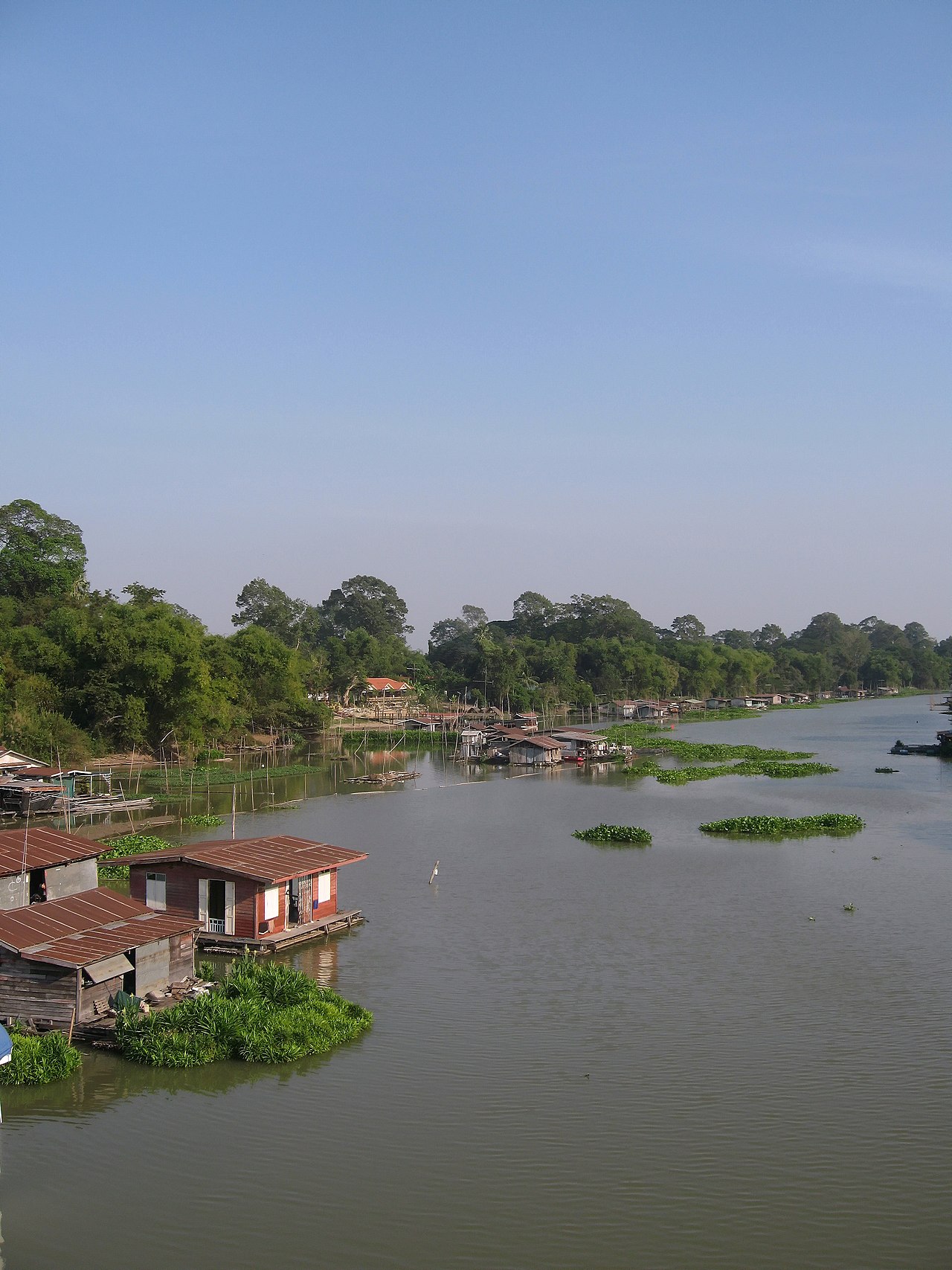
The Sakae Krang River is the main waterway that has sustained Uthai Thani town for a long time, and a long-tail boat cruise past the raft houses is an activity almost every visitor to this town tries at least once. What makes it special is that the raft houses here are still genuinely inhabited — people make a living raising fish in pens, especially giant gourami, the province's signature fish. Boats set off from the pier in front of the morning riverside market, near Wat Ubosatharam, known locally as Wat Bot, and cruise along banks lined with old wooden rafts, fish pens, and riverside homes. It's a scene that keeps much of the flavor of an old-fashioned river town intact. Most visitors describe the atmosphere as quiet, shaded, and a rare glimpse of village life that's hard to find in bigger cities.
The highlight that gets many people out of bed early is the riverside alms-giving. In the early morning, monks paddle or ferry across to receive alms at the pier in front of the market, and visitors can bring offerings and join in giving alms alongside the local community. It's a warm experience that combines merit-making with a genuine cultural encounter. After the alms round, you can continue strolling the morning riverside market, picking up local snacks and fresh food along the way. For those who aren't early risers, an evening cruise from around 4 to 6pm is another option, since that's when the light softens and you can watch the sunset reflect off the water. A short raft-house viewing tour runs about a hundred baht per person if you join a group; chartering a covered long-tail boat that seats ten to twelve people runs about five hundred baht per hour, and going all the way out to Manorom bumps the price up into the thousands.
A few honest things to keep in mind before you go: first, this activity is about simplicity and everyday life rather than thrills — it isn't the kind of tour with dramatic sea adventures, so anyone expecting high excitement might find it a bit flat, but if you go in with an open mind for soaking up the atmosphere, it delivers. Second, most of the boats are run by local villagers, so agree on the price and route with the boatman clearly before you board, since there's no fixed counter — rates differ per person versus per boat, so confirm exactly what's covered. Third, timing matters a lot: if you want to join the alms-giving, you need to reach the pier by around 6:30–7:00am, since arriving later means missing the monks. Fourth, bring a hat, umbrella, and sunscreen, since the boats are open-air and the sun on the water can be intense during the day. In the rainy season the water can turn murky and sudden showers are possible, so check the weather before heading out.
- See genuinely inhabited raft houses and fish pens — a traditional riverside scene that's hard to find in bigger cities
- Join a morning alms-giving on the riverbank alongside the local community — warm and authentically cultural, not a staged show
- Quiet, shaded atmosphere, good for families, older travelers, and slow-travel couples wanting an easygoing pace
- Short cruises start affordably at around a hundred baht per person; chartering is cheap too, and you can pick either the morning alms-giving route or the sunset cruise
- Focused on simplicity and everyday life with no thrill-seeking activities — anyone hoping for a sea-adventure-style tour might find it a bit flat
- Most boats are village-run with no fixed counter, so you need to negotiate the price and route with the boatman yourself before boarding
- You need to get up quite early if you want to join the alms-giving (arrive by around 6:30–7:00am), and the open boats mean strong sun on the water during the day
Khao Sakae Krang (Wat Sangkat Rattana Khiri · Mondop With Buddha's Footprint Replica · Giant Bell · City Viewpoint)

Khao Sakae Krang is a low hill in the middle of Uthai Thani town, topped by Wat Sangkat Rattana Khiri, a mondop enshrining a replica Buddha's footprint, and a large bell that has become a symbol of the town. There are two ways up: climbing roughly 449 steps of a naga staircase from the temple grounds below — home to the sacred Phra Buddha Mongkol Sak Sit image — or driving or riding a motorbike up the winding road to park near the top and walking the last short stretch. Those who enjoy exercise tend to choose the stairs, stopping to pay respects along the way, while families with older members or young children usually find driving up more convenient. This spot suits both merit-makers and view-seekers, since the summit offers a wide panorama over Uthai Thani town, the Sakae Krang River, and the surrounding rice fields.
A local custom is to climb up and ring the giant bell at the summit for good luck, its sound carrying across the town. Many visitors pay respects to the Buddha's footprint replica in the mondop, then walk the terrace to take in the view before heading back down. The most popular times to climb are morning, while the air is still cool, and evening near sunset, when the light is more flattering for photos of the town than the harsh midday sun. The temple grounds below have ample parking and usually a few stalls selling offerings and snacks — a pleasant stop for worship and a bit of atmosphere before continuing on to the riverside market or the walking street downtown, both nearby. As a result, this stop is often folded into a half-day Uthai Thani sightseeing itinerary.
A few honest things to keep in mind: this is a temple and a sacred site, so dress modestly — no sleeveless tops or shorts above the knee — and remove your shoes when entering the mondop area as marked. The naga staircase is fairly steep with many steps; anyone with knee trouble or traveling with older visitors should take the driving route up and walk only the short remaining stretch. Midday sun is strong and the summit offers little shade, so bring a hat, sunglasses, and water. On long weekends or during festivals it gets crowded and parking at the top is limited, so mornings are more comfortable. There's no admission fee here — it's a visit for worship, made according to one's own faith — and if you'd like the convenience of transport plus other stops around town, booking a guided Uthai Thani city tour with a driver saves time and spares you the hassle of finding parking yourself.
- You can climb the naga staircase while worshipping along the way, or drive to the top — choose based on your physical condition and who's traveling with you
- The summit offers a wide-angle view over Uthai Thani town, the Sakae Krang River, and the surrounding rice fields, beautiful in both morning and evening
- You get to worship the Buddha's footprint replica in the mondop and ring the giant bell for good luck, following local Uthai Thani custom
- Free admission, located right in town, so you can pair it with the riverside market or the walking street in a single trip
- The naga staircase is steep with many steps — tough for anyone with knee trouble or older visitors, who should take the driving route instead
- There's little shade at the summit, so midday sun can be strong and hot — best avoided around noon
- On long weekends or during festivals it gets crowded and parking at the top is limited
Walk Uthai Thani's Old Town + Trok Rong Ya + Sakae Krang Riverside Market (Uthai Thani old town, Trok Rong Ya walking street & Sakae Krang riverside market)
Uthai Thani town is a small riverside town that has kept its old-fashioned charm remarkably intact. There are three spots people love to walk between, all close enough to reach on foot. Start with the Sakae Krang riverside morning market, where locals set up stalls before dawn selling fresh vegetables, fresh and dried fish, curries, and local sweets. Early risers often join the alms-giving here, as monks paddle over to receive alms along the riverbank — a slice of everyday life that's becoming rarer by the year. A short walk further is Trok Rong Ya, a short alley that used to be a trading district with an old tobacco-curing house, now revived as a walking street lined with old wooden buildings, street art on the walls, local food stalls, and small cafés to duck into. It's a pleasant place to wander and take photos, morning or evening.
What gives this district its charm is that it's a genuinely lived-in old town, not something staged purely for tourism. Many of the wooden riverside houses are still inhabited, with residents going about their daily work as usual. The old Wat Ubosatharam sits on the riverbank right in the old town, while Wat Khao Sakae Krang sits on the hill above, offering a view down over the town and the river. Visitors who walk Trok Rong Ya and the riverside market often continue on to pay respects at these temples in the same trip. Walking the old town is free — you only pay for food and coffee you'd like to try. Trok Rong Ya is liveliest on Saturday evenings, when the shops are all open; on weekdays it can still be walked but with fewer shops open. If you want the full market atmosphere, come early in the morning when locals are out shopping.
A few honest things to know before you go: first, timing matters a lot. The riverside morning market wraps up quickly — arrive after eight or nine and many stalls will already be packing up. Trok Rong Ya, meanwhile, can feel quiet with many shops closed on weekday afternoons, so it's worth planning your visit around early morning or Saturday evening. Second, this is a small town, and the walkable area isn't very large — two to three hours covers it all, so anyone expecting a huge attraction may find it smaller than expected. The charm here is in the relaxed pace and soaking up the atmosphere rather than grandeur. Third, midday heat is strong and there's little shade along the riverside path and alleys, so bring a hat, umbrella, and water. Fourth, parking in town is limited, especially during the Saturday walking street, so arrive early or park a bit further out and walk in, and keep some cash on hand since many small shops only accept cash.
- Walk all three parts of the old town in one loop within walking distance — the morning riverside market, Trok Rong Ya, and the antique wooden buildings — no need to drive between them
- Free to enter the old town, pay only for food and coffee you'd like to try — an easy, budget-friendly visit
- You get a genuinely lived-in old-town atmosphere: morning alms-giving by the river, street art, wooden riverside houses, and cafés to relax in, all great for photos
- The Sakae Krang riverside market has a real review score of around 4.5 out of 5 on Wongnai, with visitors praising the variety of food and the riverside atmosphere
- You need to time it right — the morning market wraps up quickly, and Trok Rong Ya can feel quiet with many shops closed on weekday afternoons
- It's a small town with a limited walkable area — about 2–3 hours covers it all, so anyone expecting a major attraction may find it smaller than expected
- Midday heat is strong with little shade along the walking paths, parking in town is limited during the Saturday walking street, and many small shops only accept cash
Wat Uposatharam (Wat Bot) — An Old Temple on the Sakae Krang With Rattanakosin-Era Murals + Hong Poles
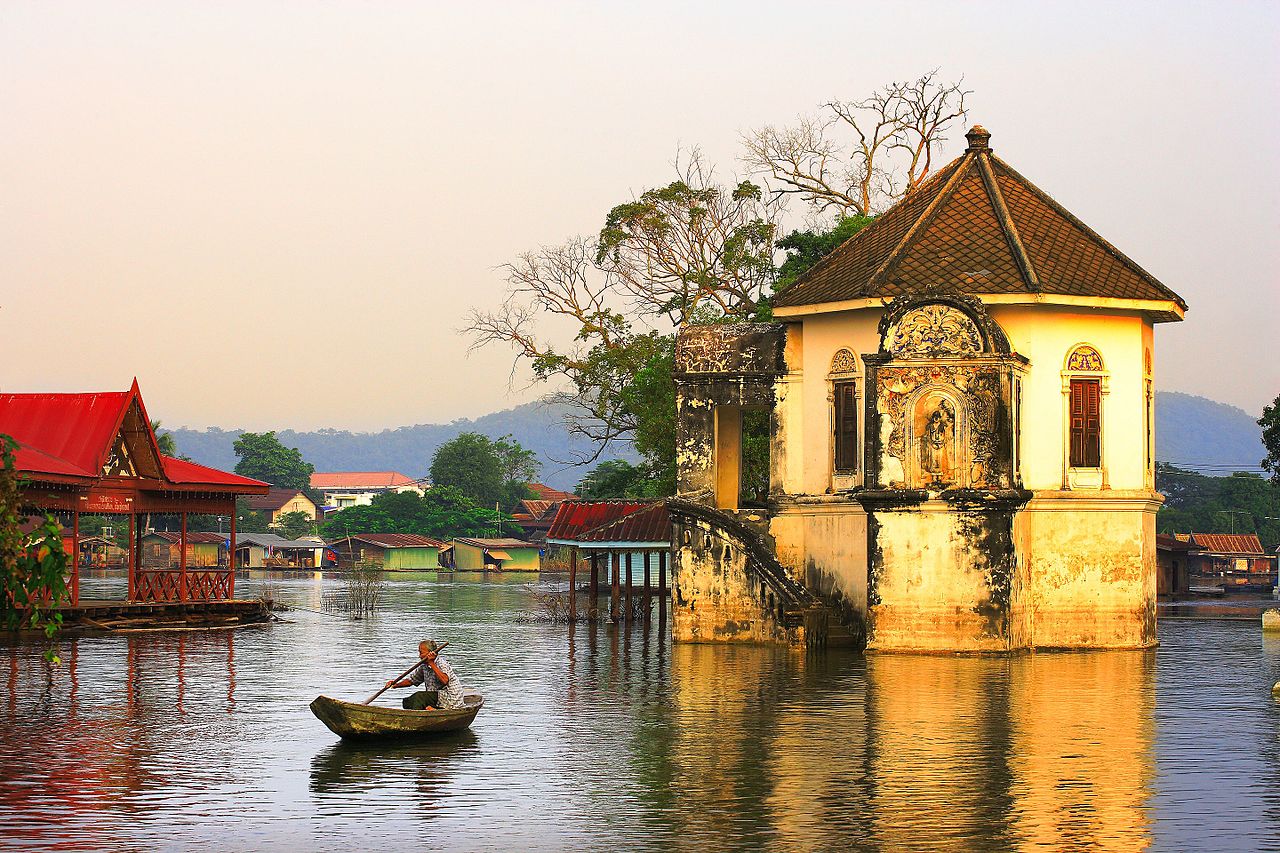
Wat Uposatharam, known to locals simply as Wat Bot, is an old temple on the banks of the Sakae Krang River, sitting on Ko Thepho island directly across from Uthai Thani's municipal market — just a short walk across a small footbridge to reach. Originally named Wat Bot Manorom, it was built in the early Rattanakosin period. The main draw here is the genuine murals inside the ordination hall and viharn, telling the story of the Buddha's life from birth to enlightenment, painted by artisans of the early Rattanakosin era whose color and linework are still remarkably clear. Beyond the paintings, there are also hong (swan) poles in front of the temple, an old symbolic feature, and an octagonal mondop blending Thai and Western styles — quite different from a typical temple. It's a pleasant place to wander in a quiet, shaded riverside setting.
What makes this temple special is that it's still a living community temple by the river, not a sealed-off historical site. Once here, you can tour the ordination hall and viharn, then step out to the riverbank and watch the raft-house life and fishing boats on the Sakae Krang, all in the same visit. Many people prefer to come in the morning or evening when the sun isn't harsh, giving softer light and more comfortable weather than midday. Admission is free with no fee, and it's open from roughly 8am to 4:30pm. Anyone already touring Uthai Thani town can stop by easily, since it sits right next to the market and other major temples, just a short walk or drive away. It pairs well with a Sakae Krang river cruise or morning alms-giving to round out a full day of cultural sights.
A few honest things to know before you go: this is a small, quiet temple without the facilities or shops you'd find at a more famous one, so anyone expecting bustle may find it too understated. Some of the murals show wear with age, and the ordination hall may be closed at certain times, so it's worth asking or checking the posted hours first. Visiting on a weekday or in the morning gives a calmer atmosphere and more comfortable photo conditions than a long weekend. Dress modestly when entering the ordination hall area, remove your shoes before entering the buildings, and avoid using flash when photographing the murals to help preserve the old paintings for longer.
- See genuine early-Rattanakosin-era murals telling the Buddha's life story from birth to enlightenment, with color and linework still clearly visible
- Features hong poles in front of the temple and an octagonal mondop blending Thai and Western styles — rare architecture unlike a typical temple
- Right on the Sakae Krang River near town, reached by crossing a footbridge from the market — quiet, shaded atmosphere
- Free admission, and pairs easily with a river cruise or morning alms-giving in the same trip
- A small, quiet temple without many facilities or shops — anyone expecting more bustle may find it too understated
- Some murals show wear with age, and the ordination hall may be closed at certain times, so it's worth checking ahead
- The bridge into the temple is for pedestrians and small motorbikes only — cars can't reach the temple itself, so you need to park on the market side and walk across
Huai Kha Khaeng Wildlife Sanctuary — Nature Study Center + Seub Nakhasathien Memorial (World Heritage Site)

Huai Kha Khaeng is the forest that, along with Thung Yai Naresuan, became Thailand's first Natural World Heritage Site in 1991. It forms the core of the Western Forest Complex, one of the most intact stretches of forest left in Southeast Asia. Most of the area is strictly off-limits to protect the habitat of wildlife such as tigers, wild elephants, gaur, banteng, and hundreds of bird species, so general visitors can't access all of it. The parts open to outside visitors are the sanctuary headquarters area and the Huai Kha Khaeng Wildlife and Nature Study Center, which are set up to teach about forest ecosystems and conservation work in a structured way. There's a short nature-study trail, exhibits, and a section telling the story of Seub Nakhasathien, the former head of the sanctuary who gave his life to draw public attention to protecting this forest.
What sets Huai Kha Khaeng apart from typical nature attractions is that it wasn't designed for fun or photogenic moments — it's managed first and foremost to let the forest and its wildlife survive. Visiting here feels more like a lesson in living alongside nature within clear boundaries. The spot most visitors stop at is the Seub Nakhasathien Memorial near the headquarters on the Lan Sak side, which has a statue and his former residence preserving the story of his work. Reading through it, you come to understand why this forest means so much more to Thai people than just a patch of green on a map. The nature study center on the Ban Rai side focuses more on walking trails and learning stations about trees, animal tracks, and the work of forest rangers — a great place to bring children and open their eyes to a different world.
Because this is a wildlife sanctuary rather than a national park, the rules are stricter than many visitors are used to. Accessing deeper trails or staying overnight requires advance permission from the sanctuary and a staff guide. Loud noise, feeding animals, collecting forest products, and littering are all strictly forbidden. Getting there is easiest with a private vehicle, since public transport doesn't reach it. In the rainy season, some roads can be slippery and certain routes may close, so it's worth calling the sanctuary headquarters to check before setting out each time. Bring water, hiking shoes, and plan to arrive before 3pm since the headquarters closes in the evening. Visiting respectfully, with a genuine willingness to learn and follow the rules, gives you a very different kind of experience from an ordinary attraction — and it directly supports keeping this forest alive for the future.
- Experience a genuine World Heritage forest in the sections open for study, with nature trails and learning stations that give a structured understanding of the forest ecosystem
- The Seub Nakhasathien Memorial tells the story of conservation work movingly, deepening appreciation for the forest's value and the work of forest rangers — great for bringing children and families to learn
- A quiet, richly intact natural atmosphere without the crowds of mainstream attractions, well suited to nature lovers who want to be immersed in a real forest
- Visiting respectfully directly supports conservation work in the Western Forest Complex
- Rules are stricter than a typical national park — accessing deeper trails or staying overnight requires advance permission and a staff guide, so it's not a place you can just wander into freely
- It's a long drive from town and public transport doesn't reach it, so a private vehicle is essential; in the rainy season, some roads can be slippery or closed
- It's not designed for fun or photogenic moments, and the chances of a clear large-wildlife sighting are low — anyone expecting a safari-style experience may be disappointed
Ban Rai Hillside Rice-Field-View Cafés, Ban Rai District (GoodView CafeHouse · Loom Cafe · Kham Ta Café, etc.)
Ban Rai District sits on Uthai Thani's western edge, a forest-fringe area of farmland, rice fields, and hills stretching across the whole district. In recent years a scattering of new cafés and farm stays has opened up along the ridges and rice-field edges here. The appeal is the slow pace and quiet — visitors driving up from Bangkok or other big cities often stop here to rest their eyes, sipping coffee while looking out over green hills and rice fields with no need to rush anywhere. Popular spots include GoodView CafeHouse, a café combined with accommodation and a hillside camping area; Loom Cafe, a pet-friendly café tucked into a valley; and Kham Ta Café, a cozy wooden house overlooking farmland and mountains. Each has its own character, so visiting several in one trip works well.
Touring this area suits travelers who care more about atmosphere than a packed itinerary. By day, sit at a café sipping a drink and taking photos of the view; by evening, many spots become sunset points behind the ridgeline. For the full experience, stay overnight at a farm stay and wake up hoping for a light morning mist over the fields in the cool season. The most convenient way to get around is with your own car or a rental, since the cafés and stays are spread out along rural roads some distance from Uthai Thani town. Plan your route ahead and check each café's opening hours, since some close early in the afternoon or take certain days off. The best views come in the late rainy season through early winter, roughly October to January, when the rice fields are still green or turning gold, the air is cool, and there's a chance of morning mist.
A few honest things to keep in mind: the view and atmosphere depend heavily on the season. In the dry season, roughly March to May, the rice fields can turn brown and dry and the weather gets hot, quite different from the pretty photos you'll see from the rainy-to-cool season. Popular spots like GoodView get crowded on long weekends and during festivals — some reviews mention full seating and long waits. If you want a genuinely quiet atmosphere, avoid public holidays or go early on a weekday morning. Finally, the roads into some cafés are narrow rural lanes with some uphill stretches, so drivers of low-clearance sedans or those unused to hilly roads should drive slowly and carefully, especially after rain when the roads can turn slick or muddy. Bring cash too, since some small rural cafés may only accept cash or have unreliable transfer signal.
- A quiet, slow-travel atmosphere among hills and rice fields, a great escape from the city without traveling far from central Thailand
- Several cafés and farm stays to choose from, each with its own character and view, and you can visit multiple spots in one trip
- Many spots make great sunset points behind the ridgeline, and staying overnight at a farm stay gives you a shot at morning mist in the cool season
- Drink and food prices are in line with typical upcountry cafés — not overpriced given the view and atmosphere you get
- The view depends heavily on the season — in the dry season (roughly March–May), the rice fields turn brown and dry and it's hot, quite different from the rainy-to-cool-season photos
- Popular spots like GoodView get crowded on long weekends and during festivals, with some reviews mentioning full seating and long waits
- Cafés and stays are spread along rural roads, so a private vehicle is essential to get around comfortably, and some routes are narrow with uphill stretches
Khao Pathawi — Limestone Caves & Cave Temple, Resident Monkeys, and a Viewpoint (Thap Than District, Uthai Thani)

Khao Pathawi is a small limestone range in Thap Than District, about 750 meters long and roughly 253 meters high, made of stacked, fairly steep rock formations. Its standout feature is the dozens of caves ringing the hill — including Tham Prathun, Tham Bandai, Tham Chong Lom, Tham Buddha History, Tham Pla, and Tham Bat, among others. Many of these caves connect to Wat Khao Pathawi, making it a cave temple where visitors pay respects and stroll among stalactites and stalagmites at the same time. The plaza in front of the hill has large shade trees and a sizable resident monkey troop, a favorite photo subject for visitors. Anyone who climbs up to the viewpoint at the top gets a wide view over the surrounding rice fields and villages — a great pick for anyone after a quiet, still-uncrowded local attraction.
A visit to Khao Pathawi makes for a relaxed half-day outing. Start by walking the caves around the hill — some connect through to one another — then pay respects at the Buddha images enshrined inside, before climbing the stairs up to the viewpoint. The hill isn't very tall, but some stretches of the climb are steep and rocky, so wear shoes with good grip, bring water, and don't rush. As a temple, it's free to enter, with only a donation box for those who wish to give. It's reached from Uthai Thani town via Thap Than District along Highway 3013, about 18 kilometers, with parking available in front of the temple. It pairs well with other sights around Thap Than or as a stop on the way to Hup Pa Tat.
A few honest things to know before you go: the monkey troop in front of the hill is quite used to people and fairly mischievous, so keep food bags, water bottles, glasses, and anything shiny well out of sight — don't carry plastic bags visibly, since the monkeys will often try to grab them, and don't hand-feed them directly, as you risk being bitten or scratched. If you're bringing young children, keep them close by at all times. Some sections inside the caves are dim with uneven ground, so bring a flashlight or use your phone's light, and mind your head and footing. In the rainy season, the rocks get especially slippery, so take extra care. The most comfortable times to visit are morning or late afternoon, when the sun isn't as strong and the heat is more bearable, letting you fully enjoy the caves and the viewpoint.
- Several experiences in one place: walking the caves around the hill, paying respects in the cave temple, watching the monkey troop, and climbing to a rice-field viewpoint
- Free admission, with no entrance fee, good for a budget trip or a family outing
- A quiet, local atmosphere that's still uncrowded compared to more popular attractions
- Not far from Uthai Thani town (~18 km), easy to pair with other sights in Thap Than or on the way to Hup Pa Tat
- The resident monkeys are used to people and mischievous, with some risk of having items snatched or being bitten/scratched if you're careless — keep everything tucked away at all times
- Some stretches of the climb are steep and rocky, cave floors can be slippery with dim lighting, so bring proper shoes and a flashlight, especially in the rainy season
- This is a local nature attraction with few facilities or shops, so bring your own water
Waterfalls & Hillside Streams in the Lan Sak–Huai Khot Zone (Pha Raet / Lush Green Hills, Western Uthai Thani) — Swimming & Rainy-Season Hiking

The western side of Uthai Thani, covering Lan Sak District and the border with Huai Khot District, is a stretch of lush green mountains that continues into a large conservation forest in the upper-central region. This zone has several hillside streams and small-to-medium waterfalls scattered along the forest edge — water flowing down from rock cliffs and pooling into basins you can wade or swim in. Locals and nature-minded visitors often drive up here to find a cool spot to swim, walk through the shaded forest, and find a spot to pitch a tent or lay out a mat for a riverside meal. What stands out here is the quiet and the genuinely natural setting — it hasn't been developed as a full commercial attraction — making it a good fit for anyone who wants to get away from the crowds and simply be among the trees, the water, and birdsong without competing for space.
Before planning a visit, it helps to understand that the streams and waterfalls in the Lan Sak–Huai Khot zone depend heavily on the season. The best time, with the most water, is the rainy season, roughly June to October, when the streams run strong and full and the surrounding forest turns vivid green. In the dry season, roughly February to April, many spots run low or dry up entirely, making swimming impossible. If your main goal is swimming, aim for the rainy season or the late rainy/early cool season. Getting around mostly requires your own vehicle or a hired driver, since the various spots are scattered across the foothills and some access roads are unpaved dirt tracks or narrow lanes with no public transport reaching them. Visitors coming from Uthai Thani town should allow about one to one-and-a-half hours of driving each way, and should check the route and road conditions in advance, since phone signal can drop out in parts of the forest.
A few honest things worth saying plainly: this zone doesn't have the full facilities you'd find at a famous waterfall — some spots have no restrooms, shops, or staff on hand, so bring your own water, food, and trash bags, and take everything back out with you rather than leaving it in the forest. The rocks and boulders along the streams get very slippery, especially when wet, so wear shoes with good grip and take care when climbing over them. In the rainy season, when the water runs strong, check the current and water level carefully before getting in, since flash floods can arrive quickly after heavy rain upstream — don't swim when the water looks murky or fast-moving. After rain, leeches can also appear along the hiking trails, so wear covered shoes and avoid sitting on damp ground for long. If you're bringing children, supervise them closely and stick to shallow, still pools so everyone has a fun and safe day.
- Genuinely swimmable hillside streams and waterfalls in the rainy season, with a lush, quiet forest atmosphere that's uncrowded compared to famous attractions
- Good for every kind of nature lover — families with kids paddling in shallow water, camping friend groups laying out a riverside meal, and couples who love quiet
- Entry costs are low or nearly free, making it an affordable nature outing where the main cost is just transport into the area
- Part of the same western-hills zone as other natural attractions in Lan Sak–Huai Khot, easily combined into a half-day or full-day trip
- Water levels depend heavily on the season — in the dry season, roughly February to April, many spots run low or dry up entirely, making swimming impossible
- A private vehicle or hired driver is essential, since the spots are scattered across the foothills, some roads are unpaved, phone signal drops out, and public transport doesn't reach them
- Few facilities — some spots have no restrooms, shops, or staff, the rocks by the water are slippery, and in the rainy season you need to watch for flash floods and leeches along the trails
Visiting Uthai Thani — Where Should You Stay?
Pick a hotel in Uthai Thani town near the Sakae Krang River and the old-town market; compare prices across 3 sites before booking
Search Hotels on AgodaBook Activities & Tickets in Advance
For a nature-and-riverside trip to Uthai Thani, booking a car or package in advance makes things easier
💡 Know Before You Visit Uthai Thani
Hup Pa Tat is a closed valley reached by walking through a short cave. The trail is easy and suits all ages, admission is minimal, and it's worth bringing a flashlight or phone light for the cave section.
Cruise the Sakae Krang River to see the raft-house communities and fish-pen farming. Evenings have great weather — ask about routes and prices with the operator before boarding.
Wat Tha Sung (Wat Chantaram) has a beautifully decorated Glass Hall and mondop and is an active place of practice, so dress modestly and follow the temple's rules.
The Huai Kha Khaeng Wildlife Sanctuary is a World Heritage forest with strict access rules. The sections open for study are limited, so contact the sanctuary and read up on the rules in advance.
How to Plan an Uthai Thani Trip That's Worth It
With 2 days: spend day one at Hup Pa Tat and Wat Tha Sung, then climb Khao Sakae Krang in the evening to worship and take in the view. On day two, cruise the Sakae Krang River past the raft houses, walk the old town market, and join the morning riverside alms-giving. If you're interested in going deeper into nature, look into visiting Huai Kha Khaeng — that way you get a full mix of nature, temples, and riverside life. Uthai Thani also combines well with a Nakhon Sawan–Kamphaeng Phet trip.
Ready to visit Uthai Thani? Start by picking a hotel on the Sakae Krang riverfront
See Uthai Thani Hotels →