🔄 Last checked 26 Jun 2026 · details and hours can change — check the venue before you go
📍 All restaurants on the map
Tap a pin for the spot + nearby stays
Lamphun is a city many people drive past on the way to Chiang Mai, unaware they're bypassing a walled town more than 1,300 years old. This was the ancient city of Hariphunchai, founded by Queen Chamthewi — the first queen of the north — long before Chiang Mai existed. The old city still has its ancient moat, Lanna temples within walking distance of one another, and the century-old Inthayongyot Street where colonial-era buildings are now home to cafes and street art. On Friday evenings, the walking street in front of Wat Phra That fills with northern food stalls and handmade crafts. Come late in the year and the temple courtyard transforms into a sea of a hundred thousand lanterns that draws visitors from across the north. Walking around Lamphun feels like moving through a city where time slows down.
If there's one thing Lamphun is proudest of, it's the temple heritage. Wat Phra That Hariphunchai Woramahawihan houses the golden Lanna chedi that holds the Buddha's hair relic and serves as the lucky stupa for those born in the Year of the Rooster. Wat Chamthewi (Wat Ku Kut) has the Suwanna Jangkot chedi — a square stepped tower with standing Buddha images on every tier — listed as a national monument and one of the most complete examples of its form still standing. Wat San Pa Yang Luang is widely cited as one of the most beautiful temples in Thailand for the intricately carved stucco covering the entire white viharn housing the Phra Khiao Khong jade-like Buddha. Out of town toward Mae Tha District, the Tha Chumphon White Bridge is a curved white concrete railway bridge over a hundred years old that has become the province's top photography spot. All of this sits in one small province — and one well-planned trip covers all of it.
Wat Phra That Hariphunchai Woramahawihan
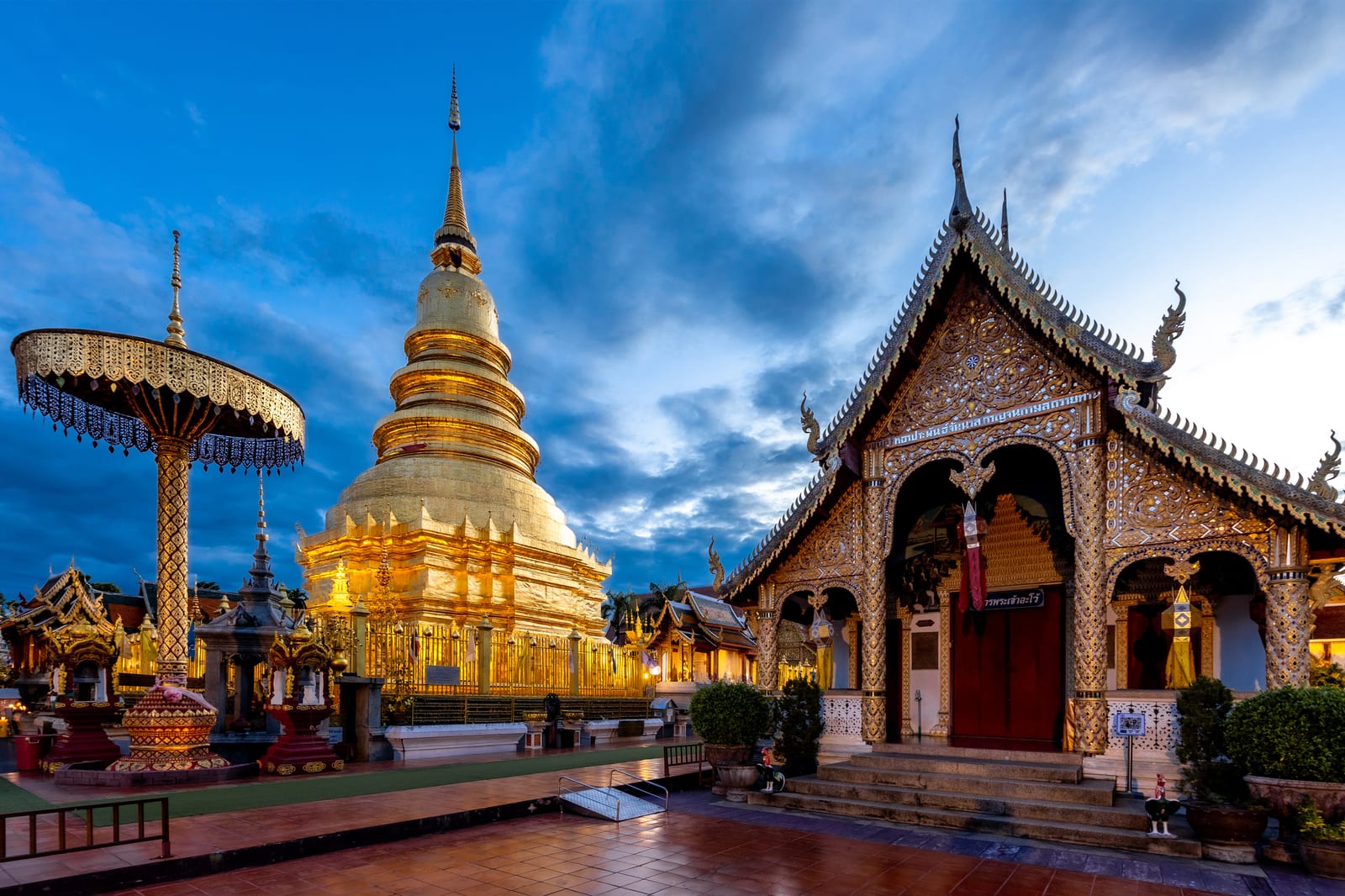
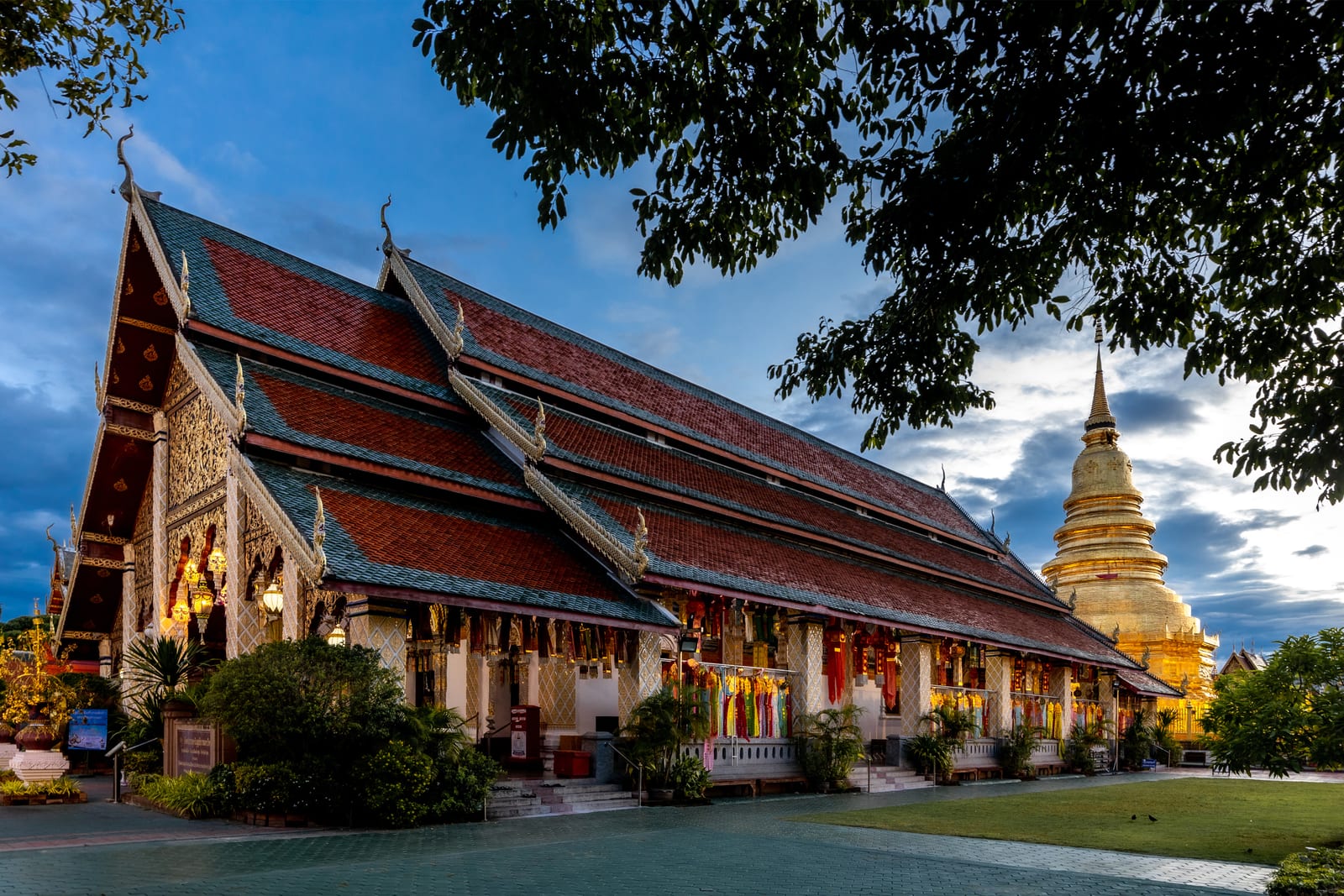
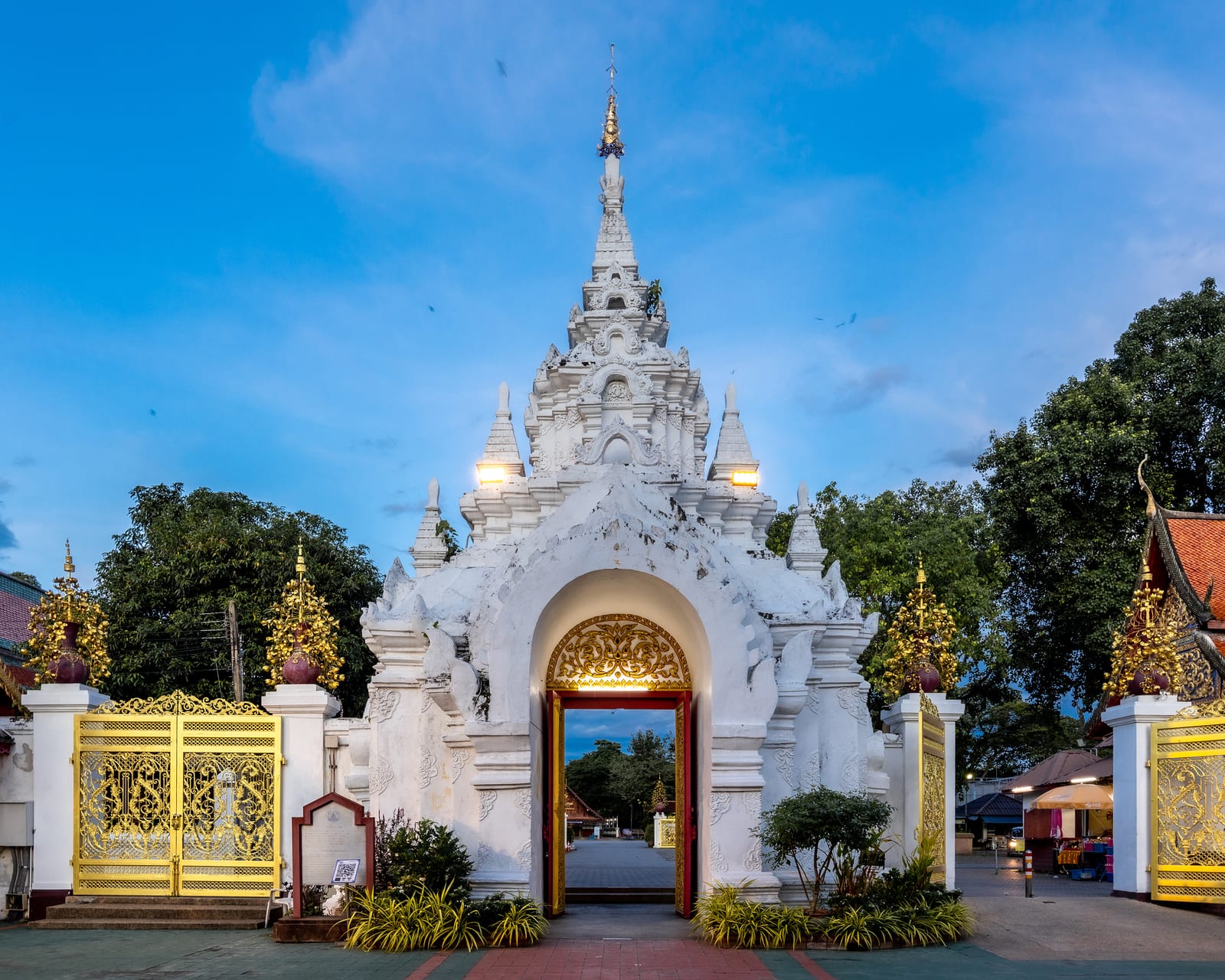
If you only have time for one stop in Lamphun, make it Wat Phra That Hariphunchai Woramahawihan. This is the royal monastery at the heart of the old city, right on Inthayongyot Road, a short walk from the provincial hall. A first-class royal monastery of over a thousand years' standing, its centrepiece is the golden Lanna-style chedi about 23 metres tall, inside which the Buddha's hair relic is enshrined. It also serves as the auspicious stupa for people born in the Year of the Rooster — many make a special trip here at least once in their lifetime to pay respects.
Beyond the golden chedi, the unmissable highlights include the elaborately carved stucco gate arch (pratukhong), the large temple bell said to be among the biggest in the north, and the five-tiered Suwanna Chedi royal stupa behind the main chedi — often passed without a second glance. Most reviewers agree the temple grounds are wide, clean, and pleasant to walk; the midday sun is strong but there is shade to rest under. The real magic comes in late year during the Yi Peng lantern festival (roughly September to November), when Lanna lanterns are hung all across the courtyard and at night the entire space glows — a scene many visitors describe as endlessly photogenic.
Thai visitors enter free; foreign tourists pay a small fee of about 20 THB. Open from dawn to around 9 pm — recommended in the morning or late afternoon for cooler conditions and better light. Dress modestly as this is a place of active worship. Parking is available around the temple but gets busy during festivals and holy days. The area surrounding the temple has khao soi, kanom jeen nam ngiao, and Lamphun souvenirs within easy walking distance, making this the perfect first stop of any Lamphun trip.
Tha Chumphon White Bridge
The Tha Chumphon White Bridge is a curved white concrete railway bridge in Western style, over a hundred years old, spanning the Mae Tha River in Tha Pla Duk Sub-district, Mae Tha District — about 30 km from Lamphun town. Built from 1918 and completed in 1920 under the supervision of Prince Kamphaengphet Akrayothin, the Father of Thai Railways, it was constructed during wartime when steel was unavailable for bridges, so reinforced concrete was used throughout. The bridge still carries northern line trains today, and its graceful arc against green hills has made it the province's most photographed landmark.
What reviewers consistently praise is the contrast of the white bridge curve against clear water and the mountains on both sides — beautiful from every angle. The key tip from real visitors: if you want a photo with a train crossing the bridge, check the Northern Line timetable first, because trains pass only a few times a day. Early morning misty conditions give especially soft, dreamy images; late afternoon with gentle light is also ideal. Don't miss going down to the riverbank beneath the bridge to look up and capture the full arch in one frame — and feeding the fish in the river while you're there.
Free entry, open at all times. A small community of locals runs food and snack stalls along the riverbank at very reasonable prices — you can sit and enjoy the view for the cost of a few bites. From Lamphun town it's about 40 minutes by car, with roadside parking available. Located between Khun Tan and Tha Chumphon railway stations.
The reason it's so popular is simple: it's simultaneously a historic landmark and the province's top photography check-in point, with a Google rating of 4.5 from thousands of reviews. Important safety note: the bridge is still in active use — never walk on the rails or stand on the bridge itself for photos. Always shoot from the riverbank or designated viewing spots below, and be ready to move clear well before any train passes.
Wat Chamthewi (Wat Ku Kut)
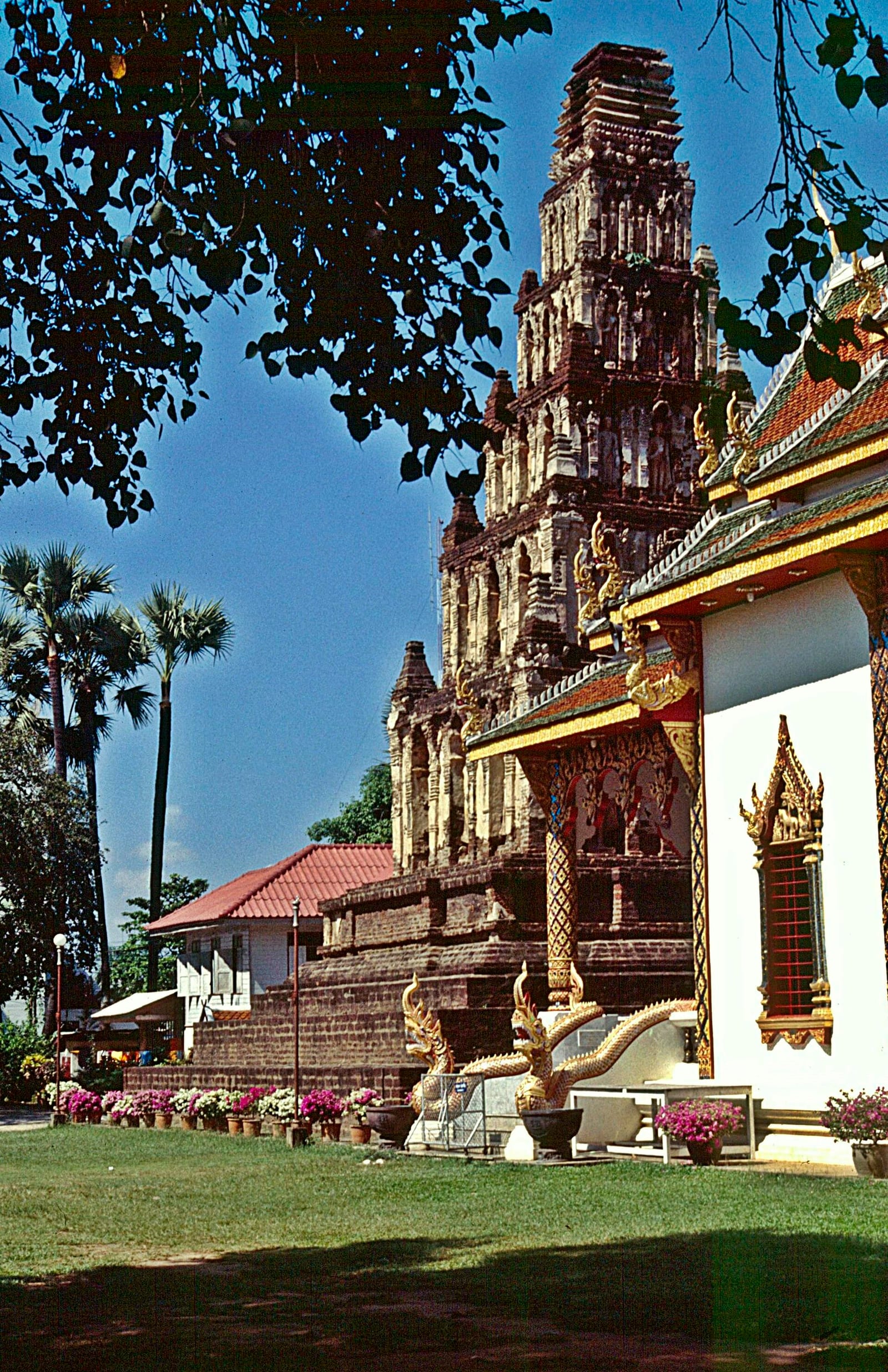
Wat Chamthewi — locally called Wat Ku Kut — is a temple dating back over a thousand years to the Hariphunchai era, on Chamthewi Road in Nai Mueang Sub-district, just a short distance from the town centre. Ideal for those who love ancient monuments, old architecture, or a quiet and beautiful place to pay respects without fighting big tourist crowds. Queen Chamthewi, the founding monarch of Hariphunchai, has a close connection to this site, and it is believed that her relics were enshrined in one of the main chedis here.
The unmissable highlight is the Suwanna Jangkot chedi — or Ku Kut — a square stepped stupa rising in five tiers that taper progressively upward to about 21 metres. On each face of each tier stands a row of stucco Buddha images in the 'bestowing blessings' posture, totalling dozens of figures overall. The 'Ku Kut' name comes from the fact that the stupa's spire has been lost for centuries, leaving a flat-topped form. This Hariphunchai-style form is extremely rare and is regarded as one of the most significant national monuments in the country. Adjacent to it is an eight-sided chedi, and a small wooden hall displaying the story of Khruba Srivichai, who once came to restore this temple.
Reviewers consistently describe the atmosphere as calm, leafy, clean, and easy to walk through. No entry fee, parking available at the front and inside the temple grounds. Many visitors recommend entering the main viharn to pay respects to the presiding Buddha first, then walking out to examine the Ku Kut stupa from the exterior. Open daily approximately 07:00–18:00. Located near Queen Chamthewi's monument and adjacent to Lamphun Hospital — about 1.5 km from Wat Phra That Hariphunchai, easy to pair in one loop.
The appeal here is that this is the most complete surviving example of this stupa form anywhere. Anyone interested in Lanna–Hariphunchai history typically names it as an essential stop. Dress modestly, remove shoes before entering the viharn, and visit in the morning or late afternoon when the light and temperature are both more pleasant and photographs of the stupa come out better.
Wat San Pa Yang Luang
Wat San Pa Yang Luang is an old temple in the centre of Lamphun that locals keep recommending to visit — because its centrepiece, the Phra Khiao Khong viharn, is a white hall covered entirely in intricate carved stucco: pure Lanna patterns mixed with contemporary craft, a multi-tiered roof, and columns of golden teak and rosewood sourced from Laos, Myanmar, and Thailand. Many visitors rate it as one of the most beautiful viharns in the country. Well suited for architecture lovers, photographers, and anyone who wants more from a temple than just paying respects — here you get real craftsmanship to study closely.
Inside the viharn is enshrined Phra Khiao Khong, a Buddha image carved from greenish-black Mekong River stone, brought from the Mekong area near Laos. It is the temple's presiding image and draws many visitors seeking blessings. Don't miss the stucco work wrapping the exterior — vine patterns, animals, nagas, and elephants — along with the small white chedis scattered around the courtyard. Reviewers consistently say the place is 'so elaborately beautiful it dazzles' and that the lighting plays wonderfully on the carvings. Shoes must be removed from the moment you step into the viharn precinct.
Calm, leafy, rarely crowded — far less frenetic than famous temples in Chiang Mai — and it takes about one to two hours to enjoy properly. No entry fee; donations welcome. Located within Lamphun municipality, close to the town centre, a short drive from Chiang Mai. Open approximately 06:00–18:00 daily.
Note: visit in the morning or late afternoon, as the white viharn reflects midday glare and the angled light at those times brings the carvings to life better. Dress modestly and keep quiet — this is also a meditation temple. For temple and art enthusiasts, it's worth making a priority on any Lamphun trip.
Queen Chamthewi Monument
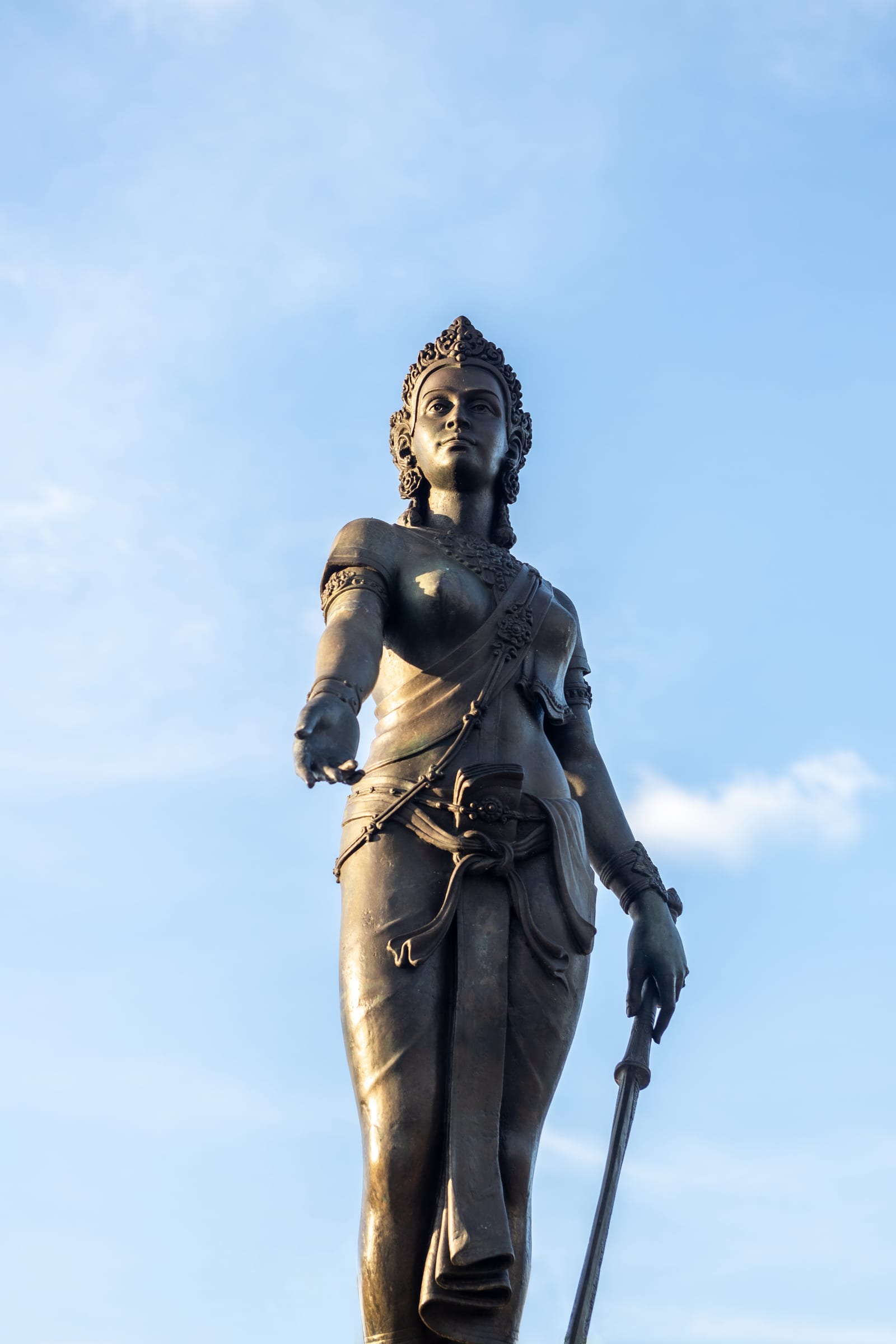
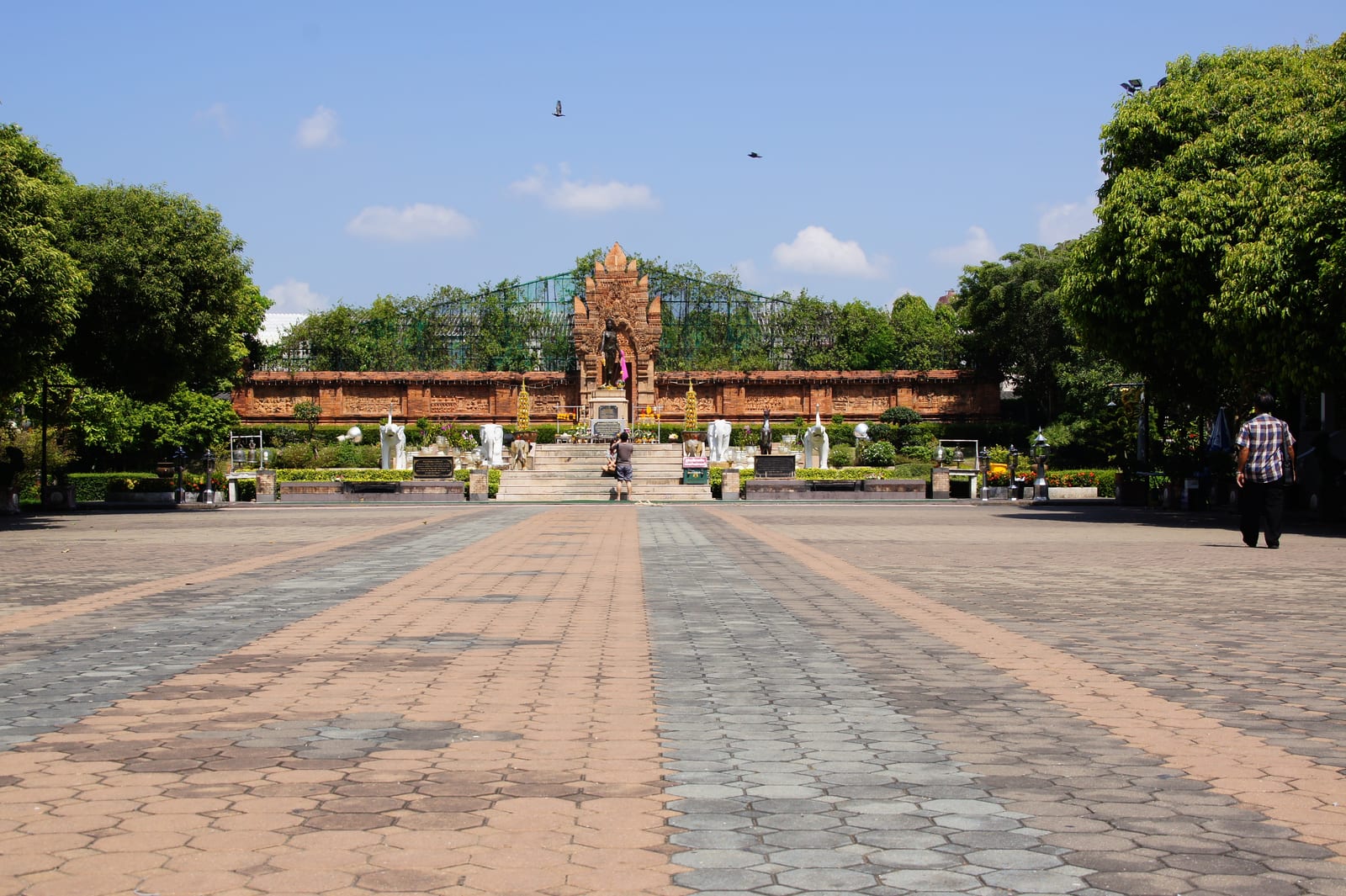
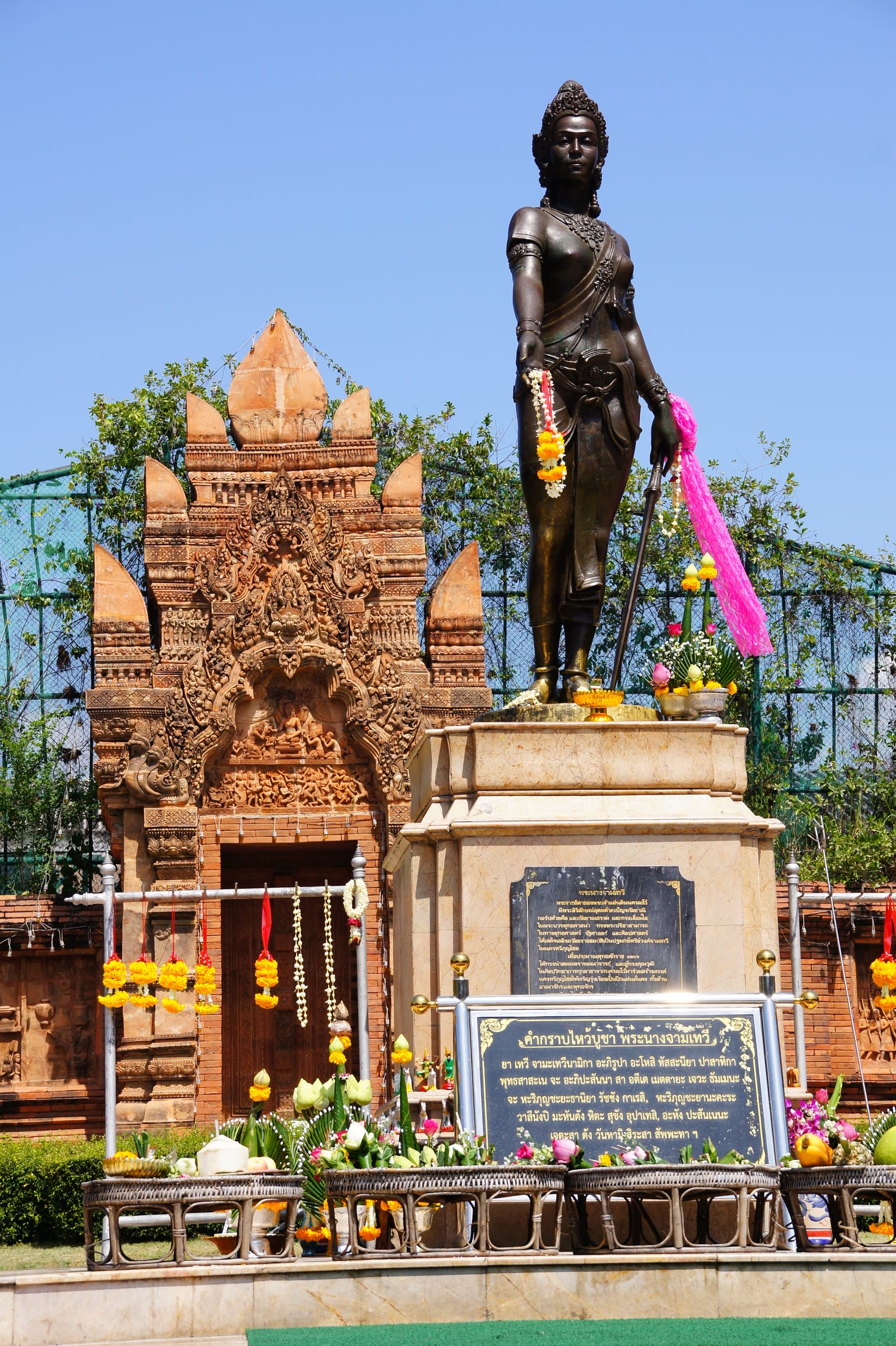
If you want to understand Lamphun from its very roots, start at the Queen Chamthewi Monument behind Nong Dok Market, near the provincial hall. This is the cast image of the founding monarch of ancient Hariphunchai — the queen who brought Buddhism and arts and culture here over 1,300 years ago. The bronze figure stands upright in the regalia of an ancient warrior-queen, presiding over a shaded public park that Lamphun residents genuinely use for leisure — not a staged tourist attraction, but a living civic space.
The key experience is paying respects to the monument for a blessing — locals revere the queen as the city's sacred protector. Many visitors release birds here as an act of merit. Walk around to the low-relief carved narrative wall at the back, which tells the story of the city from its founding to the present day, then photograph the elephant and horse statues flanking the main image. Evening is the best time to come — reviewers agree that the cooler air, the illuminated monument cutting a striking silhouette, and the surrounding evening food market make the combination hard to beat.
Free entry; open all day but most pleasant around 06:00–21:00. Centrally located in the old city — easy to walk to the Hariphunchai National Museum or Wat Phra That Hariphunchai from here. Popular year-round, with a Songkran ceremony in April and lantern decorations during Loy Krathong.
Note: parking is fairly limited, especially during festivals. Morning or evening visits are cooler and more pleasant, and December–January weather makes it especially nice. The courtyard is marble paving, which heats up on sunny days — wear comfortable shoes and keep sunscreen handy.
🛏️ Hotels in Lamphun
Staying overnight in Lamphun gives you a relaxed pace to visit the old temples and the walking street in the cool of the morning and evening. There are guesthouses and small hotels near the old town, plus options across the Kuang River in Chiang Mai if you want more choice. Book ahead for better rates.
🔍 Check Lamphun Hotel Prices (Agoda)Ku Chang Ku Ma Ancient Monument
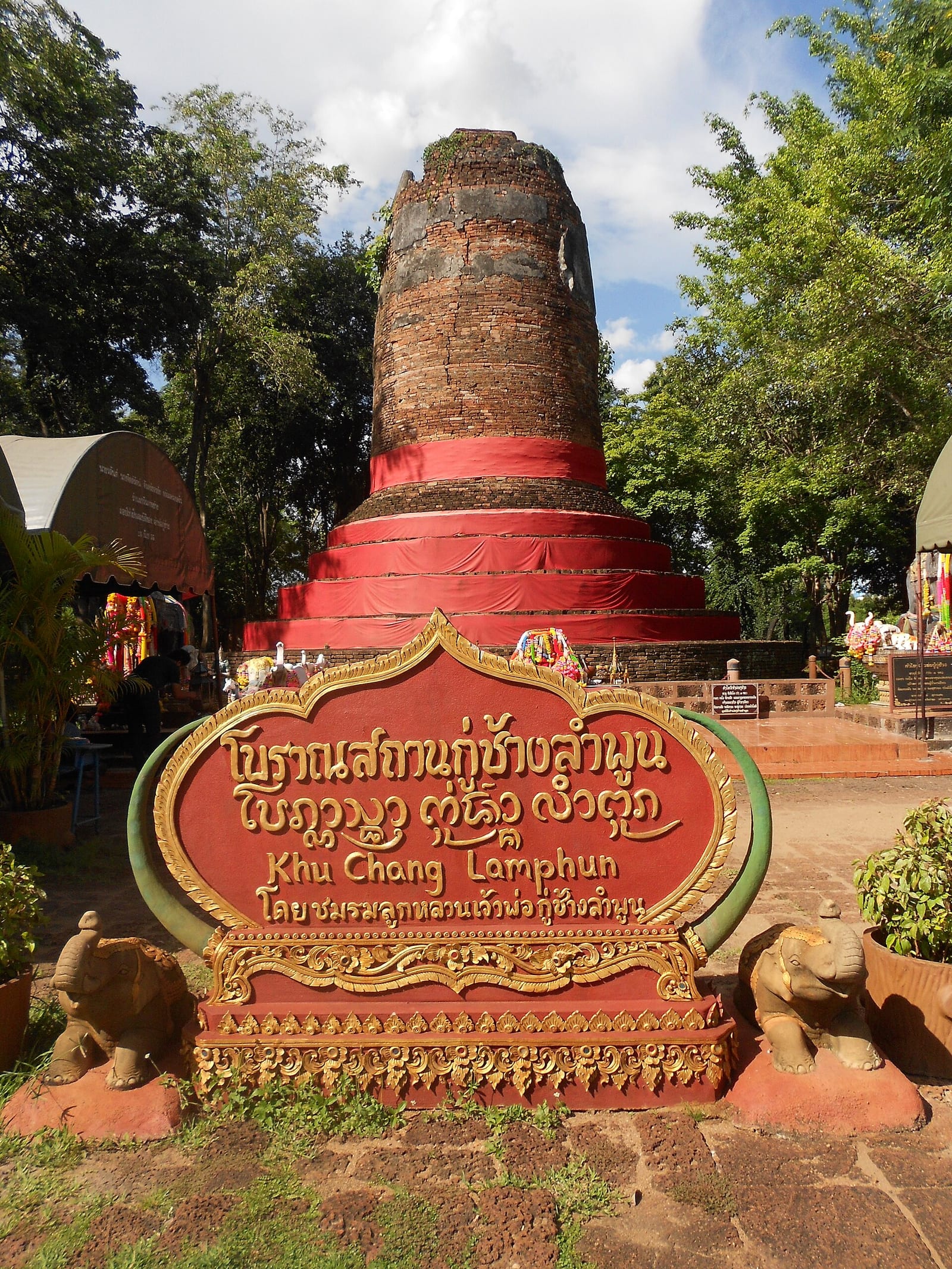
Ku Chang Ku Ma is a historic monument deeply embedded in Lamphun's community identity, located in the old neighbourhood of Wat Pratu Li–Wat Kai Kaew, about a kilometre from the old city moat. The standout feature is a pair of ancient chedis standing side by side. Ku Chang is a cylindrical rounded-top stupa, believed to be the burial place of Poo Kam Nga Khiao, Queen Chamthewi's legendary war elephant. Ku Ma behind it is a bell-shaped stupa, believed to be the tomb of a prince's war horse. For visitors interested in Hariphunchai legend and who enjoy sacred sites with real local belief, this is an excellent choice — you get both ancient architecture and a living tradition of local veneration in one place.
The highlight that most visitors don't skip is the act of asking for blessings from the war elephant statue — many come to pray for exam success, career advancement, and business prosperity, then return to make offerings when their wishes are granted. The other ritual not to miss is 'ducking under the elephant's belly', a local belief that bringing good fortune, advancement, and the fulfilment of wishes. Alongside the main monuments is a stall selling flowers, incense, and candles, plus a donation box for elephant welfare support. The surroundings are quiet and leafy, with a garden courtyard for easy walking. English information signs are posted — international visitors often say they're surprised to find such a quiet but richly storied site.
Free to enter; any merit-making is voluntary. The only cost is a small amount for flowers and incense if you'd like to make an offering. The visit takes less than an hour. Located close to the town centre — from Chiang Mai follow signs for Rong Rian Jakkhakham Khanathorn then turn into the adjacent lane. Also reachable by the Lamphun city tour tram. During Buddhist holy days or festivals the site gets busier than usual — an early morning visit guarantees a quiet atmosphere.
This site is popular because it has served as a merit-making destination for generations of Lamphun families and as a history check-in that can't be found anywhere else — stupas directly tied to the war elephant and war horse legend of Queen Chamthewi. Dress modestly and be respectful while praying, as this is a genuinely sacred community site.
Lamphun Walking Street
If you're in Lamphun on a Friday, don't turn in early — because come evening the street in front of Wat Phra That Hariphunchai transforms into the Lamphun Walking Street, closing the road all the way from the elephant roundabout to the clock tower intersection by the Kuang River. It's a northern-style evening market where Lamphun residents come together — young people, workers, and families with children — in a relaxed atmosphere that never feels as packed or overwhelming as big-city walking streets.
The unmissable highlight is the northern food. Real reviewers consistently say 'tons of food, easy to walk, great variety' — from sai ua sausage and khao soi to traditional sticky-rice and coconut sweets and hand-carried snacks. Another distinctive element is the handmade wooden crafts in Lamphun style, home decor, handicrafts, and woven textiles. Heading left from the temple gate leads to clothing and household goods; turning right leads to the food zone stretching a long way. Along the route there are also busker musicians and marble benches by the river where you can sit, eat, and relax.
Budget is very wallet-friendly — reviewers say 30 THB gets you something to eat. No entry fee; you pay only for what you buy. The market is in Nai Mueang Sub-district, Mueang Lamphun, right in the old city centre. It opens every Friday from around 16:00, but the local tip is to arrive from 17:00 onward when it's properly buzzing. There's parking for both motorcycles and cars nearby.
The reason this market is popular is that it combines everything in one spot — pay respects at Wat Phra That first, then walk straight out and browse and eat. Important note: it's Friday only. If your Lamphun trip falls on another day, you'll miss it — so check the day when planning. Bring an umbrella during rainy season as it's an outdoor market.
Inthayongyot Street (Cultural Street)
After paying respects at Wat Phra That Hariphunchai, don't rush off — because stepping out of the temple gate puts you right on Inthayongyot Street, a century-old road named after Chao Inthayongyot Choti, the ninth prince-ruler of Lamphun. In its earlier days this was the town's commercial and fashion district, home to barbers, tailors, photo studios, a silk weaving workshop, and a sports club. Today the old colonial shophouses and ancient row houses still line the street, now accented with street art murals and contemporary cafes — making it a walk-and-photograph neighbourhood with a strong sense of lived-in history. Well suited for old-city lovers, cafe-hoppers, and anyone wanting to experience Lamphun at a slow-life pace.
The highlight most visitors mention is simply strolling the street house by house, photographing each old building, then ducking into cafes hidden inside the original structures. Spots that reviewers frequently name include Temple House (102 Inthayongyot Road) — an airy space decorated with art and crafts — and Yann Cafe (136 Inthayongyot Road) — reviewed as beautifully decorated, classically styled, and capturing the old-city feel exactly right. The street isn't long, so walking the full length is comfortable and pairs naturally with a temple visit in the same trip.
Walking the street itself is free — spend only on coffee and food inside cafes, typically a few hundred baht per person. Located in Nai Mueang Sub-district right alongside the boundary wall of Wat Phra That Hariphunchai. A short walk from the temple's parking area. Late afternoon is the most pleasant time — cooler air, softer light, and the best conditions for photography.
One note: the full 'Cultural Street' event atmosphere — with community market stalls, Lanna music, and retro exhibitions — happens specifically on weekends organised by the district, usually Saturday–Sunday evenings. Outside event days the street is still walkable and cafe-able any time. Check the street's Facebook page before going if you want the full event experience.
Wat Phra Phuttha Bat Tak Pha
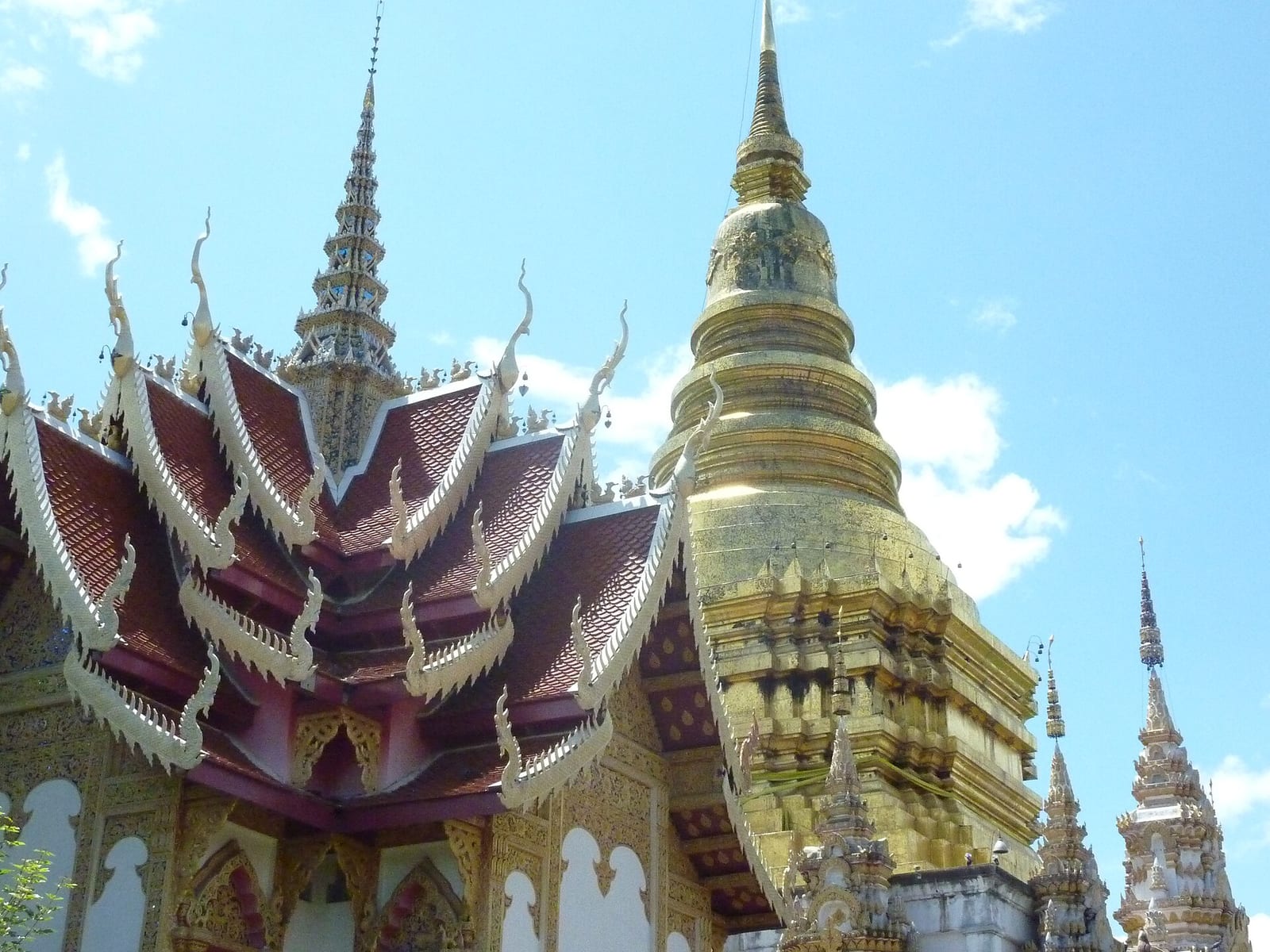
Wat Phra Phuttha Bat Tak Pha is a royal monastery in Pa Sang District, about 20 km from Lamphun town, on a hillside between Doi Mon Chang and Doi Khruea. It is well known locally as an ancient temple tied to a Buddhist legend: the Buddha is said to have passed through here, left his footprint imprinted on a rock slab, and had the Venerable Ananda bring his robe to dry on nearby rocks — giving the temple its name ('tak pha' means to dry a robe). The rock where the robe was dried still draws visitors to pay respects today.
The main draw for many is the Buddha footprint in a viharn at the base of the hill — easily accessible with no climbing needed. Well suited for those who want to venerate an ancient sacred site in a relaxed way. Those who want the atmosphere and the view can make the climb up to the golden chedi on the summit — the second key highlight. The golden chedi stands out prominently and is visible from a distance; once you reach the top there is a wide terrace overlooking the rice fields and the town of Pa Sang in a long panoramic view.
The ascent uses a naga stairway of about 467 steps. Those who are fit can climb on foot for the full pilgrimage feel — take your time, rest at the landings, and photograph the naga balustrades along the way. Anyone who finds the stairs difficult can also drive the long way around to park at the top, so visitors of all ages and fitness levels can reach the summit chedi. Inside the temple grounds there are also old viharns and buildings to explore, all shaded by large trees.
Another quality that makes this temple special is its identity as a meditation practice temple — Luang Pu Prohma once stayed here and maintained the tradition of vipassana practice, drawing a steady stream of both laypeople and those interested in dharma to come, offer merit, listen to teachings, and practise. For travellers planning a Lamphun trip, Wat Phra Phuttha Bat Tak Pha is a balanced stop: quietude, a hilltop view, and connection with an old local legend in one place. Free entry daily.
Nong Dok Market (Kad Nong Dok)
Nong Dok Market — or Kad Nong Dok as Lamphun residents call it — is a well-established old-town market right next to the Queen Chamthewi Monument in Nai Mueang Sub-district. If you want to see real everyday Lamphun life without anything staged for tourists, this is the right place. Best for food lovers who want to try northern specialities, budget travellers, and anyone who prefers an authentic fresh market over a photographer's market.
The main draw is the depth of northern local food all in one place: nam prik num with blanched vegetables, sai ua sausage, ab moo (steamed minced pork), ab pla, ab kung, and plenty of ready-cooked food packed for takeaway. The fresh market side is also a major wholesale source of northern vegetables, fruits, and fresh produce that vendors from across the province come to collect. Multiple reviewers note how much there is — pork, fish, chicken, fresh produce, dried goods — all at very accessible prices. Strolling, tasting, and browsing is an easy, pleasant experience.
The atmosphere is a genuine local market. The fresh market section starts before dawn around 4 am and runs to mid-afternoon; the food and evening market zone picks up in the evening and continues nightly. Free entry — walk in for nothing; budget for food only. There is parking available. Located centrally in the old town, with Wat Phra That Hariphunchai and the Queen Chamthewi Monument within easy walking or driving distance for a single visit.
Note: if you want the freshest full selection, come in the morning. If you prefer a more casual evening browse with cooked food and snacks, come at dusk. This is a local market in the true sense — no English signs or tourist-standard facilities — but that authenticity is precisely what makes Kad Nong Dok a beloved Lamphun institution that has endured for generations.
🎫 Tickets, Tours & Activities in Lamphun
Lamphun has attractions both in the old city and out of town — the Tha Chumphon White Bridge in Mae Tha District being the prime example. If you'd rather not drive yourself, guided Chiang Mai–Lamphun tours through Klook or GetYourGuide are available — half-day Lanna temple tours, railway bridge photography tours, and multi-stop packages with transport and a guide included. Booking ahead gets a clear price and skips the queue.
💡 Know Before You Go: Lamphun
Lamphun is a compact city — old-town attractions are within easy walking distance of one another. Grab or songthaew taxis are available in the town centre. Out-of-town spots like Wat Chamthewi and the Tha Chumphon White Bridge in Mae Tha are further out; renting a car or hiring a day vehicle is most convenient for those. Lamphun is only about 30 km from Chiang Mai, so many visitors rent a car there and do Lamphun as a day trip.
Lamphun Walking Street, Kad Nong Dok, and most street food stalls run on cash. Bring small bills and coins. Some stalls have PromptPay QR codes but don't assume every stall does — get cash from an ATM before heading to the markets.
The Lamphun Walking Street is open only on Friday evenings — plan your trip to land on a Friday if you want it. Temples are best visited in the morning when the sun is lower and crowds are thinner. The Yi Peng lantern festival takes place in late year only — check the dates before you plan.
The Lanna temples of Lamphun are sacred sites that have stood for a thousand years. Dress modestly — cover shoulders and knees. Remove shoes before entering a viharn. Lower your voice in the area around the main stupa. At Wat Phra That Hariphunchai, a wrap-around cloth is available to borrow if your clothing isn't temple-appropriate.
English signs and menus appear at major temples and shopping centres, but street market stalls and local eateries may have none. Google Translate or pointing at dishes works well. Tipping is not required, but rounding up or leaving a small amount at a cafe or restaurant is appreciated if the service was good.
At the Tha Chumphon White Bridge, the iconic shot everyone wants is a train crossing the white curved span. Check the northern line timetable for services passing through Tha Chumphon station, and arrive early enough to get into position. Always stand in a safe, designated viewing area — never on or near the rails.
Plan Your Lamphun Trip of 1–2 Days for the Best Value
Start the Lamphun trip with the old city cluster — everything is close together and easily walkable or a very short drive between stops. Begin early at Wat Phra That Hariphunchai Woramahawihan: pay respects to the golden Lanna chedi and photograph the temple courtyard, then walk across the street to the Queen Chamthewi Monument in the public park. Next, visit Wat San Pa Yang Luang for the carved stucco viharn of Phra Khiao Khong, then continue to Ku Chang Ku Ma in the Wat Pratu Li community. Mid-morning, stroll Inthayongyot Cultural Street and take a coffee in one of the century-old colonial buildings. If you're visiting on a Friday evening, end the day at the Lamphun Walking Street in front of Wat Phra That — a long leisurely walk through northern food and handmade goods.
If you have a second day or enjoy driving, pick up the out-of-town spots. Head to Wat Chamthewi (Wat Ku Kut) first to see the square Suwanna Jangkot stepped stupa with its rows of standing Buddha images, then drive about 20–30 minutes to Mae Tha District for the Tha Chumphon White Bridge — time it to catch a train crossing the white curve if possible. Kad Nong Dok by the canal is a good morning or evening stop for northern fresh market finds and local food to take home. And if you're visiting in late year (roughly September to early November), don't miss the Yi Peng lantern festival in the evening at Wat Phra That Hariphunchai courtyard — a hundred thousand lanterns fill the entire space in a spectacular scene.
Want to wake up early and explore the ancient Hariphunchai temples without rushing, staying overnight in Lamphun makes the whole trip far more relaxed. Lamphun is a small city with limited accommodation — during the Yi Peng lantern festival and long weekends rooms fill up fast. Compare prices across multiple sites and pick the one that suits you.
Check Lamphun Hotel Prices