🔄 Last checked 25 Jun 2026 · details and hours can change — check the venue before you go
📍 All restaurants on the map
Tap a pin for the spot + nearby stays
Lopburi's appeal is two eras layered over each other. The old town along Tha Hin can be covered comfortably in one day because Phra Prang Sam Yod, San Phra Kan, Wat Phra Si Ratana Mahathat, and Wang Narai Palace all sit within walking distance of the railway station. Along the way you'll encounter the monkeys that have become the city's calling card. When you've walked the ruins until your legs ache, late afternoons bring food stalls and a walking street at Soi Manohra and the night market in front of the station. For anyone with a second day, Phattana Nikhom District has Pasak Cholasit Dam, the Khao Chin Lae sunflower fields, and Khao Wong Phra Chan with its 3,790 steps to the summit.
A few things on this list have earned their place through real distinction. Phra Prang Sam Yod is a Khmer-Bayon-style three-prang shrine side by side — the landmark everyone associates with Lopburi, and the one that appears on the provincial emblem and the old banknotes. Wang Narai Palace is the royal compound where King Narai the Great held court, now a national museum with artifacts from his reign. Pasak Cholasit Dam is the longest earthen dam in Thailand. And the floating railway above the dam at Khok Salung is the kind of image that goes viral every winter — a train running apparently on water. Choose your route and go.
Phra Prang Sam Yod
You cannot think about Lopburi and not think about this place. Phra Prang Sam Yod is a Khmer-Bayon-style shrine of three prangs arranged side by side, built from laterite stone decorated with stucco, standing in the center of the old town. It appears on the provincial seal and old Thai banknotes. Estimated to date to the 18th Buddhist century (approximately 13th century CE), during the reign of King Jayavarman VII, it was originally a Mahayana Buddhist shrine before being converted to a Hindu shrine and later a Buddhist temple. Anyone who loves history, Khmer architecture, or photography with a historic backdrop should have this at the top of their list.
The most talked-about element is the resident monkey troop — hundreds of them, earning the site its Monkey Temple reputation. Reviewers describe the monkeys as both the attraction's charm and its most persistent hazard — sunglasses, caps, plastic bags, snacks, and phones are all fair game. Staff at the entrance keep sticks available for monkey deterrence. After the municipality relocated some of the more aggressive animals, the grounds became noticeably calmer and more enjoyable. The prangs themselves photograph beautifully in the soft afternoon light, their carved stucco framing the doorways still showing traces of their original form. This was used as a filming location for the drama Buppesannivas, which sent another wave of visitors tracing the setting.
Entry fees: Thais approximately 10 THB, foreigners approximately 50 THB (some sources list 80 THB for foreigners). Open approximately 06:00–18:00 daily. A walk-around takes 20–45 minutes. Located in the old town at Tha Hin Subdistrict, easy walking distance from Lopburi Railway Station and San Phra Kan. A natural first stop for any Lopburi trip.
Worth knowing: never carry a bag or hold food in the open — the monkeys will take it immediately. The late-afternoon light from around 15:00 onward is the best for photography. Ranked the #1 thing to do in Lopburi on multiple platforms, partly for historical significance and partly because nowhere else quite looks like this.
Wang Narai Palace (Phra Narai Ratchaniwet) and the Somdet Phra Narai National Museum
If you want to understand why Lopburi mattered so much during the Ayutthaya period, Wang Narai Palace — also called "Wang Narai" — is the place to come. This was the royal palace commissioned by King Narai the Great from around 1666, on a compound of over 40 rai in the heart of the old town. Walk in and you meet towering palace walls, bastions, pointed-arch gateways, and surviving throne-hall foundations. Multiple reviews describe it as "beautiful, grand, and imposing" — though parts are ruins, the sheer scale of the original Thai-European hybrid architecture is impossible to miss. An ideal stop for history enthusiasts, photographers, and families wanting a meaningful educational visit.
The highlights not to miss are the Dusit Sawan Thanya Maha Prasat Throne Hall at the complex's centre, and the Chantara Phisan and Phiman Mongkut Throne Halls, now serving as the Somdet Phra Narai National Museum. Inside: Lopburi-period Buddha images, stone linga, ancient artifacts, and objects from King Narai's reign, with captions in both Thai and English. The arched gateways in long rows and the old walls are also a prime photography backdrop — many visitors come in traditional Thai dress because it suits the setting perfectly. The palace grounds are shaded by large trees, relaxing to walk, and take about 1–2 hours to cover properly.
Entry fees are modest: Thais approximately 10–30 THB, foreigners 30–150 THB. Students in uniform, senior citizens, and monks enter free. The museum opens Wednesday–Sunday 09:00–16:00 (closed Monday–Tuesday). The archaeological sites open daily approximately 08:30–16:30. Located in Tha Hin Subdistrict, old town, walking distance from Phra Prang Sam Yod and San Phra Kan. Google rates it 4.7 from thousands of visitors. Most praise the maintenance, the gardens, and the quality of the exhibits.
Worth knowing: multiple reviews warn against coming at midday — the grounds are wide open and hot. Come in the morning or late afternoon. Bring an umbrella or hat. Check the museum's opening days before visiting since it closes Monday–Tuesday. For something special, the Somdet Phra Narai Fair in February fills the palace with light and traditional costume — a very different atmosphere.
San Phra Kan
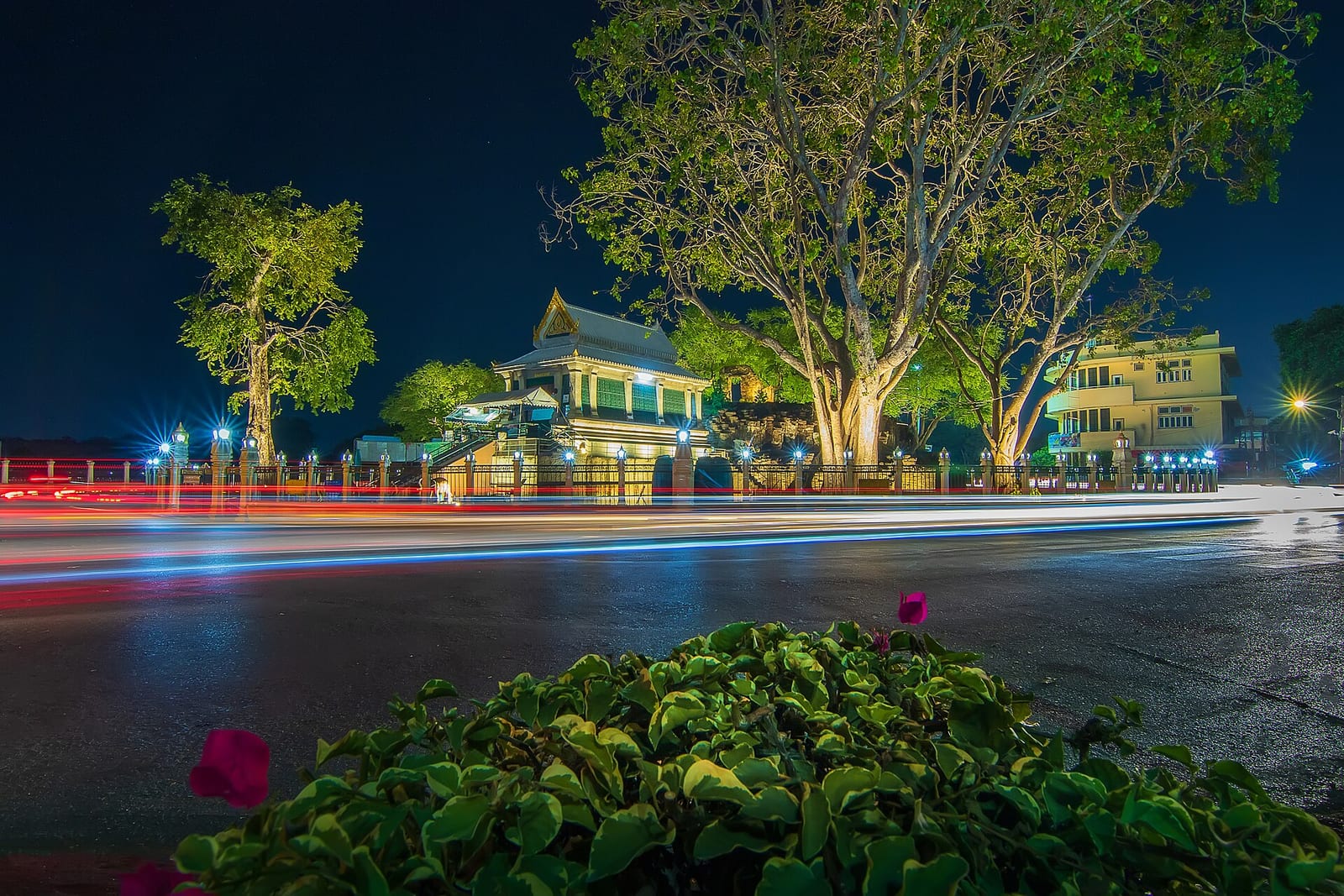
When people think of Lopburi, two images surface immediately — "monkeys" and "San Phra Kan" — and this is where both converge. San Phra Kan is the city-guardian shrine that stands prominently at the Sri Sunthorn Roundabout, along the railway track near the station. A short walk from Phra Prang Sam Yod. The deity's image is a Lopburi-period Khmer antique, believed to be a gilded Vishnu figure, deeply venerated by Lopburi residents and visitors alike for blessings on career, fortune, and prosperity. Ideal for merit-seekers wanting to pray for specific blessings, and for anyone wanting to see Lopburi's famous monkeys up close.
The highlight that reviews always mention: the troop of several hundred macaques that are considered the shrine's disciples. The monkeys here are reportedly more docile, cleaner, and healthier than those in the old-town alleys. Multiple reviews note that after the municipality tidied up and relocated the more aggressive animals, the grounds felt genuinely safer and more comfortable. That said, still keep valuables stowed — sunglasses, caps, plastic bags, phones, and food are all items monkeys will grab and run with. Foreign reviewers emphasize this: "absolutely do not carry a bag or show food."
Free entry — no admission to pray or visit. Feeding the monkeys is now managed with designated zones and specific rules; feeding outside designated areas may result in a fine. Open during the day every day, approximately 06:00–18:00. Located in the very center of the old town — park and then walk to Phra Prang Sam Yod and the old-town quarter in the same outing. Google rates it around 4.5 stars.
Worth knowing before you go: wear closed-toe shoes for peace of mind, stow all valuables, take off sunglasses if you'd rather keep them, and avoid eye contact or provoking the animals. For a quieter, more comfortable prayer experience, weekday mornings or Sunday mornings are calmer with smaller crowds and less excited monkeys.
Pasak Cholasit Dam
Pasak Cholasit Dam is Thailand's longest earthen dam — the dam crest runs nearly 4,860 m — in Phattana Nikhom District, Lopburi, overlapping with Wang Muang District, Saraburi. It's a Royal Initiative project of Rama IX that has evolved into an easy day trip from Bangkok. Works for families, campers, photography enthusiasts, and anyone who wants to breathe open air. The most talked-about spot is the "dam tail at Ban Tha Rit" — a wide green meadow along the water that many visitors nickname Thailand's New Zealand, with a goat-and-sheep herd grazing there that you can photograph and hand-feed.
Things not to miss: the tram ride along the dam crest with views over the reservoir and hill line, taking approximately 30 minutes return — and waiting for the late afternoon (typically 15:00–18:00) when the goats come out, then catching the sunset behind the meadow. Some days you can watch paramotor flyers and kite fliers overhead. The overall atmosphere, per reviews, is breezy, open, easy for children to run around, and suitable for tent camping by the reservoir. Anyone visiting during the winter peak (November–January) can also catch a special tourist train running from Bangkok across the dam crest.
Entry to the dam grounds is free. Tram for adults approximately 25 THB, children 10 THB. Goat feed packages approximately 20 THB per bundle or milk sets approximately 50 THB. Bicycle and tent rental are both available. Located in Nong Bua Subdistrict, approximately 48 km from Lopburi city. Tram runs 08:00–16:30.
Worth knowing: the meadow and goat herd look best after the water recedes (late rainy season through cool season and into early dry). Some periods the area can flood and there's no ground to walk on — check conditions before making the trip. Midday sun is strong; the late afternoon is far more comfortable for both light and temperature. Wear a hat, bring water, and pack shoes that can manage grass.
Khok Salung Floating Railway (Pasak Cholasit Railway Bridge)
The Khok Salung Floating Railway is the stretch of the Kaeng Khoi–Bua Yai line where the track crosses the surface of Pasak Cholasit Reservoir in Khok Salung Subdistrict, Phattana Nikhom, Lopburi. When the reservoir is at full level, the rail and bridge appear to float in the middle of open water. When a train runs across, you get the image of a train moving across water — many visitors describe it as giving a Japan or overseas atmosphere. It works for photographers, couples, families looking for a quiet picnic spot, and rail enthusiasts who want to photograph a real passing service.
The highlight is waiting to photograph the train crossing the bridge above the water, combined with walking the rail-side path for station-sign angles and distant hills in the background. The spot has two faces depending on season: November–January when the reservoir is full gives the full floating-railway image; around March–September when water is low reveals wide green meadows with cattle grazing — a completely different, New Zealand-style view. Reviews recommend coming in the late afternoon near sunset — good breeze, beautiful light, and less punishing heat than midday.
Free admission. Drive to the edge of the dirt road near the tracks and park. Open to visit during daylight, approximately 06:00–18:00. Trains pass in intervals — on average roughly one every 90 minutes or so. The morning run typically passes around 09:30–10:00, the afternoon around 15:30. Anyone wanting a train in the shot should check the timetable and allow waiting time. Search Google Maps for "Floating Railway Khok Salung viewpoint" — the entrance is before Khok Salung School.
The spot went viral through social media and drama filming location tracing — people now come in numbers, especially on weekends and in winter. Worth knowing: the area is fully open, sun is very strong at midday, and there are no toilets or shops of any kind at the viewpoint. Bring water, food, a hat or umbrella, and take your rubbish back out. If walking along the tracks, watch and listen carefully in both directions — this is an active rail line.
🛏️ Book a place to stay in Lopburi
For an easy old-town visit, staying in the Tha Hin area near the railway station lets you walk to Phra Prang Sam Yod, San Phra Kan, and Soi Manohra Walking Street. For Pasak Cholasit Dam, the Khao Chin Lae sunflower fields, and the Floating Railway, staying closer to Phattana Nikhom gives you a head start on the early morning light. Compare prices across levels and book ahead, especially during the winter season when visitor numbers peak.
🔍 Check Lopburi hotel prices (Agoda)Khao Chin Lae Sunflower Field
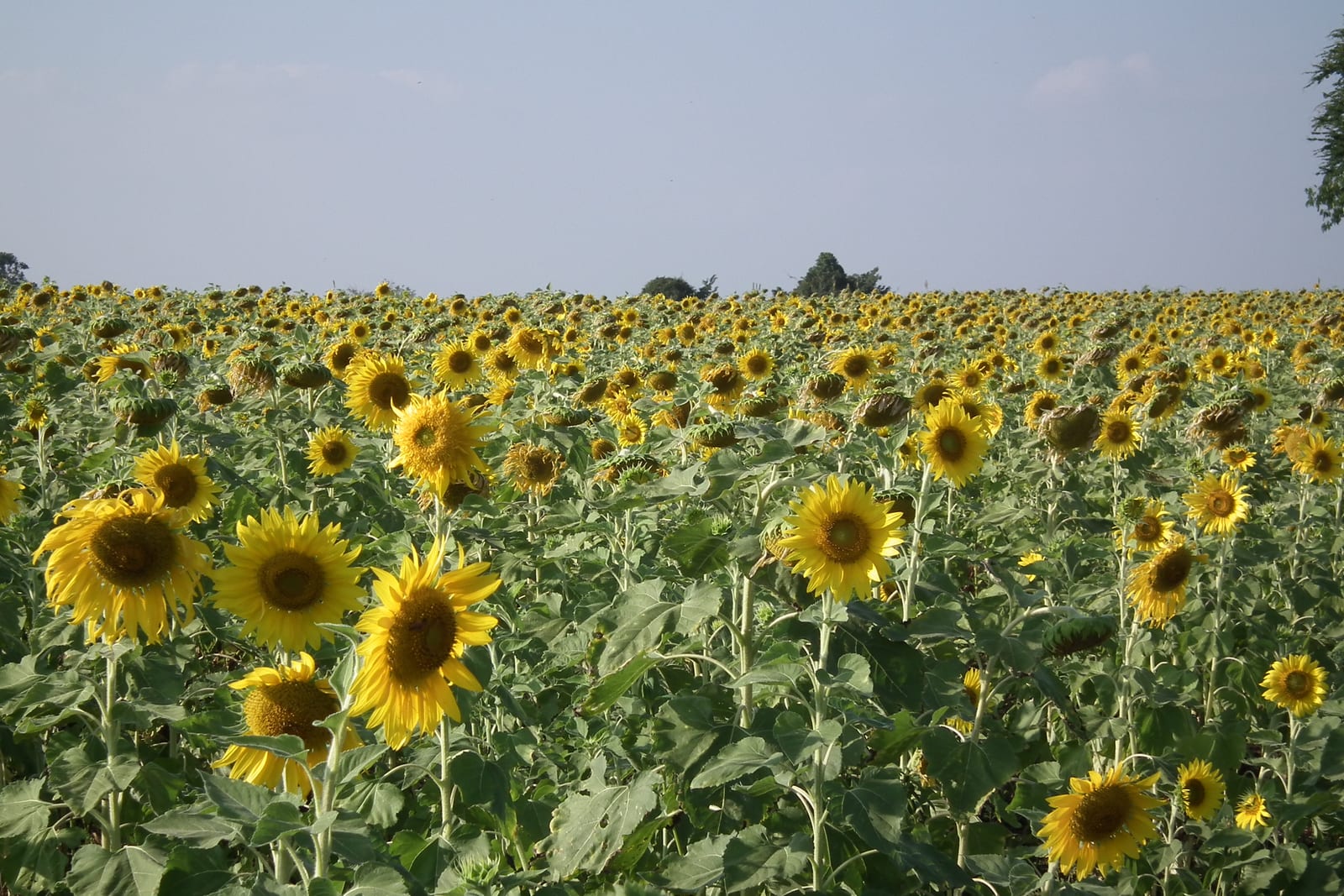
If you're in Lopburi during the cool season, Khao Chin Lae is worth planning around. It's a large sunflower field on the plain below Khao Chin Lae in Nikhom Sang Ton Eng Subdistrict, Mueang Lopburi, about 14 km from town. The appeal is a wide yellow expanse with "a mountain as the backdrop" — and if you position yourself right, Wat Weluwat in white stands out against the flowers in the distance. It's a classic composition for photographers, popular with couples and families.
The most-mentioned experience in reviews is riding the tram (some call it the field train) that runs through the middle of the sunflower plot — approximately 20 THB for adults, 10 THB for children. Side activities include animal feeding, a "courage test" jump tower, and some farms offering ATV rides. Walking through the field for free photography is easy; there are restaurants, drinks, and parking available on-site.
Budget is light: most farms charge 20–50 THB per vehicle for parking, some have free entry into the field itself, a few charge a 20 THB admission, then extra for the tram. The field only opens during the blooming season — late November through mid-January each year. Open from approximately 06:30–17:30. The window most often recommended: 07:00–10:00 when the sun is still low, the air is cool, and sunflowers turn toward the light at their best angle.
Lopburi is Thailand's largest sunflower-growing province, so Khao Chin Lae has become the seasonal emblem. The one key piece of advice from reviewers: check that the flowers are actually blooming before you drive out, because different farms stagger their planting. Some patches may still be young or already past peak. Call ahead or check recent social media posts to confirm the current bloom status before the trip.
Khao Wong Phra Chan
Khao Wong Phra Chan in Khok Samrong District is Lopburi's highest mountain, standing about 650 m above sea level. What everyone comes for is the 3,790 steps that lead to the summit — a 1.7 km climb. Anyone who wants to combine genuine physical effort with merit-making and a sweeping view, and anyone whose family can handle a proper staircase hike, will find this trip rewarding. It suits everyone from teenagers pushing their limits to senior visitors who take it in stages — rest pavilions are spaced along the route throughout.
At the summit: a sacred Buddha footprint, enshrined for veneration. Beyond it, a viewing platform that opens up Lopburi's rice fields and hill ranges in every direction. Late afternoon near sunset is the time most people wait for — the light shifts across the valley as the temperature drops. Before the climb begins, a large Phra Phutthacho Buddha image is visible from a distance and offers a prayer stop before you start.
Free entry — only a merit donation box. The mountain is open every day; during the annual Namsakan footprint veneration festival (late January to mid-February, approximately 15 days and nights) the mountain stays open 24 hours. Drive from Lopburi city toward Khok Samrong, approximately 28–30 km. A private vehicle or hired transport is recommended — public transport does not reach the base of the steps. Allow 2–3 hours round trip depending on your pace.
Tips before you go: bring enough water for the round trip. Wear shoes comfortable for stair climbing. Come early morning or late afternoon to avoid strong midday sun. Rest stops and small drink sellers are spaced along the route, but toilets are limited — plan accordingly. Take each section at your own rhythm and the summit view will be its own reward.
Wat Phra Si Ratana Mahathat Lopburi
If you arrive in Lopburi by train, this is the natural first stop — Wat Phra Si Ratana Mahathat is directly across the road from the station platform. Walk out the exit and cross the street. It's a large heritage complex of approximately 20 rai. The centrepiece everyone mentions is the principal prang, said to be the tallest in Lopburi, built from laterite with lime plaster over it, decorated with stucco depicting Buddha images and scenes from the life of the Buddha. Anyone interested in Lopburi-Ayutthaya art that mixes Khmer with Thai styles will find plenty to study at close range.
What makes this site interesting is the range of periods represented in one place: Khmer-style prang, assorted-form small chedis, and the great wihan built during King Narai's reign — which includes pointed-arch windows of Western European influence. Walking around you will find stucco decoration on small chedis still showing traces of the craftsmen's original work. Most reviews describe the grounds as clean, well-maintained, quiet, and more shaded than expected — and easier and more orderly than the busier Phra Prang Sam Yod nearby.
Entry: Thais 10 THB, foreigners 50 THB, children free. A combined ticket for multiple old-town heritage sites is available. Open approximately 07:00–17:00, closed Mondays and Tuesdays. Plan your days carefully around the closure — arriving on the wrong day wastes the trip. Walking through takes approximately 1–2 hours at a relaxed pace.
The location is unbeatable: step off the train and you're here. Best used as the opening point of an old-town Lopburi circuit. Worth knowing: it's an open-air heritage site and the sun is strong at midday — come in the morning or late afternoon. Bring a hat and water, and you can walk through comfortably.
Ban Luang Rap Ratchathut (Ban Wichayen)
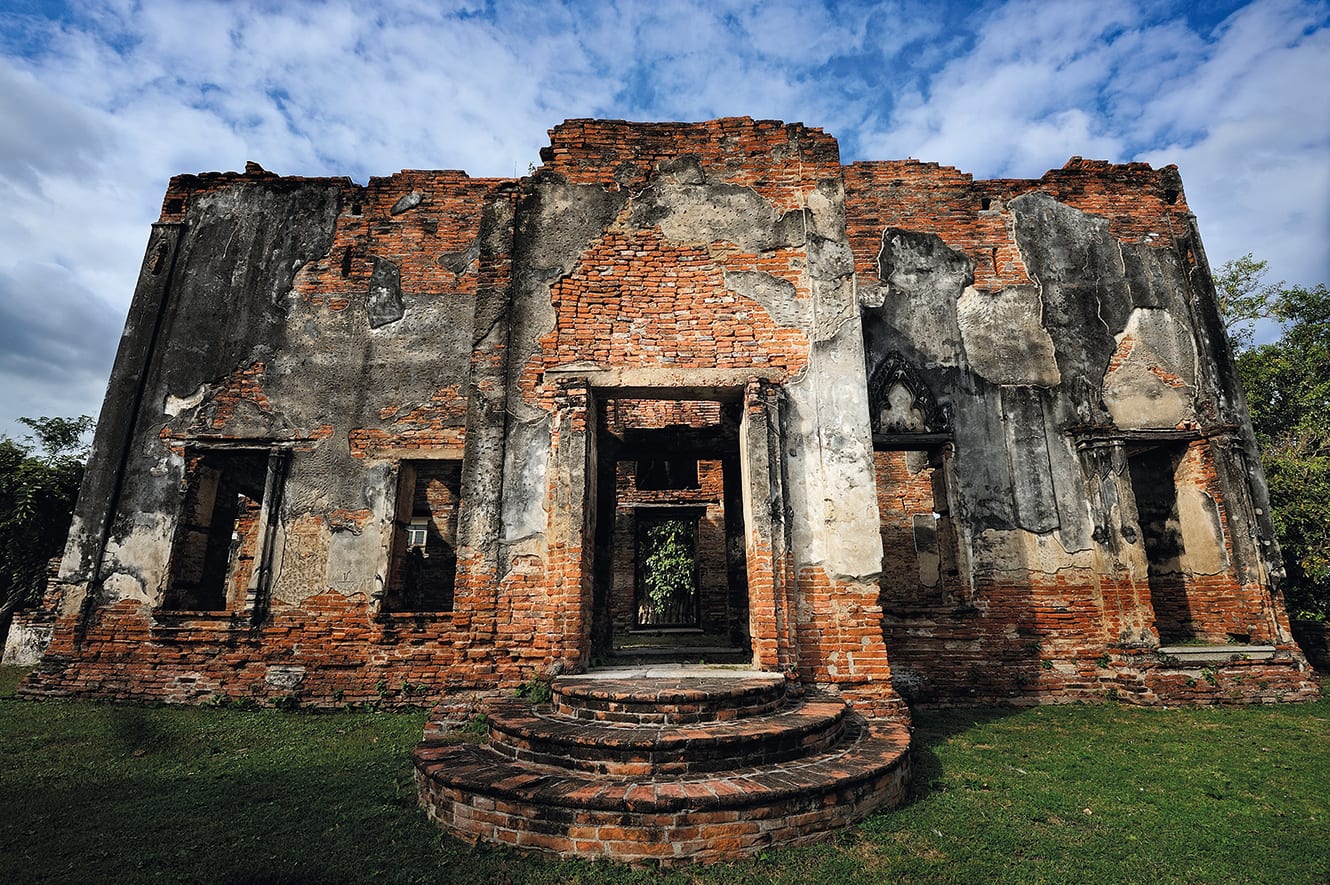
Ban Luang Rap Ratchathut — popularly known as Ban Wichayen — is a group of brick-ruin buildings in Lopburi's old town that reaches back to the reign of King Narai the Great. What sets this apart from standard heritage sites is the architecture: European style mixed with Thai, built to house the French diplomatic mission that arrived in 1685, and later used as the residence of Chao Phraya Wichayen, or Constance Phaulkon — the Greek nobleman who became King Narai's most trusted official. Ideal for people who enjoy quietly walking through history, photographing old ruins, and those tracing the drama Buppesannivas settings.
The highlights most visitors describe are the two-storey brick guest house with European arched windows and doorways, plus remaining stucco ornamentation. Not to miss: the ruins of a Christian church in European style mixed with Thai detailing — a physical manifestation of two cultures meeting in one building. Walking the full site reveals also ruins of a bell tower, a storage building, and traces of a bathhouse. The whole compound is compact — a 15–20 minute walk covers it thoroughly.
Entry: Thais 10 THB, foreigners 50 THB. A combined ticket for multiple old-town heritage sites at 150 THB (covers Wang Narai Palace, Phra Prang Sam Yod, and here) is better value than buying separately. Open approximately 08:00–17:00, but several sources note it may close Mondays and Tuesdays — check before going. Easy walking distance from Wang Narai Palace in the old-town quarter.
Tips from visitors: come during daylight hours as some report arriving late and finding it closed. Lopburi sun is strong; bring an umbrella or hat and water because there is almost no shade inside the ruin compound. For the best light and fewer people, early morning or late afternoon is better. And most efficiently: include it in the same old-town walking route as Wang Narai Palace and Phra Prang Sam Yod.
Lopburi Walking Street (Soi Manohra) and Night Market in Front of the Railway Station
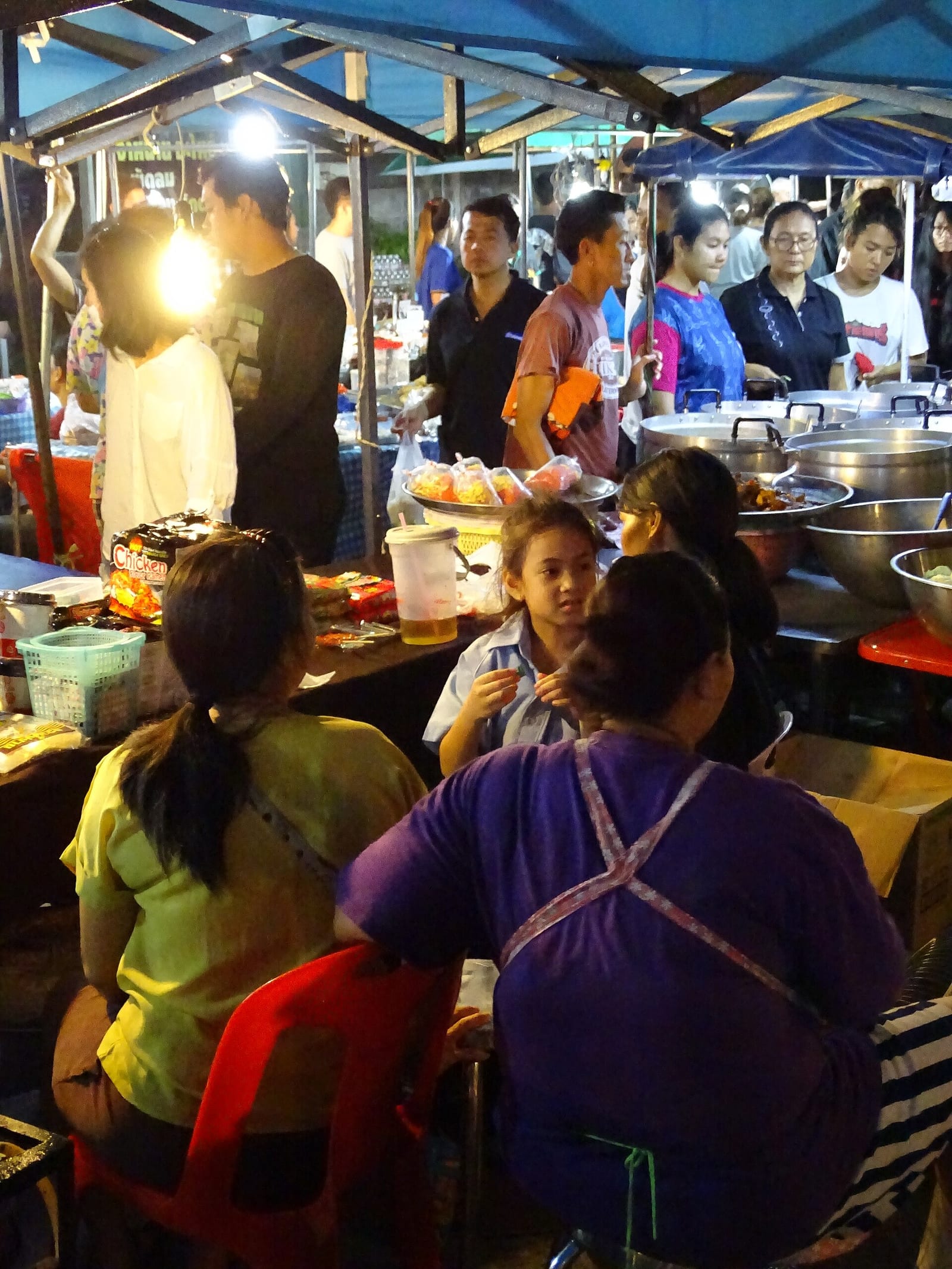
If you want to eat dinner in Lopburi the way actual residents do, this is the answer — the walking street zone in the old town (around the Phra Ya Kamjat–Soi Manohra strip) combined with the night market in front of Lopburi Railway Station, directly adjacent to San Phra Kan. Walk out of the station platform and you hit food stalls in a line. Perfect for day-trippers arriving by train who want a snack before the return service, or anyone who likes a casual market atmosphere with local-scale pricing and no reservation required.
Food reviewers most commonly mention: late-night congee in a hot clay pot, a popular fried fish ball stall at the station entrance, duck noodles, roti, and seasonal fruit and desserts. Most of it is made-to-order and cooked fresh in front of you. Evening through late night brings the neon light, drifting cooking smoke, and the full market atmosphere. The old-town walking street side has food, clothing, and handmade items on rotation by day.
No admission. Food prices are at standard market rates — a single dish from the low tens of THB; eating across several stalls is still inexpensive. The location could not be more convenient: directly in front of Lopburi Railway Station. Walkable from the old town, Wat Phra Si Ratana Mahathat, and San Phra Kan. Parking nearby available. The night market is lively evening through late night daily; the old-town walking street runs on specific days (the Phra Ya Kamjat zone on Wednesdays, 16:00–21:00) — check local social media posts if you want the full-format version.
What people like about it is that it's the real Lopburi — local prices, local recipes, and the old-town feel in one strip. Worth knowing: Lopburi is monkey territory, and near the station and San Phra Kan the animals do come down. If you're carrying food and walking through, be aware and don't display bags. Bring cash or PromptPay — small stalls generally work cash-first.
Book tickets and tours in Lopburi in advance
Lopburi's sights spread across the old town and the dam side. If you'd rather not manage transport and routing yourself, booking a guided Lopburi tour with vehicle pickup through Klook or GetYourGuide is more convenient. Some packages cover Phra Prang Sam Yod, Wang Narai, and Pasak Cholasit Dam in a single day. If you're planning the floating railway during winter, booking tickets ahead avoids missing a full train.
💡 What to know before you visit Lopburi
Phra Prang Sam Yod, San Phra Kan, and Wat Phra Si Ratana Mahathat near the railway station are all walkable from each other. But Pasak Cholasit Dam, the sunflower fields, and Khao Wong Phra Chan are out of town — rent a car or use your own vehicle, as Grab and public transport are limited there.
The San Phra Kan and Phra Prang Sam Yod areas have large monkey troops. Monkeys will grab sunglasses, caps, plastic bags, phones, and food. Keep everything stowed. Never hold a bag in the open or display food.
Soi Manohra Walking Street, the night market in front of the station, and most heritage site entry booths primarily take cash. Small shops may not have card readers or QR. Keep small bills handy.
Khao Chin Lae sunflower fields bloom beautifully from late November to December. The Pasak Cholasit floating railway runs Sat–Sun during November–January only. If you visit outside those windows, neither will be there.
Lopburi sun is strong at midday. Heritage sites are best in the morning. Khao Wong Phra Chan and Pasak Cholasit Dam look best near sunset. Allow travel time to reach the dam side in time for the evening light.
Main heritage sites and the national museum have some English signage. Markets and local shops are primarily in Thai. A translation app and keeping the place name in Thai script ready for drivers will smooth things out.
Plan your Lopburi trip in a day (and extend to two)
For a single day, focus on the old-town quarter of Tha Hin — Phra Prang Sam Yod · San Phra Kan · Wat Phra Si Ratana Mahathat · Wang Narai Palace all sit close together around the railway station. Start early before the sun gets hot, then finish the evening with food at Soi Manohra Walking Street and the night market in front of the station.
For a second day, move to the Phattana Nikhom side — visit Pasak Cholasit Dam for a tram ride along the crest, continue to Khok Salung Floating Railway, and if it's late November to December add Khao Chin Lae Sunflower Fields that bloom beautifully in that window. Active travelers with energy left can push to Khao Wong Phra Chan in Khok Samrong for the 3,790-step summit view. On a rainy day or when you want cool indoor time, the Somdet Phra Narai National Museum inside Wang Narai Palace is an easy, comfortable visit.
Two days in Lopburi give you the old town and the dam side without rushing. Stay near the old quarter for easy walking to Phra Prang Sam Yod and the walking street, or choose Phattana Nikhom side for early access to Pasak Cholasit Dam.
Check Lopburi hotel prices