🔄 Last checked 28 Jun 2026 · details and hours can change — check the venue before you go
📍 All restaurants on the map
Tap a pin for the spot + nearby stays
Nakhon Phanom's charm is all about the Mekong riverside. Sunthon Wichit Road runs along the river for several kilometres, with a bike lane and walkway where the whole town comes out to run, cycle, and catch the cool breeze in the morning and evening. Across the water you see the mountains of Tha Khaek in Laos — a view unlike any other Mekong town. Before dawn, many people sit and wait for the sunrise over the river. In the old town centre you'll still find French colonial buildings, a Vietnamese clock tower, and a Thai-Vietnamese community whose blended culture has become the city's signature. If you like market strolling, there's the riverside walking street open Friday–Saturday–Sunday, plus the Indochina Market selling Vietnamese, Lao, and Chinese food and souvenirs to keep browsing well into the evening.
Many spots on this list are genuine province-defining landmarks. The Phaya Sisattanakharat Naga Plaza features a seven-headed naga cast in brass weighing around 9,000 kilograms and standing 15 metres tall, rising prominently by the river and spouting water on a schedule — the city's number-one check-in spot, at its most beautiful when lit up at night. Phra That Phanom is the year-stupa for those born in the Year of the Monkey and the day-stupa for those born on a Sunday; its golden form stands tall by the river, a sacred site that pilgrims from all across Isan travel to venerate. Paired with the Phu Thai people's Phra That Renu Nakhon and Phra That Nakhon in the city centre, it makes a complete merit-making route in a single trip. Nature lovers can drive up to the far north of the province to Phu Langka National Park to see the sea of mist in the cool season. One trip to Nakhon Phanom covers it all — the spiritual, the food, and the photography. Come stroll the riverside once and you'll be hooked.
Phaya Sisattanakharat Naga Plaza
If you come to Nakhon Phanom and don't stop at the Phaya Sisattanakharat Naga Plaza, it's as if you never really arrived. This is the city's number-one landmark that everyone talks about. The seven-headed naga is cast entirely in brass, weighing around 9,000 kilograms, rising on an octagonal base to more than 15 metres tall including the base, facing out to the Mekong with Laos as a backdrop. It suits people who want to make a wish, merit-makers, photographers, and anyone who wants to stroll the riverside in the cool breeze. Locals believe the naga watches over and protects the city, and people commonly come to pray for luck, finances, and career.
The highlight you can't miss is when the naga 'spouts' streams of water, which happens on a schedule in the morning, afternoon, and evening. Reviewers agree it's most beautiful in the evening when the whole figure is lit up — the naga glows gold against the dark sky and the water. Come in the evening and you might also catch a lovely Mekong sunset, and on some days there's a votive dance to watch. Around the plaza there are stalls renting flowers, incense, and candles, so paying respects is easy.
Admission is free, no entry fee, and the plaza is open to walk through at any time. Most people come between around 5 a.m. and 8 p.m. If you want good light and the best atmosphere, come from 16:30 onwards to catch the evening light, the sunset, and then the night lighting. You can continue to the adjacent walking street if you time it for a market day. It sits in the city centre on Sunthon Wichit Road, easy to reach — about 2 kilometres from the bus terminal.
It scores as high as 4.7 from more than ten thousand reviews on Google. Most voices praise the Mekong views in the morning and at sunset, calling it a sacred place with good energy. Worth knowing: the daytime sun is quite strong and hot, so bring an umbrella or hat and drinking water. Parking is along the roadside, and it gets fairly busy during festivals and holidays, so allow a little extra time to find a spot.
Wat Phra That Phanom Woramahawihan
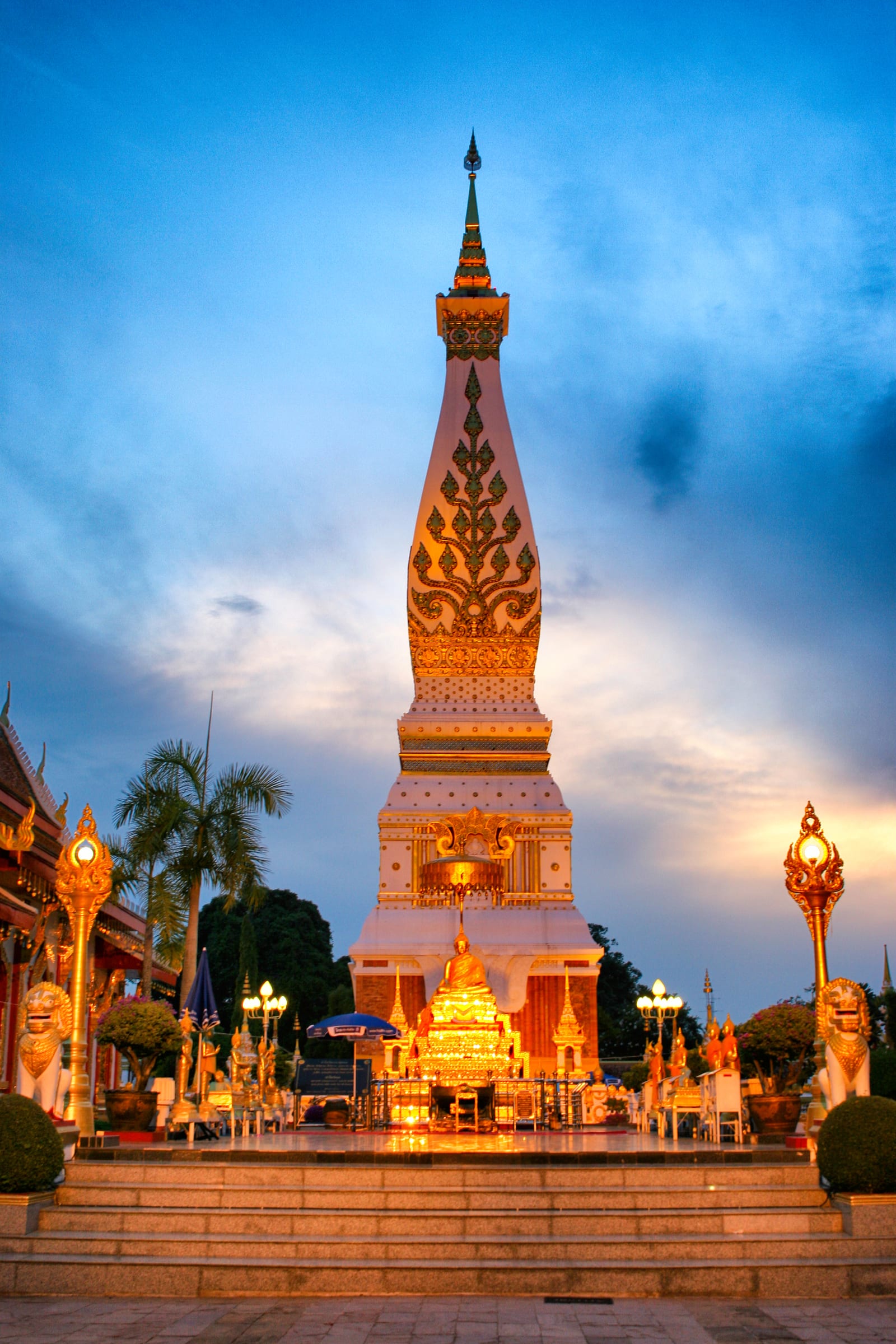
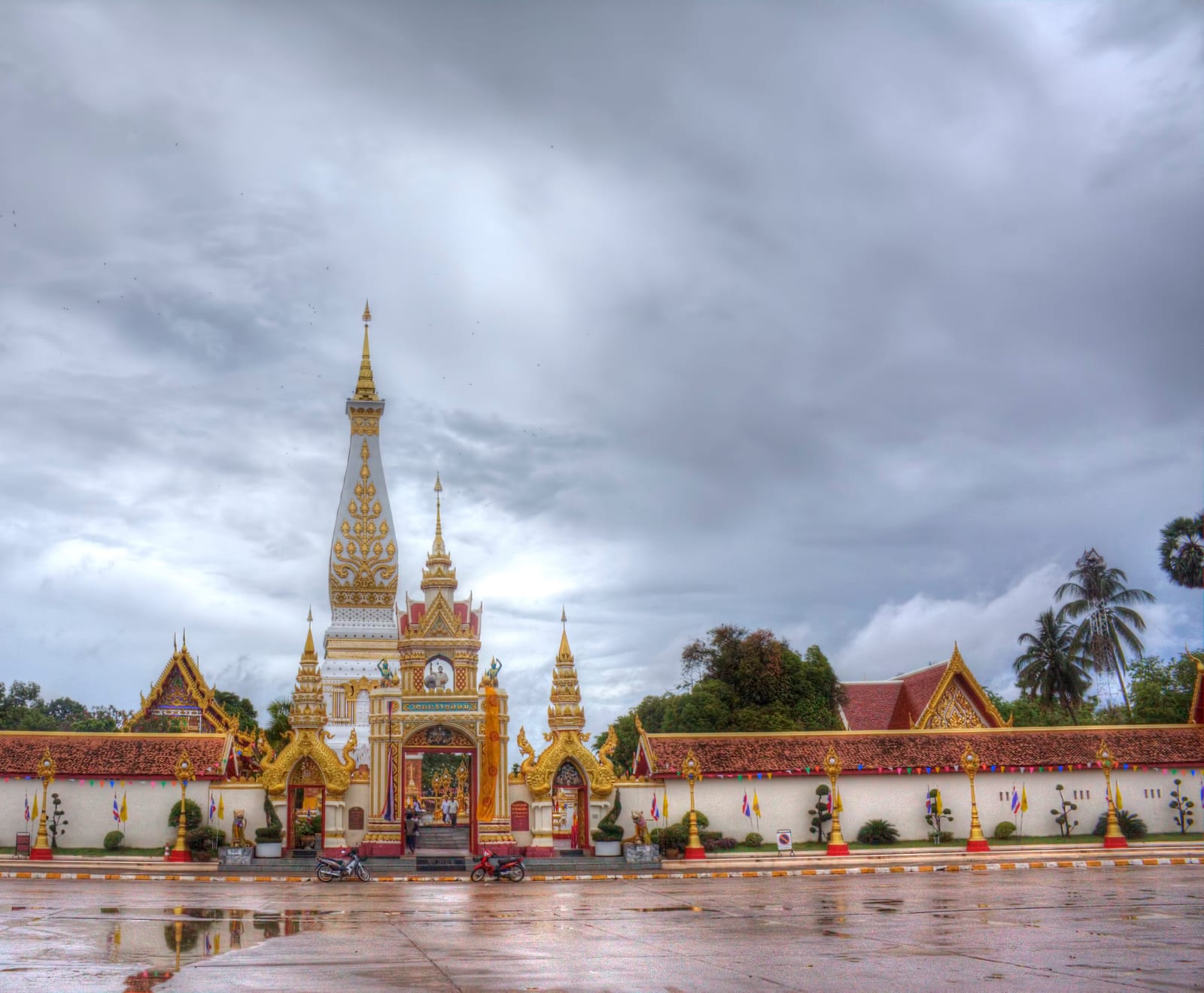
When it comes to the sacred guardian of Nakhon Phanom, almost everyone thinks of this place first. Wat Phra That Phanom Woramahawihan is a first-class royal temple and a centre of faith that pilgrims from all across Isan — including Lao people on the far side of the Mekong — travel to venerate in an endless stream. The stupa is a square Lao-Isan style chedi, 53.6 metres tall, its spire adorned in gleaming gold, standing tall and visible from far off. If you were born in the Year of the Monkey or on a Sunday, this is directly your year-stupa and birthday-stupa — perfect for anyone who wants to come and pay respects in earnest.
The must-do is to pay your respects and then walk in circumambulation around the stupa. Most people come to pray for career, finances, and prosperous trade. Within the temple there's also a museum of ancient artefacts and a shrine to the naga spirit that many stop to venerate. The overall atmosphere is calm, clean, and shaded. Many genuine reviews say they leave with a peaceful heart, and that this is a temple where faith remains strong enough to keep it busy almost every day, especially during festivals and Buddhist holy days.
You can rest easy on cost: entry is free, with flowers, incense, and candles available to offer as your faith moves you — pay by cash or scan a QR code. The temple is open for worship daily from around 05:00–21:00. It sits in That Phanom District, about 50 kilometres from Nakhon Phanom town, easy to reach by private car. Allow about 1–2 hours to walk around comfortably.
A small note: this is a revered temple where crowds gather, so dress especially modestly and be respectful. If you want to avoid the crush, come in the morning when the sun isn't yet strong and the crowds are still thin. The annual Phra That Phanom homage festival in the third lunar month (around February–March) is especially lively. Coming to pay respects here once in your life is well worth the journey.
Nakhon Phanom Walking Street (Riverside)
If your Nakhon Phanom visit happens to fall on a Friday, Saturday, or Sunday, don't overthink it — head straight to the riverside in the evening, because the Nakhon Phanom Walking Street is where the whole town and its visitors gather. The street runs along the Mekong on Sunthon Wichit Road, starting near the Vietnamese Memorial Clock Tower and heading toward the Indochina Market and the water-spouting naga plaza — about 800 metres, an easy, unhurried walk. It's ideal for anyone looking for dinner, wanting to stroll in the river breeze, or coming as a family or group of friends with no real plan needed.
The highlight is the food, because it brings together Isan street food like larb, koi, grilled pork, and som tam, alongside Vietnamese dishes like spring rolls and nam neuang, a signature of Nakhon Phanom's Thai-Vietnamese community — interspersed with dessert stalls, fruit, drinks, and craft, clothing, and souvenir stands. Walk out toward the riverbank and there's a walkway and boardwalk along the Mekong, with a long cycling path and lovely photos of the Lao bank opposite, especially at sunset. Many genuine reviews agree the standout is the cool riverside atmosphere — never cramped, with the quiet feel of a Mekong-side town that's hard to find in ordinary night markets.
It's very easy on the wallet: entry is free, most food is in the tens to low hundreds of baht, and a few hundred baht in cash is enough to eat well and take home some souvenirs. Opening hours are roughly 16:30–20:30 (some evenings lively until around 9 p.m.), on Fridays, Saturdays, and Sundays only. It sits in the city centre of Mueang Nakhon Phanom District, walkable from many riverside hotels.
Worth knowing: on weekdays there are no walking-street stalls, just the riverside road to stroll, so check the day beforehand. Weekend evenings get busy and parking near the clock tower fills up quickly — arriving before dark makes parking easier and lets you catch the evening light along the river too.
Mekong Embankment on Sunthon Wichit Road (Bike Lane / Nakhon Phanom Check-in Spot)

If you had to pick a single place that sums up the word 'Nakhon Phanom', it would be this Mekong embankment on Sunthon Wichit Road — a walkway and bike lane stretching for several kilometres along the river through the town centre. On one side is the broad Mekong, with the mountains of Laos across the water; on the other are old Indochina-style buildings and cafés. It's ideal for anyone who wants to stroll at an easy pace, cycle, jog, or just sit and watch the river flow — no plan needed; simply wandering along is a pleasure.
The highlight everyone photographs is the large 'Nakhon Phanom' check-in sign and the 'I love Nakhon Phanom' sign, both set facing the Mekong so you get the lettering and the river view in one frame. A tip from regulars: stand slightly off-centre rather than dead-centre in front of the sign to capture both the sign and the riverside more attractively. Nearby is the Phaya Sisattanakharat Naga Plaza, the great seven-headed naga that is the town's twin landmark, just a few steps on from the signs.
The time locals love most on the Nakhon Phanom riverside is the pre-dawn hours, around 06:00–08:00, because Nakhon Phanom faces the Mekong to the east, making it a beautiful sunrise-over-the-river spot with few crowds and cool, comfortable air. In the evening, from 16:30 onwards, the breeze turns cool and you can stroll for a long while, and on Friday, Saturday, and Sunday nights there's the riverside walking street to continue with tasty food. There's no entry fee here — free to walk, free to cycle; it's the city's public space.
A small note: the daytime sun is quite strong and there's little shade, so avoid the midday hours and bring a hat or umbrella. Bike rentals are available nearby if you want to ride, and parking is along the roadside. During festivals or long holidays it gets busier, but because the path is long, people spread out comfortably without feeling cramped — one of the best-value free attractions in town.
Wat Maha That (Phra That Nakhon)

If you're visiting Nakhon Phanom and wandering the riverside near the walking street, Wat Maha That — commonly called Phra That Nakhon — is the easiest spot to drop into, because it sits in the city centre right on Sunthon Wichit Road by the Mekong. You can walk over comfortably from the walking street or the Phaya Sisattanakharat Naga Plaza. The standout is the square white-and-gold stupa about 24 metres tall, shaped like a scaled-down Phra That Phanom. It is the birthday-stupa for those born on a Saturday, and it's believed that paying respects here enhances merit, prestige, and career advancement — ideal both for spiritual visitors who come to pray and for anyone who wants to drop by a lovely temple and photograph it by the river.
The must-do is photographing the stupa, which many reviews agree looks good from every angle — the white and gold set against the sky by day, while in the evening the temple lights it up to glow bright, beautiful in a different way. Beyond venerating the stupa, you can go in to pay respects to the principal Buddha image in the ubosot, then step out front to view the Mekong with the Lao bank opposite. Early risers will catch the atmosphere of monks on alms rounds along the river with villagers coming out to offer food in the first light of day — an image many people find memorable.
It's easy on the wallet: entry is free, donate as your faith moves you. There's parking inside the temple, and if it's full you can park along the road outside. It takes less than an hour to walk around and pay respects. It's open during the day into the evening every day — coming in the morning or evening gives you good light and cooler air.
A small note: the temple is a religious precinct, so dress modestly — no spaghetti straps or short shorts inside the ubosot, and remove shoes before entering buildings. If you want to complete the birthday-stupa circuit, Nakhon Phanom has several birthday stupas scattered around the province, and Phra That Nakhon is the one right in the city centre, making it a neat start or finish to a riverside trip.
🛏️ Nakhon Phanom Hotels — Riverside or City Centre
Staying overnight in Nakhon Phanom makes touring much easier. Pick a riverside hotel on Sunthon Wichit Road to wake up to river views and walk to the Phaya Sisattanakharat Naga Plaza and the walking street in minutes, or stay in the city centre for easy access in every direction. Options range from budget riverside guesthouses to mid-range hotels with Mekong views. Compare prices across sites and book ahead — especially during the Illuminated Boat Procession festival at the end of Buddhist Lent, when rooms fill up fast.
Wat Phra That Renu Nakhon

If you've come to Nakhon Phanom and already paid respects at Phra That Phanom, drive on about 15 kilometres into Renu Nakhon District to find 'Phra That Renu', which many people call a smaller Phra That Phanom, because it was modelled on the original Phra That Phanom before it collapsed, only scaled down. The stupa is around 35 metres tall with an 8.37-metre-wide base, a square Lan Xang-style form painted white with pastel pink — which many reviews say is easier on the eyes than the usual gleaming-gold temples. It is the birthday-stupa for those born on a Monday, and it's believed that paying respects brings a radiant complexion and loving charm — making it ideal for spiritual visitors following the birthday-stupa circuit, merit-makers, and anyone who wants a stop along an Isan Mekong-side trip.
The highlight everyone agrees on is the finely detailed stucco work around the stupa, including false-arch doorways on all four sides and lotus-petal patterns, built with an ancient plaster called chathai — a mix of lime, sand, and yang bong sap giving a smooth finish, with the spire in a squared lotus-bud shape resembling a gourd head. You can walk around and photograph the stupa beautifully from every angle. Inside the viharn is a Lao-style meditation-posture Buddha image to pay respects to. Another charm not to miss is the Phu Thai culture of Renu Nakhon, whose people still keep their traditions strong. Around the temple courtyard, vendors often lay out cotton cloth, hand-woven silk, and local snacks — handmade fans will surely take home a lovely woven textile.
It's very easy on the budget, because entry is free — just donations as your faith moves you and the cost of flowers, incense, and candles. There's a spacious car park, and it's open around 08:00–18:00. Allow about an hour to pay respects and take photos. It pairs well as a stop with Phra That Phanom in a single trip. The liveliest time is the annual Phra That Renu homage festival around the fourth lunar month (waxing 11th–15th), which features Phu Thai dance performances and a local market. Worth knowing: this is a sacred site, so dress modestly, remove shoes before entering the viharn, and avoid the midday sun as the open courtyard gets hot. Come in the morning or in the softer evening light to photograph the pink stupa at its best.
Sai Thong Sri Khottrabun Sandbar
Anyone who thinks Nakhon Phanom is all stupas and riverside views should come in the dry season and discover the town's other hidden treasure — the 'Sai Thong Sri Khottrabun Sandbar', a large sandbar that rises up in the middle of the Mekong only when the water drops. Locals call it a once-a-year phenomenon. When the morning sun hits it, the sand grains and the water surface shimmer gold, and the sandbar's ripples layer in tiers that many people liken to 'naga scales', stretching for several kilometres down the middle of the river with the mountains of Laos as a backdrop. It's ideal for anyone who loves unusual natural scenery and photographers wanting a shot unlike anything else.
The must-do is to arrive in time for the early morning light at sunrise, when the sand is at its most golden and the breeze is still cool. If you can't make the morning, you can catch the evening sunset instead. Another thing locals do is walk down onto the sand itself to photograph the rippled patterns, then continue with a stroll or cycle along the 'Sawan Chai Khong Road' that runs for nearly 5 kilometres along the river. In the mornings there are plenty of people out exercising and running, with the easy, genuine feel of a Mekong-side town.
You can rest easy on cost, because it's a public riverside area with no entry fee — free to walk and take in the view. It's very easy to find, along Sunthon Wichit Road running beside the Mekong in Mueang Nakhon Phanom District, walkable from the riverside hotel and restaurant district. The best time is morning to evening (roughly 07:00–18:00), but the key factor is the 'season' more than the time.
Something worth saying plainly before you come: this sandbar isn't visible all year — it only appears in the dry season when the Mekong drops, usually around February to May, though in some years the water falls early and it shows from late in the year. Because of upstream dams, the timing of when the sandbar surfaces varies from year to year, so before making a long trip, check the news or a Nakhon Phanom tourism page to see whether the sandbar has appeared this year, so you don't miss out. And if you walk out onto the sand, watch the water's edge, which can be deep or slippery — choosing spots where locals walk is safer.
President Ho Chi Minh Memorial (Thai-Vietnamese Friendship Village)

The President Ho Chi Minh Memorial at Ban Na Chok, Tambon Nong Yat, is a historical attraction that tells the story of the time 'Uncle Ho' — Ho Chi Minh — settled in this area to find supporters for his campaign to win independence for Vietnam, nearly a hundred years ago. The Thai and Vietnamese governments jointly built it on about 7 rai of land and opened it officially in 2016. It suits history lovers, families who want to bring children to learn, and anyone who wants a close-up look at the roots of the Thai-Vietnamese community in Nakhon Phanom.
The highlight you can't miss is the replica house built to imitate the wooden home Uncle Ho used for his movement, laid out with everyday utensils, a work desk, and figures depicting the atmosphere of meeting with villagers in that era. The museum building tells the story of the liberation campaign through photos and captions, with some English signage. Another thing many visitors enjoy is renting a Vietnamese ao dai to photograph against the buildings and garden, for genuinely Vietnamese-looking shots. If you want the real thing, walk on a little further to Uncle Ho's original house, which still keeps his belongings and the trees he planted.
The atmosphere here is calm and shaded, and the mixed Thai-Vietnamese building style looks dignified. Many reviews say weekdays are quiet, comfortable to walk around, and it takes about 20–30 minutes to see everything. Entry is free, with only a donation box as your faith moves you; the costume rental fee is separate. There are toilets, parking, and a zone selling local OTOP products and souvenirs, so it's very light on the budget.
It sits only about 3 kilometres from Nakhon Phanom town — a 5–10 minute drive — and is open daily 08:00–17:00. It's popular because it's a rare thing to see, both a historical marker of a two-nation relationship and a pretty photo spot. Worth knowing: the exhibition relies mainly on photos and captions, and some visitors wish for more video storytelling — pairing it with the real Uncle Ho house and other Nakhon Phanom attractions makes it more worthwhile.
Indochina Market, Nakhon Phanom
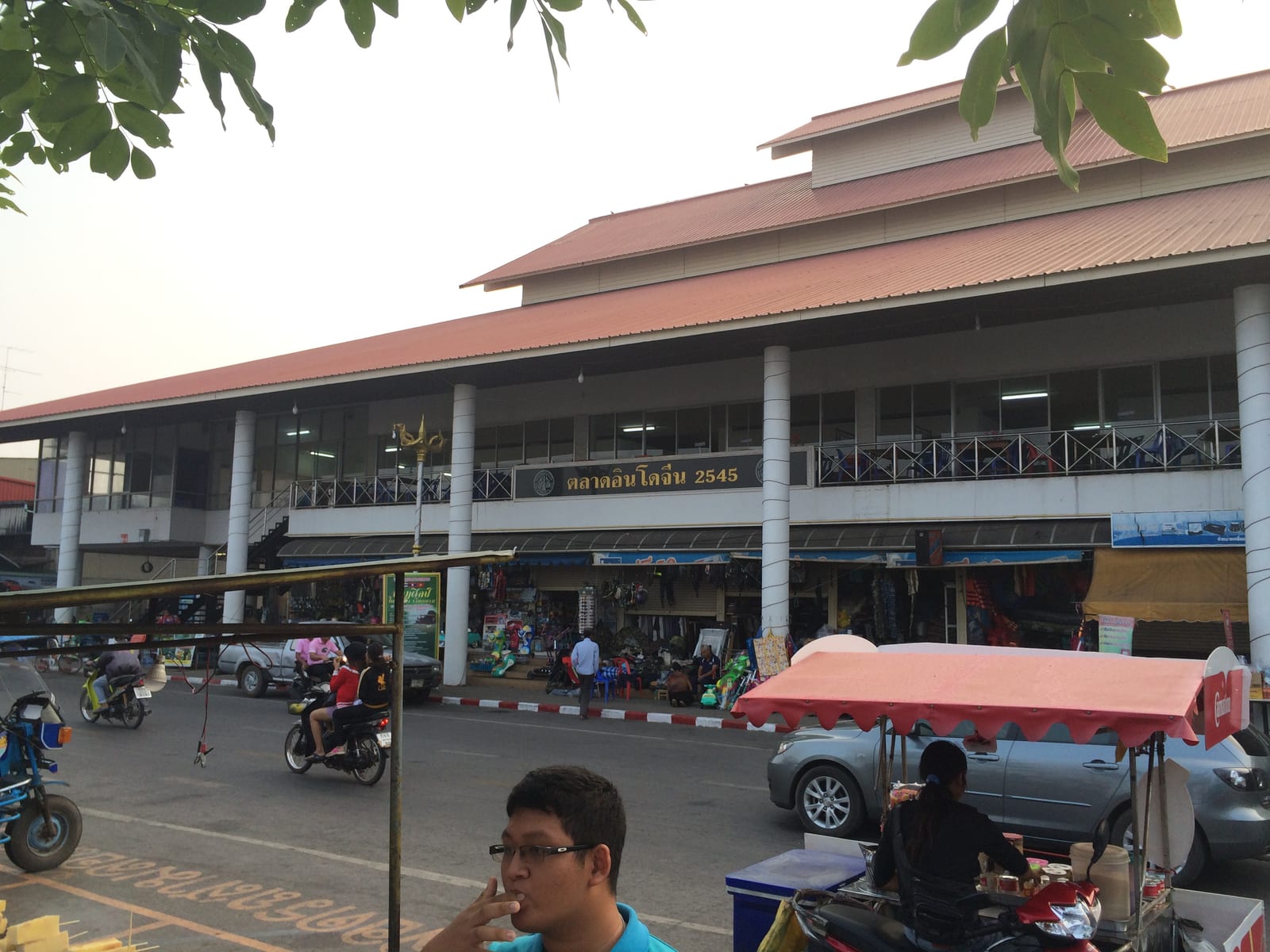
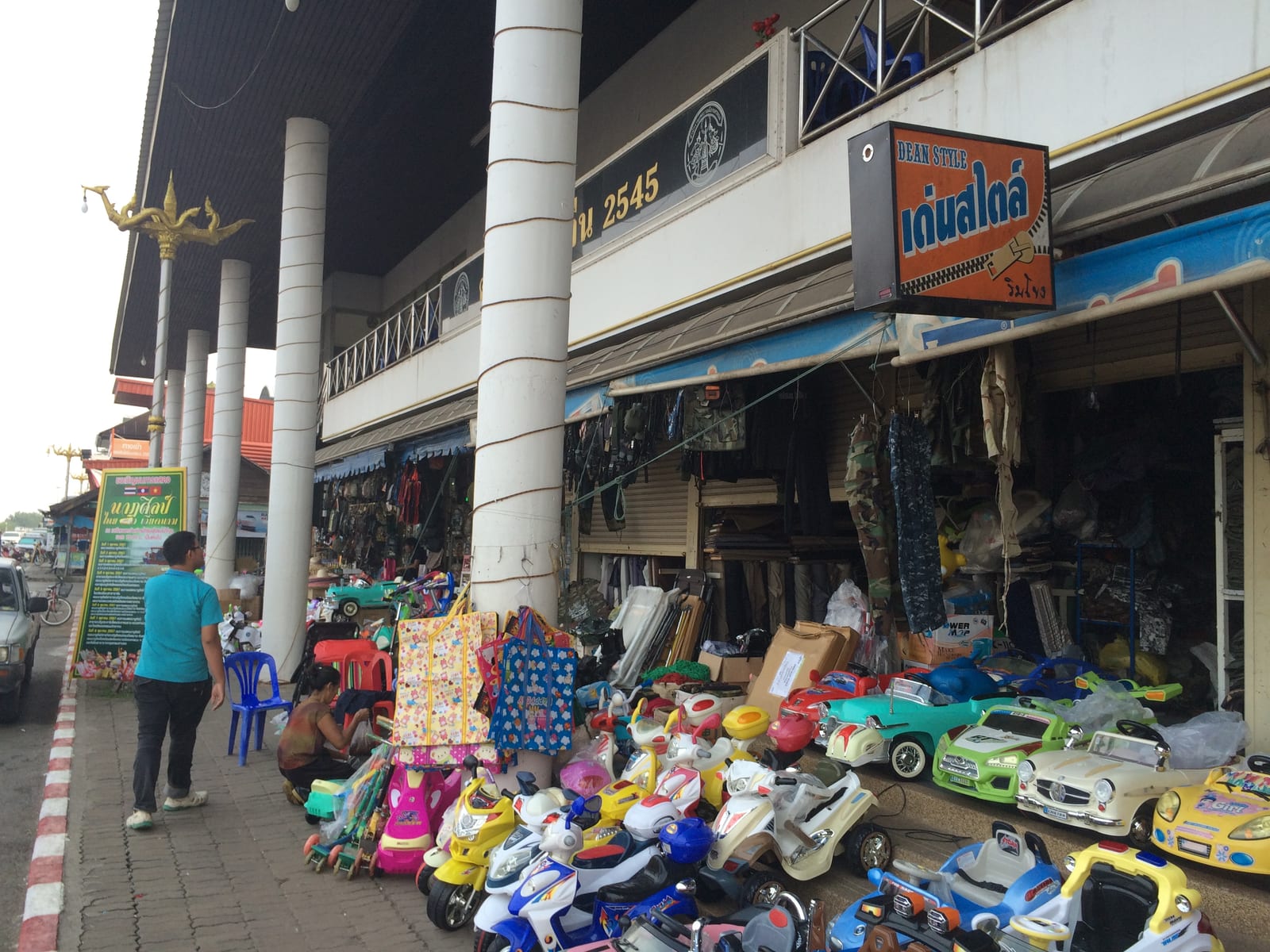
The Nakhon Phanom Indochina Market is a riverside market building on Sunthon Wichit Road, next to Wat Okat, in the centre of Nakhon Phanom town. Built in 2002, it's a hub for border goods from the Indochina countries — Vietnam, Laos, and China. Walk inside and you'll find clothes, bags, shoes, nano blankets, electrical goods, and affordable souvenirs lined up in stalls. The upper floor is a dining zone where you can look out over the Mekong and see the Lao bank comfortably. It suits anyone wanting inexpensive souvenirs and an easy continuation of a riverside stroll.
The real highlight isn't the market itself but its location, because in front of the market is a riverside plaza that, on Friday–Sunday evenings, becomes the Nakhon Phanom Walking Street. Walk out a short way and you reach the Phaya Sisattanakharat Naga Plaza, the great bronze naga that is the city's photo landmark. Most tourist reviews prefer the riverside atmosphere here over the merchandise, agreeing that the view is lovely, that you can stroll a long way in the cool breeze, and that there are cafés and food shops nearby to drop into.
Entry is free, and you can browse at your leisure. Souvenir budgets start in the tens to low hundreds of baht, and the food upstairs is only a few dozen baht a plate. Something to know, said plainly: the market has become much quieter in recent times, with many stalls closed or empty, as more people order Chinese goods online. If you come expecting a lively market filling the building, you may be a little disappointed, but if you treat it as a quick souvenir stop before heading out to walk the riverside, it's still worthwhile.
It's open daily, with daytime shopping, but the real fun is in the evening into the night when the walking street opens and the riverside starts filling with people. Parking is along the roadside, and everything — the market, walking street, and naga plaza — is within walking distance. This spot is popular because it brings souvenirs, food, and Mekong views together in one place, making it a good final stop to close the trip before heading back to your hotel.
Phu Langka National Park
Close out your Nakhon Phanom trip at 'Phu Langka National Park' in the far north of the province, in Ban Phaeng District — a large mountain range that runs along the border between Nakhon Phanom and Bueng Kan, covering about 50 square kilometres of still-intact evergreen and dry dipterocarp forest. It suits serious trekkers, people who want to breathe mountain air, and those who want to camp and wake up to a sea of mist without travelling all the way to the north of the country. Phu Langka is also tied to the naga legends of the Mekong basin, giving the trekking here an undercurrent of belief and reverence.
The most talked-about highlight is the nature study trail that winds along waterfalls and caves, especially the route from Tat Wiman Thip up to Naka Cave, where rock patterns resemble snake scales and have become a hugely popular photo spot. Many trekkers agree that some sections have unclear signage, so having a ranger or volunteer guide leads to a more reassuring hike. The waterfalls in the Ban Phaeng area, such as Tat Pho and Tat Kham, are beautiful and good for a dip in the rainy season into early cool season. In the dry season the waterfalls may run dry, but the trade-off is an easier climb to the summit.
Another charm is the high viewpoints like Pha Hin Hua Rot Bus and Pha Nakhi, where on cool mornings with low cloud you may see a sea of mist drifting over the valley. Many people choose to camp overnight on the summit viewing lawn of Phu Langka to wait for the morning light. Entry is 20 baht per person for Thais, with an extra 30 baht per vehicle — very easy on the budget. There's a camping lawn and park lodging near the headquarters, but you should bring your own food, as services in the forest are fairly limited.
Worth knowing: opening hours are roughly 08:30–16:30. The best season is late rainy into early cool season, around November to February, for both the sea of mist and cool air. Naka Cave and some spots may close periodically for restoration, so check the park's page before travelling. Wear sneakers or hiking shoes, bring enough drinking water, and allow time for routes that require a fair climb. It's a genuinely rewarding way to close a Nakhon Phanom trip with nature and a mountain atmosphere.
🎟️ Tickets, Tours, and Activities in Nakhon Phanom
Make seeing several Nakhon Phanom spots in one day more fun with a guided tour or a car with driver, so you don't have to plan the route yourself and can hear the naga and stupa legends in depth. Look for tours to venerate Phra That Phanom and Renu Nakhon, a Mekong cruise package, or a trip across to Tha Khaek on the Lao side on Klook and GetYourGuide. Book tickets online in advance — clear pricing, no queuing on the spot — ideal for anyone short on time who wants to see it all.
💡 Know Before You Go: Nakhon Phanom
Grab is scarce in Nakhon Phanom and can mean a long wait. The riverside Sunthon Wichit Road area is easy to explore on foot, but for spots outside town like Phra That Phanom, Phra That Renu Nakhon, and Phu Langka (Ban Phaeng District), a private car or a rental car/motorcycle is the most convenient.
The riverside walking street, Indochina Market, street food stalls, and the Phu Langka park entry fee are mostly cash-only. Carry small bills of 20–100 THB; only mall shops and larger cafés will take QR payments.
The Sunthon Wichit Road embankment is at its best before dawn waiting for the sunrise, while the Phaya Sisattanakharat Naga Plaza is loveliest in the evening when the naga spouts water and the lights come on. The walking street is lively Friday–Saturday–Sunday — arrive before 18:00 for easier parking and walking.
Phra That Phanom, Phra That Nakhon, and Phra That Renu Nakhon are sacred sites, so dress modestly, cover shoulders and knees, remove shoes before entering the stupa precinct, and keep your voice down while others are praying.
Most signs and menus are in Thai. Major attractions like the Phaya Sisattanakharat Naga Plaza and Phra That Phanom have some English. It helps to keep the Google Translate camera handy for reading market menus. People in Nakhon Phanom are friendly and helpful.
In the dry season (Feb–May) the Sai Thong Sri Khottrabun sandbar rises up in the middle of the Mekong to stroll on, while the cool season is ideal for going up Phu Langka to see the sea of mist. Visit around the end of Buddhist Lent and you'll catch the Illuminated Boat Procession by the river, Nakhon Phanom's annual highlight.
Plan a Perfect 1–2 Day Nakhon Phanom Trip
The simplest formula is to split it into 'the riverside city' and 'outside town'. On day one, tour the city comfortably. Start before dawn at the Sunthon Wichit Road embankment to wait for the sunrise over the Mekong and photograph the 'Nakhon Phanom' and 'I love Nakhon Phanom' signs, then stop at Wat Maha That (Phra That Nakhon) by the river in the city centre. If you come in the dry season (Feb–May), don't miss the Sai Thong Sri Khottrabun Sandbar, a freshwater sandbar in the middle of the Mekong. In the evening head to the Phaya Sisattanakharat Naga Plaza to see the seven-headed naga spout water once the lights are on, when it's at its most beautiful, then walk the riverside walking street (open Friday–Saturday–Sunday evenings) all the way to the Indochina Market to shop for Vietnamese and Lao food and souvenirs.
If you have a second day, drive toward That Phanom District to pay respects at Phra That Phanom, the Year-of-the-Monkey stupa that pilgrims from across Isan travel to venerate. On the way, stop at Wat Phra That Renu Nakhon in Renu Nakhon District (about 15 km from Phra That Phanom) to see the finely detailed stucco work and Phu Thai culture. If you're into history, stop at the President Ho Chi Minh Memorial at Ban Na Chok, where you can rent Vietnamese costumes for photos. If you come in the cool season and love nature, drive up to the far north of the province to Phu Langka National Park in Ban Phaeng District to see the sea of mist and waterfalls before heading back to town.
Staying overnight in Nakhon Phanom is far more relaxed. Wake up early to walk the riverside in the cool breeze, wait for the sunrise over the river, and visit the temples before the crowds, then drive out to That Phanom or Phu Langka in the late morning. Riverside and in-town hotels come in a range of tiers — check prices and book ahead.
Check Nakhon Phanom Hotel Prices