🔄 Last checked 26 Jun 2026 · details and hours can change — check the venue before you go
📍 All restaurants on the map
Tap a pin for the spot + nearby stays
Ask a Bangkok local to picture Nonthaburi and the first image is almost always Koh Kret — a river island in the middle of the Chao Phraya you can cycle around in an hour, packed with old Thai sweets, Mon pottery, and ancient riverside temples. But Nonthaburi has a lot more going on. Stroll the Nonthaburi city waterfront and you'll hit Tha Nam Non Market with its old clock tower; head over to Bang Yai and you find Central Westgate with IKEA, the biggest mall complex in the metro area; while the Ratchaphruek–Bang Kruai side offers open-air community malls perfect for an evening chill. Whatever your travel style, there's something here for you.
The highlights people talk about most are the temples. On Koh Kret, Wat Poramai Yikawat has the Mutao Stupa — a Mon-style white pagoda that's been leaning against the riverbank for over a century and has become the island's defining landmark. Across at Pak Kret, Wat Bang Jak is famous for its one-of-a-kind purple ordination hall, a giant golden Buddha, and Mon-style chedis. Over in Bang Si Mueang, Wat Chaloem Phra Kiat is a royal temple on the Chao Phraya with gorgeous Thai-Chinese architecture, and Wat Chonprathan Rangsarit — the temple of the late revered monk Phra Panyananda — is peaceful and leafy. Add in Sai Noi Floating Market and Somdet Phra Srinakarin Park for waterside exercise, and Nonthaburi turns out to be far more interesting than most people expect. Come see for yourself.
Koh Kret

Koh Kret is a river island in the middle of the Chao Phraya in Pak Kret district, Nonthaburi — just an hour's drive from Bangkok, yet it feels like a completely different world. There are no roads for cars, only a narrow concrete path that rings the entire island. It's perfect for anyone wanting to escape the city for a gentle cycle, a temple visit, and some unhurried Thai snacks. The island's real soul is its Mon community, here for over 200 years, still hand-throwing earthenware — jars, mortars, planters — with Mon patterns you'd be hard pressed to find anywhere else.
The unmissable highlight is Wat Poramai Yikawat, an Ayutthaya-era temple whose Mutao Stupa (the "leaning stupa") has become Koh Kret's signature image after centuries of the riverbank eroding its base. The weekend riverside market is another draw, buzzing with stalls selling everything from deep-fried banana-palm shoots and steamed fish cakes to rice soaked in flower water and antique-style Thai confections. Craft fans should visit the Guan Ama pottery village to watch potters at work. Rental bikes for circling the island's 6 km loop cost around THB 40–50 per day.
The budget is very easy on the wallet — there's no island entry fee, just the small passenger ferry from Wat Sanam Nuea pier, a handful of baht each way (bikes and motorcycles cross on the same boat). Ferries run from early morning to evening. Most shops and stalls open from around 9 am to late afternoon, and weekends and public holidays are when the island really hums; weekdays are quieter and more serene.
Koh Kret scores around 4.2 stars on Google. Reviewers consistently praise the easy day-trip access from Bangkok, the volume and low prices of street food, and the chance to witness a living Mon community. The common tip: weekends can get crowded and hot on that sun-exposed path, so aim for early morning or late afternoon, wear comfortable shoes, bring an umbrella or hat, and consider adding a longtail boat ride around the island for extra views.
Wat Poramai Yikawat (The Leaning Stupa)
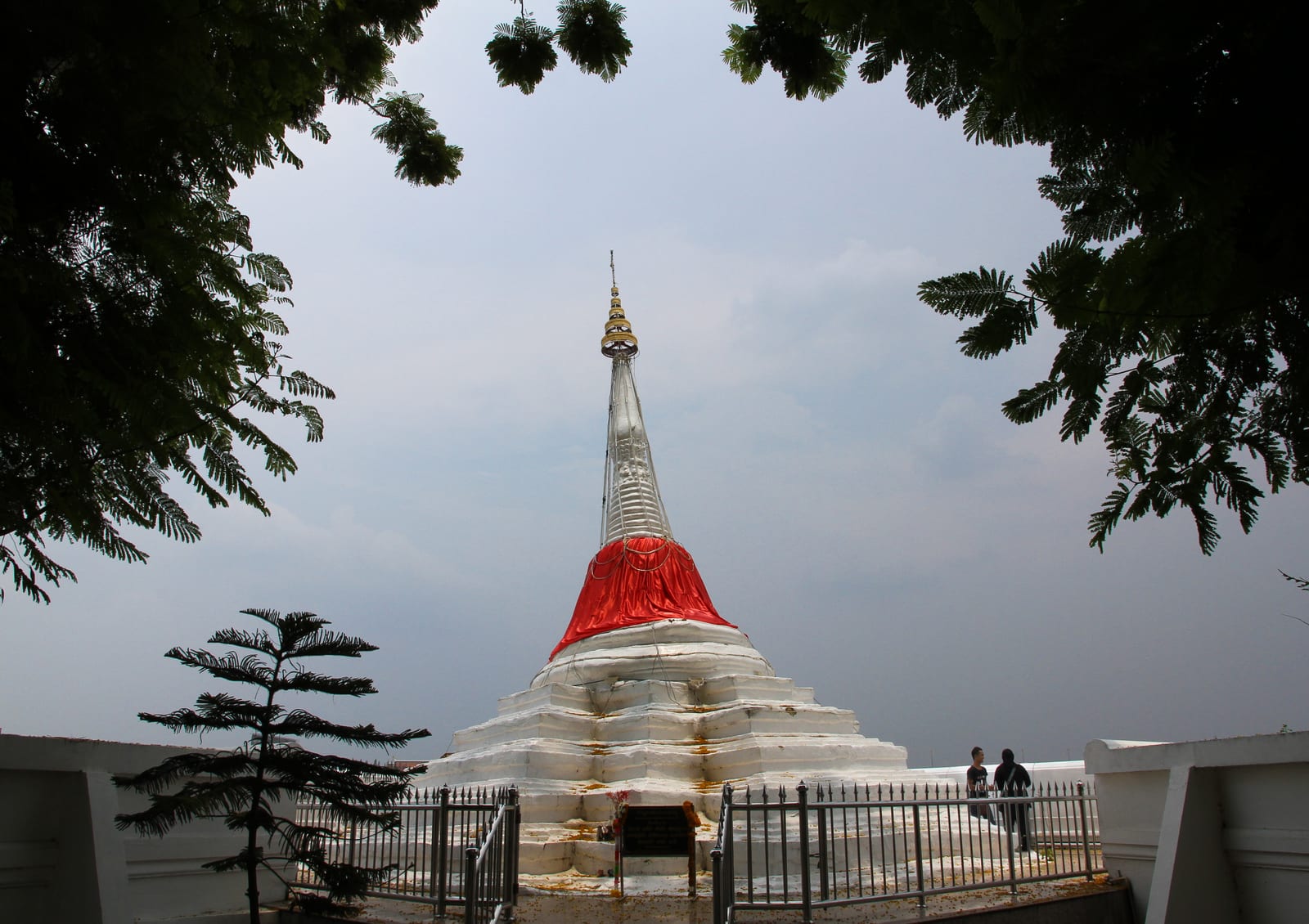
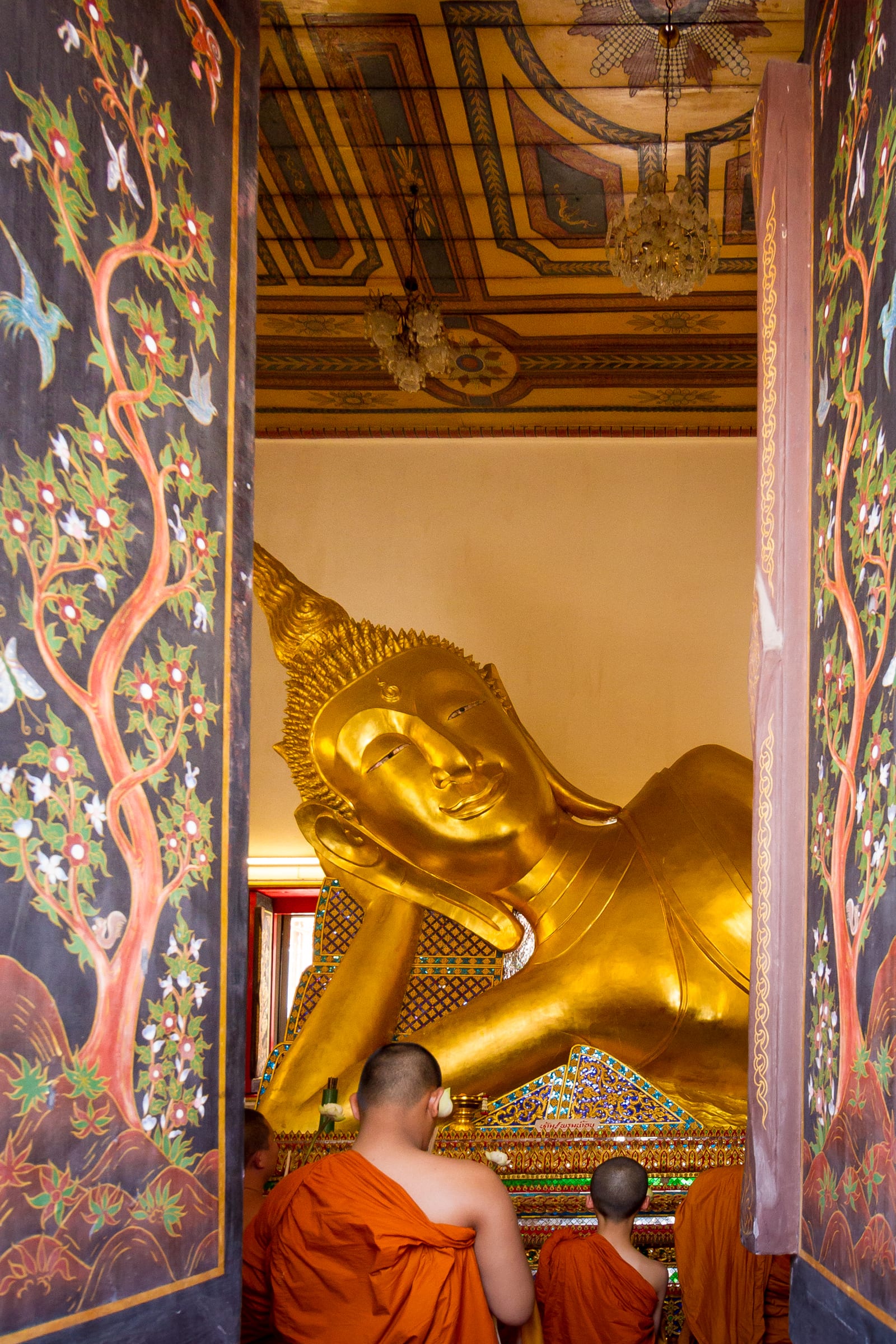
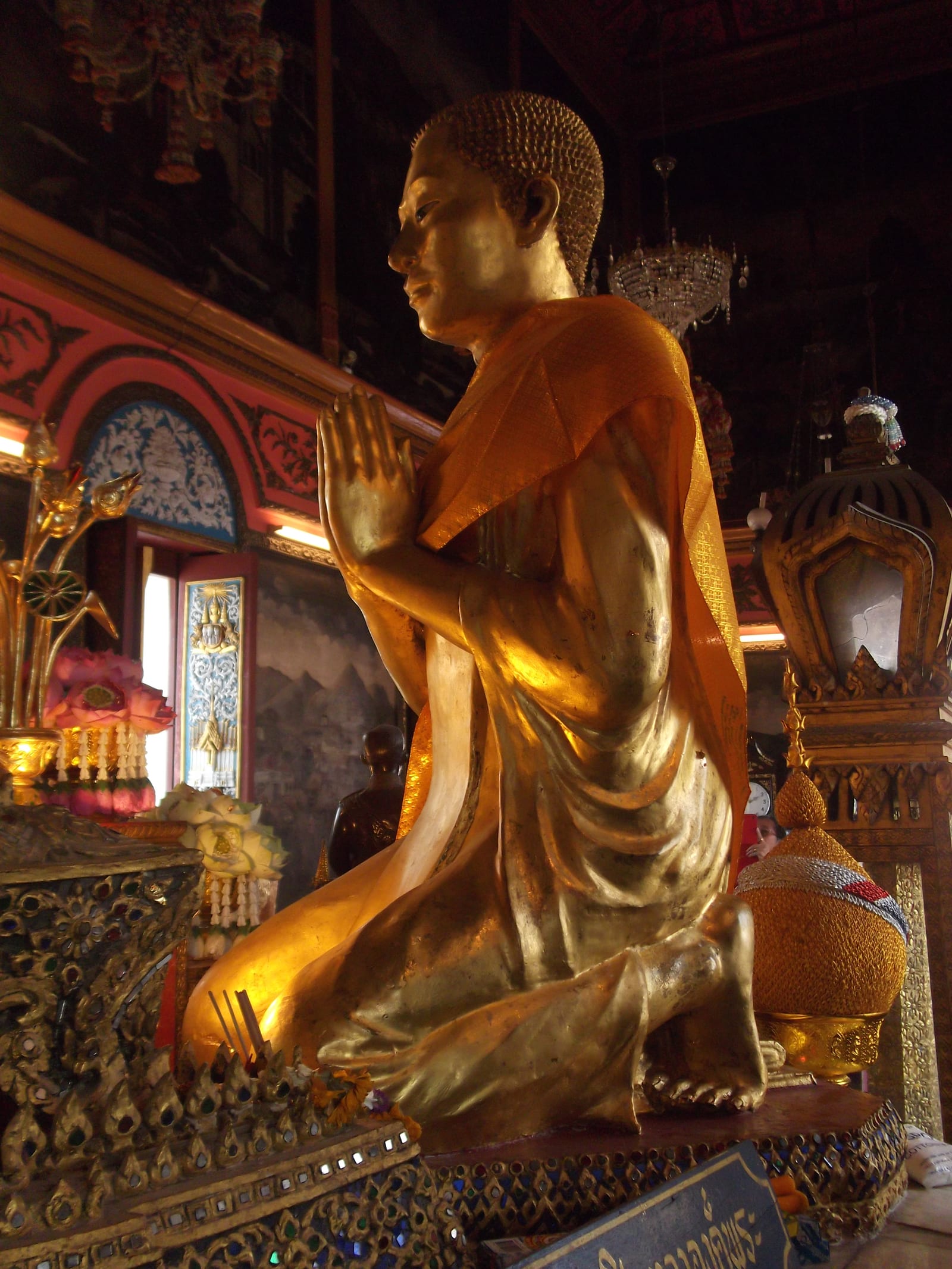
If you're coming to Koh Kret, Wat Poramai Yikawat is the first stop — you step off the ferry and it's right there. This is an ancient royal temple of the Mon (Raman) community, extensively restored during the reign of King Rama V, and it rewards anyone who loves temple architecture, great photography, and a calm Chao Phraya setting. The star of the show is the Mutao Stupa — a white Mon-style pagoda that genuinely leans, its base eroded by the river over hundreds of years. It has become Koh Kret's most recognizable image, known the length and breadth of Thailand.
Beyond the leaning stupa there is plenty to explore. The ordination hall is smothered in intricate stucco work; its doors and windows are plastered in color; the iron railings encircling the bot are European imports. Inside, the wall paintings and the principal Buddha image "Phra Nonthamunin" are beautifully preserved. Elsewhere in the compound you'll find a large reclining Buddha and a museum covering Mon cultural history and earthenware — well worth a half hour. A detail that strikes many visitors: the chanting here is still done in the Mon language, just as it has been for generations.
Entry is free — the only cost is the few-baht ferry to the island. The temple buildings are open Mon–Fri from around 13:00–16:00, and Sat–Sun plus public holidays from 09:00–15:00, which is also when the island market is at its busiest. The temple sits at the tip of the island in Koh Kret sub-district, Pak Kret. Drive to Wat Sanam Nuea on the opposite bank and take the short ferry crossing.
Visitor advice: if you want a quiet atmosphere and a clean shot of the leaning stupa with no crowds, aim to arrive between 8–9 am — after 10 am the ferry queue builds and the island fills. Dress modestly as this is a temple, and budget time for the Koh Kret market, Thai snacks, and Mon pottery in the same trip.
Central Westgate
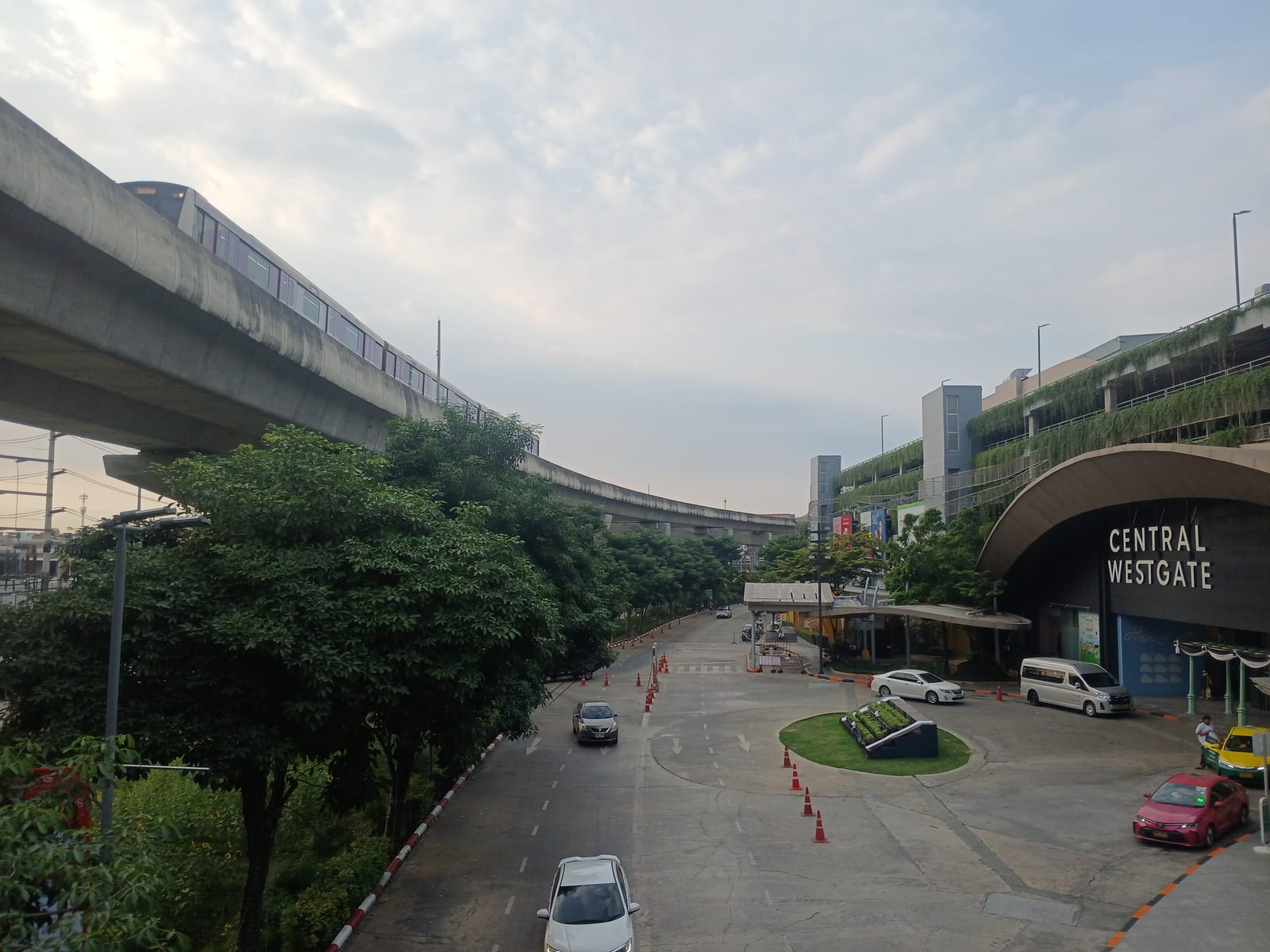
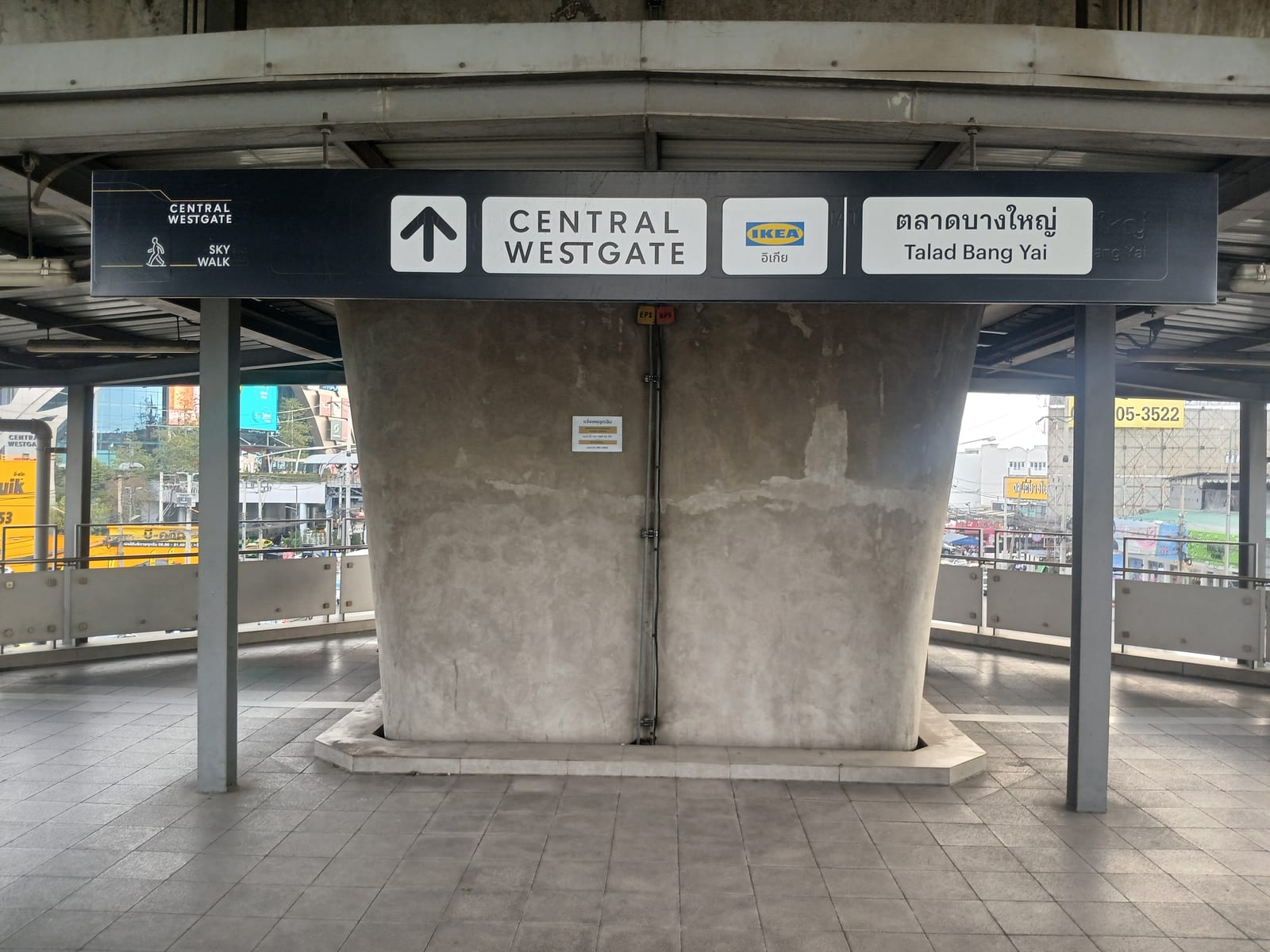
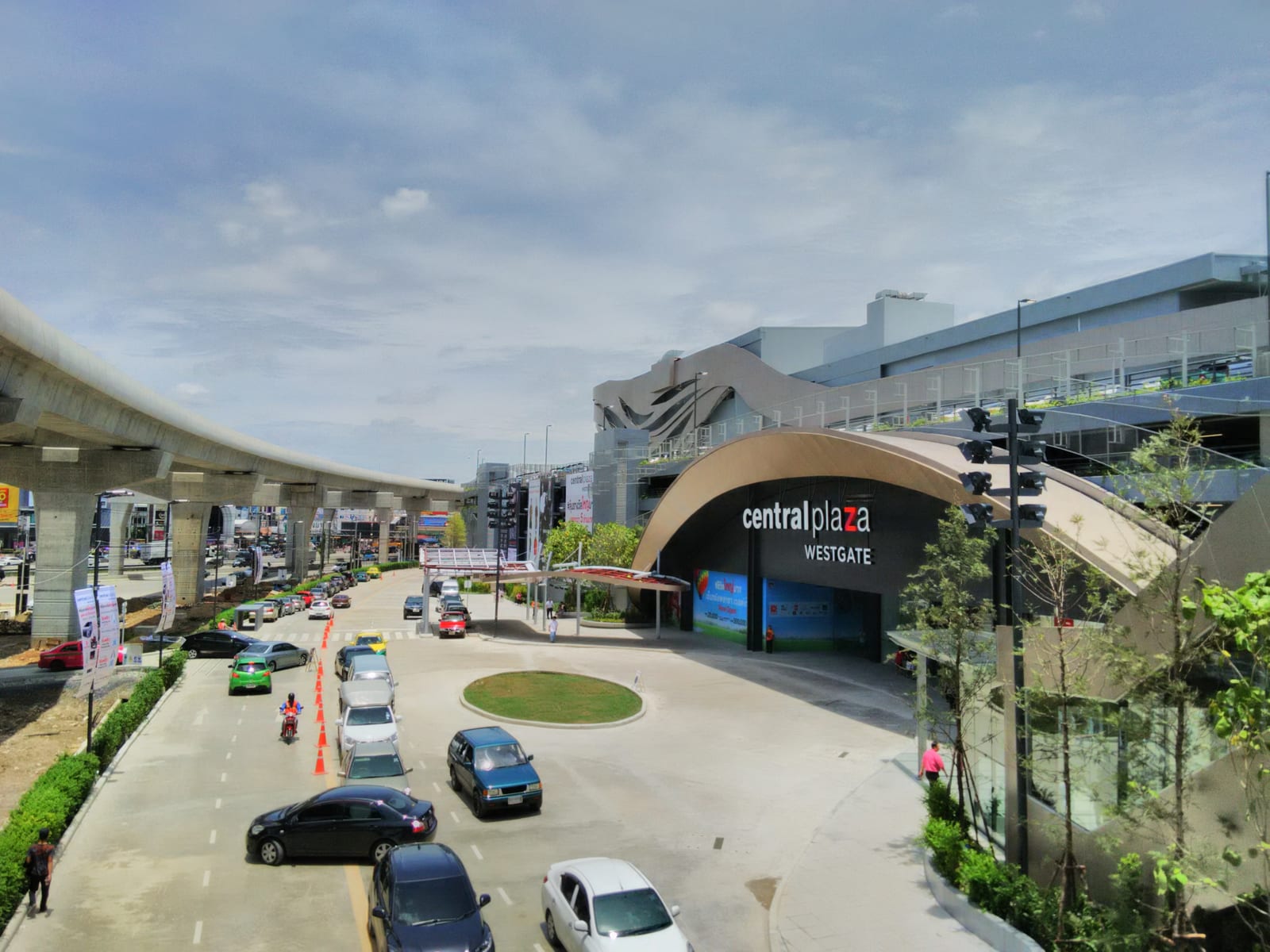
If you're on the western side of Bangkok or in Nonthaburi and want a mall you can wander all day without running out of things to do, Central Westgate at Bang Yai Intersection is the anchor of this part of the metro. One of the largest shopping centres in the region, it opened in 2015 and, combined with IKEA, covers over 500,000 square metres. Getting here is easy — it links directly to Bang Yai Market station on the MRT Purple Line, so you can come by car or rail with equal convenience. Ideal for families with kids, couples who love a full-day mall visit, or anyone doing serious home furnishing.
The highlight most people mention first is IKEA Bang Yai — the largest IKEA branch in Thailand, three full floors and over 50,000 square metres of home furnishings, furniture, and Swedish meatballs at the in-store restaurant. Kids adore Mega HarborLand on the 4th floor, a massive indoor theme park that once claimed to be the world's biggest at opening, spanning around 10,000 square metres. Reviews consistently describe it as spacious, clean, and entertaining enough to keep children busy for hours. Add a multiplex cinema, frequent live events on the central stage, and a broad dining zone from street-food brands to buffet restaurants, and the day fills itself.
Entry is free. A meal or drinks typically runs THB 200–600 per person; Mega HarborLand and the cinema are ticketed separately. Halal and vegetarian options are available, and many restaurants have English menus. Open daily 10:00–22:00.
Practical heads-up from real reviews: weekends and long holidays see heavy traffic — parking queues can stretch, and the free parking has a time limit before fees kick in. Come on a weekday or early in the morning for a much calmer experience.
Tha Nam Non Market

If you want to escape Bangkok without going far, just ride the Chao Phraya Express Boat to its last stop — Tha Nam Non pier — and you step straight into a classic waterfront market with food, atmosphere, and great photo spots. This is the place for anyone who loves a relaxed riverside wander, café culture, and honest Nonthaburi street food. The landmark everybody photographs first is the Tha Nam Non Clock Tower, 17 metres tall with a clock face on all four sides and a rooster weathervane on top. Next to it is the old Provincial Hall — a teak mansion of fine fretwork from the reign of Rama VI that now operates as the Nonthaburi Provincial Museum, free to walk through.
The charm of this neighbourhood is in the strolling. From the pier you drift into the wet market and the food street, where the famous spots include a seafood fry shack by the clock tower, Pa Uan's old-school fried rice with a time-tested recipe, Nonthaburi-style hand-pounded papaya salad, and Nont Bakery known for its eclairs. Café lovers should not miss Baan Tha Nam Non (Chaopraya Antique Café), a restored wooden house on the water with a vintage feel, or Chao Café, which has a Tha Nam Non branch with one of the best sunset views over the Chao Phraya.
Budget: the market is free to enter; food starts from tens of baht — a plate of fried rice for THB 35 is not unusual; café drinks run around THB 60–90. The market sits on the east bank of the Chao Phraya, Suan Yai sub-district, Mueang Nonthaburi. Getting there by Chao Phraya Express (last stop, N30) is the most pleasant option; there are also several bus routes and a cross-river ferry to Bang Si Mueang for just THB 4. Market stalls and shops are busiest from morning to early evening, while many cafés stay open late into the night.
This is Nonthaburi's most enduring landmark, pulling together history, an old market, and river views in a single stretch. The best tip: come in the late afternoon or evening — light is beautiful, there's a breeze, and the café crowd thins. Weekends get busy and parking near the pier is limited, so the boat or an early arrival is recommended. The old Provincial Hall Museum closes on some days — check hours before you go to make sure you catch those teak interiors.
Wat Chaloem Phra Kiat Worawihan

Wat Chaloem Phra Kiat Worawihan is a second-class royal monastery on the western bank of the Chao Phraya in the Bang Si Mueang neighbourhood of Mueang Nonthaburi. Over 160 years old, it was built during the reign of Rama III to honour his grandparents and mother, then completed under Rama IV. Anyone who loves old temples, beautiful architecture, and a quiet riverside setting close to Bangkok will feel right at home here. It suits temple lovers, photographers, and anyone who simply wants to sit by the Chao Phraya for half a day away from the city noise.
The centrepiece is the ordination hall, built in the Thai-Chinese style popular during Rama III's reign — no traditional pointed gable finials, instead decorated with glazed ceramic tiles. Inside, the murals are unusually delicate: falling flowers in soft, pale colours, quite different from the saturated tones you see in many Thai temples. The principal Buddha image, Phra Phuttha Maha Lokaphini Nan Patima, is cast in bronze. Another talking point is the fortress-like enclosure wall around the bot, said to be unique in Thailand, along with the large white bell-shaped stupa that stands out clearly from a distance.
The grounds are shaded and spacious — gardens, a small artificial waterfall, a riverfront terrace where you can feed the fish and browse a row of waterside shops. Google reviews consistently praise the beauty and calm, noting how surprisingly green and quiet it feels despite being close to the city. The temple has also served as a period drama filming location, its classical composition making it ideal for that. It has scored around 4.6 from nearly a thousand reviewers over time.
Entry is free, open approximately 06:00–18:00 daily. Allow 1–2 hours to walk the grounds properly. Located on the opposite bank from Nonthaburi city: arrive by cross-river ferry from Nonthaburi pier for atmosphere, or drive to the temple and use its parking area. Dress modestly when entering the ordination hall; on Buddhist holy days the grounds are busier than usual.
🛏️ Hotels in Nonthaburi — stay close to the sights, easy access to the city
Want to explore Nonthaburi without rushing back to Bangkok? Try staying in Mueang Nonthaburi, Pak Kret, Muang Thong Thani, or near Central Westgate — rates are often better than the Bangkok side, and you can wake up early for a Koh Kret cycle or a floating market wander. The MRT Purple Line is close for a smooth city commute. Compare prices and reviews in advance — weekend rooms fill fast.
🔍 Check Nonthaburi hotel prices (Agoda)Wat Bang Jak
Wat Bang Jak is an old riverside temple in Khlong Phra Udom sub-district, Pak Kret, directly across the water from Koh Kret — built during the era when Mon communities settled along this stretch of the Chao Phraya. What put it on the social-media map is the purple ordination hall, widely described as the only one of its kind in Thailand. The violet walls are offset by gold stucco carvings, and the building looks striking from every angle. It draws people who want merit alongside a beautiful photo, whether coming solo, with family, or specifically seeking blessings.
The temple's showpiece beside the purple bot is the Luang Pho To — officially Somdet Phra Phutthamongkhonchai, a golden pang marawichai Buddha image with a 19-metre lap width and standing about 27 metres tall, making it the largest Buddha statue in Nonthaburi province, positioned right at the river's edge. Another spot locals love is the three-headed Erawan elephant, which visitors drive beneath in a drive-through blessing lane said to boost fortune. The Pu Naka cave offers a crawl-through blessing for luck and prosperity. Around the grounds you'll also find Mon-style chedis, a reclining Buddha, Naga guardian figures, and a Thao Wessuwan shrine, making it a comprehensive stop for anyone on a merit-making circuit.
The atmosphere is open and breezy — a wide riverside temple grounds where the morning and late-afternoon light is perfect for photography. Reviews place it at 4.8 on Google, with most visitors commenting on the cleanliness, the organised layout of the shrines, and how respectfully the merit spots are arranged. Free entry, no admission fee, just donation boxes around the grounds. Open daily 08:00–17:00.
Located in the Pak Kret area close to Bangkok — driving and parking is straightforward. It pairs naturally with Koh Kret in a single trip. Practical note: this is a popular temple on weekends, so arriving early will give you the purple bot without the crowds. Dress modestly as with any temple.
Somdet Phra Srinakarin Park Nonthaburi
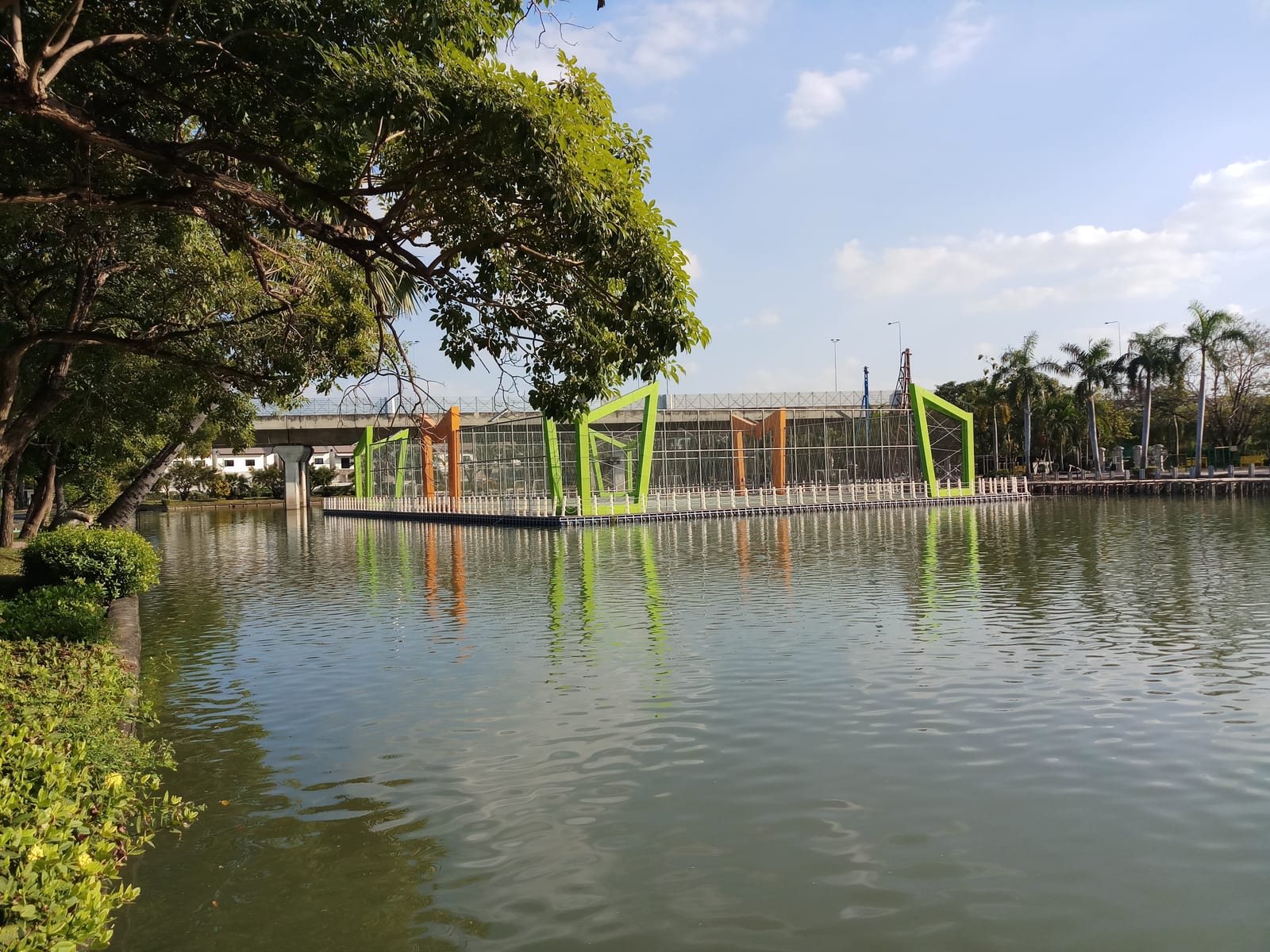
Somdet Phra Srinakarin Park Nonthaburi — locals call it Suan Somdet Ya — is a public park of over 100 rai in Pak Kret, close to Muang Thong Thani. It's the Somdet Phra Srinakarin Park closest to Bangkok. Its highlight is a large central lake with a fountain in the middle, encircled by clearly separated running and cycling lanes totalling about 2.5 km per loop. A good choice for anyone who wants serious exercise, a family outing, or just a quiet sit by the water in the evenings.
Reviewers consistently mention the lush feel and the sunset over the lake as the standout moments. Early mornings and evenings see aerobics groups, futsal matches, badminton games, and children on the play equipment. The ornamental garden has flowering plants and a floral clock for photographs. Pedal boats are available for hire on the lake, and during festivals like Songkran the park sometimes sets up water-mist tunnels for cooling off. Runners particularly appreciate the clear lane markings and measured distance around the lake.
Free entry, no admission fee. Open daily 05:00–20:00. Located on Si Saman Road, Ban Mai sub-district, Pak Kret. Easy to drive from Muang Thong Thani or Chaengwattana; parking available on site. One thing to keep in mind: the lake path is exposed and can get crowded and hot on weekday evenings and weekends. Early morning or late afternoon is the most comfortable time. For anyone staying around Muang Thong Thani or Chaengwattana looking for a free outdoor workout or relaxation spot, this is the obvious answer.
Sai Noi Floating Market
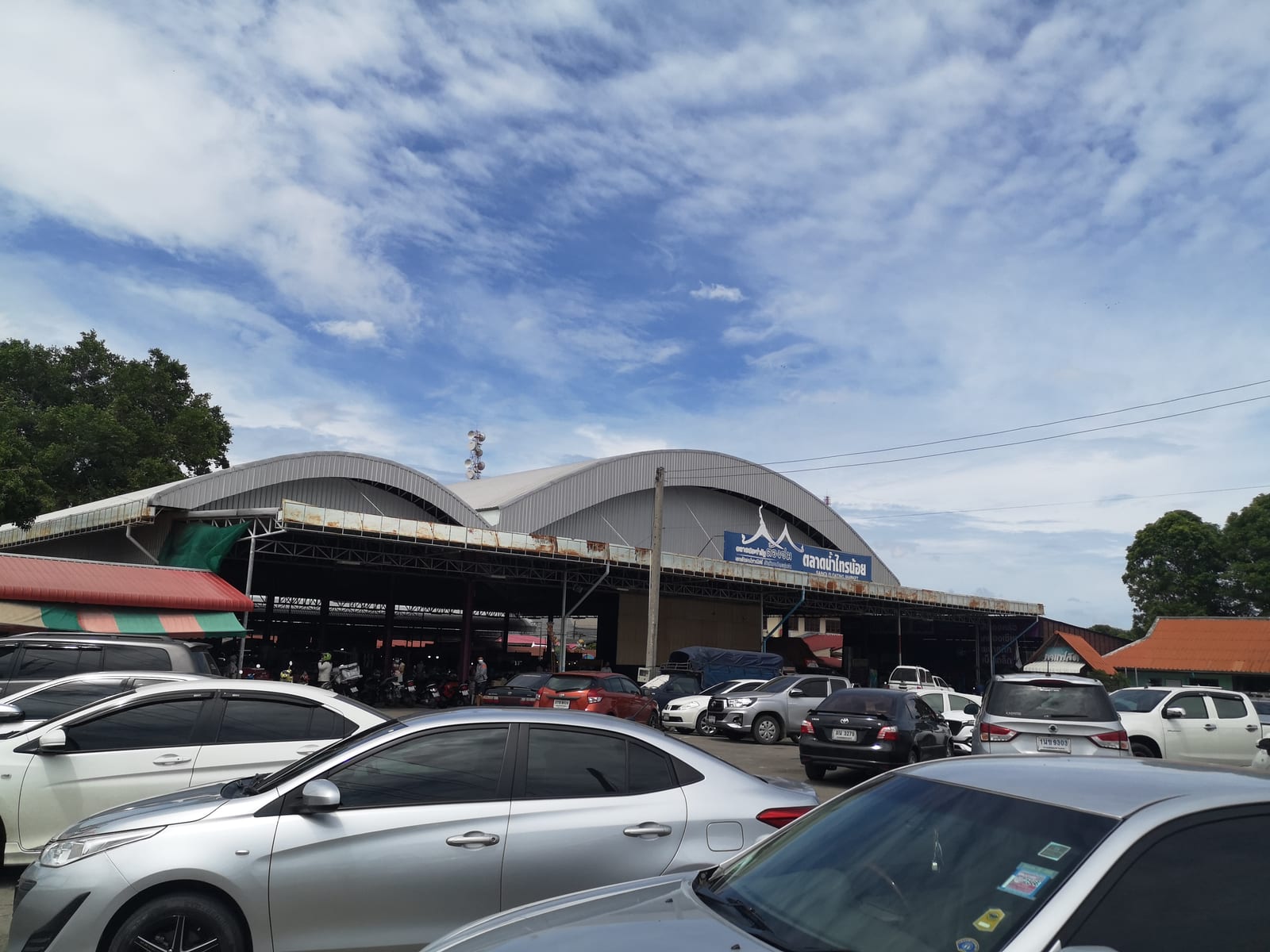
Sai Noi Floating Market sits along Phra Phimon Racha Canal, next to Wat Sai Yai in Sai Noi district, Nonthaburi — close to Bangkok with only about an hour's drive from the city. This is a genuine local market rather than a polished tourist attraction, open only on weekends and public holidays. Reviews repeatedly say the same thing: "dirt cheap and loaded with food," because it's largely local residents selling what they grow and cook themselves.
The most talked-about item is braised duck — whole braised duck, roasted duck, and duck offal from the famous stall. Beyond that, boat noodles, green-onion pancakes, grilled fish wrapped in herbs, and every variety of traditional Thai sweet are stacked along the stalls. Don't miss the pesticide-free produce and fresh garden crops brought by local farmers, priced well below supermarket rates. If you're after souvenirs, there are dried goods and handmade items too.
The real atmosphere comes from the long wooden raft sections extending along the canal — sitting over the water eating while fish swim below, with a dedicated dragon-sculpture zone lit up with lanterns and a decorative pond, one of the market's most-photographed spots. Inside Wat Sai Yai, the golden Luang Pho Thong image is worth a visit, so the trip combines eating, sightseeing, and merit-making naturally. A couple of hours is enough for a satisfying visit.
No entry fee. Food from a few dozen baht. Arrive on weekends, opening around 8 am until mid-afternoon. Come early: fresh produce and the popular dishes are fullest before the crowds build, and parking fills up on busy weekends. Midday sun is intense since the canal path is largely open — bring a hat or umbrella.
Wat Chonprathan Rangsarit
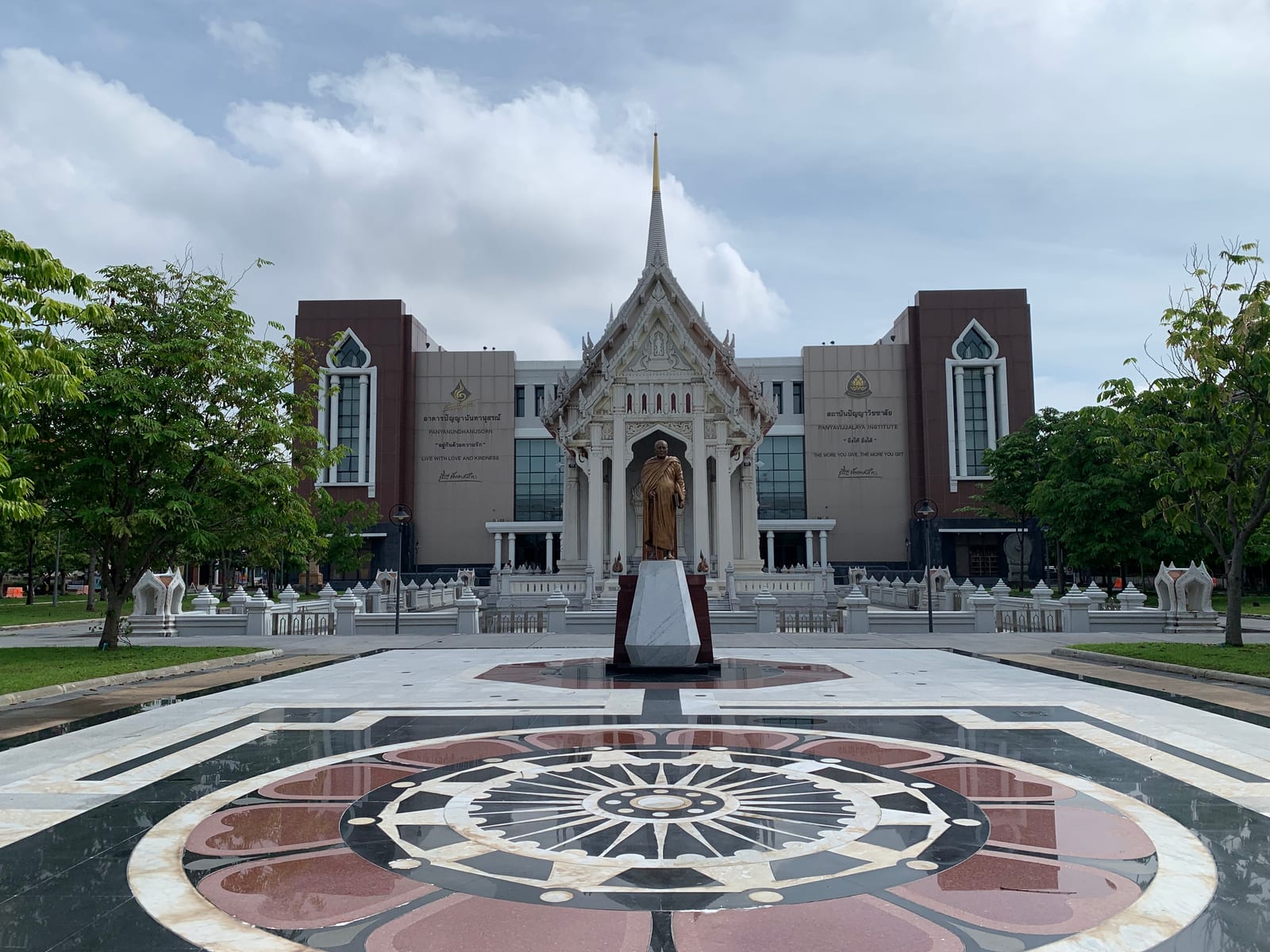
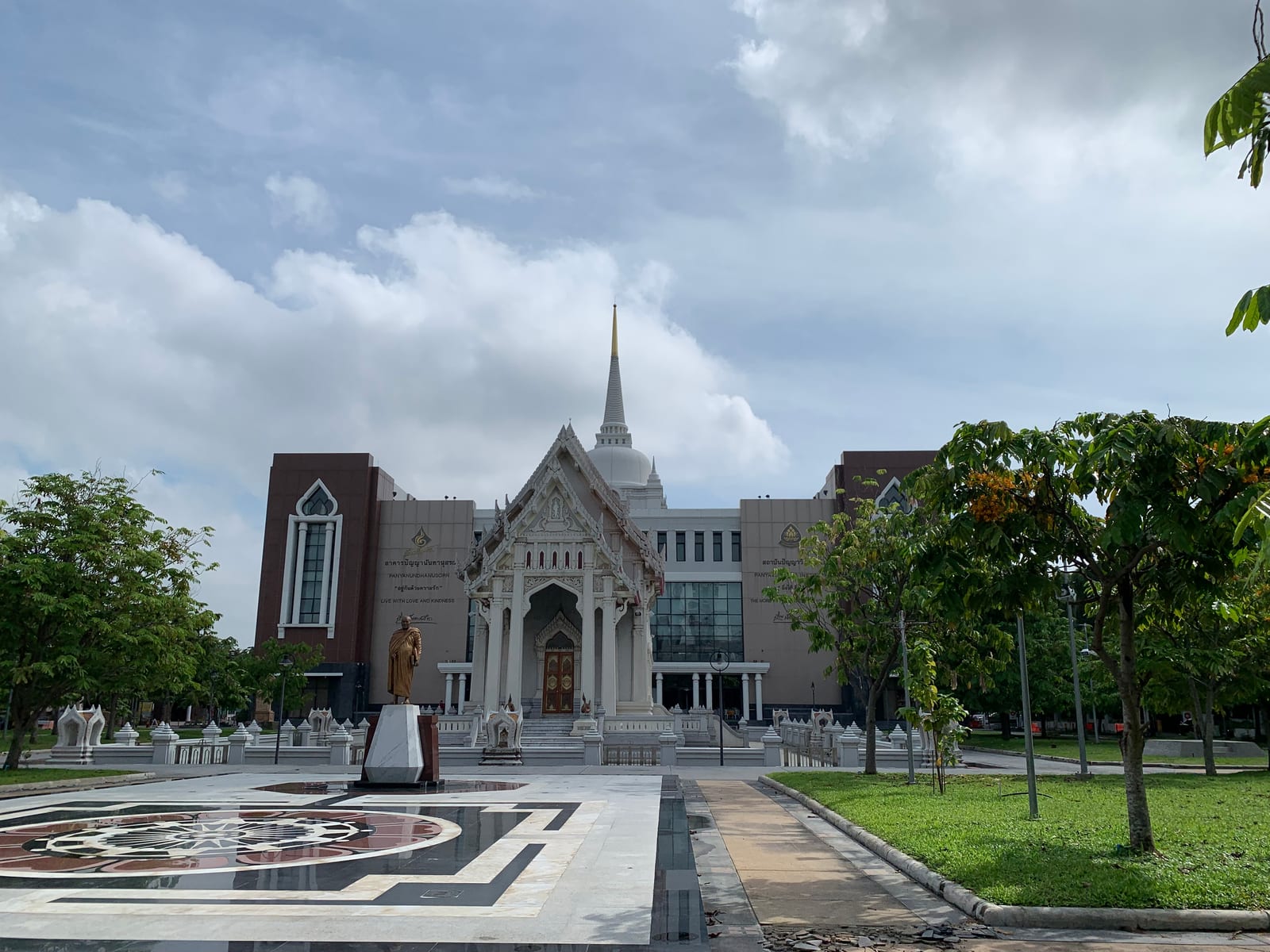
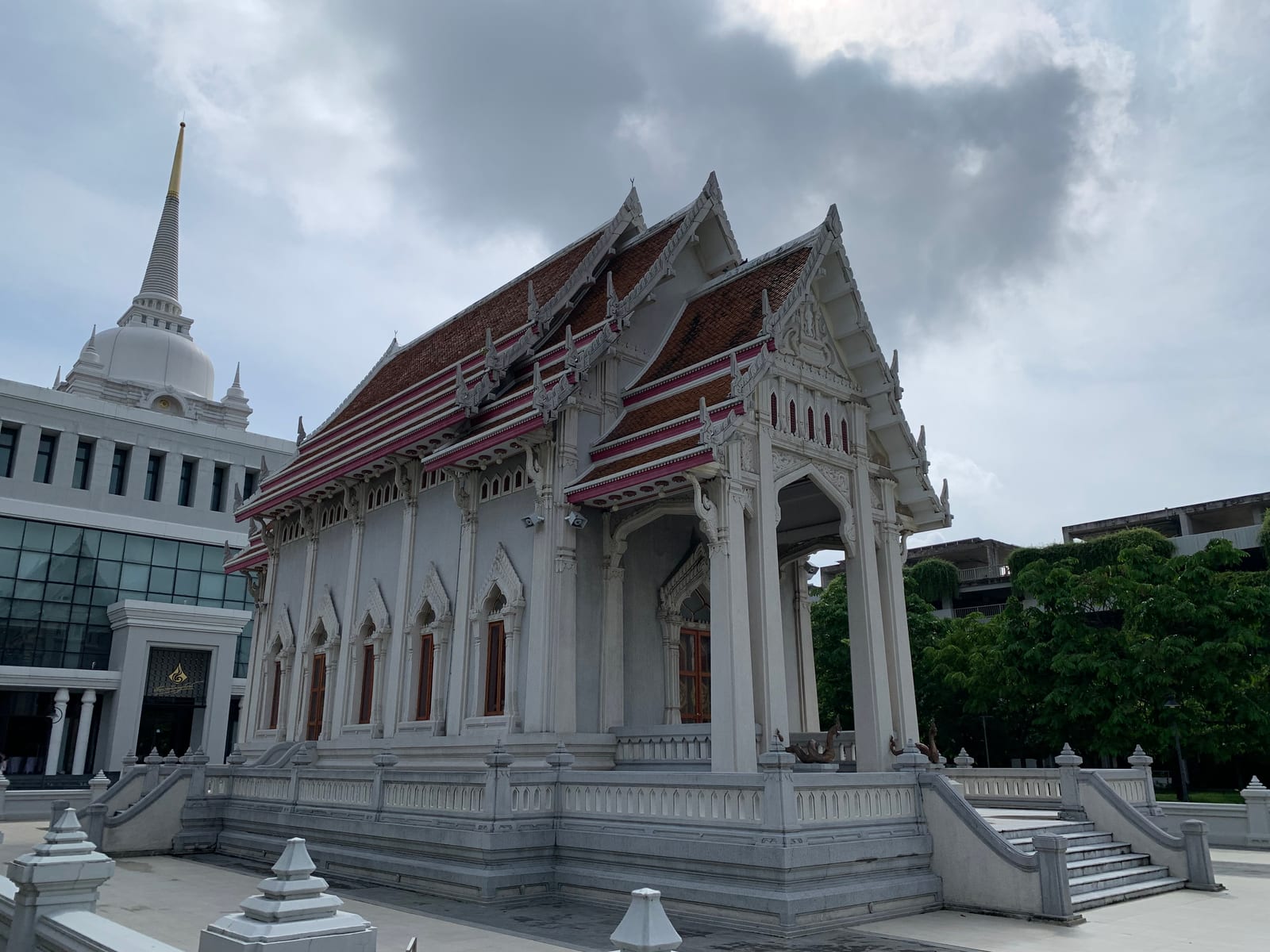
Wat Chonprathan Rangsarit is a royal monastery in the middle of Pak Kret that many people know as the temple of the late Venerable Panyananda Bhikkhu, a progressive monk celebrated for making the Dhamma accessible and direct. The temple was established in 1959 at the initiative of the Royal Irrigation Department, which is how it got its name. It works well for anyone seeking a quiet spot near Bangkok to pay respects, make merit, or sit in meditation — particularly those who take the practice seriously rather than just wanting a photo stop.
The highlight is the Stone Amphitheatre, an open-air terrace shaded by large trees, used every Sunday morning at around 9 am for group chanting, Dhamma talks, meditation, and alms-giving. The atmosphere in this spot is the temple's defining quality. Reviews consistently describe the temple as clean, shaded, and remarkably quiet given its location right on Tiwanon Road — the large trees absorb a great deal of the noise. Also worth noting is the Sukati Shan, a crematorium designed with sustainability principles and a policy against flower garlands at funerals — both quite forward-thinking for a Thai temple.
Free to enter; no admission charge. There is a Dhamma bookshop, a meditation pavilion, and a food hall inside. Getting here has become much easier since the Pink Line opened — Krom Chonprathan station is within walking distance. Drivers can park inside the compound. Open daily, most active from morning to early evening.
Practical advice: Sunday morning is the richest time to come, when the Stone Amphitheatre fills with activity. On weekdays the grounds are quiet — good for a calm temple visit. Dress modestly. This place is popular because it represents a temple model built on simplicity and substance over spectacle, which makes it resonate with younger visitors and older devotees alike.
Wat Chomphu Wek

Wat Chomphu Wek stands in the Nam Nam Airport area, Tha Sai sub-district, Mueang Nonthaburi — a Mon temple dating back to the late Ayutthaya period, around the reign of King Narai the Great, making it over 300 years old. According to legend it was founded by a Mon monk named Pho Pu Sri Chomphu, and Nonthaburi locals have long regarded it as an anchor of the Mon riverside community along the Chao Phraya. The grounds are shaded and calm, easy to wander without rushing.
The main reason people make the trip is the wall murals in the old ordination hall — especially the image of Phra Mae Thorani (the Earth Goddess) wringing her hair above the entrance doorframe. Several scholars consider this to be one of the most complete and beautiful Thorani depictions in Thailand. Painted by Nonthaburi master craftsmen using natural pigments mixed with tree-sap glue, the scenes illustrate the Ten Jataka tales and the story of Phra Malai, with lines and colors still clearly readable after hundreds of years.
Beyond the murals, the temple has a white Mon Mutao-style stupa — a distinctive Mon architectural form rarely seen in this area — believed to enshrine sacred relics. The old Maha Utdom ordination hall retains its original layout, and anyone who appreciates ancient craftsmanship will come away with compelling photographs from multiple angles.
Wat Chomphu Wek is also a draw for those who come to pay respects to Pho Pu Sri Chomphu and seek blessings from Phra Mae Thorani. Access has improved considerably with the Pink Line — alight at Nam Airport station and take a local songthaew or motorcycle taxi into Nonthaburi Soi 33. Pink Line riders from the Purple Line can change at Saphan Phra Nang Klao and take a songthaew on the Tha Nam Non–Nam Airport route. Free entry; open during daylight hours. Worth combining with a Mueang Nonthaburi day trip.
Book Nonthaburi tours and tickets in advance
Covering several spots in Nonthaburi in one day goes more smoothly with a plan. On Klook and GetYourGuide you'll find Chao Phraya river cruises, guided Koh Kret day trips, and activity tickets around Bangkok and the metro area — all bookable online so you skip the queue on the day. Good for anyone who wants a stress-free visit with everything sorted, or international travellers who'd prefer an English-speaking guide.
💡 Good to know before visiting Nonthaburi
The MRT Purple Line runs through Nonthaburi — alight at the station closest to your destination then grab a Grab ride. Koh Kret requires a cross-river ferry from the Pak Kret side, just a few baht and cash only.
Snack stalls and street food on Koh Kret and in the floating markets mostly run on cash. Keep small bills and coins for the ferry. Big malls like Westgate accept cards and QR payment as normal.
Temples and floating markets peak on weekends — arriving early means easier parking and fuller food selection. Koh Kret on weekend afternoons gets packed; weekdays are far more relaxed.
Nonthaburi has some lovely temples. When entering an ordination hall, cover shoulders and knees, remove shoes before going inside, and keep voices down in sacred areas.
Tipping is not mandatory in Thailand, but rounding up at a restaurant or café is a warm gesture. Donations at temples are entirely voluntary — give as much or as little as you like.
Main attractions and large malls have enough English signage to get by. Floating markets and local shops may be Thai-only — a translation app or pointing at a menu photo works well. Nonthaburi locals are friendly; don't hesitate to ask for directions.
How to make the most of Nonthaburi in a day
For a temple and slow-life day, start early on Koh Kret: take the ferry from Wat Sanam Nuea pier, cycle past Wat Poramai Yikawat and the leaning stupa, pick up Thai sweets and Mon pottery, then cross back to visit Wat Bang Jak and its purple temple — both are on the Pak Kret side. In the late afternoon drift down to Tha Nam Non Market on the Chao Phraya, sit in a wooden riverside café, photograph the clock tower, and catch the cooler evening breeze.
If you're going on a weekend, temples and floating markets fill early — plan to arrive by opening time and you'll get a parking spot and the best of the stalls. For a shopping and dining finish, Central Westgate (with IKEA Bang Yai, the cinema, and the indoor theme park) is perfect for wrapping up the evening. Art and history fans should not leave without seeing Wat Chomphu Wek and the Phra Mae Thorani mural — the finest of its kind in Thailand.
Nonthaburi packs enough into a day, but if you'd rather not rush back to Bangkok, a night in Mueang Nonthaburi, Pak Kret, or near Westgate puts you right at the starting line the next morning — at prices that tend to beat the Bangkok side.
See Nonthaburi hotels