🔄 Last checked 25 Jun 2026 · details and hours can change — check the venue before you go
📍 All restaurants on the map
Tap a pin for the spot + nearby stays
If you want to know what makes Sukhothai enjoyable, start with the old city — because this is the heart of the whole province. Sukhothai Historical Park was listed as a UNESCO World Heritage Site in 1991 under the name 'Historic Town of Sukhothai and Associated Historic Towns', and the way to explore it that most visitors pass on to others is renting a bicycle and pedalling temple to temple in a cool breeze under shaded trees, with old chedis appearing one after another. Anyone who wants more peace and quiet can drive out a bit further to Si Satchanalai Historical Park — the second UNESCO site in the group, quieter than the main city, where you can walk through Wat Chang Lom and Wat Chedi Jet Thaew without competing with anyone for a photo angle. Beyond the old city there's also Thung Thaleh Luang with its heart-shaped island in the reservoir, and the vintage riverside Rim Yom Market for a change of atmosphere.
What makes Sukhothai special is that the stories here are still alive. Wat Mahathat is the centre of the kingdom and the real stage for the Loi Krathong Candle Ceremony each year — famous across the country. Wat Si Chum has the enormous Phra Achana seated in a narrow mandapa, along with the legend of the 'speaking Buddha' passed down since the era of King Naresuan the Great. And Wat Sa Si, sitting on an island in the middle of a pond, casts a reflection of its chedi on the water at dusk that many visitors name as the unmissable photograph of the trip. Those who enjoy the stories can also stop at the Royal Monument of King Ramkhamhaeng the Great and the Sangkalok Museum, which holds thousands of pieces of ancient Sangkhalok ceramics. Make the most of a Sukhothai trip by covering temples, nature and local food all in one go.
Sukhothai Historical Park
If you could visit only one attraction in Sukhothai, most people would point here — because this is a capital city over 700 years old, listed by UNESCO as a World Heritage Site in 1991 under the name 'Historic Town of Sukhothai and Associated Historic Towns'. Inside the rectangular city walls running roughly 2 kilometres are the remains of palaces and temples — more than 200 sites in total inside and outside the walls. It suits history enthusiasts, photography lovers, families and international travellers equally.
The highlights not to miss are Wat Mahathat, the largest temple at the city's centre with its distinctive lotus-bud chedi; Wat Si Chum, outside the northern wall, with the enormous Phra Achana in its narrow mandapa and the legend of the speaking Buddha; and Wat Sa Si, set on an island in the middle of a pond, spectacularly beautiful in the late afternoon when sunlight catches the ruins. The most recommended way to visit is to rent a bicycle at the park entrance and pedal the old city at your own pace — past ancient sites one by one in a cool breeze. Anyone who prefers not to cycle can take the park tram or a golf cart. Reviews consistently say morning and late afternoon are the best times: less heat and more beautiful light.
Entrance fees are divided by zone. Thai nationals pay approximately 20 THB per zone; foreigners pay approximately 100 THB for the central zone, with a small additional fee for bicycles. The value for what you see is high. Open every day from early morning. The park is located in Mueang Kao Subdistrict, about 12 km from Sukhothai new town. The ruins are well maintained, the grounds are naturally shaded, and the Google rating is 4.7 from tens of thousands of reviews — a genuine reflection of how much visitors enjoy it.
A few things to know: the park is large — allow a half-day to a full day. Bring water, a hat and sunscreen as some sections offer little shade. Dress modestly covering shoulders and knees as this is a temple zone. For photography without crowds, arriving at opening time is the best option.
Wat Mahathat, Sukhothai
Wat Mahathat is the heart of Sukhothai Historical Park — the royal temple at the exact centre of the kingdom, sitting within the city walls. Anyone visiting Sukhothai for the first time with limited time should come here first, because one temple alone gives a complete overview of all Sukhothai art: the principal chedi, the viharn, the mandapa, the ordination hall and over a hundred surrounding chedis. It suits history lovers, photography enthusiasts and families who want a relaxed walk through the ruins.
The highlight not to miss is the principal phum khao bin chedi — the lotus-bud form that is uniquely Sukhothai — standing on a three-tiered base. Looking at it from the front, through the columns of the viharn, is a genuinely beautiful composition. Another favoured photography point is Phra Attharat, the large standing Buddha image in the mandapa flanking the chedi, and the long rows of laterite columns extending across the viharn floor. Late afternoon, when the golden light falls across the ruins, is the most beautiful time to be here.
The entrance fee for the walled central zone is approximately 20 THB for Thai nationals, approximately 100 THB for foreigners — outstanding value for the scale of what you see. The recommended way to get around is by bicycle rented at the park entrance; it's more enjoyable and comprehensive than walking. Open approximately 06:30–19:30 daily. Morning and late afternoon mean less sun and fewer people. Multiple reviews note that the atmosphere here is calmer and more spacious than at Ayutthaya, and you can wander at your own pace without feeling pressed.
Wat Mahathat is a UNESCO World Heritage landmark, and its importance extends beyond architecture: it is the main stage for the Loi Krathong Candle Ceremony (Prapheni Loi Krathong Phao Thian Len Fai) each November — a sound-and-light show against a backdrop of ancient chedis that cannot be found anywhere else. Things to know: bring a hat, umbrella and water since the grounds are open with limited shade. Dress modestly as this is a sacred heritage site, and do not climb the chedis.
Wat Si Chum (Phra Achana)
Wat Si Chum is one of the stops that almost every visitor to Sukhothai makes. The centrepiece is Phra Achana — a massive stucco Buddha image in the Subduing Mara posture, with a lap width of approximately 11.30 metres and a total height from the base to the top of the finial of more than 15 metres, filling the entire interior of a square mandapa with walls 3 metres thick. It suits history lovers, photography enthusiasts and those who come to pay respects to a Buddha image that many believe holds great sanctity. The name 'Achana' means 'the unshakeable' — fitting for the serene expression you see when you look through the narrow entrance of the mandapa.
The unmissable shot is framing Phra Achana through the doorway of the mandapa — a natural frame that brings out only the face and hands. Many reviews note that standing at the entrance and looking in is deeply moving: the sheer scale of the figure filling the narrow space creates a powerful effect. A further piece of lore is the legend of the 'speaking Buddha' — the explanation being that there is a staircase passage in the rear wall through which a person could climb up and speak, their voice emerging from the direction of the image. It is said King Naresuan the Great used this passage to rally troops here. Those who enjoy this kind of story can look for the side entrance to the passage.
The surroundings are an open courtyard with areas of shade. Reviews recommend coming in the morning or late afternoon, as midday sun is strong and the temple sits outside the northern wall, requiring some cycling or walking from the central zone. Entrance fee for Wat Si Chum is included in the northern zone pass: approximately 20 THB for Thai nationals, 100 THB for foreigners, with a small additional fee for bicycles or vehicles. Open approximately 07:30–17:00 daily.
This remains a popular landmark because it is the image of Sukhothai most often seen on postcards and in travel media — paired with the legend that makes visitors want to see it for themselves. Things to know: dress modestly as this is a sacred site. Bring a hat and water. If the interior passage is open, allow time to walk the staircase passage and observe the jataka inscriptions carved into the stone slabs on the interior walls.
Si Satchanalai Historical Park
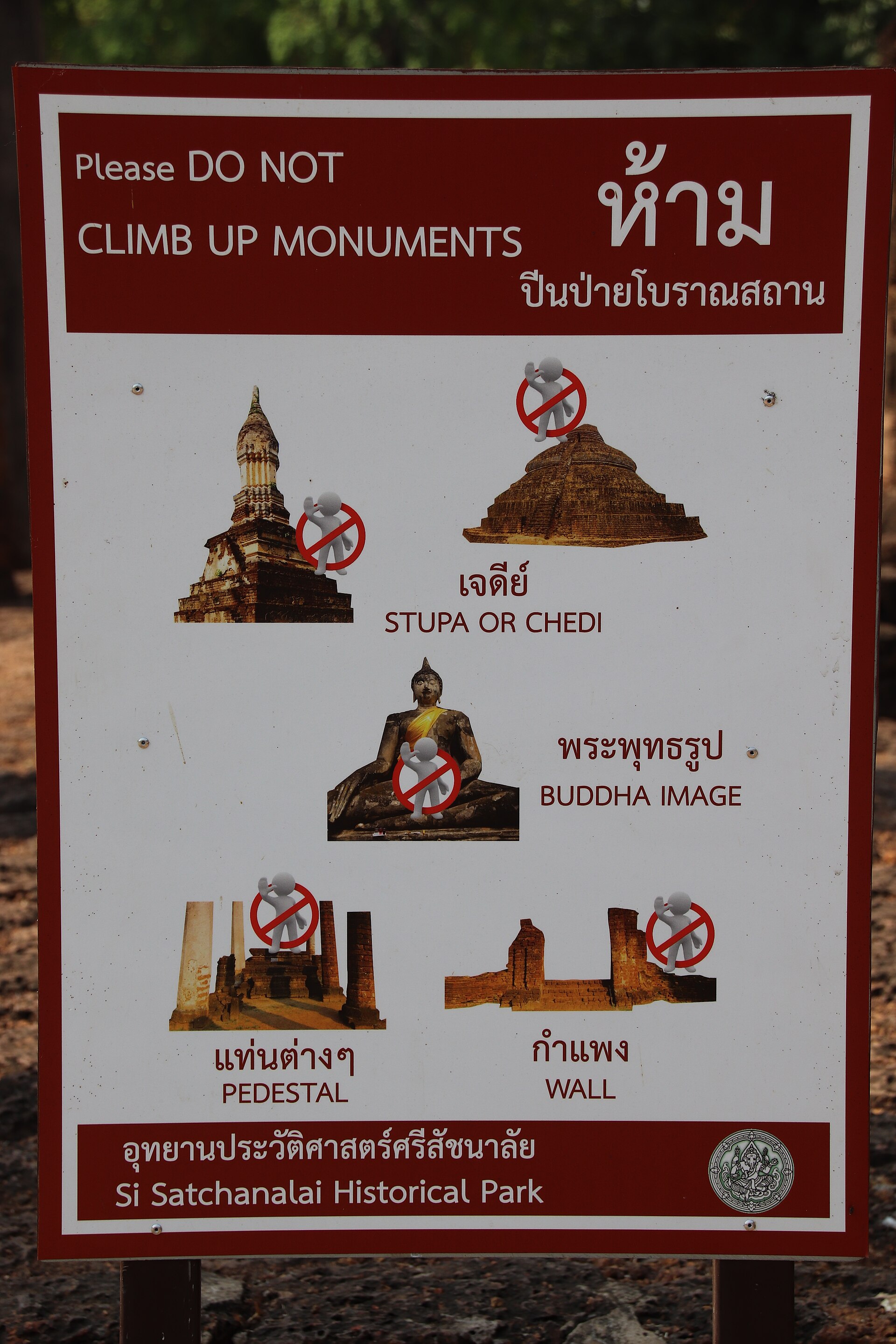
If you've already visited the main Sukhothai Historical Park and loved it, this is the quieter, more spacious version. Si Satchanalai Historical Park is about 50 km from Sukhothai town and forms part of the UNESCO World Heritage Site 'Historic Town of Sukhothai and Associated Historic Towns'. The park covers over 500 rai with hundreds of historic sites scattered through open forest along the Yom River. It suits history lovers, photography enthusiasts and anyone who wants to walk the ruins without competing for space — because it is genuinely less crowded than the main city.
The highlights not to miss are Wat Chang Lom — a Sri Lankan-style chedi on a square base, ringed by 39 full-bodied stucco elephants, an imposing and atmospheric sight — and just across the road, Wat Chedi Jet Thaew, with its rows of seven chedis in various forms, believed to have been the royal burial ground. The two temples are close enough to walk between, and they are the sites visitors mention most often in reviews.
The atmosphere is genuinely shaded, clean and well-organised. Reviews consistently say the morning is the best time, when it feels as though you've stepped back into a different era. Options include walking, renting a bicycle or taking the park tram. Entrance fee: 20 THB for Thai nationals, 100 THB for foreigners; the guided tram adds approximately 30 THB. Open every day 08:00–17:00. The value for the beauty and peace you get is excellent.
Things to know: the park is large with ruins spread out — walking alone is tiring. Rent a bicycle or use the tram to move comfortably. Bring a hat, water and sunscreen for sections with strong sun. Morning or late afternoon gives the best light and the most comfortable temperature for photos.
Thung Thaleh Luang (Heart-Shaped Island)
If you're visiting Sukhothai and want a distinctive aerial-view photograph that looks unlike anything else, Thung Thaleh Luang is the answer. This is a large royal-initiative reservoir covering over 7,070 rai, surrounded by the Luang mountain range. What makes people across Thailand talk about it is the 'heart-shaped island' in the middle — viewed from above, the island is clearly heart-shaped, and on it stands a mandapa housing Phra Phuttha Rattana Siri Sukhothai, an ancient bronze Buddha image in the Subduing Mara posture over 700 years old. It serves as both a leisure destination and a merit-making site in the same visit — suited to those who enjoy wide open spaces, couples, families and solo visitors seeking calm.
The experience not to miss is driving the circuit road that loops the reservoir — about 15 kilometres, with multiple stopping points for photographs along the way. The most beautiful moments are sunrise and sunset; reviews consistently say the sunset view along the road before the park entrance is exceptional, with a cool breeze. The site is also good for cycling, jogging, or sitting under a tree by the water. To see the full heart shape, you need a drone or an aerial shot — standing at ground level you see a wide reservoir more than a clear heart outline.
Entry is free, no admission charge. Opening hours seen most often are approximately 08:00–18:00 (some sources show earlier opening). Located in Ban Kluai Subdistrict, Mueang Sukhothai, a short drive from town. A private vehicle is strongly recommended as the area is large and points of interest are spread out.
Things to know before visiting: there are very few shops or food stalls nearby. Bring your own water and snacks. Pack an umbrella or hat for midday sun as the site is exposed. The mandapa on the island may be closed at certain times — worth checking before making a special trip. This is a popular landmark because it offers a rare and striking photograph combined with merit-making and peaceful natural scenery in one stop.
🛏️ Where to Stay in Sukhothai
Most Sukhothai trips revolve around two areas: the old city and the new town. If you want to wake up early and cycle into the historical park without a long drive, staying near the old city is the most convenient option. If you prefer access to evening food stalls and a convenience store nearby, the new town is the better base. Compare prices at good-location properties in advance — booking ahead almost always gets you a better deal than booking on arrival.
🔍 Check Sukhothai Hotel Prices (Agoda)Royal Monument of King Ramkhamhaeng the Great
If you visit Sukhothai Historical Park and don't stop at this monument, you haven't quite arrived. The Royal Monument of King Ramkhamhaeng the Great is a large bronze statue — approximately twice life size, cast in a bronze-copper alloy — depicting the king seated with his legs hanging down on the Manangsilabat stone throne, right hand holding a scripture, left hand in a teaching posture. It suits visitors who want to start the trip with a moment of reverence before cycling the ruins, and families who want their children to encounter Thai history from a primary source.
Highlights not to miss: the royal figure on the Manangsilabat throne, and the bas-relief panels at the base that illustrate the king's reign — the invention of the Thai script, a flourishing era of trade, and military campaigns. Another detail many visitors mention is the large bell at the entrance: many reviews note it looks like a temple bell at first glance but is actually very large, connecting to the story of the petition bell in King Ramkhamhaeng's era. Passers-by often ring it gently for good fortune.
The surrounding area is open and spacious, with a large pond at the front that adds to the photograph. Reviews consistently warn that sun and shade are limited here — morning and evening are recommended, and bringing a hat and water is essential. The monument is inside the central zone of the park — easy to reach by walking or bicycle. No additional charge beyond the central zone entrance fee (approximately 20 THB for Thai nationals, 100 THB for foreigners). Open every day approximately 06:30–19:30 (matching the central zone hours).
The monument is popular because it is essentially the symbolic heart of the Sukhothai old city. Thai visitors come to pay respects and honour the king's legacy; international visitors stop because it is within the UNESCO World Heritage zone. Worth noting: behind the monument on Friday to Sunday evenings, a walking street market called Tha Nam Rap Sadet opens approximately 16:00–20:00. Weekend visitors can walk over and sample local food immediately after.
Wat Sa Si
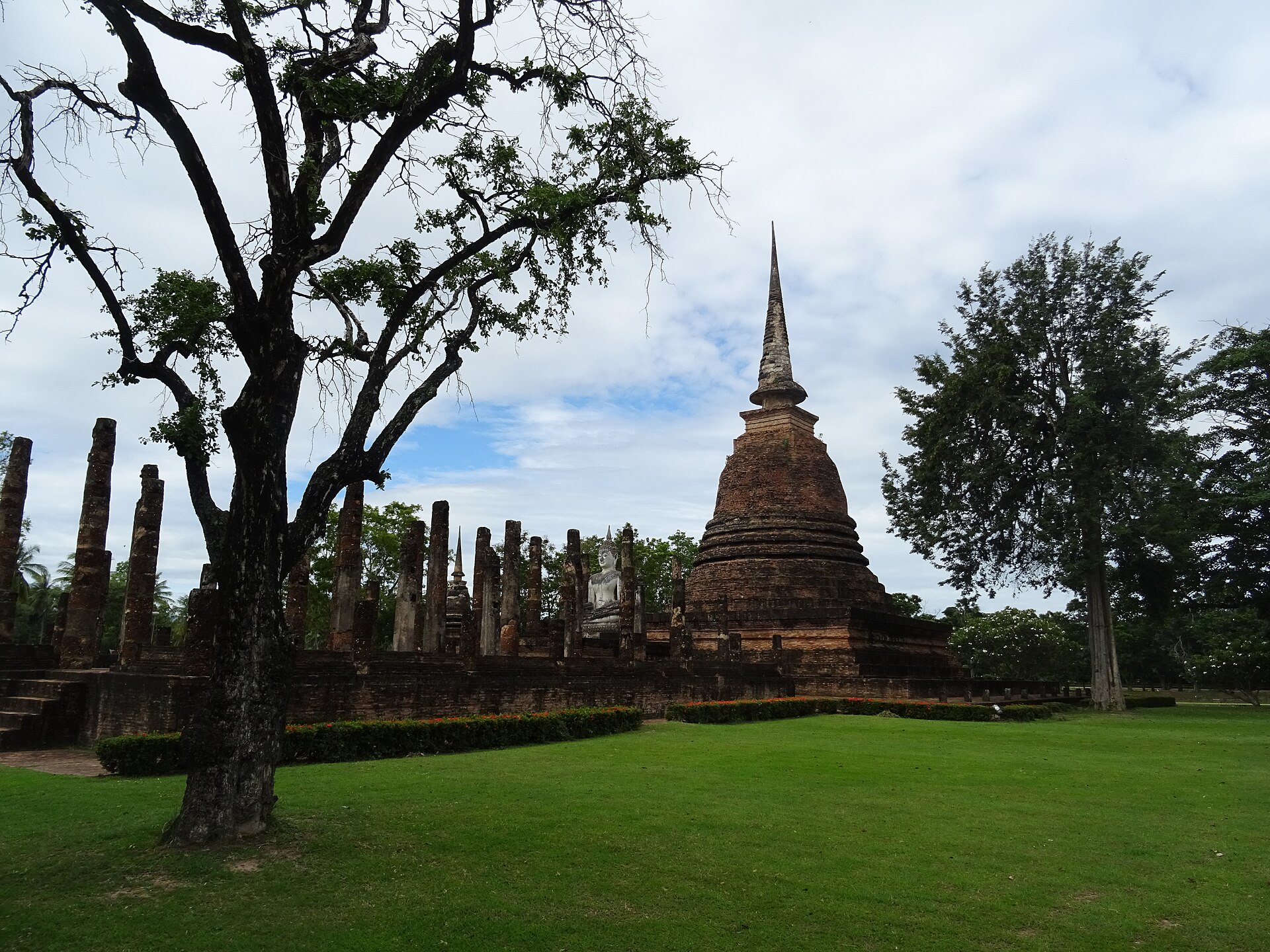
Wat Sa Si is one of the temples that photography lovers most often nominate as the most beautiful corner within Sukhothai's city walls. The defining feature is its position: it sits on an island in the middle of Tra Phang Tra Kuan, the largest pond in the old city. Cross a short wooden bridge and you reach the principal Sri Lankan-style bell chedi — clean, smooth and complete in its form. For anyone who enjoys a quiet, shaded temple and wants to photograph at a relaxed pace, this is particularly suited — especially for couples or those who want a beautiful image without competing for the angle.
The unmissable experience is the chedi reflected in the surface of the pond at dusk. Reviews consistently single out Wat Sa Si and Wat Mahathat as the two best spots in the park to watch the sunset, because the water around the island catches the orange and red light and mirrors the chedis below. The technique is to stand on the bridge or at the western bank, arriving about half an hour before sunset. Another highlight is the walking Buddha image inside the viharn — in the distinctively Sukhothai pang lila posture, graceful and light, that many visitors describe as appearing genuinely to move.
The entrance fee is included in the central park zone pass: 10 THB for Thai nationals, 40 THB for foreigners, with a small additional fee for bicycles or vehicles. Located about 350 metres north of Wat Mahathat — a short cycle on from the main temple. Open every day approximately 06:30–19:30. Morning and late afternoon offer better light and fewer people than midday.
This temple is consistently popular because the composition — chedi, water, wooden bridge and lotus flowers in the pond — comes together in a photograph that feels complete. It also serves as an important venue for provincial events including the Loi Krathong Candle Ceremony. The site is small; the visit is quick. Combine it with the other central-zone temples in the same circuit, and always bring a hat and water as midday sun is strong.
Rim Yom Market 2437
Rim Yom Market 2437 is a vintage riverside market that the people of Kong Krailat revived together, first held in 2012 in front of Wat Kong Krailat — on the site of an old pier and trading quarter from over a century ago. The number 2437 refers to the Buddhist Era year in which Kong Krailat District was established. Walking in, you feel transported to a market from your great-grandparents' era: wooden shophouses, old-style store signs, and vendors dressed in traditional Thai costume throughout the market. It suits people who love a slow, unhurried atmosphere, photography enthusiasts and families who want their children to see traditional Thai life firsthand.
Food is the real star. The market stretches about 200 metres along the riverbank with more than 60 community stalls. Must-try items include noodles served in a coconut shell (kuay tiao kala), pad thai wrapped in a banana leaf, and claypot kuay jab (a peppery offal-noodle soup that is increasingly rare nowadays). For dessert there are khanom kong (black sesame sweets), khanom phing, Tod Man Rim Yom, and local fermented fish condiments. Many stalls use old family recipes made exclusively for market day. Prices are community-market friendly; bring cash and graze at your own pace.
What makes people keep talking about Rim Yom isn't only the food but the events surrounding the market: vintage dancing, ballroom dancing, open-air film screenings and storytelling about Kong Krailat's history. By dusk, the atmosphere builds into something reminiscent of a village temple fair from the past — warm lights along the riverside as the sun goes down, which is the most beautiful window of the evening.
The most important thing to know: the market opens only on the first Saturday of each month, approximately 16:00–21:00. It is not open every day. Confirm the date before making the trip. Located about 21 km from Sukhothai town; there is a car park, and no entrance fee. Arriving in the late afternoon is recommended to catch both the evening light and the building market atmosphere.
Sangkalok Museum Sukhothai
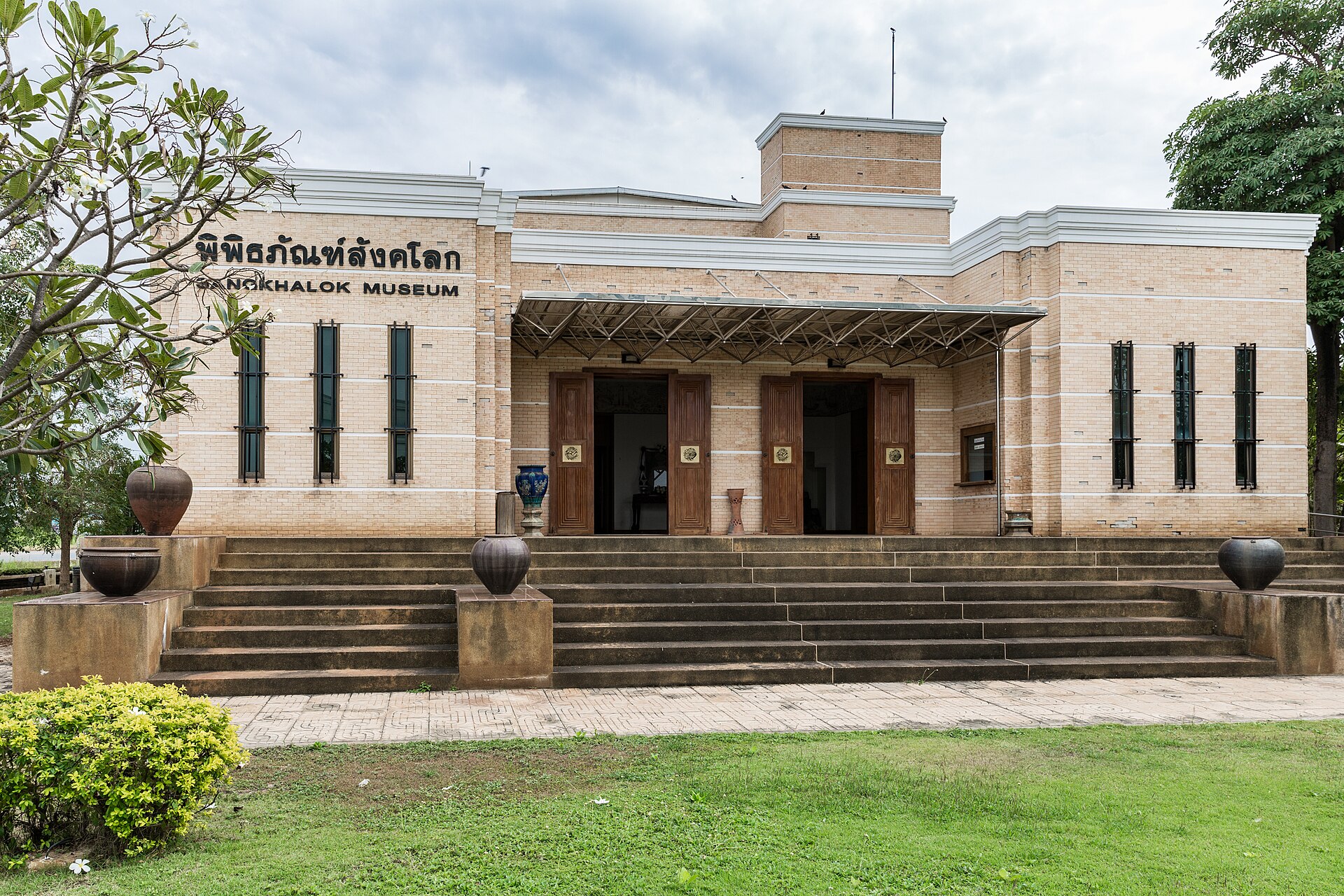
Sangkalok Museum Sukhothai is a small two-storey private museum housing more than two thousand pieces of ancient Sangkhalok ceramics. It works well for anyone who wants to understand the deeper story of Sukhothai before or after walking the historical park. History lovers, collectors of old artefacts and families bringing children for an out-of-classroom learning experience will all find it digestible and quick — roughly one hour covers the whole collection. Most of the pieces were excavated in the area, supplemented by items traded from China, Vietnam and Myanmar, telling the story of Sangkhalok's role as Sukhothai's key export product in the 14th to 16th centuries.
Highlights that visitors most often mention include rare antique Buddha images and ceramic figurines on the second floor, a single-of-its-kind plate with a traditional Thai house design, and a large complete Sukhothai-era water jar. Exhibits are neatly arranged in glass cases with both Thai and English descriptions. A free printed guide is available at the counter. The atmosphere is quiet and cool with air conditioning; there is also a small gift corner selling reproduction ceramics. Multiple reviews note the information is substantive, staff are helpful and it is a strong complement to the historical park visit.
Entrance fee: adult Thais approximately 50 THB, children and students in uniform 20 THB, foreigners approximately 100 THB — very affordable. Open every day 08:00–17:00. Located in Mueang Plaza, on the bypass road on the Sukhothai town side, about 2–3 km from the new town centre — a tuk-tuk ride away.
One practical note: opening hours occasionally don't match the posted times. Some visitors have arrived within business hours to find the doors closed. If you're making a dedicated trip, calling ahead or checking at the gallery building next door before travelling is worth doing. Overall, for anyone who loves old objects and the stories of this World Heritage city, it is well worth the stop.
Sukhothai Night Market (Prasoet Phong Road)
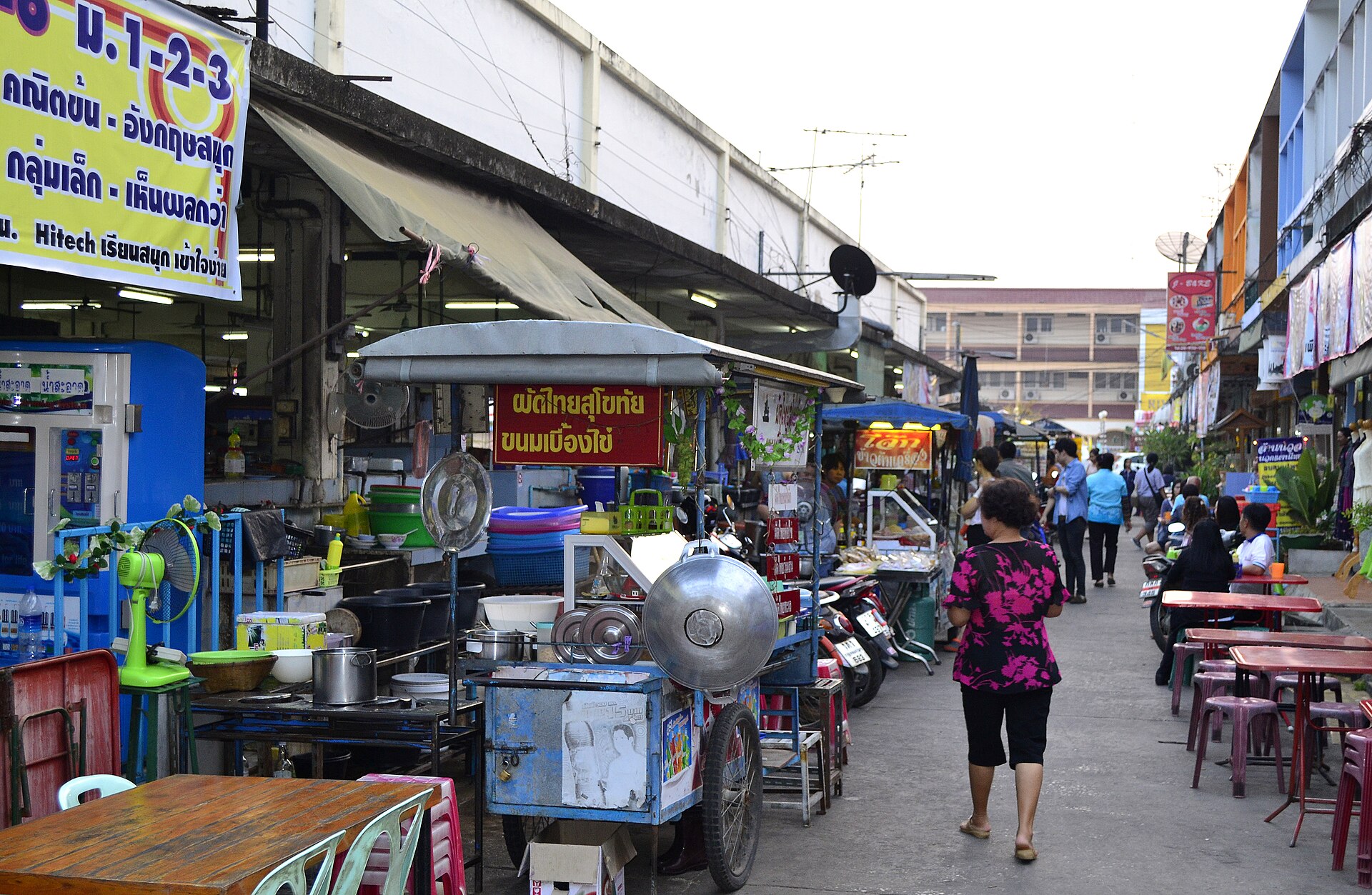
The Sukhothai night market on Prasoet Phong Road in the new town is where actual Sukhothai residents go for their evening meal. This is not a tourist-facing market designed for photographs — it is the living food street that locals walk every evening. Anyone staying in a new-town hotel and wondering where to eat should come here, because the street brings together food stalls, fried snacks, desserts and fruit shakes in a long strip along the road. It suits people who want genuinely local food at local prices, and who want to see Sukhothai at night in its unfiltered form.
The two dishes not to skip are the province's signatures. First: Sukhothai noodles — a slightly chewy light-yellow noodle in a subtly sweet broth, topped with long beans, fresh lime and a squeeze of chilli, the sour-spicy combination working perfectly together. Second: Khao Pib — thin steamed batter on a cloth, wrapped around red pork, egg, bean sprouts, coriander and spring onion, one bite delivering a full balance of flavours. Beyond these two, there is also Sukhothai pad thai (made with tamarind water instead of vinegar — sweeter and rounder than the standard version), hoi tod (oyster pancake), khao man kai, curries and northeastern Thai food to choose from.
The atmosphere is a long walking street along the road: a mix of local residents and visiting food-seekers weaving through. Reviews consistently note the food is genuinely good, the prices are low — 40–60 THB per dish — and the vendors are friendly and approachable. One thing to note: seating in the market is limited and many stalls focus on takeaway. Most vendors speak little English; pointing at the menu or saying a few Thai words makes everything easier.
Located in the new-town centre, near the King Ramkhamhaeng Monument — not the historical park side. Open evenings from approximately 16:00 through to 23:00; busiest on Friday and Saturday nights. This market is popular because it has been here for years and is the real evening kitchen of the local community — authentic local food at friendly prices, and a genuine taste of Sukhothai evening life that no tourist attraction provides.
Book Sukhothai Tickets and Tours
Sukhothai's attractions are spread across several districts — the old city, Si Satchanalai and Thung Thaleh Luang. If you'd rather not drive yourself or risk getting lost, a guided tour through Klook or GetYourGuide covers multiple sites in a single day with a pick-up. Some packages include transport and advance ticket booking — no queuing at the gate. A good option for visitors with limited time who want to cover the main sites efficiently.
💡 Know Before You Go — Sukhothai
The ruins of the old city are spread out. Renting a bicycle at the park entrance and cycling between them is more enjoyable and more thorough than walking. At Si Satchanalai there is also a park tram as an alternative.
Park entrance fees, bicycle rental, street markets and local restaurants mostly operate on cash. Carry small notes and coins — card payments are mainly accepted at hotels and larger businesses.
The park opens from around 06:30. Early morning and the hour before sunset are the times with the least heat, the best light and the fewest people. The ruins photograph far better than at midday.
Major attractions like the historical parks and key temples have bilingual Thai-English signage. At markets and local restaurants, communication in English is limited — a translation app helps a lot.
The park grounds are wide open with limited shade. Bring a hat, sunglasses, sunscreen and plenty of water — especially if you plan to cycle through multiple temples in a single outing.
Sukhothai noodles and Khao Pib are the two dishes everyone should eat here. The night market on Prasoet Phong Road in the new town opens in the evening — the most convenient and affordable place to find them.
How to Cover Sukhothai Properly in One Trip
A simple approach is to split the trip into two zones. Day one: dedicate the whole day to the 'old city'. Rent a bicycle at Sukhothai Historical Park from early morning and ride from Wat Mahathat through Wat Sa Si in the central zone, then continue out to Wat Si Chum outside the northern wall. Morning and late afternoon are when the sun is manageable and the ruins photograph at their best.
Day two: allow time to drive to Si Satchanalai Historical Park in a separate district — about an hour from the old city. The park tram and bicycles are both available there. Walk Wat Chang Lom at a leisurely pace. On the way back, stop at Thung Thaleh Luang to photograph the heart-shaped island, then close the evening at the night market on Prasoet Phong Road in the new town for Sukhothai noodles and Khao Pib. Rim Yom Market 2437 in Kong Krailat opens only on the first Saturday of the month — confirm the date before making it part of the plan.
A full day covering multiple Sukhothai sites is much more comfortable with a nearby hotel. Staying near the old city or the new town both work well. Book ahead for the best rates.
See Well-Located Hotels in Sukhothai