🔄 Last checked 26 Jun 2026 · details and hours can change — check the venue before you go
📍 All restaurants on the map
Tap a pin for the spot + nearby stays
Suphan Buri's charm is that you can travel across several styles within a fairly small area. Around town (the Rua Yai and Tha Phi Liang neighborhoods) sits a cluster of photogenic landmarks — the giant golden dragon, Wat Khae tied to the Khun Chang Khun Phaen legend, and a viewing tower you can climb for a 360-degree look over the city. Head out toward Doembang Nangbuat and you'll reach Bueng Chawak, an open zoo and an aquarium in one place. For old-market fans there's the Sam Chuk Century-Old Market, where you stroll and eat well along the Tha Chin River. All of which makes Suphan Buri a strong fit for family trips and day trips from Bangkok, because the sites sit close together and most entry fees are cheap.
Many places on this list are famous across the whole province. The 75-meter saltwater fish tunnel at Bueng Chawak lets you walk beneath rays and sharks swimming around your head. Wat Pa Lelai is a landmark temple woven into the Khun Chang Khun Phaen literary tradition. The Banharn-Jaemsai Tower is the first and tallest observation tower in Thailand, and the newest addition, the U Thong ancient-city skywalk at Pha Mangkon Bin, is the longest pillarless glass walkway in the country. We close with the Don Chedi Memorial, which tells the story of King Naresuan's elephant-back duel in an easy-to-follow way. Ten places in all, covering temples, nature, markets, and photo spots — pick the ones you like and plan your route.
Bueng Chawak Chaloem Phrakiat (Zoo + Bueng Chawak Aquarium)
Bueng Chawak Chaloem Phrakiat is the most complete attraction in Suphan Buri, sitting at the northern tip of the province in Doembang Nangbuat District, along the Suphan-Chai Nat road. In one place you get an aquarium, an open zoo, a large aviary, and a native-plant garden — ideal for families who can spend a whole day walking with the kids, or drivers passing through who want to stretch their legs. What people talk about most is that it's an attraction near Bangkok that feels worth far more than the price of admission.
The unmissable highlight is the fish tunnel you walk through as fish swim overhead. The freshwater zone (Building 2) has more than 30 tanks and a freshwater fish tunnel that's claimed to be the first in Thailand. Anyone who wants the full experience should buy a ticket for the saltwater "Heaven Under the Sea" zone, with a tunnel that passes beneath a giant shark tank. On the open-zoo side you walk past giraffes, zebras, camels, deer, and tigers, and you can feed the giraffes. Add the crocodile zone, which runs scheduled shows that get the kids excited every time.
It's very easy on the budget. The zoo is tens of baht for adults; the freshwater fish building is 30 THB for adults and 10 THB for children; the saltwater shark tunnel is an extra 150 THB for adults and 50 THB for children. Visitors aged 60 and over enter free. Plenty of real reviews say the ticket is worth it — there's a wide variety of fish to see, it photographs beautifully, and there are inexpensive restaurants on site. A note from people who've been: come in the morning before 11 so you can walk comfortably, before the heat and the crowds build up.
Opening hours are 08:30–16:30 on weekdays, and until 17:00 on weekends and holidays. The place surged in popularity again after social clips invited people to visit, drawing lively crowds — a sign of how attached people in Suphan Buri and nearby provinces are to it. Anyone planning a visit should set aside half a day to a full day, and if you're set on seeing the shark tunnel, don't forget to check the fish-feeding and crocodile-show times before you go in.
Dragon Descendants Park – City Pillar Shrine + Dragon Descendants Museum
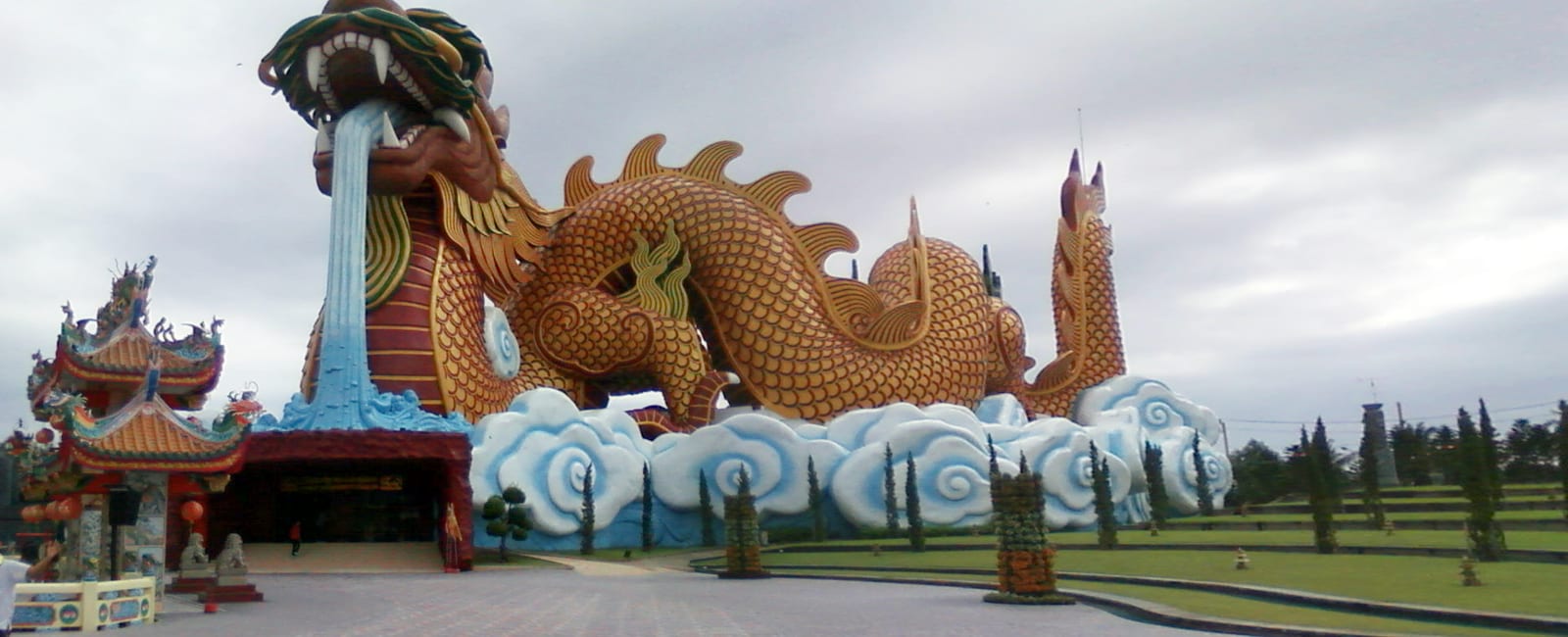
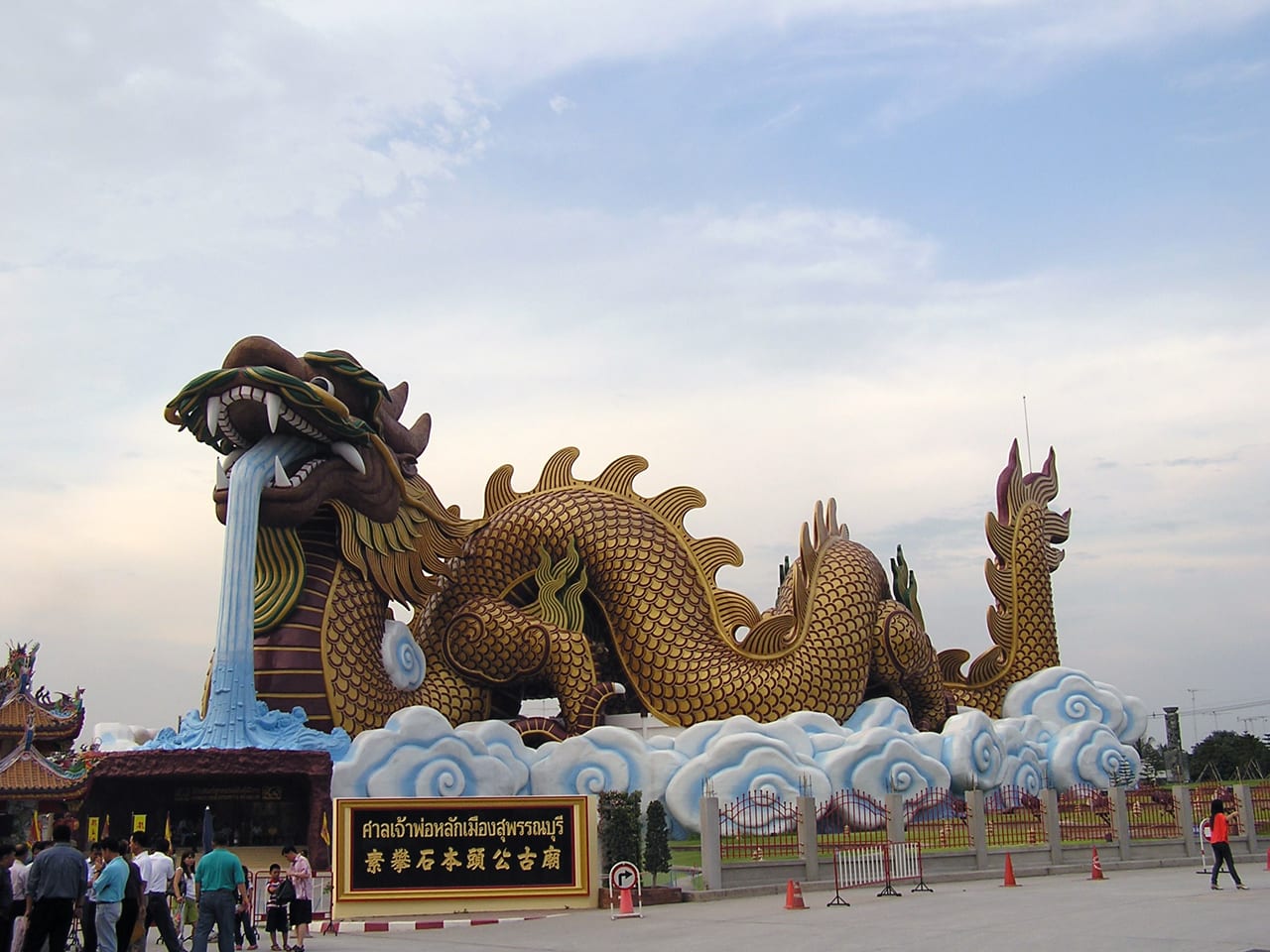
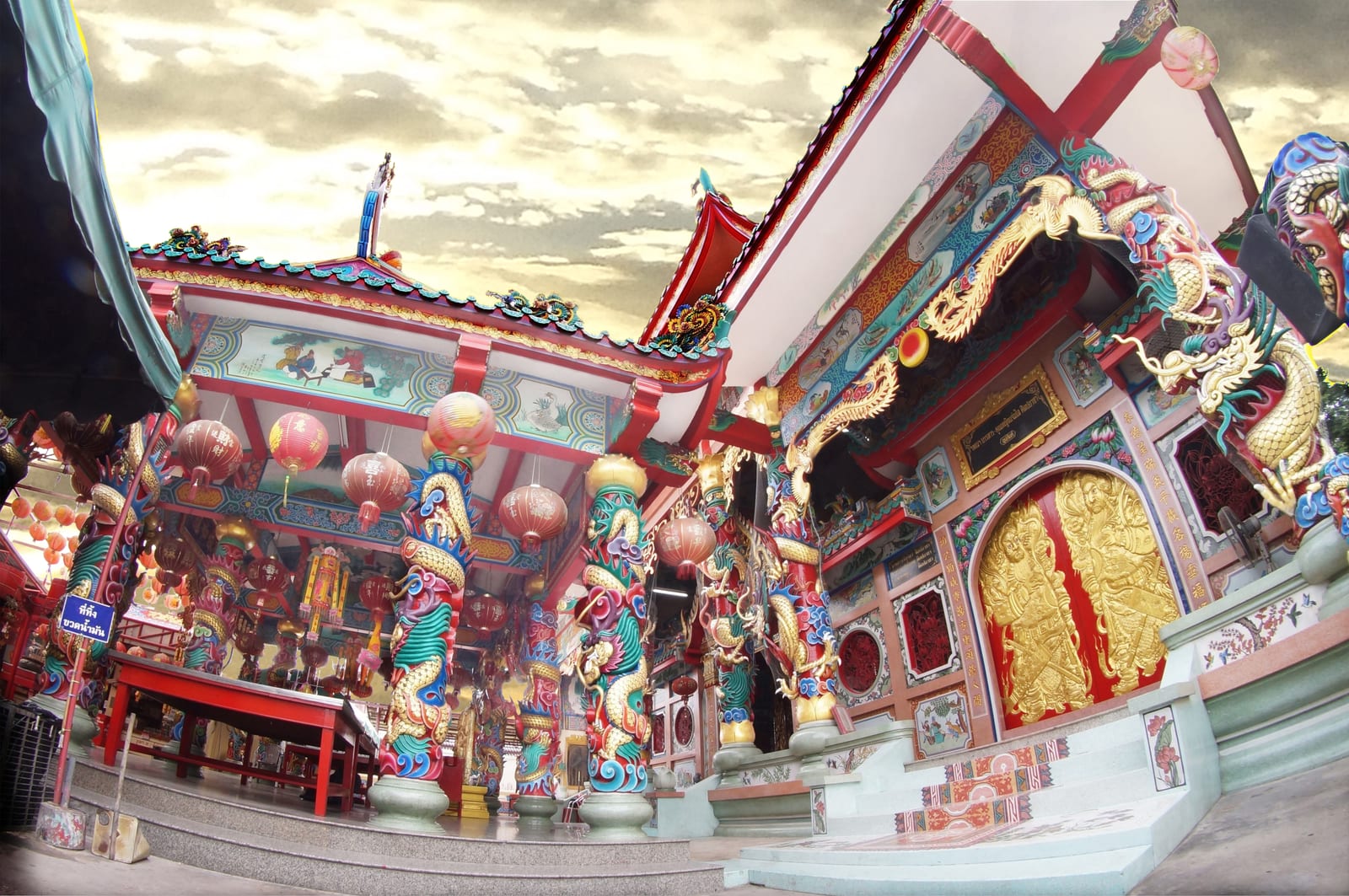
Say Suphan Buri and the first image many people picture is the enormous golden dragon draped across the middle of town. This is the Dragon Descendants Park, which brings together the Suphan Buri City Pillar Shrine and the Dragon Descendants Museum. The dragon runs nearly 135 meters long and stands about 35 meters high — so big it has become the province's symbol. It was built in the era of Banharn Silpa-archa to tell the story of Thai-Chinese people and celebrate Thai-Chinese relations. A great fit for families, worshippers seeking blessings, and anyone who enjoys history with a bit of theater.
The unmissable highlight is walking "inside the dragon's belly." This part runs on scheduled entries, with a guide leading you through 18 exhibition rooms that trace Chinese history from the legendary age through the various dynasties, told with light, sound, and animated models. It takes about 30 minutes. Many reviews say children get very excited, while adults enjoy the grand set pieces. After the dragon's belly there's still the Dragon Descendants Village modeled on Lijiang, a viewing tower, and the Buddha-command garden to explore and photograph.
On budget: the park grounds, worshipping at the city pillar shrine, and photos with the giant dragon are "free," with easy parking. The museum inside the dragon's belly charges around 99 THB per person, free for children under 5. It sits in Rua Yai on Malai Man Road in the city of Suphan Buri, a few minutes' drive from the in-town market. Open Wednesday–Sunday (closed Monday–Tuesday), roughly 10:00–16:00, opening a little earlier on weekends.
This place scores as high as 4.5 stars from over a thousand reviews. People praise it as a landmark that's complete in one spot — one visit covers blessings, the museum, and loads of Chinese-style photo corners. Good to know: the museum runs on scheduled entries, so check the times and allow extra. It gets especially crowded over Chinese New Year, so a weekday visit is more relaxed. And remember it's closed Monday–Tuesday — plan before you set off and you won't miss out.
Wat Khae (Khum Khun Phaen)

Wat Khae is a temple more than 500 years old on the bank of the Suphan Buri River, known to Thais from the literary tale of Khun Chang Khun Phaen. The story goes that Khun Phaen once studied here with Master Khong, learning to turn tamarind leaves into wasps — so walking into the temple feels like stepping into a scene from a story you read as a child. It's a great fit for people who love history and literature, and for families who want to bring the younger generation to see the real thing while making merit.
The highlight here is Khum Khun Phaen, an Ayutthaya-era Thai wooden house that the province built as a literary park. Not far away is the giant tamarind tree, its trunk nearly 10 meters around — it takes several people to encircle it — and believed to be the very tree from the legend. Devotees stop to pay respects to Luang Pu Khong seated over a nest of wasps and to Thao Wessuwan for fortune, and there are old murals and antique Buddha images to view quietly in the vihara.
The temple is free to enter; donate as you wish. It's in Rua Yai, just a few minutes from the city of Suphan Buri. Driving yourself is easy thanks to a wide parking lot, or you can take a songthaew from town. The grounds are shady with big trees throughout, comfortable for a relaxed stroll all day.
Good to know: come from morning to late afternoon when the sun is gentler and the crowds are thinner. Dress modestly, as this is a working temple. Plenty of real reviews describe it as shady, peaceful, and sacred. It's popular because it's often part of Suphan Buri's multi-temple merit-making routes, making it a stop that combines sightseeing, merit, and following the literary trail all in one.
Sam Chuk Century-Old Market
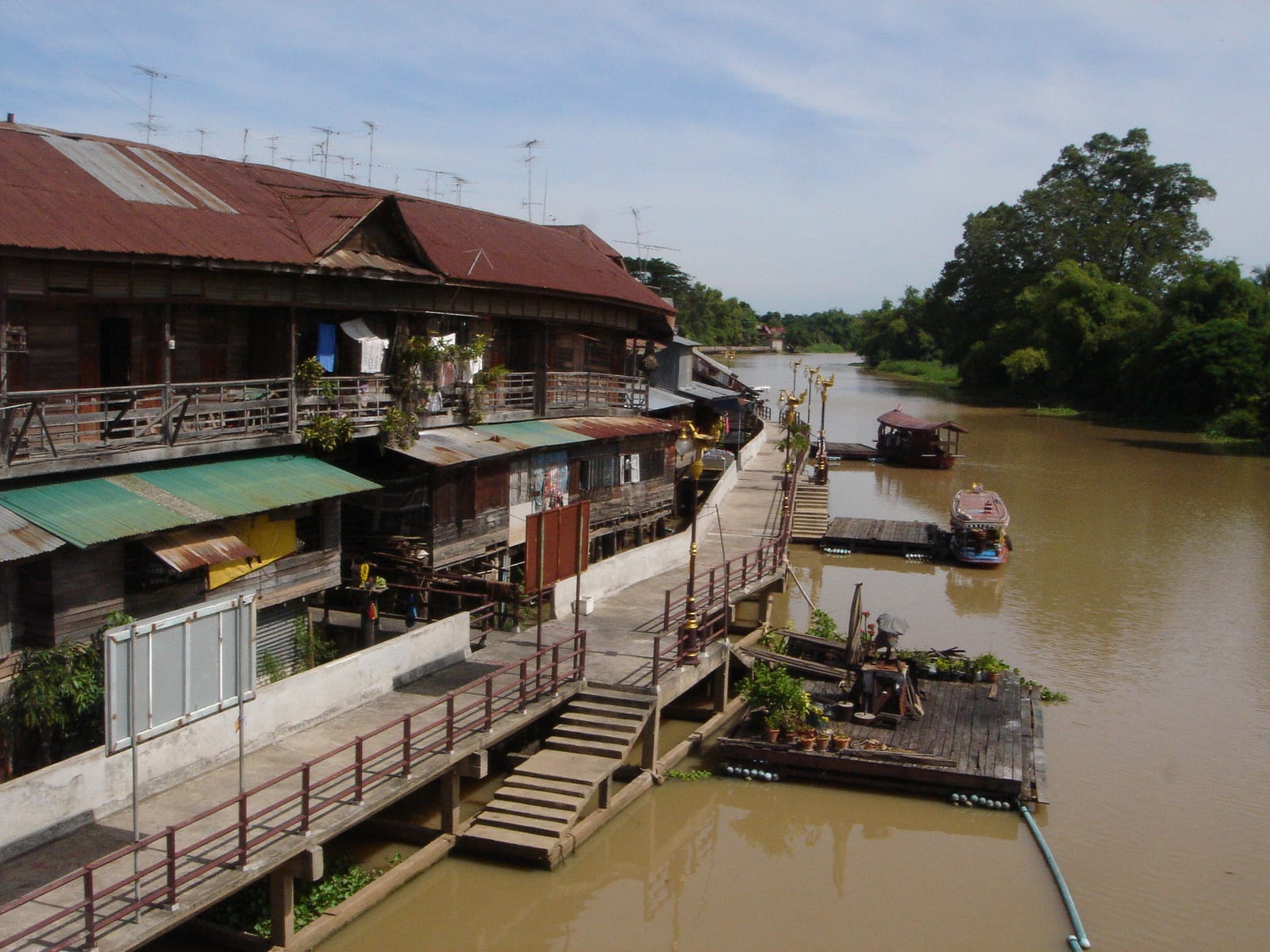
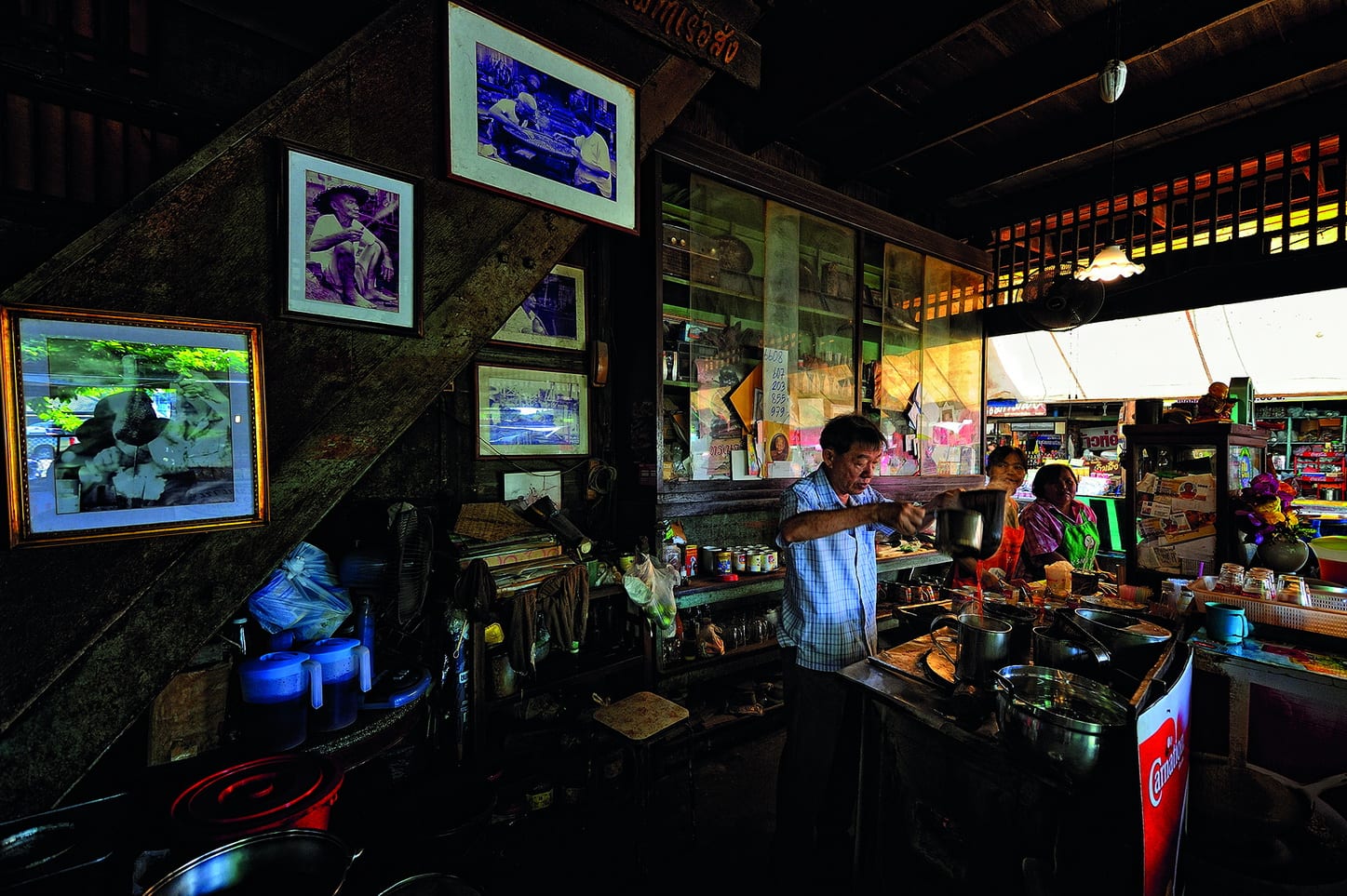
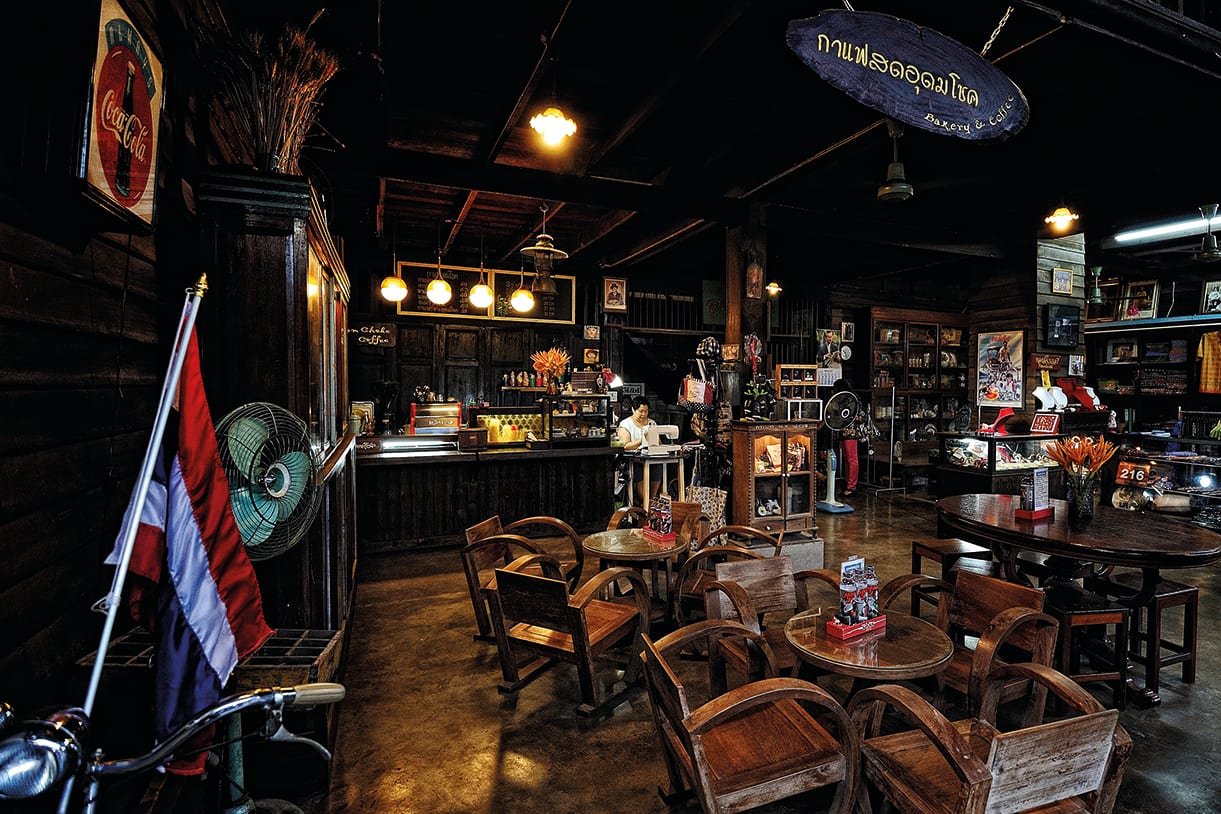
If you want to tour Suphan Buri by strolling and eating happily through an old wooden market that's genuinely still alive, the Sam Chuk Century-Old Market is the answer. It's a nearly hundred-year-old riverside market of the Thai-Chinese community along the Tha Chin River. The wooden shophouses on both sides of the walkway are all still standing, with lovely gingerbread fretwork to admire, and the unmissable Khun Chamnong Chinarak House — the wooden mansion of the first tax collector, now a living museum that tells the market's story. The market also won a UNESCO Asia-Pacific cultural heritage conservation award. A great fit for lovers of old markets, photographers, families bringing along elders, and anyone wanting to escape Bangkok on a day trip.
The real highlight is the food. Most reviews agree it's cheap and plentiful: old-style ice cream in wooden holders, tong (mung-bean sweets), khao lam in bamboo, hot old-style coffee, many kinds of Thai sweets, noodles, and the big-headed meatballs many people call outstanding. You can graze your way along, most items in the tens of baht, with souvenir shops, bakeries, and traditional sweets to take home. You can also take a boat to see life along the Tha Chin River or release fish to make merit.
The atmosphere is a selling point in itself: the central walkway is covered by canvas throughout, so even a midday walk stays out of the harsh sun. Reviewers love that you can keep strolling without getting bored, with plenty of old corners to photograph. The market opens daily, usually 08:30–16:30 on weekdays, while weekends open earlier and are far livelier, with more shops open — though it's also busier and parking is tighter.
It's in Sam Chuk Subdistrict, Sam Chuk District, on the Tha Chin River, north of the city of Suphan Buri, about 100-odd kilometers from Bangkok — driving yourself is easiest. Entry is free, and a few hundred baht per person is enough to eat your fill and take souvenirs home. Good to know: for the full-scale market, come on a weekend; on weekdays some shops may be closed, but you get a quieter, easier feel in return. Come from late morning to afternoon, since shops start closing in the evening.
Wat Pa Lelai Worawihan (Luang Pho To)
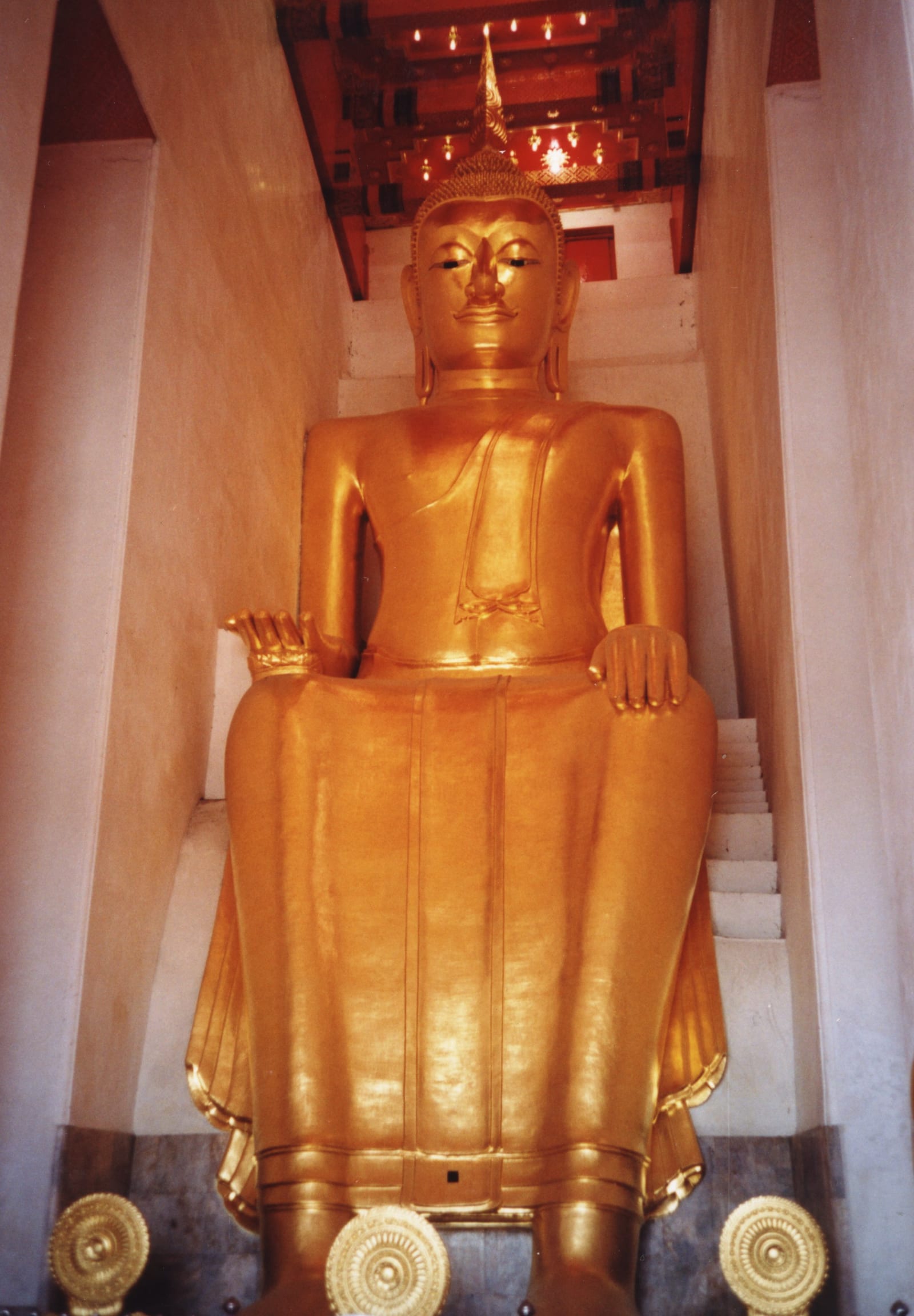
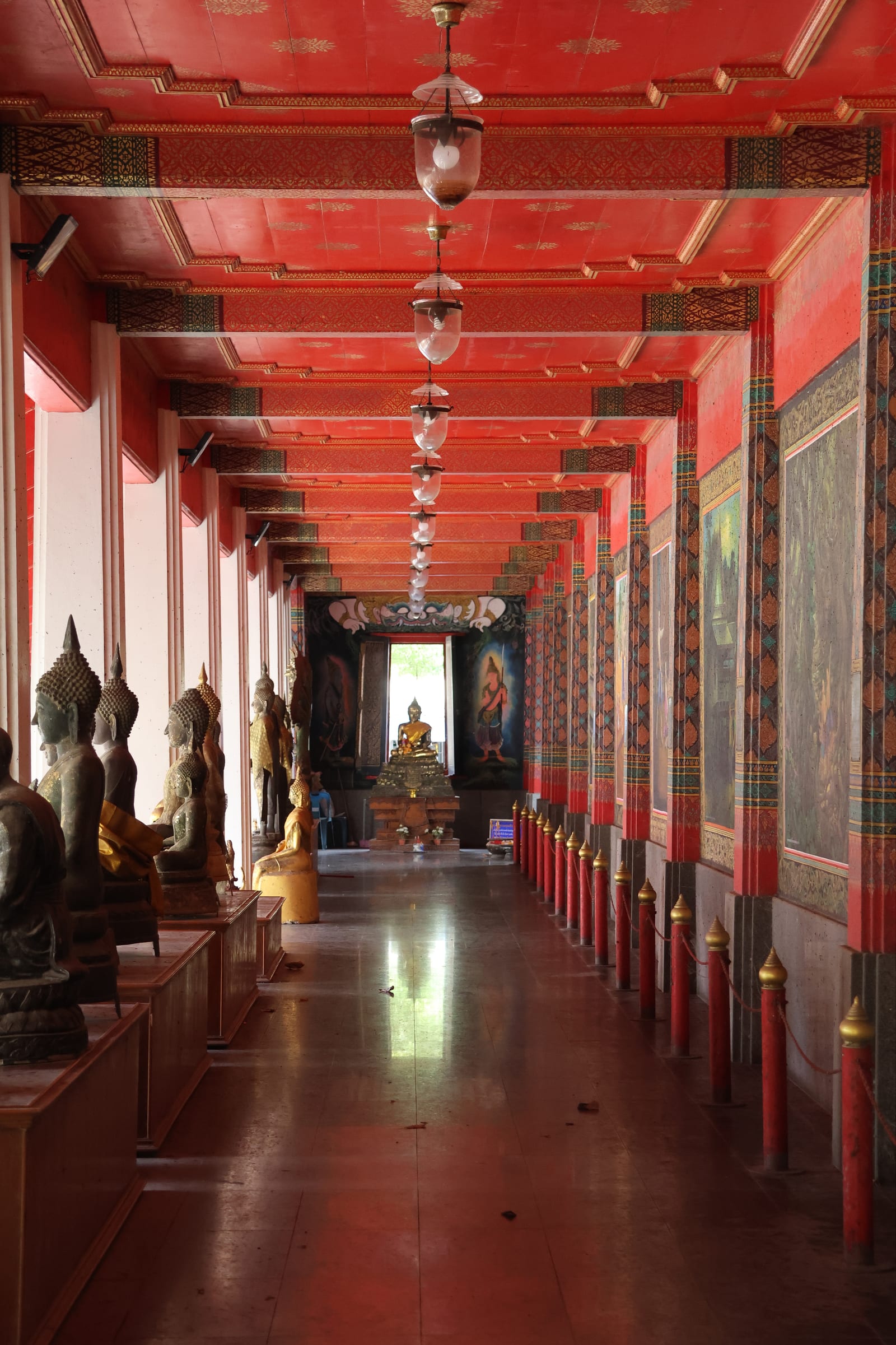
Wat Pa Lelai Worawihan is a landmark temple of Suphan Buri that almost no visitor to the province skips. The heart of the temple is "Luang Pho To," a large gilded stucco Buddha in the Pa Lelai posture, seated with the feet lowered, about 23 meters tall, enshrined in a tall vihara where you have to tilt your head all the way back to take it in. Many reviews say the scale and stillness of the vihara stir a hard-to-explain sense of faith. It suits anyone who wants to come and ask for blessings, devotees who love the atmosphere of an ancient temple, and families bringing elders to make merit.
What you shouldn't miss is paying respects to Luang Pho To and applying gold leaf, offering sangkhathan, topping up the lamp oil, then viewing the murals along the vihara's gallery, which tell the story of Khun Chang Khun Phaen — the literature tied to the city of Suphan. Inside there are also statues of characters like Khun Phaen and Nang Phim (Nang Wanthong) to photograph. The best part is "Khum Khun Phaen," an antique-style Thai house not far away — a short walk or drive — so you can cover the merit and literary trails in a single trip.
The location is very convenient. The temple is in town on Malai Man Road, on the west side of the Tha Chin River. It opens daily around 08:00–17:00, with no entry fee — only donations as you wish. Parking is spacious, but many reviews warn it's an open lot that gets quite hot and sunny at midday, so morning or late afternoon is more comfortable. Inside, the temple is clean and well-organized, with several merit-making points and a new ordination hall to explore.
This temple is popular as an old royal monastery, a center of faith for the people of Suphan, and a landmark that ties neatly to the Khun Chang Khun Phaen legend. About 1–2 hours to walk it is just right. Good to know: dress modestly, as it's a sacred site, and if you come during the Luang Pho To homage festival (twice a year), it gets especially crowded — allow extra time and factor in parking.
🛏️ Where to stay in Suphan Buri
See several Suphan sights in one trip and stay a night — it's far more comfortable than driving to and from Bangkok in a single day. Options range from hotels in the town center near the Banharn-Jaemsai Tower and Wat Pa Lelai, which make it easy to move on to other in-town spots, to quiet resorts out toward Doembang Nangbuat near Bueng Chawak. Great for families, and booking ahead through an app usually beats the walk-in rate.
🔍 Check Suphan Buri hotel prices (Agoda)Banharn-Jaemsai Tower
If you come to Suphan Buri and want to see the whole city from an angle you normally never get, the Banharn-Jaemsai Tower is the stop to make. It's the first and tallest observation tower in Thailand, rising to 123.25 meters, standing in the middle of Chaloem Phatra Rachini Park in the heart of town. Take the lift up to the viewing deck at about 78 meters and walk a full 360 degrees. On a clear day you can see for dozens of kilometers — the town, the rice fields, and the Tha Chin River. It suits families with kids, couples wanting a lovely view, and anyone who enjoys photographing from height.
What you shouldn't miss is dropping a coin into the telescopes installed around the viewing deck to hunt down the city's landmarks. Inside there's also an exhibition telling the story of Suphan — its history, its literature, and paintings of King Naresuan — to browse. Downstairs is another star: Chaloem Phatra Rachini Park, spread across 17 rai, with fountains, a musical dancing fountain, a waterfall stream, slides, a palm garden, and a playground. It's an easy place to stroll, and in the evening plenty of locals come to run and exercise.
It's very easy on the budget. The tower costs 30 THB for adults and 15 THB for children (after 6pm it rises to 40 and 20 THB), park entry is just 10 THB for adults and 5 THB for children, and parking is 10 THB. Many reviews agree it's good value, with wide parking, a clean and well-kept park, and friendly staff. The moment many people love most is the evening, when the tower lights come on and the fountains dance — the atmosphere turns romantic in an instant.
It's on Nang Phim Road in Tha Phi Liang, Mueang District, easy to find as a landmark visible from far off. Open Tuesday–Friday 10:00–19:00, and until 20:30 on weekends and public holidays; closed Monday. Good to know: if you want both the daytime view and the night lights, come in the evening before sunset and wait to watch the city turn on its lights — that's the best value.
Wat Phai Rong Wua
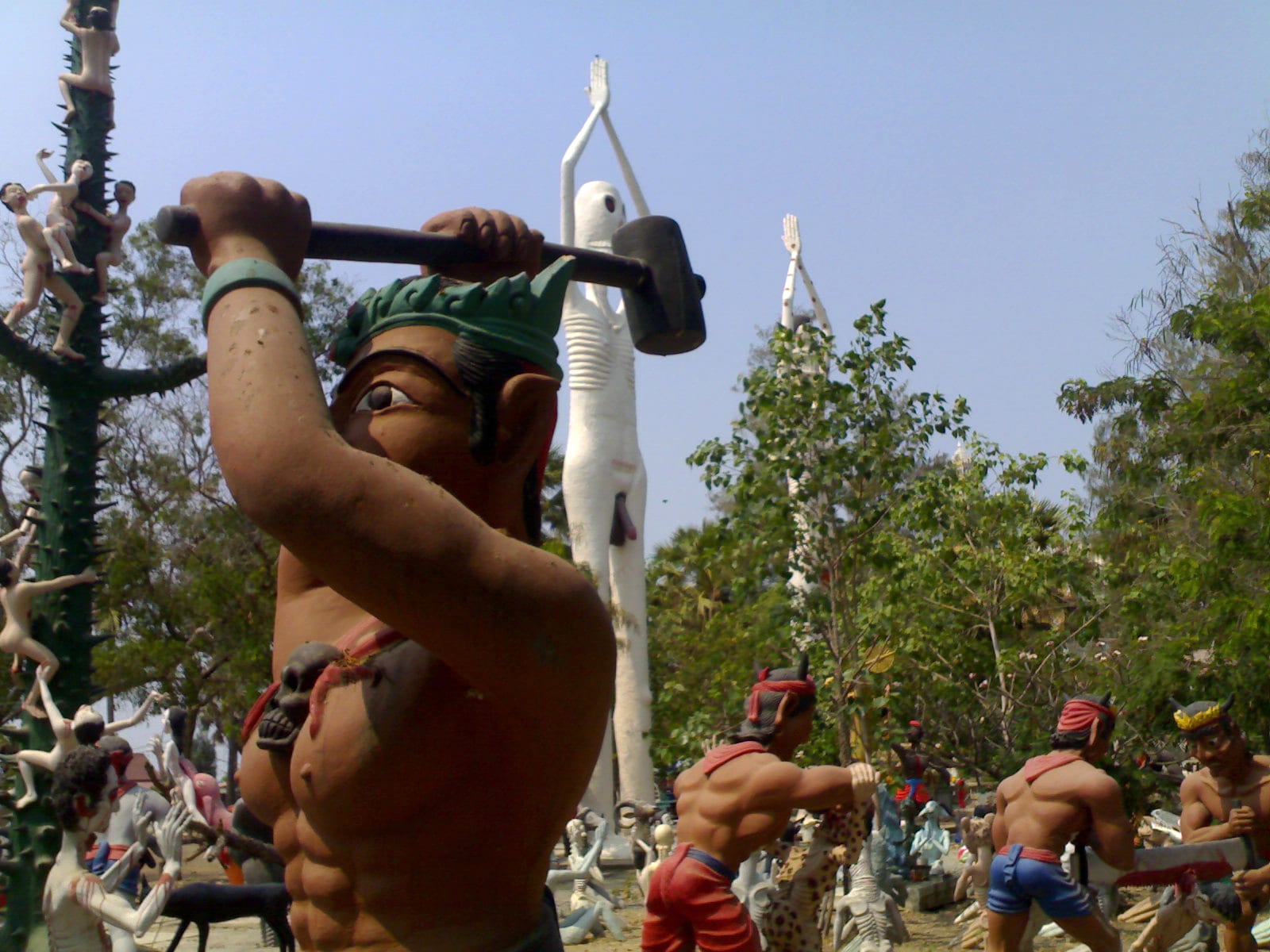
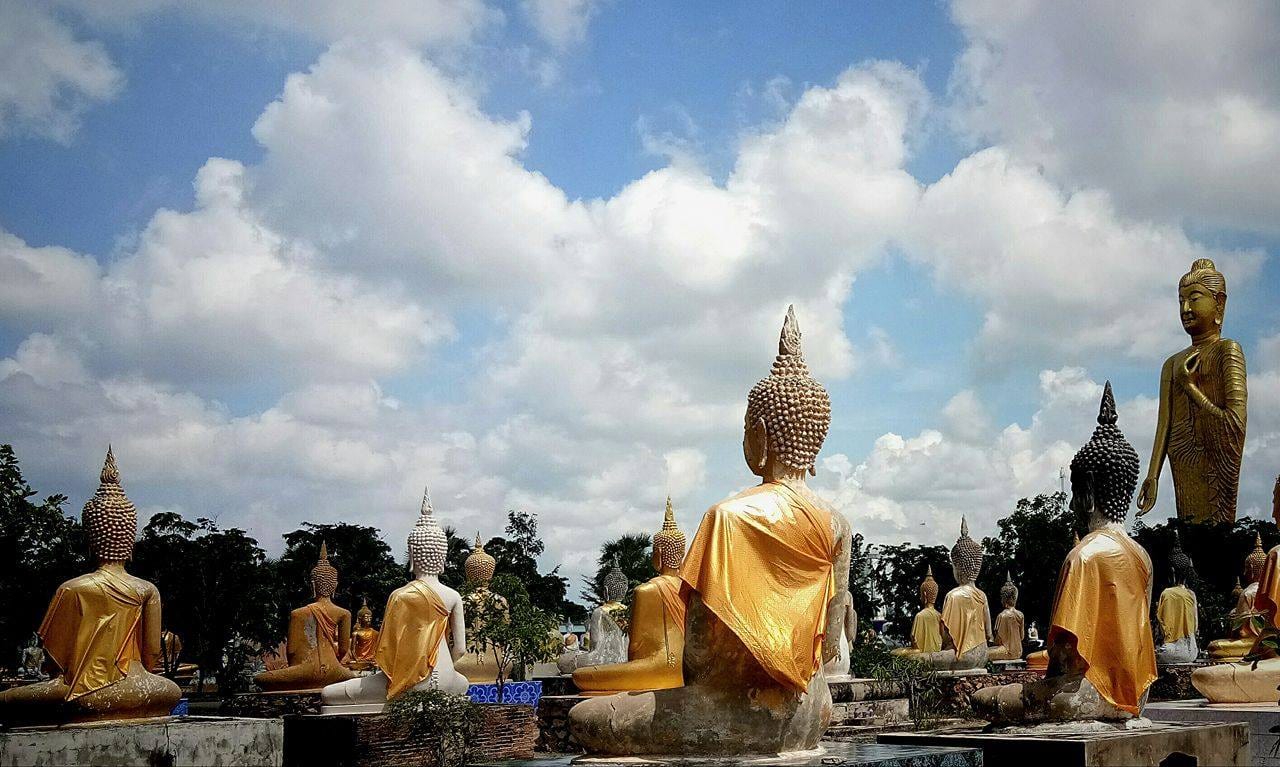
Wat Phai Rong Wua (also called Wat Photharam) is in Bang Ta Then, Song Phi Nong District, in the south of Suphan Buri Province. It's a large temple sprawling across several hundred rai that many people have known since childhood. The thing you spot from far off is Phra Kakusandho, a large white outdoor stucco Buddha in the Mara-subduing posture, standing tall as the temple's landmark — anyone driving past notices it before they reach the entrance. It's a great fit for families who want to bring the kids to worship, make merit, and see a vivid, hands-on lesson in sin and virtue.
The highlight that makes this temple stick in memory is the model "Hell realm and Heaven realm." Tall preta statues and depictions of punishment in the hell realms, according to belief, alternate with a shady heaven side — like an open-air museum teaching about the fruits of one's actions, the kind of thing children never forget. There's also Phra Phuttha Khodom, a large bronze Buddha, the Hundred-Spire Pagoda, the Hundred-Spire Vihara, and a model of the Buddhist holy sites, plenty to explore all day. Most reviews praise the wide grounds, the many merit-making points, and the endless variety to see.
Entry is free — no admission charge. Open daily around 07:00–18:00 (sometimes roughly 08:00–17:00). Inside there's wide parking, souvenir shops, and inexpensive restaurants to stop at. The atmosphere is that of a lively local temple, especially busy on weekends and during festivals — particularly Songkran, when there's a temple fair and big crowds every year. It's in the south of the province, an easy continuation from the city of Suphan, or a convenient stop on the way from Nakhon Pathom or Bangkok.
Good to know: the open grounds get quite hot, and many reviews recommend bringing an umbrella, a hat, and drinking water. Wear comfortable shoes because there's a lot of walking, and the sun is strong from late morning through afternoon. If you're with small children, allow time to rest in shady spots. All in all it's a religious attraction that combines worship, photos with the big white Buddha, and a tangible sin-and-virtue lesson for kids — well worth a half-day stop.
Thai Buffalo Conservation Village (Ban Khwai)
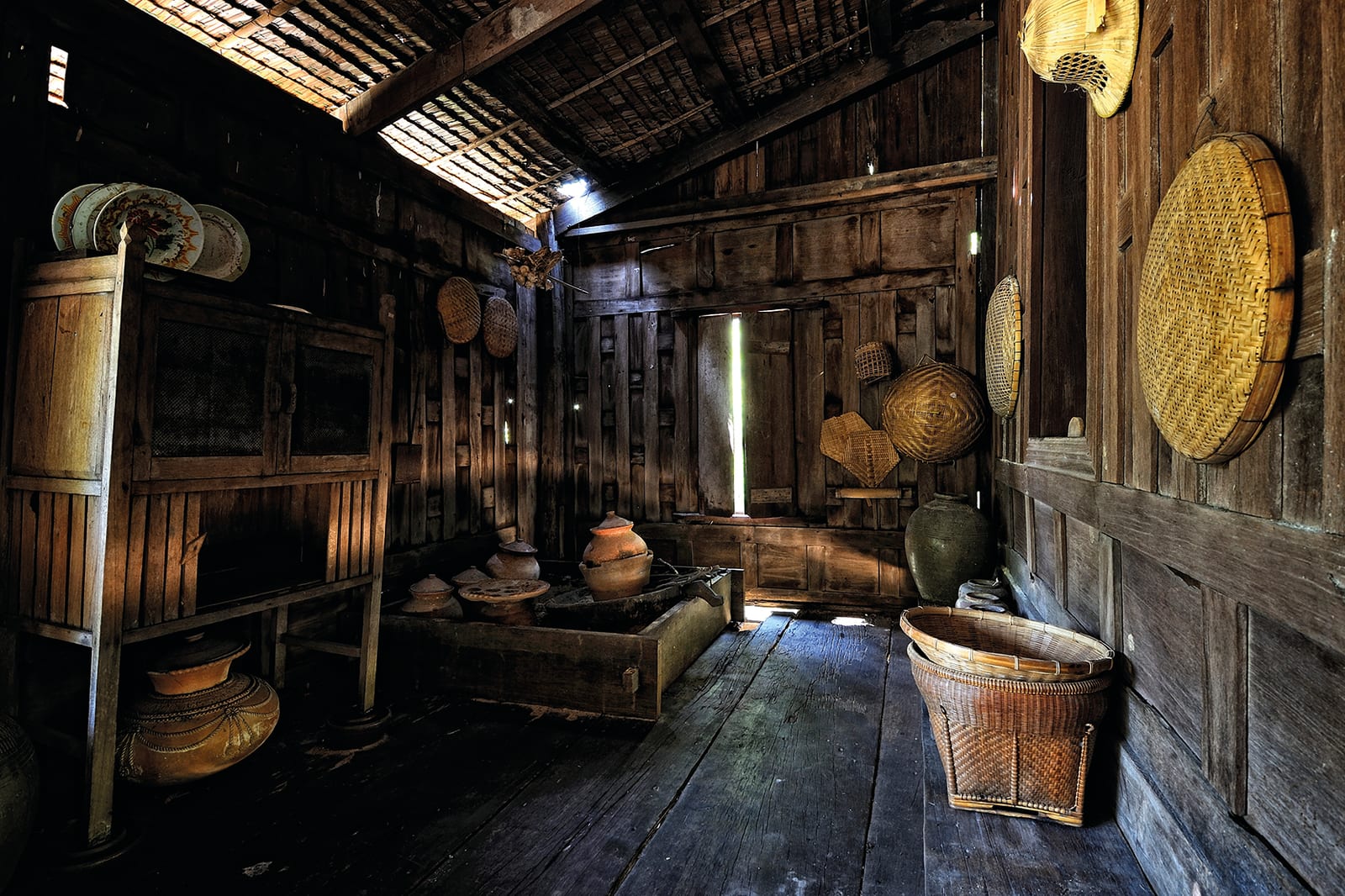
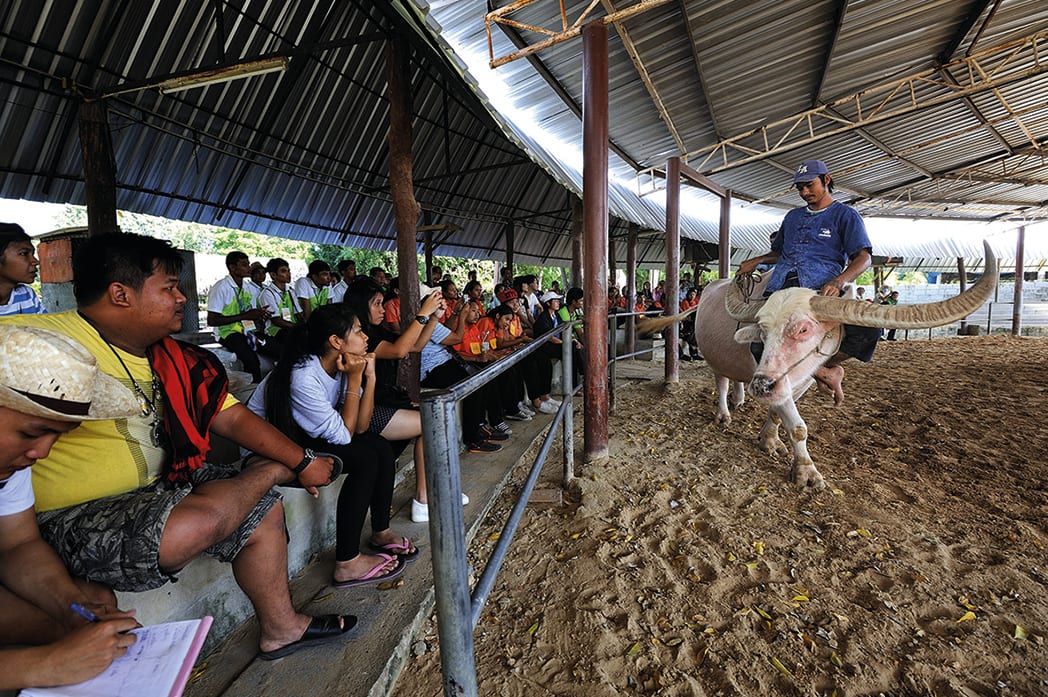
If you're driving the Suphan-Chai Nat road through Si Prachan and see wide fields with a Thai-style house by the roadside, that's the "Thai Buffalo Conservation Village" — or Ban Khwai as people call it. Open since 2002 on about 70 rai, it's a conservation attraction that recreates the whole traditional Thai farming way of life. It's a strong fit for families bringing kids to see real animals, people who want to bring elders down memory lane, or café lovers after a paddy-field atmosphere unlike anywhere else.
The unmissable highlight is the clever-buffalo show. The buffalo here are trained to lift a leg in a bow, walk on command, and the star is the "smiling buffalo" that bares its teeth for real photos. Most reviews agree the buffalo are smarter than expected and the show is fun — kids love it. Walk on and there are several Thai houses, a farmer's museum showing antique rice-farming tools, and another star, the café "Kin Fae Du Fai," where you sip coffee watching buffalo wade into the big pond. Buy a bundle of hay for 20 baht and toss it in for the buffalo to swim over and eat.
On entry and budget: open daily 09:00–18:00, with entry around 50 THB for Thai adults, 30 THB for children, and 150 THB for foreigners (prices have changed over time, so check on site). The buffalo show runs twice on weekdays, at 11:00 and 15:00, rising to three rounds on holidays — so if you're set on the show, time your visit to the round. Add a little for coffee and hay and you have an easy, budget-friendly outing.
Worth noting: it's a fairly old-established attraction, and some corners may look plain rather than polished. Some foreign reviewers dislike that signs are mainly in Thai and that the foreigner price is higher than the Thai price. But the real charm is getting close to buffalo in a way that's hard to find in Thailand anymore. It's a well-placed stop mid-tour in Suphan, taking about 1–1.5 hours to see — perfect as a morning or late-morning stop before moving on.
Suphan Buri Skywalk (Suphan Buri Buddhist Park, Pha Mangkon Bin)
Talk about a new Suphan Buri landmark people are buzzing about right now, and the credit goes to the "Suphan Buri Skywalk" at the provincial Buddhist park inside Wat Khao Thiam, U Thong District. The selling point is a sky-high glass walkway about 500 meters long and roughly 32 meters off the ground, built without support pillars, running along the crest of the cliff and claimed to be the longest of its kind in Thailand. Walk out on the glass and look straight down for full high-angle views of the U Thong ancient city. Anyone who loves photography or thrill-seeking travel will be delighted, and even those afraid of heights can walk it, since each glass panel is designed to bear several hundred kilograms.
The unmissable companion highlight is "Pha Mangkon Bin," home to Phra Phuttha Pussayakhiri Sri Suwannaphum — known to people as "Luang Pho U Thong" — a large Buddha carved into the natural rock cliff, considered the largest cliff-carved Buddha in Thailand. After the skywalk, come pay your respects, see the stone tunnel behind the Buddha, and capture beautiful shots of the image against the cliff. From 7–9 in the morning the light is just right and it's not yet too hot — the best time for photos.
On entry: the temple itself and paying respects to Luang Pho U Thong are free. Open daily around 07:00–18:00, with golf carts / shuttle service from the parking lot to the top. As for the skywalk, it has been opening in periods — for example over the New Year holidays — and is preparing for full-scale opening, with an online registration / booking system run by DASTA. Anyone going should check the times and book ahead, as some periods have heavy queues and a midday service break.
Good to know: it's sunny and very hot up on the hill, so bring a hat or umbrella for comfort. Dress modestly, as it's within the temple grounds, and be prepared for a fair bit of uphill walking. It's risen fast in popularity because it combines the best of everything in one place — a sky-high glass photo spot, panoramic views of U Thong, and a magnificent cliff-carved Buddha. It's only about 130 kilometers from Bangkok, an hour and a half to two hours by car, easy as a day trip.
Don Chedi Memorial

If you had to choose the attraction that's the true heart of Suphan Buri Province, it's here — the Don Chedi Memorial in Don Chedi District, on the western side of the province. It's a wide plaza where the statue of King Naresuan the Great riding his war elephant into battle stands large and stately, a defining image of the elephant-back duel he fought against the Burmese crown prince. It's a great fit for families who want to bring the younger generation to learn Thai history by seeing the real thing, and photographers love the architecture too — the white Sri Lankan-style Yuttahatthi pagoda rises to 66 meters with a base 36 meters on each side, standing tall behind the royal statue.
The highlight many people call unmissable is going inside the pagoda. There you'll find a museum recounting the elephant-back duel of the Ayutthaya period, with descriptive panels and hundreds of model figures of the Thai and Burmese armies, accompanied by light-and-sound displays. Visitors agree the scale models make the sequence of events far easier to understand than reading a book, and you can also pay respects to the original pagoda built and enclosed within. Foreign reviewers praise the clear English captions, and you can finish the walk-through in a short time.
The standout is free entry, no ticket charge, with a shady setting all around and a wide plaza. In the evening, locals come to walk and exercise in force, turning it into a kind of city park in its own right. Open for visits around 08:00–18:00 daily. It sits about 30-odd kilometers from the city of Suphan Buri, with driving yourself the most convenient option and easy parking.
This place scores as high as 4.7 stars from nearly two thousand Google reviews, reflecting its status as a popular destination for those following the legend of King Naresuan. Good to know: the full light-and-sound show and the grand Don Chedi memorial event are held at the end of January each year. On an ordinary weekday you get a calm atmosphere, focused on the museum and photos with the monument. Some reviews note that parts of the exhibition are starting to show their age, but the historical value and the grandeur of the monument still make it worth the stop.
Book tickets, tours, and activities ahead
Suphan's sights are spread out across different districts, so if you're not driving yourself, booking a guided tour or shuttle through Klook and GetYourGuide lets you cover several spots in one day without planning the route yourself. Some places, like the Dragon Descendants Museum and the U Thong Skywalk, run on scheduled entries or require booking — grabbing tickets online in advance avoids the on-site queue and keeps you from missing the round you want.
💡 What to know before you visit Suphan Buri
Suphan Buri's attractions are spread across several districts (Mueang, Doembang Nangbuat, Sam Chuk, Song Phi Nong, U Thong), so driving yourself or renting a car is the smoothest option. In town there's some Grab and songthaew service, but for out-of-town spots like Bueng Chawak and Don Chedi you'll want your own vehicle.
Zoo-aquarium entry, the tower fee, food in the Sam Chuk market, and temple donations — many places take cash only. Keep small notes and coins on hand.
Bueng Chawak and Sam Chuk get busy from late morning into the afternoon and on weekends. Come in the morning for a comfortable walk, cooler air, and better photos.
Some places run on rounds or have a closing day — the Banharn-Jaemsai Tower is closed Monday, the Dragon Descendants Museum runs on scheduled entries, and Sam Chuk is liveliest on weekends. Check before you set off so you don't miss out.
Wat Pa Lelai, Wat Phai Rong Wua, and Wat Khae are sacred sites — dress modestly, cover shoulders and knees, and keep your voice down within the temple grounds.
Major attractions have some English signs, but markets, roadside shops, and smaller temples are mostly in Thai. Saving an offline map and the Thai place names on your phone helps a lot.
Planning a worthwhile Suphan Buri day trip
For a day trip from Bangkok, grouping by zone saves the most time. Start early at Bueng Chawak Chaloem Phrakiat (Doembang Nangbuat), since it's the biggest site and the farthest from town — walk the zoo and the fish tunnel at length before the sun gets strong, then loop back into the city of Suphan in the afternoon.
The town zone (Rua Yai / Tha Phi Liang) lets you cover several spots close together — the Dragon Descendants Park and City Pillar Shrine, Wat Khae (Khum Khun Phaen), Wat Pa Lelai, and the Banharn-Jaemsai Tower. Go up the tower in the evening for a lovely, cooler city view. The Sam Chuk Century-Old Market is liveliest on weekends, great for a leisurely stroll-and-eat. If you also want to fit in the U Thong Skywalk or Don Chedi, consider a two-day trip, since they're on the opposite side from the city.
See several Suphan sights in one trip and stay a night — far easier than driving there and back. Options range from hotels in the town center near the Banharn-Jaemsai Tower to quiet resorts near Bueng Chawak, and booking ahead gets you a better rate.
See where to stay in Suphan Buri