🔄 Updated 21 Jun 2026
A good museum isn't just glass cases full of old things — it's a place that, once you've finished, makes you see the city around you differently. The Ubon Ratchathani National Museum is exactly that, because the building itself is the largest artifact inside it, and what's on display tells the story of southern Isan from prehistoric times, through the Khmer and Dvaravati periods, all the way to the Thai-Lao culture that is the root of Ubon people today.
The old city hall — the real star here
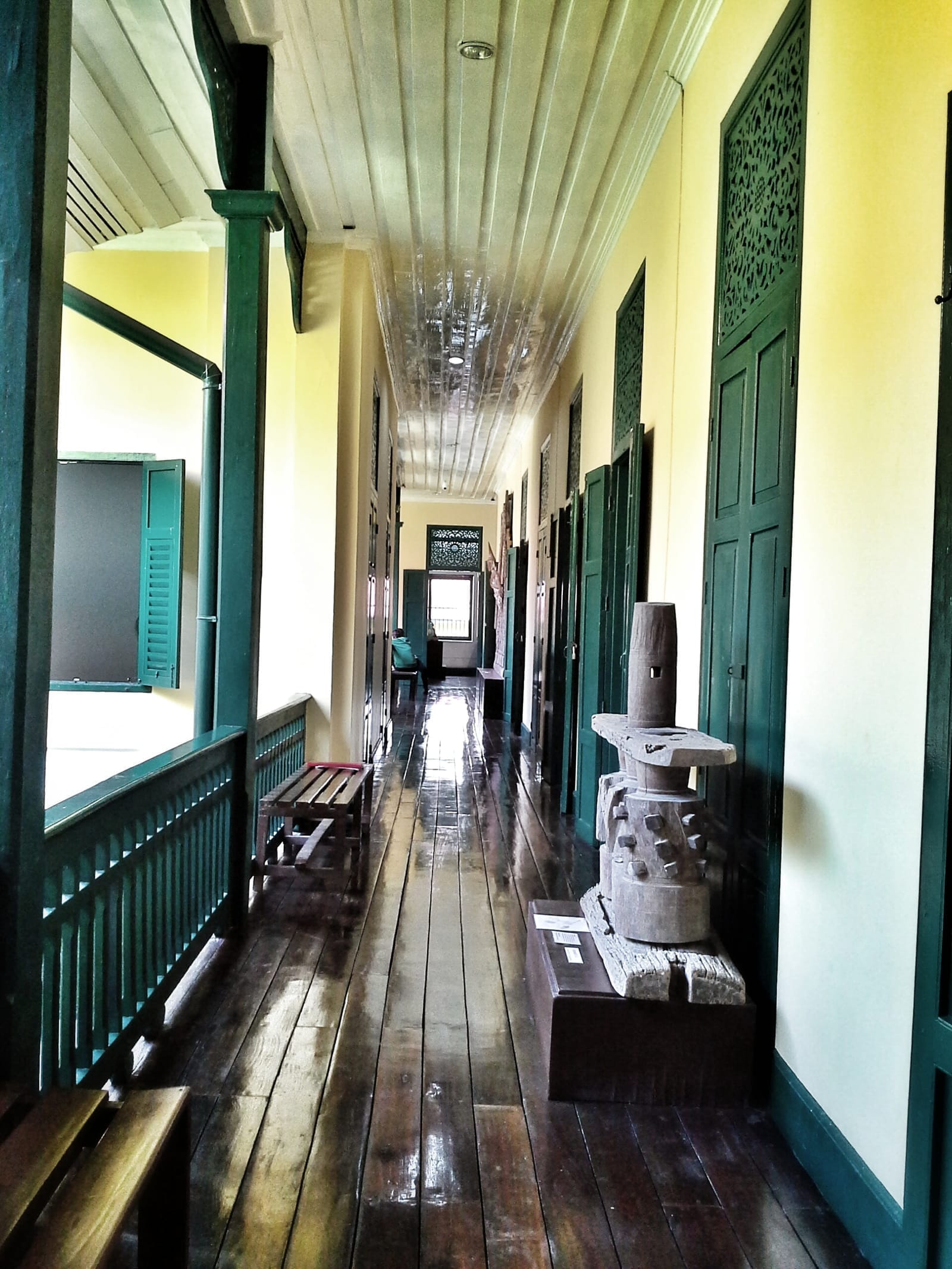
The building was completed in 1918 (during the reign of King Rama VI) to serve as the first provincial hall of Ubon Ratchathani. It's a single-storey raised masonry building laid out in an E-shape, in an eclectic Thai-European style that shows clearly in the hip roof, the fretwork wooden vents and the arched verandah columns. This blend of two architectural traditions earned the building a conservation award from the Association of Siamese Architects, and it's now registered as a national historic site.
After the provincial hall moved to a new location, the Fine Arts Department converted this building into a museum. It received national museum status in 1986 and opened officially on 30 June 1989, with Her Royal Highness Princess Maha Chakri Sirindhorn presiding over the ceremony — making it the first national museum to open in the Isan region.
Photo spot
The front of the building, with the entrance arch and the row of verandah columns, is where most people like to shoot. The light is best in the morning, around 9–10am before the sun gets harsh, when the cream walls stand out nicely against the sky.
Want more out of Ubon Ratchathani? Book tours & activities
Booking online ahead on Klook or GetYourGuide is usually cheaper than the gate and skips the queue. Pick only the experiences you actually want — prices and availability are shown live on each site.
10 galleries that read as one story
Inside is divided into 10 rooms, arranged so you walk through them in chronological order. It starts with the landscape and general background of Ubon, then goes deeper era by era. The rooms most people enjoy most are the Khmer culture room and the antique textiles room.
- Rooms 1–2: Isan overview and geography — sets the scene for where Ubon sits on the map and why the Mun and Mekong rivers matter.
- Room 3: Prehistory — stone tools, pottery and evidence of the earliest people in the Mun river basin.
- Room 4: Early historic period — traces of Dvaravati and the Chenla culture that predates Angkor.
- Room 5: Khmer culture — lintels, sandstone boundary stones and Khmer-style sculpture.
- Room 6: Thai-Lao culture — the cultural roots that became the Ubon people of today.
- Room 7: Antique and local textiles — kap bua cloth, handwoven sarongs and patterns unique to Ubon.
- Rooms 8–10: Folk music, crafts and governance — the khaen reed pipe, basketry and the story of Ubon from the city's founding.
Artifacts you shouldn't miss
Ardhanarishvara
A sandstone sculpture of Shiva, half of whom is the goddess Uma, carved in pre-Angkorian Khmer style. It's the standout piece of the museum and rarely seen elsewhere.
Sandstone boundary stones
Sema stones that marked sacred precincts, carved with Buddhist scenes in the Dvaravati-Isan style. They're found widely around Ubon and neighbouring provinces.
Khmer-style lintel
A stone panel that sat above the doorway of a Khmer sanctuary, carved with deities and floral motifs — proof that southern Isan was once part of the ancient Khmer network.
Kap bua cloth
A handwoven textile with a pattern unique to Ubon that became the province's signature cloth. Seeing it, you understand why Ubon is known as a weaving town.
To be honest, some of the labels are in Thai only, so foreign visitors may not catch every detail — but the objects on display are worth looking at in their own right. If you want a deeper explanation, the staff at the front can help, and at certain times there's a guided tour if you call ahead to book.
Hours, entry fees and getting there
- Opening hours — Wednesday–Sunday, 9am–4pm. Closed Mondays, Tuesdays and public holidays.
- Entry fee — 20 THB for Thais, roughly 100–120 THB for foreigners (children and students pay less).
- Location — 318 Khuean Thani Road, Nai Mueang sub-district, Mueang district, central Ubon, right by Thung Si Mueang park.
- Getting there — it's central, easy to reach by car or by tuk-tuk/taxi, with parking in front of the building, and only a few minutes from the markets and city-centre hotels.
- Time needed — an easy walk-through takes about 45 minutes to 1.5 hours.
Straight talk
This isn't a modern interactive museum with flashing lights — it's a classic museum that puts the focus on real objects and substance. If you like history and art, it's well worth it. If you're bringing young kids, you may need to help tell the story to keep it fun for them.
Pair it with nearby sights for a half day
The nice thing about this spot is that it's in the city centre, so you can easily walk or drive on to other places and fill out a half day.
- Thung Si Mueang — the central public park across from the museum, less than 400 metres away, good for a stroll, with the city pillar shrine nearby.
- Wat Thung Si Mueang — about 600 metres away, with an old wooden scripture library set over water and beautiful murals inside the ordination hall.
- Wat Supatanaram Worawihan — an important temple on the Mun river, with Thai-European architecture that fits nicely with the old-building theme.
- Markets and cafes in the old town — around Thung Si Mueang there are cafes and local restaurants to drop into after you're done at the museum.
Plan a full day in Ubon — temples, markets and food
See the Ubon Ratchathani travel guide →