🔄 Updated 21 Jun 2026
Before you plan anything, there's one thing you need to know. The Umphang Wildlife Sanctuary closes the vehicle road into Thi Lo Su Waterfall during the rainy season, roughly 1 June–30 September every year, and reopens it around late September into October onward. The window most people actually go is November through April, when the weather is good and the water has started to drop. So if you're planning a rainy-season trip, always check the sanctuary's announcements first.
How to get to Umphang, and why to pad your travel time
The easiest jumping-off point is Mae Sot district. From Mae Sot you take Highway 1090, the Mae Sot–Umphang route, about 164 kilometres, but it's the road everyone calls the 1,219 curves, or the sky highway, cutting along steep mountain ridges the whole way. Driving it yourself in a private car takes around 4 hours; on the local songthaew (shared pickup truck) it's more like 5–6 hours. There are a lot of hairpin bends, so if you get carsick, bring your meds.
On the car and driver
If you're not used to mountain roads, hiring a car with a local driver or buying a package out of Mae Sot or Umphang is a lot easier on the nerves than driving yourself, because locals know the rhythm of the curves and where it's safe to pass. If you are driving your own car, check your brakes and tyres beforehand, and try not to drive after dark since there's very little lighting on the road.
Book the activities in your Tak trip ahead
Booking online ahead on Klook or GetYourGuide is usually cheaper than the gate and skips the queue. Pick only the experiences you actually want — prices and availability are shown live on each site.
The 3-day, 2-night itinerary
This plan follows the format local tours usually run: day one is the drive plus the river rafting, day two you hike into the waterfall and come back for an easy night, day three you wake up early for Doi Hua Mot before heading home. Adjust the timing to your accommodation and the actual road conditions.
Mae Sot → 1,219 curves → Mae Klong River rafting
Hiking into Thi Lo Su Waterfall
Doi Hua Mot sea of fog → the drive home
What Thi Lo Su Waterfall is like
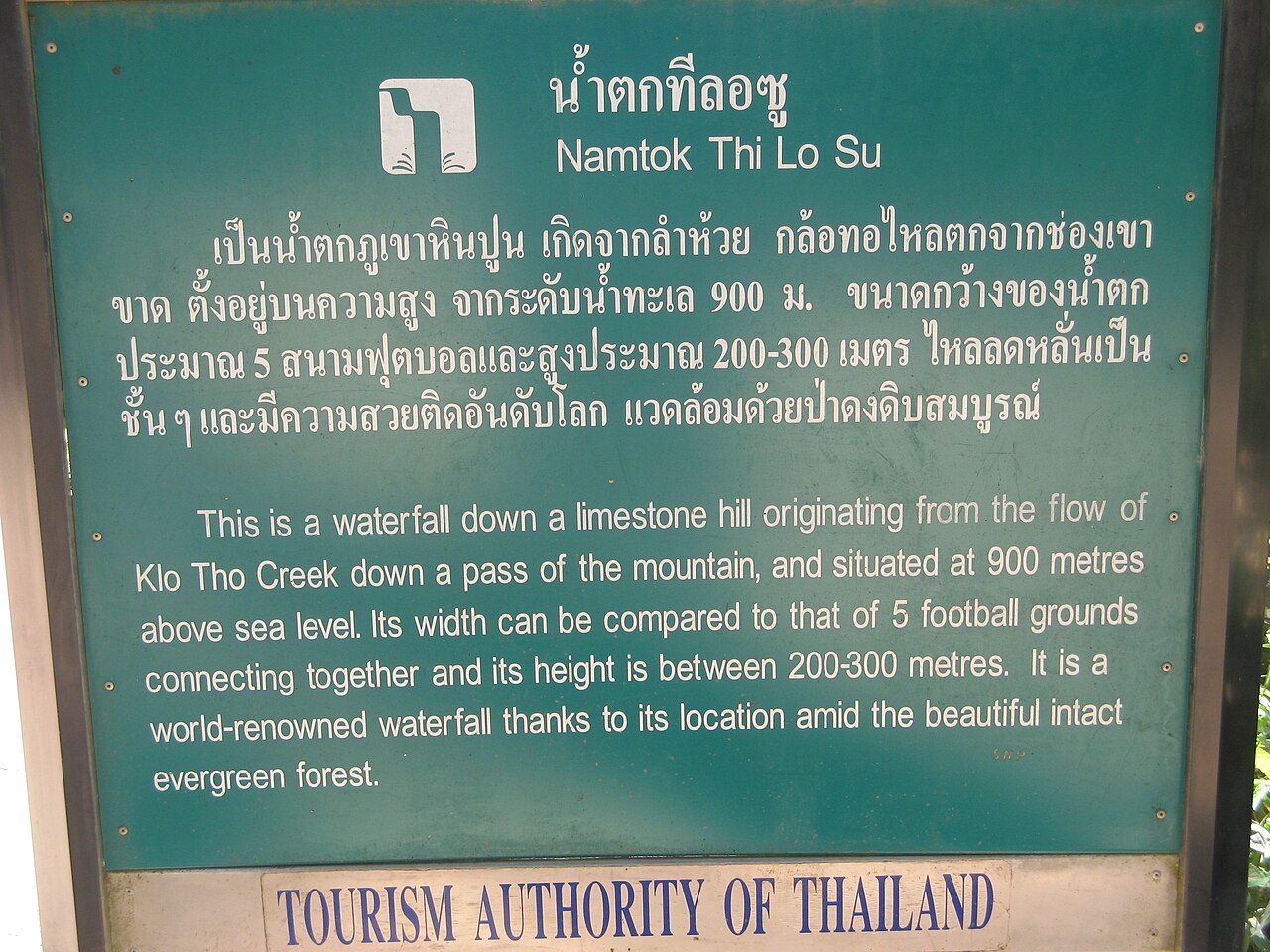
Thi Lo Su is a large limestone waterfall inside the Umphang Wildlife Sanctuary, the water fanning out into a wide curtain of several tiers against a backdrop of rock face and green forest. It looks different when the water is high versus when it runs clear: late in the rainy season the water is powerful and a deep green, while from the cool season into the hot season the water turns clearer but the volume drops. If you want that full curtain of water, the November–December window right after the road reopens usually hits the sweet spot.
- Getting in — you have to go through the sanctuary office and buy a ticket first, then walk about 1.5 km in to the waterfall
- Timing — for a same-day round trip you need to reach the ticket point before 14:00; for an overnight stay, before 16:30
- Swimming — only in the areas staff allow; don't climb past the barriers, the limestone is slippery
- Trash — pack out everything you bring in; this is a strictly protected conservation area
Doi Hua Mot and the pre-dawn sea of fog
Doi Hua Mot isn't far from Umphang town. It's a low, bald summit with no big trees in the way, and the draw is the 360-degree open view. In the pre-dawn hours from the end of the rains into early winter, a sea of fog often hangs in the valley below, waiting for the first light of day to slowly lift it. You'll want to be up there while the sky is still dark to catch the sunrise, and go in knowing that some days the fog rolls in thin depending on the weather.
Making the early start worth it
How much fog you get depends on the humidity and the temperature the night before. A cold, clear night usually means thicker fog; if it rains all night you might just get a clear sky. Don't be too disappointed — getting up there for the cool air and the view is worth it either way.
Where to stay in Umphang
Most of the places to stay in Umphang are resorts and bungalows along the Mae Klong River — simple, nature-focused spots rather than luxury hotels. Picking somewhere close to the town centre makes food and the pre-dawn run up to Doi Hua Mot a lot more convenient.
Thi Lo Su Riverside Resort
Bungalows on the Mae Klong River in Mae Klong sub-district, a handy base for the rafting and the waterfall; you can book direct with the resort.
Tukasu Cottage
A garden-style resort in Umphang town with friendly service, often sold as a package that bundles the tours.
Other riverside resorts
The Mae Klong area has several riverside resorts to choose from across different budgets; most you book direct by phone or via their page.
What to sort out before you go
- Check the open season — the road into Thi Lo Su closes around June–September; check the Umphang Wildlife Sanctuary's announcements every time before you book
- What to pack — a warm jacket for Doi Hua Mot, a dry bag for the rafting, sneakers for the trail, and motion-sickness pills
- Cash — carry enough cash; a lot of shops and resorts only take cash, and mobile signal is weak in places
- Travel time — allow 4 hours each way for Mae Sot–Umphang and don't cram too much into the travel days
Keep planning — see places to stay and things to do across Tak province
See the Tak travel guide →