🔄 Updated 21 Jun 2026
The Vietnam Memorial Clock Tower isn't an attraction you buy a ticket for or walk inside. It's an open-air landmark on the riverside road, and anyone passing through Nakhon Phanom is bound to see it. But plenty of people snap a photo and move on without knowing where the tower came from. We'll walk you through the history, the photo angles that actually work, when to come, and the spots nearby you can reach on foot within a few hundred metres.
The history — why the Vietnamese built this tower
Back during the Indochina War, large numbers of Vietnamese fled across the Mekong and settled in Nakhon Phanom and the other riverside provinces of Thailand. Many families found shelter and lived here for years, until they became part of the town itself. Traces of the Vietnamese community are still easy to spot — in the food, in the old colonial-Vietnamese buildings, and at places like the Thai-Vietnamese Friendship Village (Ho Chi Minh's House) just outside town.
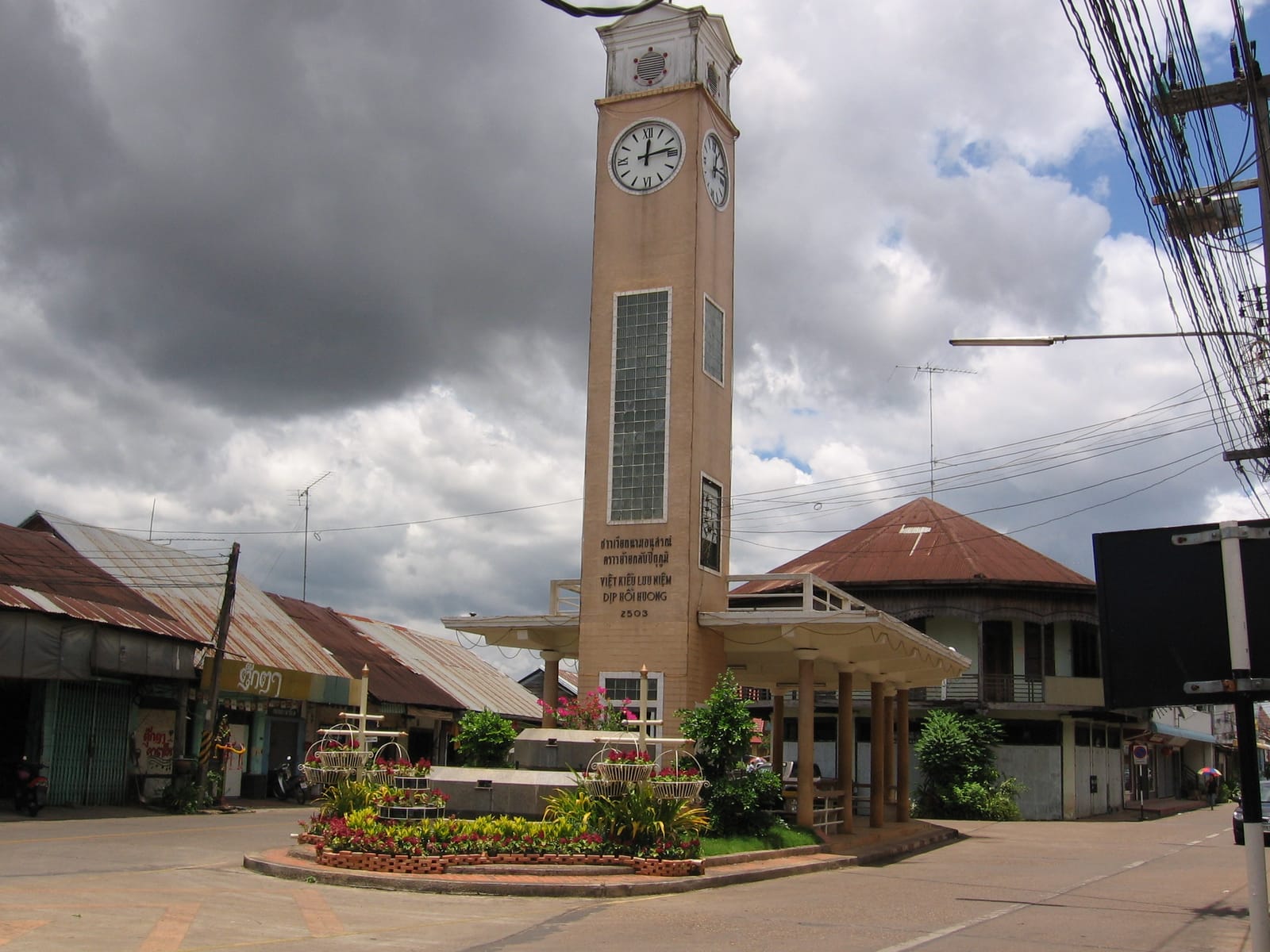
This clock tower was built in 1960 by the Vietnamese community in Nakhon Phanom, as a memorial of gratitude to the Thai people who had given them shelter through hard times, before many of them gradually moved back to their home country. That's why several sources give it the full name "Memorial Clock Tower of the Vietnamese on Their Return to the Fatherland." So it isn't just a tower that tells the time — it's a marker of a Thai-Vietnamese relationship that's been part of this town for more than 60 years.
A detail most people miss
In 2020, the province and Nakhon Phanom University held an event marking the tower's 60th anniversary, which shows it's still a symbol that genuinely means something to both locals and the Vietnamese community — not just an old clock tower.
Want more out of Nakhon Phanom? Book tours & activities
Booking online ahead on Klook or GetYourGuide is usually cheaper than the gate and skips the queue. Pick only the experiences you actually want — prices and availability are shown live on each site.
What it looks like and where it is — how easy is it to find?
The tower itself is a tall, pale-yellow clock tower with a roof that carries a hint of Vietnamese architecture. It sits on Sunthon Wichit Road, running along the Mekong in Nai Mueang sub-district, Mueang Nakhon Phanom. This spot is one of the hearts of the riverside quarter, within walking distance of both the Phaya Sri Sattanakharat Naga plaza and the Indochina Market. It's not hard to find, since you can see it from far off and locals use it as their go-to reference point.
- Location — Sunthon Wichit Road, along the Mekong, Nai Mueang sub-district, Mueang Nakhon Phanom
- Hours — an open-air landmark, viewable 24 hours a day, no entry fee
- Walkable to — the Phaya Sri Sattanakharat Naga plaza and the Indochina Market are just a few hundred metres away along the same riverside stretch
- Parking — you can park along the riverside road in patches; in the evenings and during festivals it gets crowded and spots are harder to find
Photo angles — day and night feel completely different
The clock tower gives you two distinctly different moods. By day you get the yellow tower set against the sky and the Mekong, good for capturing its full shape. At night the tower switches on colour-changing lights and looks classic — the shot most people love capturing most, especially on Friday-to-Sunday nights when the walking street buzzes around it.
Looking up from below
Stand close to the base and tilt your camera up to get the tower towering against the sky. It works on a clear blue afternoon or in the orange light of early evening.
Wide shot with the river
Step back to the riverside walkway and frame the clock tower together with the Mekong and the Lao hills on the far bank — you get the whole riverside-town context in one frame.
Night lights angle
After sunset the tower lights up in changing colours. Shoot in the early evening while the sky still isn't fully black and you'll catch both the tower lights and a deep-blue sky — the most classic shot.
Straight talk
The clock tower is a stop-and-shoot spot, not somewhere you'll linger. Most people spend about 10-20 minutes here. Its real charm is being the starting pin for a riverside stroll, rather than a standalone destination.
The walking street around the clock tower
On Friday-to-Sunday evenings, the riverside quarter around the clock tower turns into the Nakhon Phanom walking street, with food stalls, snacks, souvenirs, and craft vendors lined up. The clock tower basically acts as a sign that says "the walking street is right here." If your trip to Nakhon Phanom lands on a weekend, this is a good time to wander, since you get both the evening town atmosphere and local food in one place.
On weekdays with no walking street, the area around the tower is quieter, but people still come to stroll along the river, jog, and sit out in the cool breeze. If you like a calmer atmosphere, a weekday evening is a good time to come and shoot photos without competing for angles.
Where to go next in half a day
The good thing about the clock tower is that it sits right in the middle of the riverside quarter, a few minutes' walk from other spots. Here's how to chain it together to make a half-day worthwhile.
Riverside walk and clock tower shots
Extending the riverside trip
What to know before you go
- It's a quick stop — a 10-20 minute photo stop; pair it with a riverside walk or the market rather than driving over just to look at the tower
- Prettiest window — evening into night, for both the soft evening light and the night decorative lights; weekend nights add the walking street to the atmosphere
- Best season — the cool season, Nov-Feb, with clear skies and a cool Mekong breeze for longer strolls
- Pair it up — it's on the same stretch as the Phaya Sri Sattanakharat Naga and the Indochina Market, all walkable, so no need to drive between them
Want a full Nakhon Phanom itinerary for the whole trip?
See the Nakhon Phanom travel guide →