🔄 Updated 21 Jun 2026
If you're planning a trip to Narathiwat and want a place that actually tells the story of the area, Wadi Al-Husen Mosque is worth pinning on your map. It isn't just an old building — it's a mosque that has been used for daily prayer for almost four centuries. The mosque stands in Ban Telok Manok, Lubo Sawo subdistrict, Bacho district, at the foot of Budo mountain, about 25 kilometres from Narathiwat town.
While people call it the "300-Year Mosque," it's actually older than that by now. According to its history it was built in 1624 (B.E. 2167), passing the 400-year mark in 2024. It was built by Wan Husen As-Sanawi, a migrant from Ban Sano Yan Ya in Pattani province. He was the mosque's first imam and hand-copied a Quran that is still kept inside the mosque to this day.
What makes this mosque special
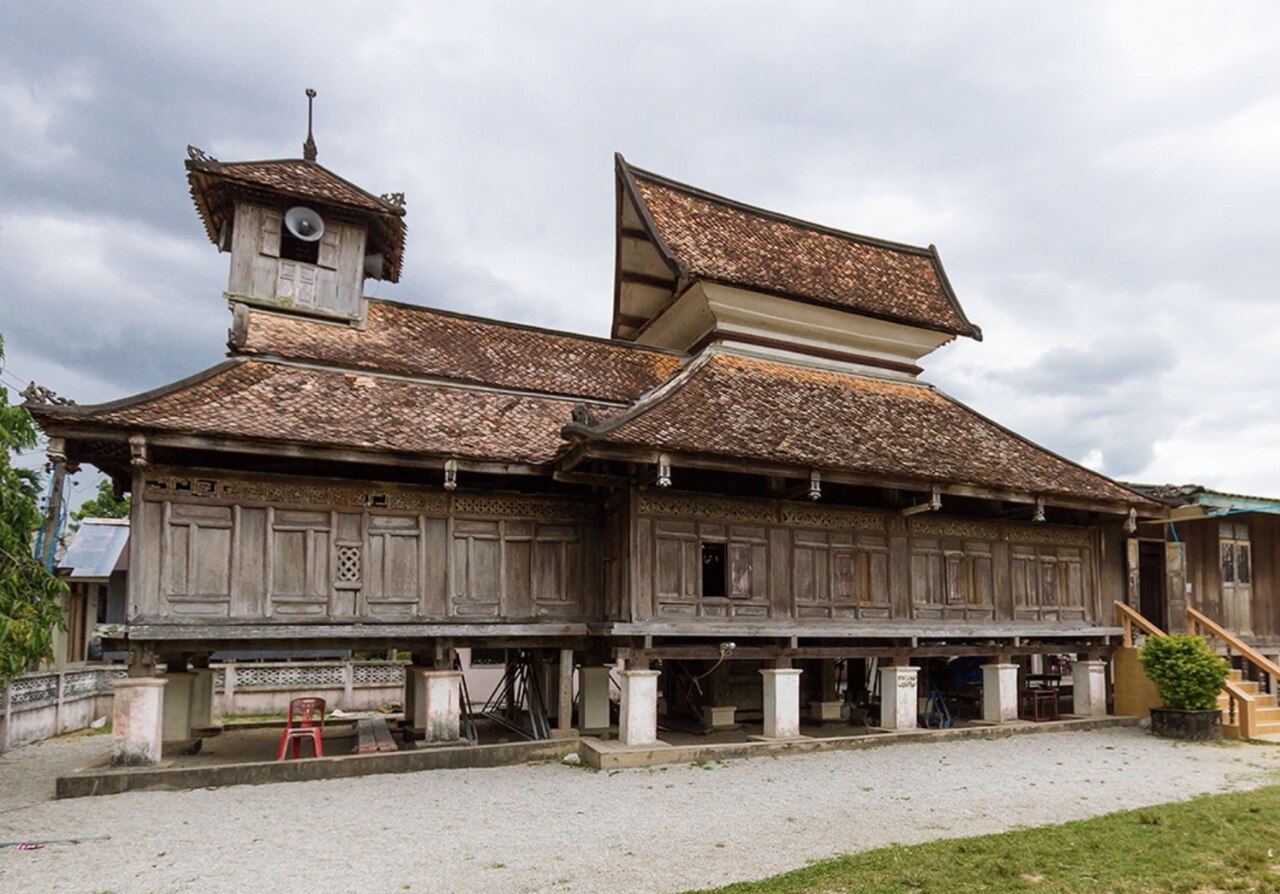
What sets Telok Manok Mosque apart from an ordinary mosque is that it's built entirely of wood — using takian timber, which was plentiful in the Budo forest at the time. The remarkable part is that the builders joined the wood together with wooden pegs, not a single iron nail, because the kind of nails we use today didn't exist back then. The roof was originally thatched with lan palm leaves and was later replaced with terracotta tiles.
- Thailand's oldest wooden mosque — built around 1624, in the early Ayutthaya period, nearly 400 years old
- Joined with wooden pegs, no nails — ancient craft that has kept the timber frame standing for centuries
- Three-culture artistry — Thai, Chinese and Malay craft combined in one building
- Houses a hand-written Quran — copied by hand by the mosque's first imam
- Still in active religious use — not a museum, but a living mosque
Want more out of Narathiwat? Book tours & activities
Booking online ahead on Klook or GetYourGuide is usually cheaper than the gate and skips the queue. Pick only the experiences you actually want — prices and availability are shown live on each site.
Tiered gable roofs and three-culture craftsmanship
The mosque is made of two wooden structures joined together. The smaller one holds the mihrab (the niche marking the qibla direction for prayer), with three stacked gable roofs and a Chinese-style minaret on top. The larger structure shows clear Thai influence through its Thai-style gable roof. Stand up close and you'll see carved patterns on the wood that mix Thai, Chinese and Malay motifs together.
The most photographed spot is the angle where the tiered gable roofs line up against the weathered wood and the green of Budo mountain behind. Mornings bring softer light and fewer people, which is ideal for taking photos and wandering around without rushing.
A craftsman's detail
Look closely at the joints where the posts meet the beams and you'll see the builders used mortise-and-tenon joinery with pegs instead of nails. It's a piece of traditional know-how that lets the timber frame flex under load without cracking easily.
The old cemetery and the mood around the mosque
Around the mosque is the old kubur (Muslim cemetery) of the Telok Manok community, with stone markers set in rows under the shade of the trees. The overall atmosphere is quiet and shaded, since it sits at the foot of the mountain. Many visitors say the same thing — the charm here is its simplicity and quiet. It isn't set up as a commercial tourist attraction; it's still very much a community space.
Please be respectful
The kubur is a sacred space for the community. You can walk through, but don't step or sit on the graves, and take photos with restraint.
How to get to the 300-Year Mosque
From Narathiwat town, take Highway 42 (Narathiwat–Bacho) for about 25 kilometres, then turn off at Ban Bue Rangae and follow the signs into Ban Telok Manok, Lubo Sawo subdistrict. The route is paved the whole way. Driving yourself or renting a car is the easiest option, as public transport doesn't reach the mosque conveniently.
- Car / rental car — easiest option, about 30–40 min from town
- Motorbike — good if you're staying close by and know the roads
- Chartered car / local taxi — ask about the fare in town first; trips often combine a stop at Pacho Waterfall
Etiquette and dress when visiting
This mosque is still an active place of worship. Most visitors view the exterior and take photos, while going inside requires permission from the imam or the village caretaker first. If you arrive during prayer times, avoid disturbing them — wait until prayers are finished before going in to look around.
- Dress modestly, covering shoulders and knees; women should bring a headscarf
- Remove your shoes before stepping up into the mosque, and walk softly inside
- Ask permission before photographing people in the area, and keep your voice down
- If you want to go inside or see the hand-written Quran, always ask the caretaker first
Check the situation before you go
Narathiwat is in Thailand's deep south border region. Before setting out, follow the latest news and safety announcements from local government agencies, and plan to travel during daytime. Most visitors get around just fine, but a little preparation and respect for local culture makes the trip go more smoothly.
More to see around Bacho
The good thing about coming out here is that the mosque sits at the foot of Budo mountain, home to Budo-Sungai Padi National Park, so you can pair it with a half-day trip nearby.
Pacho Waterfall
A large waterfall in the Budo forest that runs year-round. The first tier is the widest and prettiest, with water cascading down a tall rock face. It's inside Budo-Sungai Padi National Park, not far from the mosque.
Narathiwat town
Head back into town for Southern-Malay food — track down khao yam, nasi dagang and roti with tea at the local shops.
Narathat Beach
A long sandy beach by the town, perfect for ending the day in the evening — watch the kolae fishing boats and soak up the easygoing seaside mood.
Plan a full Narathiwat trip — where to stay, eat and explore
See the Narathiwat travel guide →