🔄 Updated 21 Jun 2026
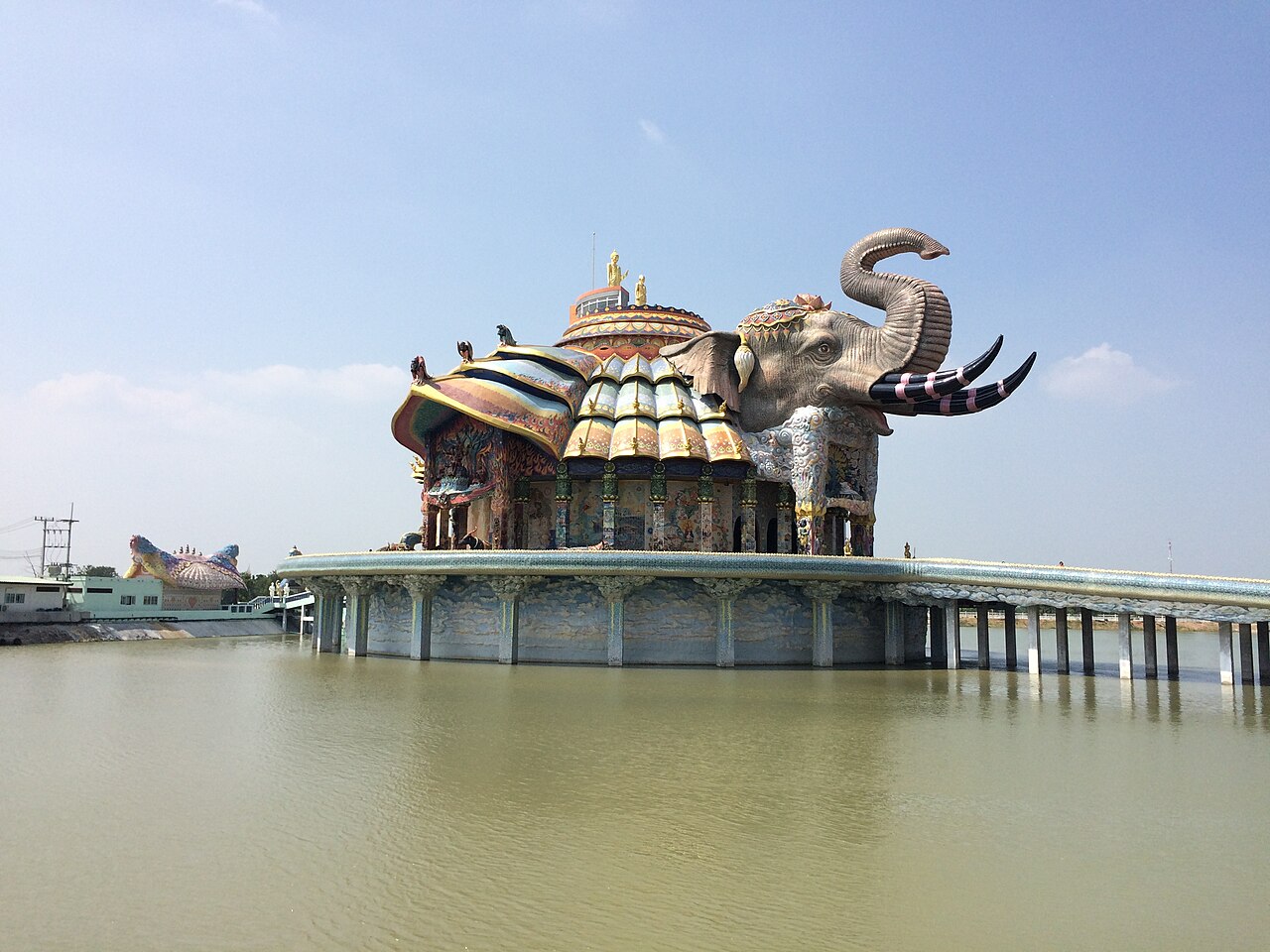
When people talk about Korat's famous temples, Wat Ban Rai in Dan Khun Thot district is almost always one of the first names mentioned. Older generations know it through Luang Phor Khoon Parisuttho, the monk who squatted down and tapped people on the head to give blessings — an image familiar to Thais nationwide. Younger visitors usually come for the Thep Witthayakhom Vihara, an elephant-shaped building on the water that is entirely sculpted from ceramic mosaic, so unusual and pretty that it has become a heavily shared check-in spot.
The temple sits a fair distance from central Korat, and a round trip eats up almost a whole day. That's why we'd like you to read through the details first, so you can plan a single-day visit or line up another stop along the way.
What is the Thep Witthayakhom Vihara?
The Thep Witthayakhom Vihara (some people call it the Thep Witthayakhom hall) was completed in 2011 to honour and commemorate Luang Phor Khoon. The building stands in the middle of a lake of around 30 rai, reached by a long bridge. The shrine rises about 42 metres and is divided into four floors plus one underground level (the underworld floor). What stops people in their tracks is that the whole structure is decorated with tiny ceramic mosaic pieces forming Thai patterns and scenes from the Buddha's life — the work of craftsmen who spent years on it.
Before you reach the shrine itself, you walk past two arches of 19-headed Nagas, symbolising the 38 blessings, while the front of the building features a large elephant-head sculpture. Inside, each floor tells a story — from hell and heaven to the life of the Buddha, up to quiet spaces for paying respects. Every staircase and wall is mosaic too, so you can happily wander and shoot photos throughout.
- Underworld floor (basement) — the zone on hell and karma, deliberately kept dim and shadowy
- Middle floors — the Buddha's life and dharma stories, with intricately detailed mosaic walls
- Upper floor — a quiet space for paying respects, with views over the lake around the shrine
- Outside — the bridge, the Naga arches and the elephant head, the most popular photo spots
Want more out of Nakhon Ratchasima? Book tours & activities
Booking online ahead on Klook or GetYourGuide is usually cheaper than the gate and skips the queue. Pick only the experiences you actually want — prices and availability are shown live on each site.
Opening hours and entry fee
The temple is open every day, generally from 8:00 to 17:00. If you want to go up and see all four floors of the shrine, aim for late morning to afternoon (roughly 8:30 to 17:00), because if you arrive too late in the day you'll sometimes only get to see the exterior and the first floor. There is no entry fee for the temple or for going up into the shrine — just donation boxes at various points, which you're welcome to drop into as you wish.
Best time to go
Weekdays are far quieter than weekends. If you want photos of the shrine without crowds, try a weekday morning — the sky is still clear, the sun isn't harsh, and you'll catch the shrine's reflection in the lake looking better than it does at midday.
Getting there from central Korat
Wat Ban Rai is in Kut Phiman sub-district, Dan Khun Thot, about 60 km from central Nakhon Ratchasima — roughly an hour and a half by car. Coming from Bangkok, take the Mittraphap Highway, and before reaching central Korat turn off towards Kham Thale So district, pass through Ban Nong Suang, and head for Dan Khun Thot. Once you reach Dan Khun Thot Hospital, turn onto Highway 2217 for another 11 km or so and you'll arrive at the temple.
- Own car — the most convenient option, with a wide car park in front of the temple. Just drop the pin for 'Wat Ban Rai Dan Khun Thot' in Google Maps and follow it
- Rental car from town — if you don't have a car, renting one and driving yourself is the better value, since public transport struggles to reach here
- Van/charter — chartered vans are available from central Korat, ideal if you're coming as a group or a merit-making tour
Straight talk
This place is far out and public transport is inconvenient. Without your own car or a rental, getting here by regular bus will burn a lot of time. We'd suggest folding Wat Ban Rai into a trip where you've got your own wheels to drive — it works out much better that way.
Dress code and etiquette
This is a sacred site where people come to pay respects to Luang Phor Khoon, so dress modestly: avoid shorts or spaghetti-strap tops inside the shrine, remove your shoes at the marked points, and keep your voice down on the worship floors. Photos are fine, but be careful not to disturb anyone who is praying.
Photo spots you shouldn't miss
Wide lakeside view
Stand on the near side of the lake to frame the rounded shrine with the long bridge. On a clear day you'll catch its reflection in the water.
Naga arches
Stand in the middle of the 19-headed Naga walkway and shoot back towards the shrine for a nice leading line.
Elephant head out front
The large elephant sculpture against the bright mosaic wall is the most queued-for spot for couple shots.
Mosaic walls up close
Shoot the columns and mosaic walls up close to capture the detail of the tiny tiles arranged into Thai patterns.
Souvenirs and food at the temple
The area in front of the temple and around the lake has tidy rows of shops selling souvenirs, Luang Phor Khoon amulets and local snacks. There are made-to-order food stalls and coffee shops where you can rest before or after your visit, with the friendly prices typical of temple-front stalls. Devotees often pick up a Luang Phor Khoon coin or yantra cloth to take home as a keepsake.
- Luang Phor Khoon amulets — coins, yantra cloths and keepsakes, all available at the temple
- Local food — made-to-order stalls and snacks in front of the temple at reasonable prices
- Luang Phor Khoon Museum — exhibits on the monk's life and teachings through wax figures and other displays, easy to visit within the same temple grounds
Where to go next
Because Wat Ban Rai is over on the Dan Khun Thot side, which is fairly far out, many people make it a half-day trip and then head back into central Korat for some good food. If you've still got another day in Korat, you can follow it up with attractions in town or out towards Khao Yai.
Thao Suranari Monument (Ya Mo)
Head back into town and stop to pay respects at Ya Mo, the heart and soul of Korat's people, right in the city centre where you can stroll on afterwards.
FoodKorat food
Cap off the trip with Korat pad mee, mee takhu and punchy Isan dishes — there are several well-known spots in town.
GuideKorat in full
See the province's other attractions, from the city centre to the stone sanctuaries and the nature side around Khao Yai.
Plan a full Korat trip — where to stay, where to eat, what to see
See the Korat travel guide →