🔄 Updated 21 Jun 2026
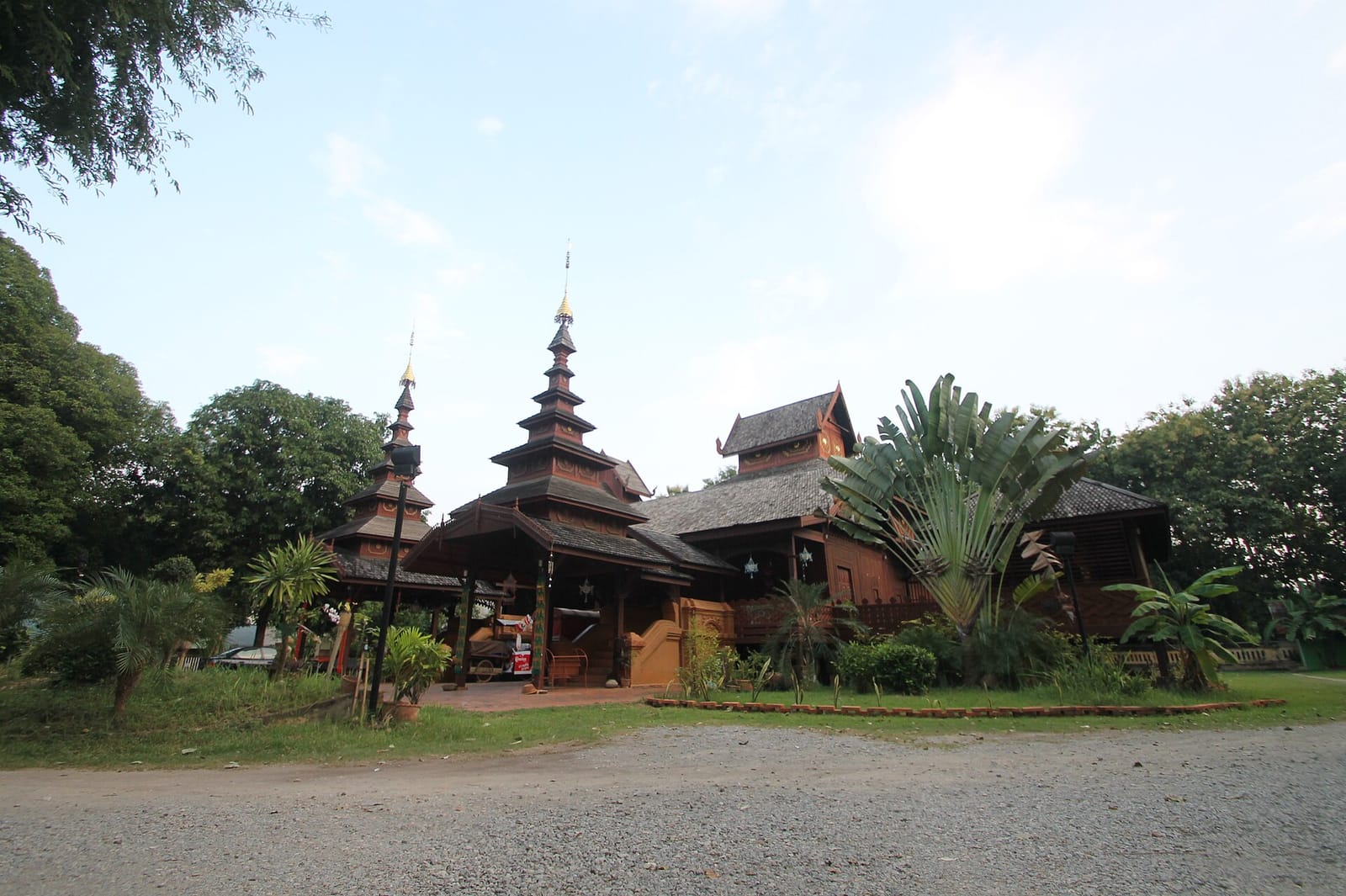
If you're wandering around Phrae's old town, Wat Chom Sawan is one stop you shouldn't skip, because it looks nothing like the Lanna temples most of us are used to. The whole building is a single teak structure with a stacked, tiered roof and incredibly detailed fretwork along the eaves, the work of Shan and Burmese craftsmen, of which Phrae has only a handful. The temple is quiet and shady, and half an hour walking around is enough to soak up an atmosphere completely different from the other temples in town.
The story behind it: Shan faith in the teak-trading era
Wat Chom Sawan was built late in the reign of King Rama V, around 1894–1912, on the faith of the Shan people, or what older locals called the Ngio, who originally came from Burma and migrated to Phrae to trade during the boom years of the teak business. The craftsmen who built it were Burmese, so every part of it clearly reflects Shan–Burmese cultural roots rather than the Lanna style you usually see across the north.
Its age and artistic value led the Fine Arts Department to register Wat Chom Sawan as a national historic site in 1990. These days the temple is well looked after and open to visitors as a place to learn about Phrae's culture.
Want more out of Phrae? Book tours & activities
Booking online ahead on Klook or GetYourGuide is usually cheaper than the gate and skips the queue. Pick only the experiences you actually want — prices and availability are shown live on each site.
The architecture: all teak, a stacked roof, fine fretwork
The heart of the temple is the main building, which combines the ordination hall, the assembly hall and the monks' quarters under one teak roof. The part people stand and stare at longest is the roof, which stacks up in tiers with a multi-layered spire, the edges of the eaves trimmed with open fretwork the whole way along, the kind of work that takes serious patience.
- Tiered, spire-topped roof — the Burmese-style stacked spire gives the building a tall, stately look, unlike the low, sweeping roofs of a Lanna hall.
- 35 gilded teak columns — inside, the teak columns are lacquered and gilded, and some are even inscribed with Burmese script.
- Carved ceilings and panels — the carving and fretwork across the ceiling, the upper walls and the vents is so detailed you have to tilt your head back to take it in.
- Coloured-glass inlay — coloured glass set into various spots adds a bit of sparkle to the dark woodwork.
See it from both sides
Don't just head straight inside. Step back and look at the roof from the outside first, then go in and look up at the fretwork ceiling, so you catch the craftsmanship from both angles.
The rare antiques worth hunting for
What makes this temple special beyond just being a pretty building is the precious antiques kept inside, several of which you'd be hard pressed to see anywhere else. It's worth going piece by piece.
The Woven Buddha
A Buddha in the subduing-Mara posture, formed from woven bamboo and then lacquered and gilded over the top. It's a rare piece of craftsmanship and the temple's highlight.
Ivory scripture
A Patimokkha scripture made of pressed ivory, finished in red lacquer and inscribed with Burmese script, an antique that reflects the craftsmanship of the era.
Ivory Buddha image
A small Buddha image carved from ivory, modest in size but finely worked, kept inside the temple.
Carved throne and stone flowers
A gilded, lacquered carved-wood throne and flowers made of stone, decorative pieces that add to the richness of the interior.
There's also the Chom Sawan stupa, which is revered by people in the neighbourhood. Every year around Makha Bucha there's a traditional festival to pay respects to the stupa, so if you come during that time you'll see the temple in a livelier mood than on an ordinary day.
Opening hours, entry fee and getting there
- Opening hours — roughly 08:00–16:00 daily.
- Entry fee — free (donations welcome).
- Location — Yantarakitkoson Road, Mueang Phrae district, about 1 km from the provincial hall, right in town and easy to reach.
- Getting there — just a few minutes' drive or ride from central Phrae, with parking at the temple, perfect to drop by while exploring the old town.
Temple etiquette
This is both a historic site and a working temple. Dress modestly, take your shoes off before stepping onto the wooden building, and take care not to touch the fretwork or the antiques, as many pieces are fragile and hundreds of years old.
What else is nearby
Because Wat Chom Sawan is right in town, it's easy to walk on or take a short drive to other spots. Plan it well and you can hit several places in a single day.
- Khum Chao Luang and Wongburi House — old teak mansions of Phrae where you can keep following the teak-era architecture that ties in with the temple's woodwork theme.
- The old town and cafes — the old quarter has cafes set in wooden houses to sit and rest after walking the temple.
- Wat Phra That Cho Hae — Phrae's guardian stupa, just outside town, good for an afternoon half-day trip.
Plan your whole Phrae trip without missing the good stuff
See the Phrae travel guide →