🔄 Updated 21 Jun 2026
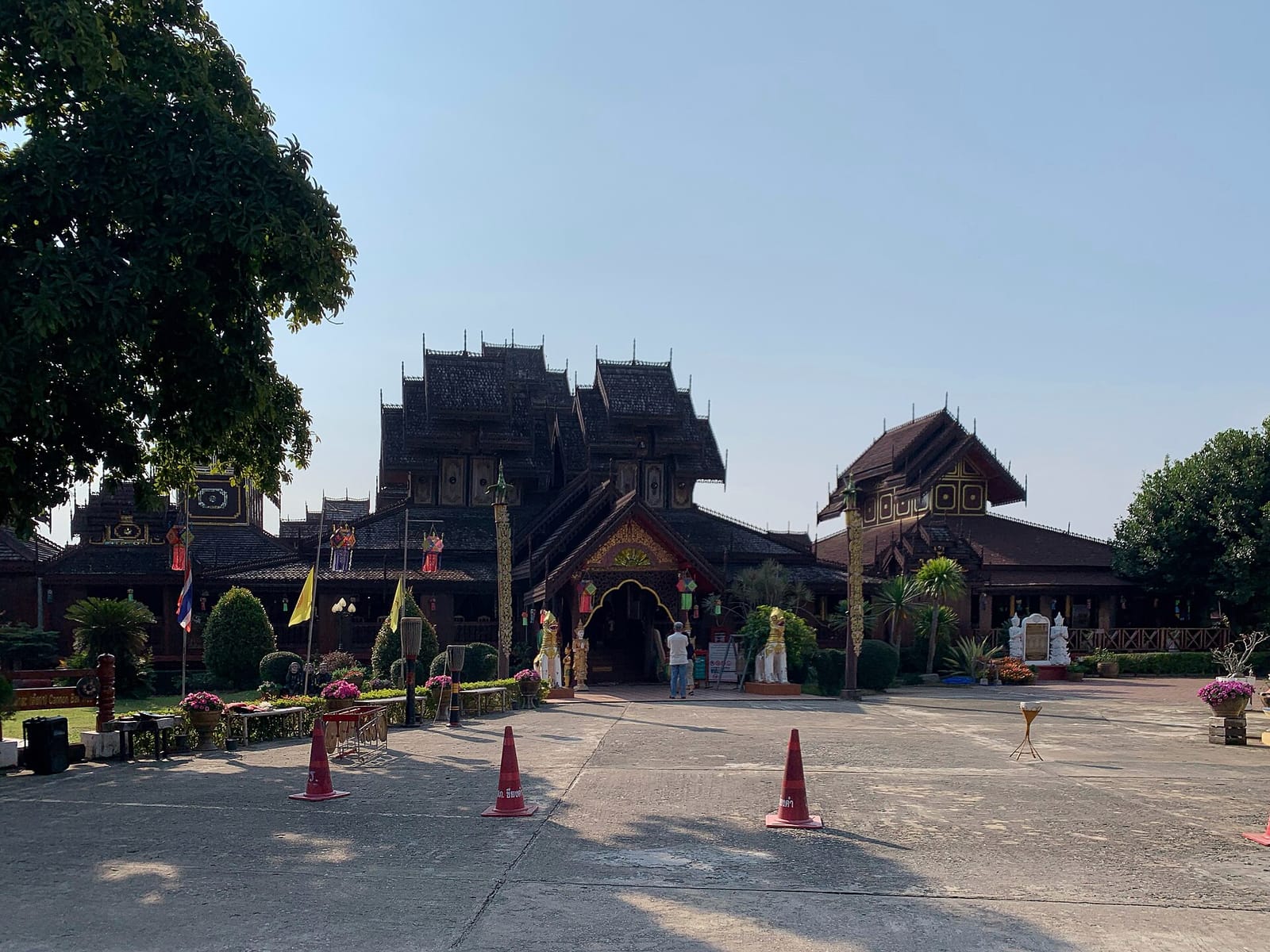
Wat Nantaram sits in the middle of Chiang Kham town, about 75 km from Phayao city. Locals have long called it Jong Man or Jong Kha — jong is the Shan word for temple, and kha comes from the early days when the roof was thatched with cogon grass. What makes this temple special is that the whole hall is built from teak rather than brick and mortar like most temples. Step inside and you'll catch the scent of old wood and see craftsmanship that's hard to find in temples these days.
The Shan-style teak hall
Construction of this hall began around 1924, led by the elder Taga Jong Nanta (Oo) Wong-anan, who hired Burmese craftsmen from Lampang to design and build it. The roof is in Shan style, with gables stacked into tiered tiers that step down one over the other, covered with wood shingles — from the outside it reads as several beautiful overlapping layers. The temple was later renamed from Jong Man to Wat Nantaram in honour of the elder Jong Nanta who built it.
- 68 teak pillars — lacquered and gilded, lined up to carry the weight of the whole hall, and a favourite spot to stand and take photos
- A coloured-glass ceiling — intricately patterned, and said to never repeat the same motif twice; worth a long look up
- Carved woodwork — across the gable, window panels, and verandah, fretted in fine detail in the Shan–Burmese tradition
- Phra Chao Saen Sae — the teak principal Buddha image inside the hall, revered by the people of Chiang Kham
Dress respectfully
The hall is a sacred place, so wear a top with sleeves, long trousers or a skirt that covers the knees, and take off your shoes before going up. The old wooden floor is best walked on gently — it helps keep these antiques around for future visitors to see.
Want more out of Phayao? Book tours & activities
Booking online ahead on Klook or GetYourGuide is usually cheaper than the gate and skips the queue. Pick only the experiences you actually want — prices and availability are shown live on each site.
The antiques museum on site
Beyond the hall, the temple grounds also hold a Shan-style chedi and a small museum corner that keeps old pieces — antique banknotes and currency, everyday household items from the past, old woven textiles, and painted scenes telling the Vessantara Jataka. It's a pleasant spot for anyone who enjoys local history to wander through after seeing the hall.
How to get to Wat Nantaram
- From Phayao city — drive along Highway 1021 towards Chiang Kham, about 75 km and roughly 1 hour 20 min. The temple is in the middle of town, near the Chiang Kham morning market
- From Chiang Rai — come via Thoeng district into Chiang Kham; the distance is similar, and it makes a good stop along the Phayao–Nan–Chiang Rai route
- Parking — there's a lot inside the temple, easy for both cars and vans
Best time to go
Open daily 8am–6pm, free to enter. Mornings before the sun gets harsh have nice light and fewer people, while late afternoon brings a low, raking light that makes the wood and shingle roof glow warmly — great for photos.
More to do around Chiang Kham
Chiang Kham is a Tai Lue town, so once you've seen Wat Nantaram there are several more spots you can fit into the same day — most are just a few kilometres apart.
Wat Saen Mueang Ma
An old Tai Lue temple near the Chiang Kham bus terminal, with a Tai Lue gable and a brightly painted hall — a different style from Wat Nantaram.
Ban That Sop Waen
A Tai Lue community with a weaving group keeping old patterns alive; stop by to see the textiles and pick up handmade souvenirs.
Chiang Kham morning market
A local market near the temple, with northern-style food and Tai Lue dishes to try in the morning.
Plan a full day of temples and food across Phayao and Chiang Kham
See the Phayao travel guide →