🔄 Updated 21 Jun 2026
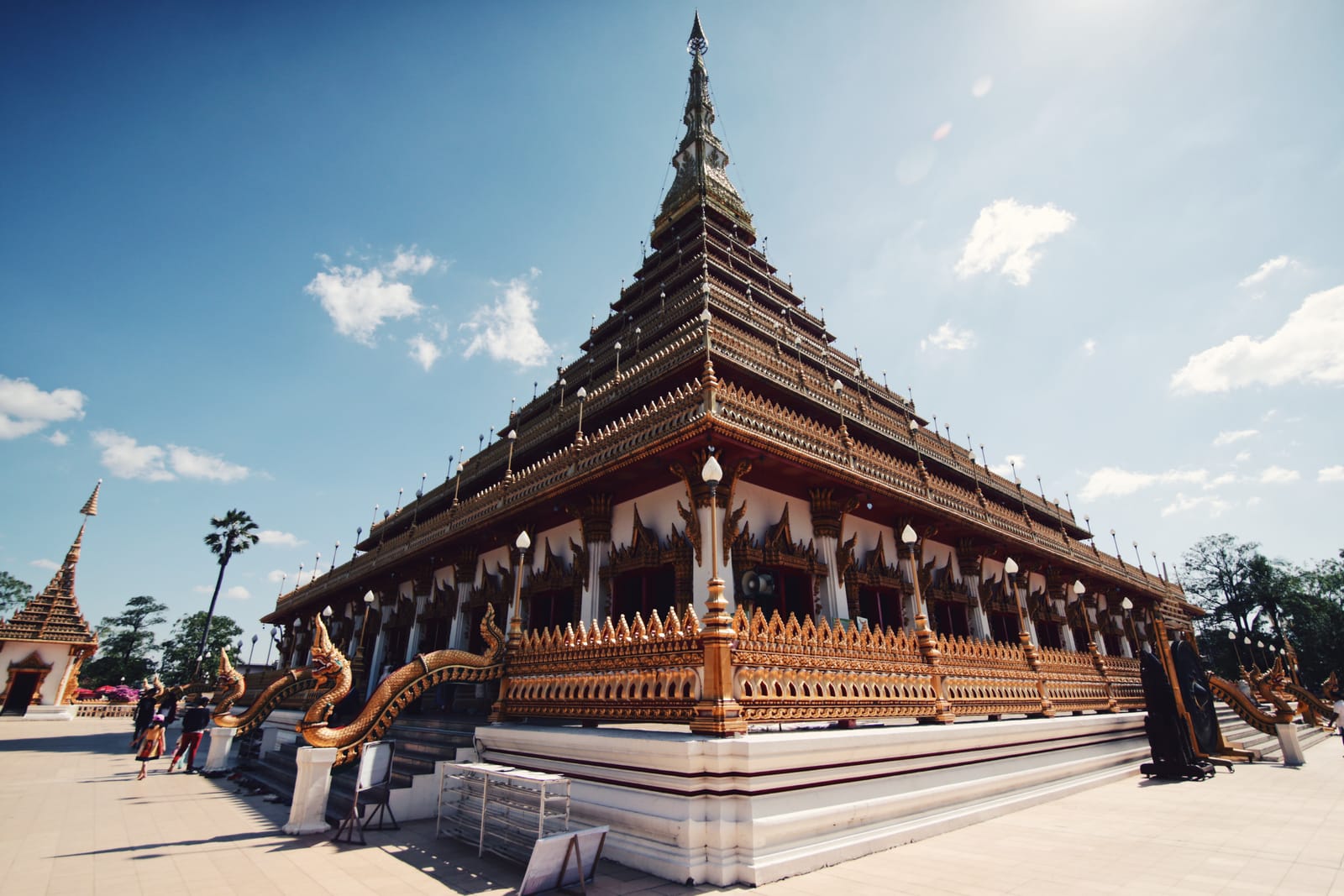
Wat Nong Waeng is a royal temple right in central Khon Kaen, sitting along a city-center road and backing onto Bueng Kaen Nakhon lake to the east. The highlight is Phra Mahathat Kaen Nakhon, a pagoda with a square base 50 metres on each side, rising nine tiers in total, its spire modelled on Phra That Kham Kaen. Four smaller chedis stand at the four corners, all ringed by a glass wall topped with seven-headed Naga serpents. Locals treat it as the city's signature landmark: pilgrims come to pray, while travellers come for photos and the view from the top.
What You'll Find on Each Tier
You can climb the pagoda tier by tier all the way up to the ninth. Each level is more than just a staircase, there's something real to look at, from the Buddha relics to murals telling the story of Khon Kaen and a museum of old Isan household objects. Take it slowly and stop on each tier and you'll get far more out of it than just rushing to the top.
- Tier 1 — A gilded shrine enshrining the Buddha relics, plus murals depicting the founding of Khon Kaen. This is where most people come to pray.
- Tiers 2–4 — Halls of antique Isan household items, cabinets of palm-leaf scripture, and paintings of khalam (traditional taboos) and the Vessantara Jataka.
- Tiers 5–7 — Museum halls with carved doors showing the life of the Buddha and the Ten Jataka tales. The woodwork here is detailed and worth a look.
- Tiers 8–9 — The scripture hall and the Buddha hall. The top tier, the ninth, has an open balcony all the way around with views of Bueng Kaen Nakhon lake and the whole of Khon Kaen.
The Ninth Tier Is the Highlight
The view most people come for is from the ninth-tier balcony, with Bueng Kaen Nakhon lake filling the foreground and the rooftops of Khon Kaen stretching beyond. There's a steady breeze up there. The stairs get fairly steep and narrow near the top, so if your knees aren't great or you're bringing older relatives, just take it slowly and rest a tier at a time.
Want more out of Khon Kaen? Book tours & activities
Booking online ahead on Klook or GetYourGuide is usually cheaper than the gate and skips the queue. Pick only the experiences you actually want — prices and availability are shown live on each site.
Opening Hours, Entry Fee, Dress Code
The temple is open daily, roughly 8:00 AM–6:00 PM, and you can usually climb the pagoda until late afternoon. Head up before 5:00 PM to leave enough time to walk through every tier. Entry is free, with no fee, though there's a donation box for the temple's upkeep if you'd like to give. On some weekends, schoolchildren volunteer as junior guides to walk you through the story of each tier.
- Dress code — It's a temple, so dress modestly. No spaghetti straps, very short shorts, or short skirts, since you'll be praying inside the pagoda.
- Shoes off — You'll need to take your shoes off before going up the pagoda, so slip-ons make it easier.
- Parking — There's a lot inside the temple grounds, but it fills up on weekends and during festivals, so you may need to circle a bit to find a space.
- Restrooms — Available on the grounds and easy to use.
When It Looks Its Best
The favourite time for most people is late afternoon, just before sunset: head up to the ninth tier and you'll catch Bueng Kaen Nakhon lake glowing in the golden light, and it's not as hot as midday. Mornings are quiet with fewer people, good if you want a calm visit to pray. In the rainy season the views turn lush and green, but check the forecast first, since the upper balcony is open to the sky. During festivals like the end of Buddhist Lent or New Year, the temple gets especially lively.
Straight Talk
Weekdays are quiet and easy to walk around, but weekends and long holidays really do get crowded. The upper stairs are narrow, so when people pass each other it slows down a bit. If you want open space and good photos, an early morning or late afternoon on a weekday is your best bet.
More to Do Nearby
The nice thing about Wat Nong Waeng is that it sits right next to Bueng Kaen Nakhon lake, so it's easy to build a half-day trip around the lake: pay your respects, climb the pagoda, then carry straight on along the waterfront.
Bueng Kaen Nakhon
A big lake in the middle of town right next to the temple, with a walking and cycling path around it, waterfront cafes, and the Chao Pho Mo Din Daeng shrine. In the evening plenty of people come to exercise and hang out by the water.
Ton Tan Market / Walking Street
Khon Kaen's go-to eat-and-shop district, with Isan food, souvenirs, and laid-back spots to sit. It's a short drive from the temple and a good fit for dinner.
Khon Kaen National Museum
If you want to follow the history thread, the ancient boundary stones and prehistoric Isan artefacts are here. It's in town and easy to reach.
How to Get to Wat Nong Waeng
The temple is in central Khon Kaen, along a city-center road backing onto Bueng Kaen Nakhon lake. If you're driving from the Pratu Mueang intersection, follow Si Chan Road past Bang Lamphu Market, then turn onto Klang Mueang Road for about another 400 metres, the temple is on your left. Without a car, you can take a songthaew or grab a Grab within town. It's only a few kilometres from the central hotel area, so it doesn't take long.
Plan a full Khon Kaen trip
See the Khon Kaen travel guide →