🔄 Updated 21 Jun 2026
If you're driving along the Chao Phraya in Ang Thong, Wat Pa Mok is one temple worth a stop — not because it's huge or showy, but because its stories are so tightly tied to Ayutthaya history: the Buddha that supposedly floated downriver, the move that pulled the statue back from the eroding bank, and the visit by King Naresuan to pay respects here before heading off to war. The temple sits right on the water, the grounds are shady and cool, and you can stroll through it at an easy pace with no need to rush.
Where Wat Pa Mok is and how to get there
Wat Pa Mok Worawihan stands in Pa Mok subdistrict, Pa Mok district, Ang Thong province, on the bank of the Chao Phraya River. It's about 18 km from Ang Thong town, roughly a 20–25 minute drive. Coming from Bangkok takes about an hour and a half, and since it's very close to Ayutthaya, it pairs well into the same route.
- Private car — the easiest option, with parking on the temple grounds. From Bangkok, take the Asia Highway (Route 32) and turn off into Pa Mok district.
- Pair it with Ayutthaya — Pa Mok sits right next to Ayutthaya's northern edge, so it's only a short drive up from Ayutthaya. Perfect for a single day trip.
- Songthaew or taxi from Ang Thong town — about 16–17 km, roughly 20 minutes. A good choice if you don't have your own wheels.
Best time to go
The temple is open for worship during the day, like most temples. Aim for morning to late morning — the sun isn't harsh yet, the light coming into the viharn is lovely, and the crowds are still thin. If you come in early October you'll hit the temple's annual festival, when it gets busier than usual.
Want more out of Ang Thong? Book tours & activities
Booking online ahead on Klook or GetYourGuide is usually cheaper than the gate and skips the queue. Pick only the experiences you actually want — prices and availability are shown live on each site.
The Reclining Buddha inside the viharn
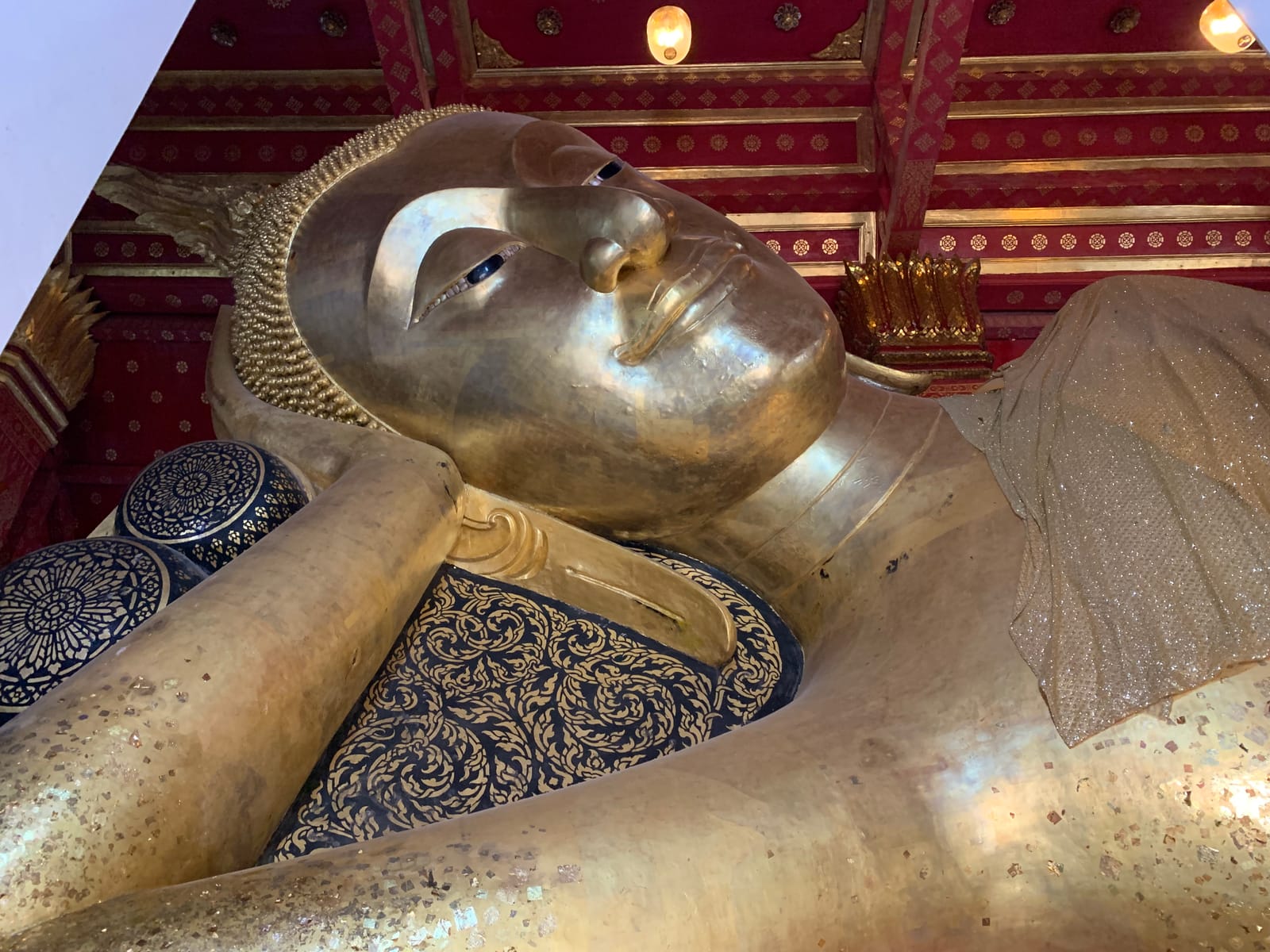
The temple's highlight is the Reclining Buddha, a large statue enshrined inside the viharn. It's built of brick, coated in stucco and then lacquered and gilded all over, lying on its right side in the lion's-rest posture (sihasaiyas). Measured from the headpiece to the soles of the feet, it runs about 22 metres — one of the finest old reclining Buddhas of the Chao Phraya basin, in late-Ayutthaya style.
What many people love is the soles of the feet and the calm, still expression on the face. Visitors come to ask for blessings around peace of mind, work, and safe travels. The viharn stays cool and quiet inside; you can walk around the statue and take photos, but keep it respectful — this is a sacred place that locals have revered for a very long time.
- Material — a brick core inside, coated in stucco, then lacquered and gilded all over
- Posture — sihasaiyas, reclining on the right side with the head resting on the hand
- Length — about 22 metres from the headpiece to the soles of the feet
- Style — late Ayutthaya; the Fine Arts Department has restored and preserved it
The floating-Buddha legend and the royal move
The story that makes Wat Pa Mok memorable is the floating-Buddha legend. As it's told, the statue drifted down the Chao Phraya and came to rest, half-sunk, in front of the temple. Villagers held a ceremony and brought it ashore to enshrine on the riverbank, where it has been revered ever since.
The clearer chapter of history is the move itself. The Reclining Buddha's viharn originally sat right at the bank, until the river eroded so close that the statue was at risk. Around 1728, King Thai Sa of Ayutthaya ordered the whole Reclining Buddha pulled back from the riverbank — a distance of about a hundred-odd metres — and a new viharn built over it. Shifting an entire large stucco statue in that era was an extremely difficult feat of engineering, which is why the event was recorded in the royal chronicles.
Another story people pass down is that before King Naresuan the Great rode out to his elephant duel with the Burmese crown prince — a battle he won — records say he gathered his troops and paid homage to this very Reclining Buddha. That ties Wat Pa Mok into the history of Ayutthaya's fight for independence as well.
Where the name comes from
This spot was once two temples side by side — Wat Chi Pakhao and Wat Talat. They later merged into one and took the name Pa Mok, after the mok trees (a fragrant white-flowering tree) that grew thickly across the grounds.
What else to see around the temple
Beyond the Reclining Buddha's viharn, Wat Pa Mok has a few more spots to wander through at an unhurried pace. It sits right on the water, the grounds are leafy and shaded, and you can walk the whole temple in not much time.
Reclining Buddha viharn
The heart of the temple, enshrining the 22-metre gilded Reclining Buddha. Walk around the statue and ask for blessings.
The ordination hall (ubosot)
The temple's ordination hall, used for religious ceremonies, built in the style of an old royal temple.
Buddha-footprint mondop
A pavilion enshrining a stone-carved replica of the Buddha's footprint — another spot where people come to pay respects.
Chao Phraya riverfront
The riverside terrace in front of the temple — sit and catch the cool breeze, watch the boats pass and the river flow. An easy, relaxed spot.
Where to go after the temple
Wat Pa Mok makes a good pin on an Ang Thong temple route, since the province's famous temples are spread out not too far apart. You can drive on to the rest comfortably in a single day.
- Wat Muang — the largest Buddha statue in Thailand and Ang Thong's signature photo stop, a short drive on from Pa Mok
- Wat Khun Inthapramun — another old reclining-Buddha temple in Ang Thong; its statue is even longer and sits out in the open air
- Ekkarat drum-making village — watch local craftspeople make drums and pick up handmade souvenirs
- Boat noodles and roadside eats — Ang Thong is known for boat noodles and riverside food, so stop to refuel before moving on
Making the most of the day
If you have a full day, string together Pa Mok, Wat Muang and Wat Khun Inthapramun for a complete merit-making temple run, then cap it off with a bowl of Ang Thong boat noodles.
Want a full Ang Thong day mapped out — what to eat, where to stay?
See the Ang Thong travel guide →