🔄 Updated 21 Jun 2026
When people talk about the prettiest temples in Udon Thani, Wat Pa Phu Kon is the name that comes up most. The appeal is in climbing up to a quiet forest temple in the middle of a big stretch of woodland, then stepping into the viharn to find a huge white marble Buddha lying right in front of you. Light filtering through the windows onto the figure makes the whole hall feel calm and solemn in a way photos never fully capture. Plenty of visitors say they didn't come just to make a wish, but to feel the atmosphere of a mountain forest temple that's hard to find anywhere else.
The white marble reclining Buddha, the temple's centrepiece
The temple's main image is Phra Phuttha Saiyat Lokanat Sasada Mahamuni, a 20-metre white marble reclining Buddha carved from Carrara marble from Italy, the same source of marble Michelangelo used for his sculptures. The stone was set together from around 42–43 blocks, each weighing 15–30 tonnes, and it took several years to carve and assemble into the figure you see today. The smooth white marble means that when light falls on it, the Buddha looks soft and bright, as if it's faintly glowing.
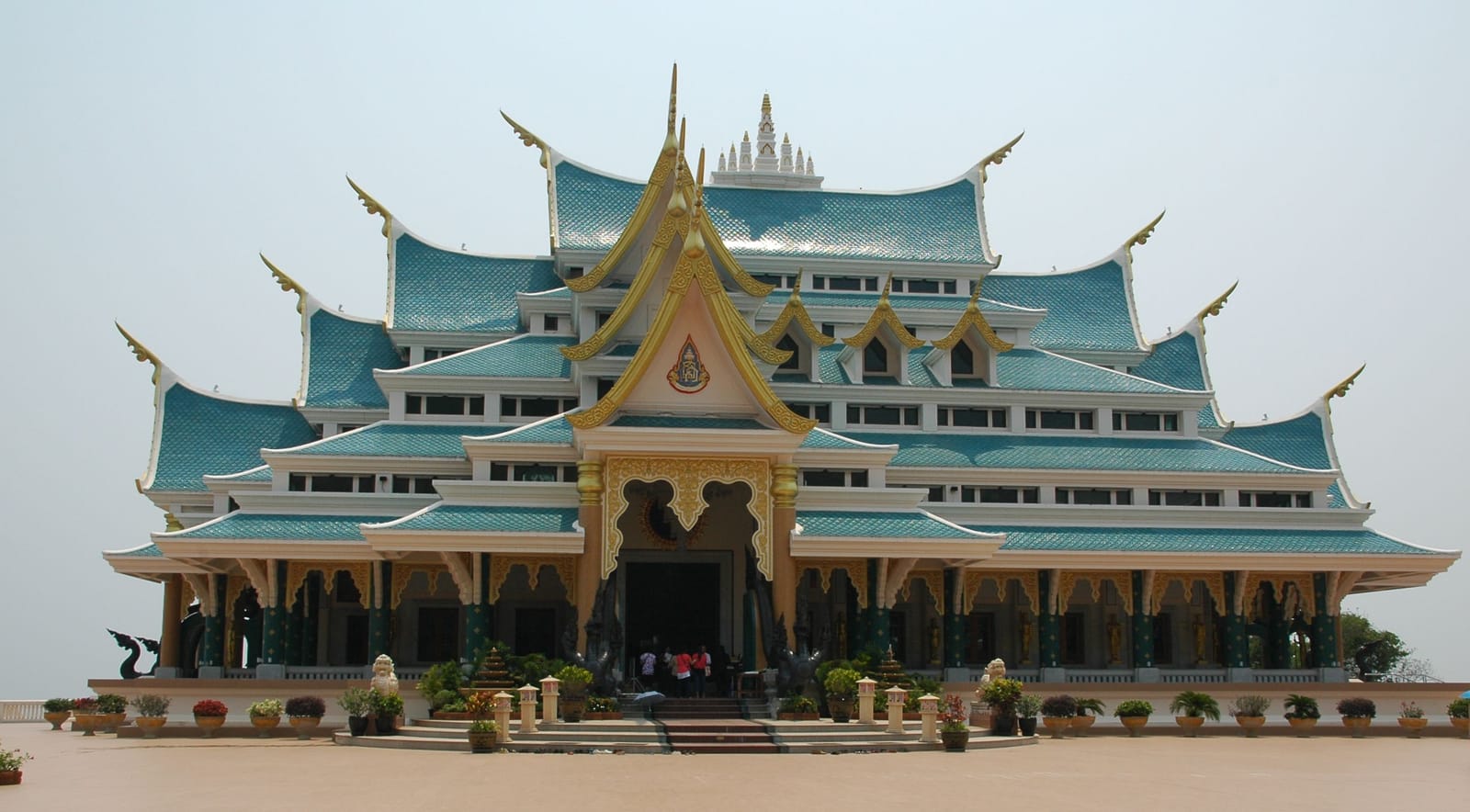
The reclining Buddha sits inside a viharn built in applied Rattanakosin-era Thai architecture, with a blue-green roof you can spot from far off. The walls and doors of the viharn are cast bronze reliefs telling the life of the Buddha and his ten perfections, all very finely done. It's worth a slow walk around rather than just stepping in to pay respects and leaving.
Best angle for photos of the Buddha
You can take photos inside the viharn, but keep it respectful: no flash and no loud talking. The best angle is standing slightly off to one side near the Buddha's feet so you can fit the whole figure in the frame. Mid-morning, when sunlight comes through the windows, gives you nice soft light.
Want more out of Udon Thani? Book tours & activities
Booking online ahead on Klook or GetYourGuide is usually cheaper than the gate and skips the queue. Pick only the experiences you actually want — prices and availability are shown live on each site.
The feel of a forest temple in the mountains
Wat Pa Phu Kon is a forest meditation temple (Dhammayut order) that was deliberately built to protect the Na Yung and Nam Som forest reserve, which had been encroached on. It was founded around 1984 and officially recognised as a temple in 1987. The first goal was to restore the forest and use it as a place to practise meditation, with the viharn and the Buddha image coming later. The grounds are shaded by big trees and the air stays cool and pleasant for most of the year. Walk around the temple and all you hear is the wind and the birds, a clear contrast to a temple in town.
- The reclining Buddha viharn — the main building on the hill housing the white marble reclining Buddha, the spot everyone comes for
- Phra Pathom Rattana Burapha Charn Maha Chedi — a large chedi holding Buddha relics, with mountain views in every direction
- The viewpoint terrace — looking out over the green ranges of the Na Yung forest reserve; on a clear day you can see all the way to the provincial borders
Winter is the prettiest time
From November to February the air is cool and on some mornings mist fills the valley below. If you come up early, before the viharn opens, you can catch a sea of mist with morning light, a quieter angle that fewer people have reached than the temples in town.
Opening hours and dress code
The viharn is open for visitors every day, roughly 8:30 a.m. to 5:00 p.m. The temple gate opens earlier (around 5:30 a.m.) for people who want to come up for morning views and the sea of mist. There's no entry fee, just donation boxes for those who wish to give. The dress code is fairly strict, since this is both a forest temple and a sacred place.
- Dress modestly. No shorts and no sleeveless or strappy tops for both men and women.
- If you're not properly dressed, the temple has sarongs and shawls to borrow before entering the viharn.
- Take off your shoes before going up into the viharn, and keep noise down while inside the temple.
- Help pick up litter and don't pick the plants, because this is the forest the temple set out to protect.
Getting to Wat Pa Phu Kon
The temple is at Ban Na Kham Yai, Ban Kong subdistrict, Na Yung district, about 120 km from Udon Thani city, roughly a 2–2.5 hour drive. The main route is out of the city towards Ban Phue–Nam Som–Na Yung, following the signs, which are clear. The final stretch is a steep climb of about 1.5 km. Sedans can make it but need low gear and careful driving. Buses and larger vehicles park at the bottom and transfer up by the temple's songthaew, which costs about 20 THB per person.
Drive or rent a car
The easiest option, since it's far out and public transport barely reaches it. You can rent a car at Udon Thani airport and drive yourself; just leave extra time for the climb at the end and make sure your brakes are in good shape.
Temple songthaew
For people arriving by bus or who'd rather not drive the steep road. Park at the bottom and transfer up by the temple's songthaew, around 20 THB per person.
Day tour
There are tours combining Wat Pa Phu Kon with other temple-and-nature spots around Na Yung–Nam Som. Good for anyone who'd rather not plan the route or drive the mountain road themselves.
Pairing it with other stops
Wat Pa Phu Kon is far from the city and up in the hills, so set aside most of a day for this zone. You can pair it with waterfalls and nature around Na Yung–Nam Som. Trying to combine it with Kham Chanot or the Red Lotus Sea in the same day means heading in the opposite direction, so it's better to stay overnight in Udon Thani and split these into separate days rather than rushing.
Best time to go
You can visit year-round, but the most comfortable and prettiest time is the cool season (November–February): cool air, clear skies, far-reaching mountain views, and a chance of morning mist. In the rainy season (June–October) the forest is lush and gorgeous, but the climb up can be slippery, so drive with extra care. In the hot season the sun is strong, but it's still cooler up the hill than down below. Aim for early morning right after the viharn opens, when there are fewer people and the light inside is at its softest.
Plan a temple-and-nature trip around Udon Thani in one go
See the Udon Thani travel guide →