🔄 Updated 21 Jun 2026
Wat Phikun Thong is a royal temple sitting beside the Noi River in Phikun Thong subdistrict, Tha Chang district, about 16 kilometres from Sing Buri town. Originally called Wat Mai Phikun Thong, it dates back to 1891 and was raised to royal-temple status in 1992. Locals usually just call it 'Wat Luang Pho Pae', because this is where Luang Pho Pae Khemangkaro spent his entire monastic life.
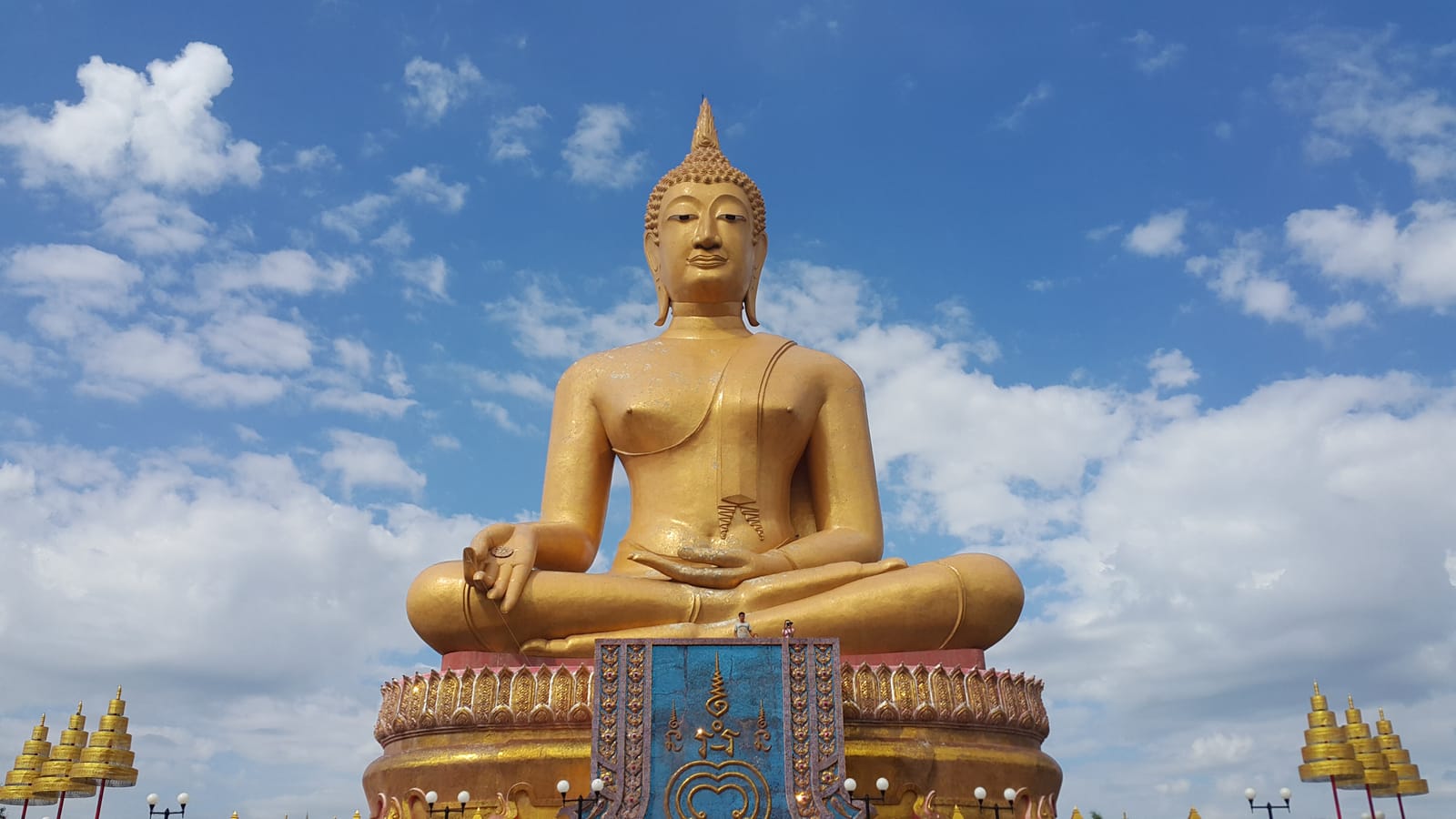
Two things made this temple famous nationwide — first, Luang Pho Pae himself, a monk trusted for his sacred amulets, and second, Luang Pho Yai, a massive seated Buddha covered in gold that you can see before you even reach the temple gate.
Luang Pho Pae Khemangkaro — the monk the whole province reveres
Luang Pho Pae, formally titled Phra Thep Singhaburachan, was born in Ban Phikun Thong in Tha Chang district. He stayed with the temple and the local community from his youth until he became abbot. He passed away in 1999, but the devotion lives on — people from other provinces still drive in to pay respects and to obtain amulets from the temple.
Luang Pho Pae's amulets are popular among collectors, especially the older votive tablets and coins that grow harder to find every year. If you visit, there's a spot where you can obtain the editions the temple produces, with prices ranging from a few tens of baht up to special editions. If you're interested, it's best to get them directly from the temple so you know they come from a genuine source.
Pay respects in the right order
Start with the cast image of Luang Pho Pae in the viharn, light the incense and candles set out by the temple and apply gold leaf, then walk over to pay respects to Luang Pho Yai out in the open. These two spots are the heart of a visit to Wat Phikun Thong.
Want more out of Sing Buri? Book tours & activities
Booking online ahead on Klook or GetYourGuide is usually cheaper than the gate and skips the queue. Pick only the experiences you actually want — prices and availability are shown live on each site.
Luang Pho Yai — the giant seated Buddha in the blessing pose
Luang Pho Yai's full name is Phra Phuttha Suwan Mongkhon Maha Muni, a seated Buddha in the blessing pose with a lap width of 11 wa, 2 sok, 7 inches and a height of 21 wa, 1 khuep, 3 inches (about 42 metres), entirely clad in genuine 24-carat gold mosaic. It stands prominently in the middle of the temple grounds and gleams when the sun hits it — said to be the largest seated Buddha in the blessing pose in Thailand.
The base of the Buddha is open so you can go up and pay your respects up close. People love photographing the image from below, since it's so large you have to tilt your head all the way back. Come in the morning or late afternoon when the sun is softer — your photos turn out better than at midday.
Where to pay respects and what to see in the temple
Cast image of Luang Pho Pae in the viharn
The first stop everyone makes, to pay respects, ask for blessings, and apply gold leaf to the monk's image.
Luang Pho Yai, the gilded Buddha
A seated Buddha in the blessing pose covered entirely in gold; you can go up to the base to pay respects and take photos.
Luang Pho Pae Museum
Displays the life story and personal effects of Luang Pho Pae, giving you a better sense of who he was.
Buddhas of the day
There are Buddha images for each day of the week to pay respects to according to your birth day, with offering bowls for making merit.
Beyond that, the temple has a wide courtyard, a shady garden, and a spot to feed the fish along the Noi River. It's an easy, relaxed place to make merit with the whole family, and it works well if you're bringing older relatives along.
Opening hours, getting there, and things to know
- Opening hours — roughly 8:00 AM to 4:30 PM daily, no entry fee, donate as you wish.
- Location — Phikun Thong subdistrict, Tha Chang district, Sing Buri province, about 16 km from town.
- Driving yourself — about 20–25 minutes from Sing Buri town, with a large car park at the temple.
- What to wear — it's a royal temple, so dress modestly with shoulders and knees covered.
- Festival times — major Buddhist holy days and long weekends get busy; for a quieter visit, come on a weekday morning.
Plan a temple-hopping day
Wat Phikun Thong fits easily into a Sing Buri temple route. Pair it with Wat Phra Non Chaksi, which has a huge reclining Buddha, then stop for boat noodles or Mae La snakehead fish before heading home — merit and a good meal in one day.
Plan a full day in Sing Buri — temples and good food
See the Sing Buri travel guide →