🔄 Updated 21 Jun 2026
Phichit has plenty of old temples, but if you want the one most tightly bound to Ayutthaya history, a lot of people will point you to Wat Pho Prathap Chang in Pho Prathap Chang district. This isn't just the village temple — it was once a royal temple built by command of an Ayutthaya king. What makes it special is that it stands on the ground believed to be the birthplace of King Suea, or King Sanphet VIII, the Ayutthaya king remembered as a founding figure of Muay Thai boxing.
By the records, the temple was built around 1699–1701 during King Suea's reign and took roughly two years to complete, with an ordination hall, a vihara, a large chedi, a preaching hall, and monks' quarters. At the time it was the biggest temple in Phichit. More than three hundred years on, the temple was abandoned for a stretch before it was restored. Today you can still see the original structures and the thick boundary walls, which actually make for a good photo spot.
Where Is Wat Pho Prathap Chang and What Are the Hours?
The temple is in Pho Prathap Chang subdistrict, Pho Prathap Chang district, Phichit province, about 20 km from Phichit town. Drive south toward Taphan Hin district and it takes around 25–30 minutes. It's a working temple where monks still live, open during the day every day for prayers and a walk around — no entry fee, and you can make a donation as you see fit.
- Location — Pho Prathap Chang subdistrict, Pho Prathap Chang district, Phichit
- Distance — about 20 km from Phichit town, a 25–30 min drive
- Hours — open for prayers during the day, every day
- Entry — free (donations welcome)
Tip
This place is outside town and public transport like songthaews doesn't run here easily — driving yourself or renting a car is the way to go. If you're making the trip just for this temple, pair it with sights on the southern side of the province, such as a stop in Taphan Hin, so the day is worth the fuel.
Want more out of Phichit? Book tours & activities
Booking online ahead on Klook or GetYourGuide is usually cheaper than the gate and skips the queue. Pick only the experiences you actually want — prices and availability are shown live on each site.
What to See Inside the Temple
The Ancient Brick Ordination Hall
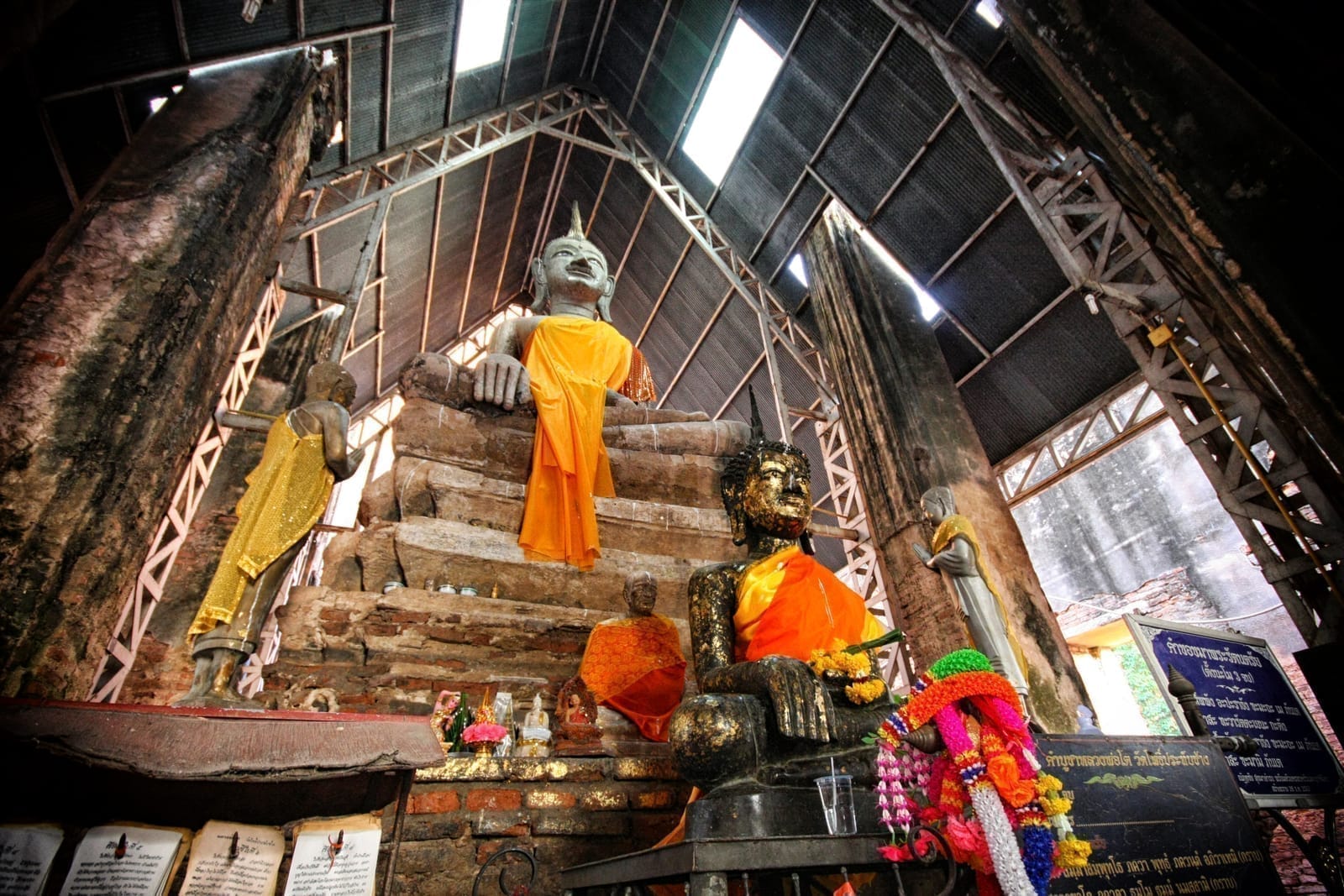
The old ordination hall is built of brick and mortar with a tiled roof, in late-Ayutthaya architecture — thick walls and narrow window slots that give it a solemn, genuinely old royal-temple feel. It's the star of the temple and the spot most people come to photograph.
The Boundary Wall
A thick brick boundary wall rings the ordination hall like a small fortress, which helps you picture how a royal Ayutthaya temple was laid out. You can walk the perimeter and study the old brickwork all the way around — a detail most temples no longer have.
The Principal Buddha and Luang Pho Yim
Inside the hall is an Ayutthaya-era principal Buddha image, plus an old Buddha image the locals call Luang Pho Yim, around 300 years old and deeply respected here. People come to pray for good fortune and success.
The Old Lotus-Bud Chedi
Within the grounds stands an old chedi believed to date from when the temple was first built, its spire shaped as a lotus bud in the Ayutthaya style. Parts have worn away over time, but you can still make out the form and the dignity of it.
The King Suea Shrine
There's a shrine with an image of King Suea for visitors to pay respects. Because he was fond of cockfighting, people fulfil their vows with rooster figures — so you'll see cement roosters left as offerings everywhere. It's a corner that clearly reflects the bond between the temple and the King Suea legend.
The Story of King Suea and This Temple
What sets this temple apart from other old temples is the birthplace story. As the legend goes, King Suea was born here during the reign of King Narai the Great, under a bodhi tree near a mango tree — the name Pho Prathap Chang ties back to that event. When he came to the throne as King Sanphet VIII, he had a royal temple built on his birthplace as a memorial.
King Suea is well known to Thais through the lore of Muay Thai — he once disguised himself to box with villagers in Wiset Chai Chan — and several historical TV dramas mention this temple, which has drawn more people to come and follow the trail in recent years. If you love Ayutthaya history, there's a real thrill in standing on the actual ground where those stories happened.
Atmosphere and Walking Around
The temple sits in a quiet rural community, not a busy tourist site. Walking around the ordination hall and the boundary wall doesn't take long — about half an hour to an hour covers it. It suits anyone who wants a calm spot where you can both pray and soak up some history. Early morning or late afternoon, when the sun is soft, is the most comfortable time to walk.
Pray and Ask for Blessings
Pay respects to the principal Buddha and Luang Pho Yim in the old ordination hall, and ask for good fortune.
Walk the Wall and Chedi
Follow the line of old brick wall and the lotus-bud chedi, and study the Ayutthaya craftsmanship up close.
Photograph the Old Temple
Solemn brick walls in soft morning or evening light make for quiet, atmospheric royal-temple shots.
Where to Go Next Nearby
Since the temple is on the southern side of the province, plan your route well to make a day of it. On the way back into town, stop to pay respects to Luang Pho Phet at Wat Tha Luang on the Nan River, then carry on to Bueng Si Fai, the big lake in the middle of town, and finish with some old-school local food in Phichit before you head home.
- Wat Tha Luang — pay respects to Luang Pho Phet, the city's revered Buddha image, on the Nan River in town
- Bueng Si Fai — a large freshwater lake with a lakeside pavilion, a Chalawan statue, and a public park
- Phichit Old City Park — an ancient town with earthen ramparts, a moat, and Wat Mahathat in shady forest
Straight Talk
This is an old temple whose value lies in its history and architecture, not in shops or lots of activities. If you like following the Ayutthaya trail and quiet temples, you'll enjoy it — but if you come expecting a lively scene, it may feel plain. Because it's far from town, check your route and fill up the tank beforehand, bring your own drinking water, and dress modestly since it's a working temple.
Plan a full trip across all of Phichit province
See the Phichit travel guide →