🔄 Updated 21 Jun 2026
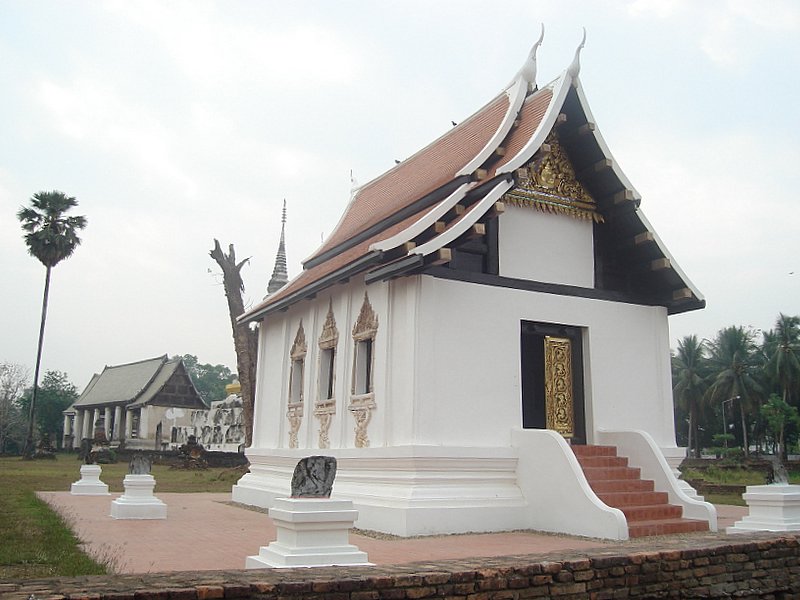
Honestly, Wat Phra Fang isn't a temple where tourists pile in — it's about 25 km out of Uttaradit town, so you have to mean to come here. But for anyone who's into old temples, history and a quiet stretch of the Nan River, it stands out in a way you won't find at a temple in the middle of town. You get to pay respects at the stupa, take in the old architecture, and understand why this small patch of land was once an important city.
Fang Sawangkhaburi — the ancient city this temple is all that's left of
According to temple records, Wat Phra Fang was built around 1157 CE while Sukhothai was the capital, which makes it nearly 900 years old and the only major historic monument still standing from Fang Sawangkhaburi. The old town was a rectangle laid out parallel to the Nan River and was a large community from the Sukhothai era right through Ayutthaya. Walk the grounds today and it's hard to picture that this spot was once the center of a whole town.
What really put Wat Phra Fang in the history books was the period after the second fall of Ayutthaya, when the kingdom splintered into rival factions. Chao Phra Fang, a monk who led the northern faction, set himself up as a power here at Sawangkhaburi, before King Taksin marched up and defeated him in 1770. Afterward Taksin held a grand celebration of the sacred relic at this temple. If you're into the Thonburi-era story, walking these grounds feels like standing on the actual stage where it happened.
Want more out of Uttaradit? Book tours & activities
Booking online ahead on Klook or GetYourGuide is usually cheaper than the gate and skips the queue. Pick only the experiences you actually want — prices and availability are shown live on each site.
What not to miss inside the temple
- The stupa (Phra That Chedi) — a bell-shaped chedi enshrining sacred Buddha relics, a revered relic that several kings came to honor. This is the heart of the temple and where locals come to pray.
- The mahaut ubosot — an old Ayutthaya-style ordination hall set deeper inside the grounds. "Mahaut" means it has few windows or none at all, which keeps the interior dim and cool — a form you rarely see in later temples.
- Carved wooden doors — Ayutthaya-era craftsmanship, each door carved end to end with swirling kanok foliage. Each panel is roughly 1.2 m wide, up to 5.3 m tall and 16 cm thick, and they're considered some of the finest carved temple doors in Thailand.
- Wat Phra Fang museum — holds antiquities and old objects found around the ancient city, which helps you picture daily life in Sawangkhaburi more clearly.
About the doors — worth knowing before you go
The original carved wooden doors have been moved to Wat Thammathippatai in Uttaradit town for safekeeping, to protect them from sun, rain and decay. What you see at Wat Phra Fang now are replicas. If you want to see the real thing, stop by Wat Thammathippatai while you're in town — it's near the intersection of Inchaimi Road and Samranruen Road.
The riverside atmosphere
Another part of Wat Phra Fang's appeal is its spot right on the Nan River — there's a cool breeze, hardly any crowds, and you can wander and photograph the chedi and old hall without competing for angles. It suits anyone after a calm, quiet visit rather than a check-in-for-laughs kind of stop. Morning and late afternoon have the best light and the nicest air; midday sun is fairly harsh because the temple grounds are open and exposed.
How to get to Wat Phra Fang
The temple is in Ban Phra Fang, Pha Chuk subdistrict, Mueang Uttaradit district, about 25 km from town. The main route is Highway 1045 out of town to the junction with Highway 11 (the Uttaradit–Phitsanulok road), turn right toward Phitsanulok for about 2 km, then turn left onto the side road and continue about 14 km to the temple.
- Own car / rental — the easiest option, around 30–40 min from town, with parking at the temple. Just search Google Maps for "Wat Phra Fang Sawangkhaburi Muninat" and follow it.
- Motorbike — good if you're traveling solo; the route is easy to ride, but the last stretch is rural road, so take care in the late afternoon when the light fades.
- No private vehicle — the straightforward move is to charter a car or hire a ride in town, since public transport barely reaches here. Agreeing on a round-trip price in advance works out better value.
Opening hours and dress code
The temple is open roughly 6:00 AM–6:00 PM, free to enter. It's a working temple with resident monks and locals coming to make merit, so dress modestly — cover shoulders and knees, remove your shoes before entering the hall, and keep your voice down, since the place is all about calm.
Where to pair it with
Because Wat Phra Fang is out of town and takes a while to reach, it's worth planning as a half-day trip or combining it with other stops on the same day to make the fuel and time more worthwhile.
Wat Thammathippatai
In town, this is where the original carved wooden doors from Wat Phra Fang are kept — come see the real thing to round out the story.
NatureSirikit Dam
A wide reservoir with mountain views, ideal for a nature-leaning trip and easy to pair with Wat Phra Fang as a single day out.
CultureLaplae Old Town
An old-town quarter full of legend, local eats and a slow community feel — add another half-day to make the trip complete.
Making the most of Wat Phra Fang
- Go in the morning or late afternoon to dodge the midday sun, since the grounds are open and hot.
- Bring your own drinking water — there aren't many shops to choose from around the temple.
- Leave time to photograph the Nan River and walk the museum; budget around 45 minutes to an hour at the temple and you'll be set.
- If you're coming to pray, bring flowers, incense and candles to offer at the stupa.
Plan a full trip across all of Uttaradit province
See the Uttaradit travel guide →