🔄 Updated 21 Jun 2026
Wat Phra Kaew Don Tao Suchadaram is a royal temple sitting on the Wiang Nuea side of Lampang, on a small rise by the Wang River. Locals treat it as one of the city's sacred temples, while visitors from elsewhere usually know it for two things: it was the former home of the Emerald Buddha before the image moved on to Bangkok, and the teak Burmese-style mondop that stands out in the middle of the temple grounds. The real draw here is the atmosphere — come early when there are still few people and the slanting sun lands right on the golden chedi, and you can wander and shoot at an easy pace.
The Golden Chedi — Phra Borommathat Don Tao
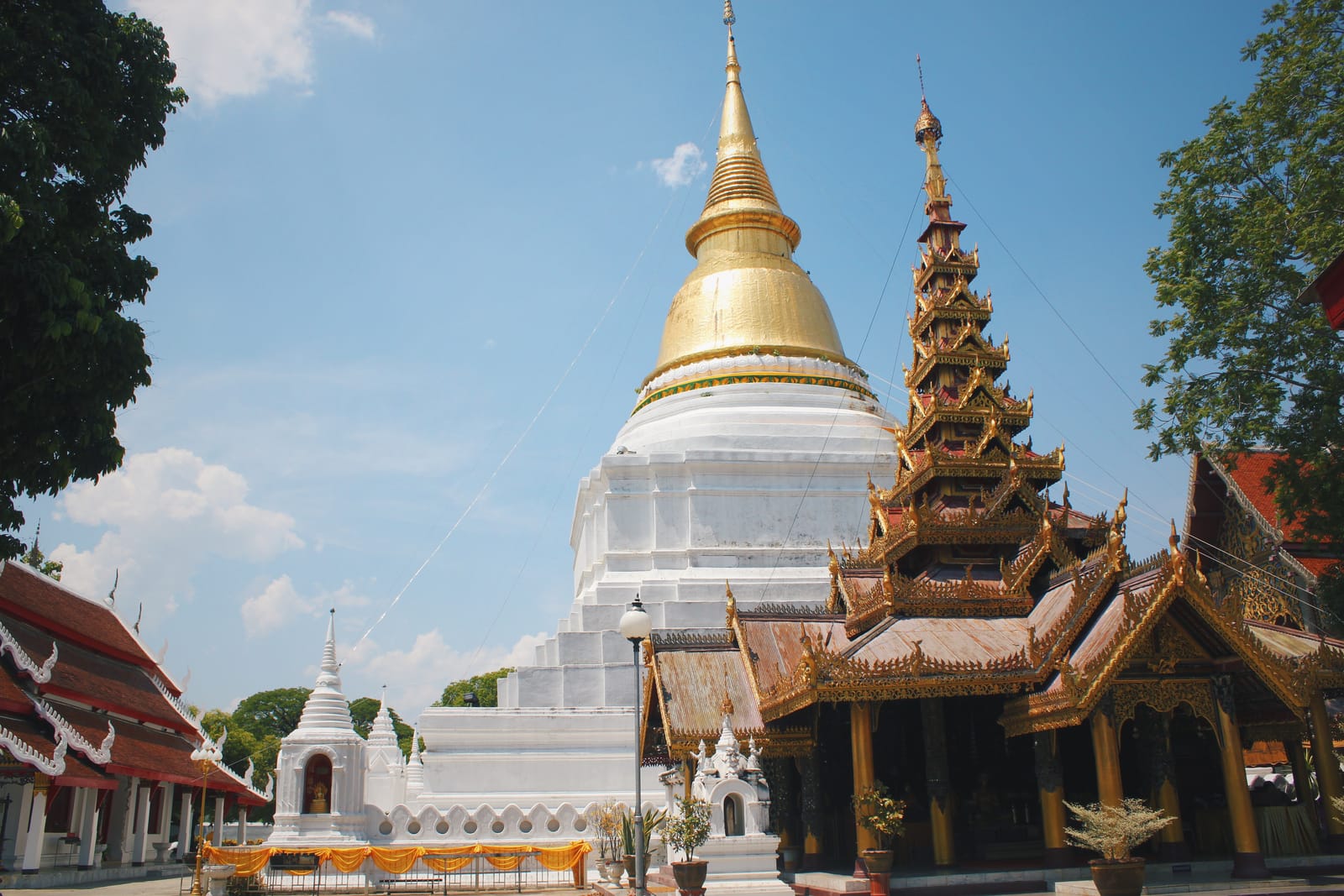
The temple's main feature is the large chedi people call Phra Borommathat Don Tao — a white square base rising into a bell that's clad in gleaming brass top to bottom. It's believed to enshrine a hair relic of the Buddha. The chedi stands roughly 50 metres tall and is the oldest Lanna-style work in the temple, dating back to around the 14th–15th century. When the sun hits it, the gold catches the light from a distance, and it's a landmark that drivers coming into Lampang look out for.
- The white square base plays off the gold-clad bell — the best angle is standing diagonally so you catch the base and the spire together.
- Walking clockwise (pradakshina) around the chedi is a custom worshippers do three times.
- Late afternoon with soft light turns the gold warm-toned, and shots against the sky come out nicer than at midday.
Want more out of Lampang? Book tours & activities
Booking online ahead on Klook or GetYourGuide is usually cheaper than the gate and skips the queue. Pick only the experiences you actually want — prices and availability are shown live on each site.
The Teak Burmese Mondop — The Highlight People Come For
The other spot you shouldn't skip is the Burmese-style mondop, built in 1909 (B.E. 2452) by a wealthy Burmese trader who came in during Lampang's teak-logging boom. The whole structure is teak, topped with a seven-tiered prasat-style Burmese roof (pyatthat), decorated with coloured glass and fine fretwork. Inside sits a Mandalay-style Buddha image — genuine Burmese craftsmanship that you don't often get to see in Thailand. Locals call it the finest Burmese mondop in the province.
Before You Enter the Mondop
Take off your shoes before going up, and dress modestly with shoulders and knees covered. If you've come in shorts or a strappy top, the temple usually has sarongs to borrow near the entrance. The light inside is fairly low — if you want to capture the coloured-glass detail, turn off the flash and switch to night mode for truer colours.
The Legend of the Emerald Buddha and Lady Suchada
The temple's name comes from an old legend passed down over generations. A woman named Lady Suchada is said to have found an emerald inside a watermelon (mak tao), which she offered to a senior monk. He had a craftsman carve it into a Buddha image — the source of the name Don Tao. The Suchadaram part comes from her home, which later grew into the adjoining temple. More significant than that: this temple once enshrined the Phra Phuttha Maha Mani Rattana Patimakon, or the Emerald Buddha, for about 32 years during the 14th–15th century, before it was moved on elsewhere and finally enshrined in Bangkok. Walking the temple grounds and thinking that the Emerald Buddha was once right here gives the place a different feel.
The Museum and Viharns Within the Temple
The temple grounds have other buildings worth a look — the main viharn, the Reclining Buddha viharn, and the Lanna Museum, which holds plenty of old objects, household items, Buddha images, and Lanna artefacts. You can see it all in a single loop. If you have time to spare, the adjoining Wat Suchadaram is included on the same ticket.
Reclining Buddha Viharn
A large reclining Buddha in a quiet, calm setting — a good spot to sit and settle before walking on.
Lanna Museum
A collection of old objects, household items, and Lanna artefacts that tell the story of old Lampang.
Wat Suchadaram
The adjoining temple, included on the same ticket — quieter and with fewer people than the chedi side.
Opening Hours, Entry Fee, and Getting There
- Opening hours daily, roughly 06:00–18:00 (some parts like the museum may close earlier, around 3–5 pm).
- Entry fee free for Thais, around 20 THB for foreigners (one ticket covers both the Don Tao and Suchadaram sides).
- Location Phra Kaew Road, Wiang Nuea sub-district, Mueang Lampang, on the north bank of the Wang River.
- Getting there from central Lampang it's about a 5–10 minute drive or horse-cart ride, with a car park inside the temple.
- Time needed about 45 minutes to 1 hour to see it all.
The Best Time to Visit
Come in the morning, 7–9 am, when the air is still cool, the sun isn't harsh, and there are fewer people than later in the day. If you like warm light, late afternoon before closing is lovely in a different way. Skip midday — the temple grounds are wide open, the heat is strong, and photos are hard to get.
Where to Go Next, All in One Day
The upside of this temple is that it's right in town, so it's easy to keep going afterwards. Once you've finished, try planning the rest of the day like this.
Temple + Old-Town Eats
Market and Walking Street
A Few Small Points of Temple Etiquette
- Dress modestly, shoulders and knees covered, especially when entering the mondop and viharns.
- Take off your shoes before going up any building, and place them neatly.
- Keep your voice down and don't take selfies with your back to the main Buddha image — it's an etiquette point locals take seriously.
- There are donation boxes for the temple — give as you see fit to help keep these historic sites standing.
Want a full Lampang trip already planned out for you?
See the Lampang travel guide →