🔄 Updated 21 Jun 2026
If you're driving through Chai Nat and want to stop somewhere that isn't just a petrol station, Wat Phra Kaew in Sankhaburi is a name worth jotting down. The temple sits in Phraek Si Racha sub-district, Sankhaburi district, about 23 km from Chai Nat town. It's part of an ancient settlement that locals call ‘Mueang Phraek’ or ‘Mueang Sankha’, with traces going back to the Dvaravati period and continuing into early Ayutthaya.
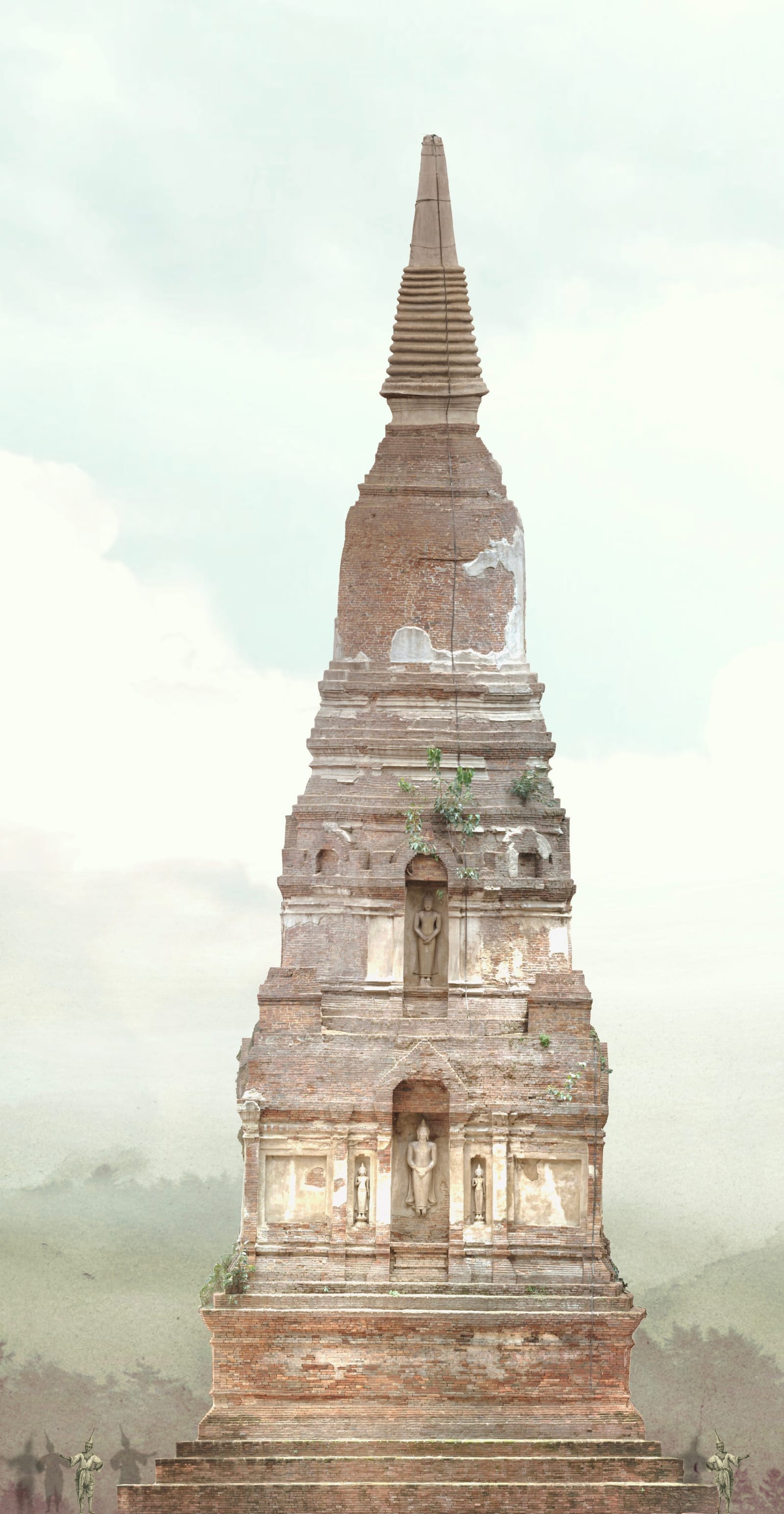
The star here is the square-based stupa standing front and centre in the temple grounds. A lot of first-time visitors are surprised at how well preserved and elegantly shaped it is, given that it's several hundred years old. That's exactly why art historians take such an interest in this small temple out in Sankhaburi district.
The Stupa at Wat Phra Kaew — Why They Call It the Queen of Stupas
The main stupa at Wat Phra Kaew is a square-based design, with a redented base rising in well-proportioned tiers. Scholars estimate it was built around the 13th-14th centuries CE, making it roughly 600-700 years old. Its form blends several influences — the tall Lopburi-style stupa, late Dvaravati work, and hints of Sukhothai art — earning it the nickname ‘Queen of Stupas’ across Southeast Asia.
What keeps people snapping photos are the niches around the stupa that once held standing and seated Buddha images. Some of the original stucco detailing still survives. When the morning or late-afternoon sun rakes across the old brick, the tones turn especially warm — a treat if you like shooting architecture.
Photo Tip
The best light is in the morning before 9am and in the late afternoon after about 3:30pm. The low, angled sun brings out the depth of the stupa's tiers and gives the brick a warmer colour than the flat, direct light at midday.
Want more out of Chai Nat? Book tours & activities
Booking online ahead on Klook or GetYourGuide is usually cheaper than the gate and skips the queue. Pick only the experiences you actually want — prices and availability are shown live on each site.
Luang Pho Chai and Luang Pho Khao
Beyond the stupa, the temple grounds hold Buddha images that people come to pay respects to. The best known is ‘Luang Pho Chai’, a red sandstone Buddha enshrined in the viharn in front of the stupa. One detail people pass along is the relief carving on the back of the image, depicting Indra riding the three-headed elephant Erawan — an old piece of artwork that draws special interest. Behind the stupa is ‘Luang Pho Khao’, a large Buddha image in an open-air viharn.
If you're into making merit or simply enjoy paying respects at temples, both spots are places locals genuinely stop to pray for blessings. But to be straight with you, the main draw of Wat Phra Kaew is still the stupa itself and the old-town atmosphere, more than any luck-and-blessings angle.
The Ancient Town of Sankhaburi — Wat Phra Kaew Doesn't Stand Alone
One thing a lot of people miss is assuming the visit ends at Wat Phra Kaew. In reality the temple is part of the ancient Phraek Si Racha settlement, where several old temples sit close together. Within a few kilometres you can take in a handful more — perfect for stringing into a half-day old-town route.
- Wat Mahathat Sankhaburi — an old temple long tied to Mueang Phraek, on the banks of the Noi River, with an old stupa and prang to see. Not far from Wat Phra Kaew.
- Wat Song Phi Nong — a historic site within the same old-town area, an easy add-on along the same route.
- Wat Tanot Lai — another ancient Sankhaburi site that history buffs often track down.
If you've got half a day, start at Wat Phra Kaew in the morning before the sun gets harsh, then move on to Wat Mahathat and the other temples in the old town. You'll get a feel for Mueang Sankha back when it was an important frontier town on the Chao Phraya basin.
How to Get to Wat Phra Kaew, Sankhaburi
Drive yourself
The easiest option. It's about 30-40 minutes from Chai Nat town. The temple is in Phraek Si Racha sub-district and has parking on site. Just drop a pin for ‘Wat Phra Kaew Sankhaburi’ in Google Maps.
From Nakhon Sawan / Sing Buri
Chai Nat sits midway between the central and northern regions, making it a handy stop on the way north. Turn off the Asia Highway and head into Sankhaburi district.
Public transport
Not very convenient. You'll need to get to Chai Nat or Sankhaburi town, then take a local hired car or motorbike taxi. Without your own vehicle, renting or chartering a car is far smoother.
Hours, Entry Fee and Things to Know
- Visiting hours — the temple is open during daylight hours; morning to evening is best. The stupa grounds are out in the open.
- Entry fee — free, no ticket required (you can donate as you wish via the temple's donation boxes).
- Dress code — it's a temple, so dress modestly; skip spaghetti straps and very short shorts, especially when entering the viharn to pay respects.
- Time needed — about 30-45 minutes to walk the stupa and pay respects. Allow half a day if you're continuing on to the old town.
Straight Talk
Wat Phra Kaew in Sankhaburi is a historic site, not a theme park. On-site facilities are limited. Bring drinking water, a hat and an umbrella if you come in the hot season, because the stupa grounds offer almost no shade.
Plan a full day of old towns and temples across Chai Nat
See the Chai Nat travel guide →