🔄 Updated 21 Jun 2026
Wat Phra That Chae Haeng sits on a low hill in Phu Phiang district, on the east bank of the Nan River, about 3 kilometres from town once you cross the bridge. This spot was once the site of Wiang Phu Phiang Chae Haeng, the centre of old Nan before the city moved to its current bank. The stupa was built around 1355 CE under King Phaya Kan Mueang, which makes it over 670 years old today.
Why come here
For many people the main reason is faith. Phra That Chae Haeng is the year-of-birth stupa for people born in the Year of the Rabbit under Lanna tradition, so those born in that year often make a point of coming to pay their respects once in their lives. Everyone else is welcome too. Lanna belief holds that coming to “chu that” — venerating the stupa of your birth year — brings blessings to your life.
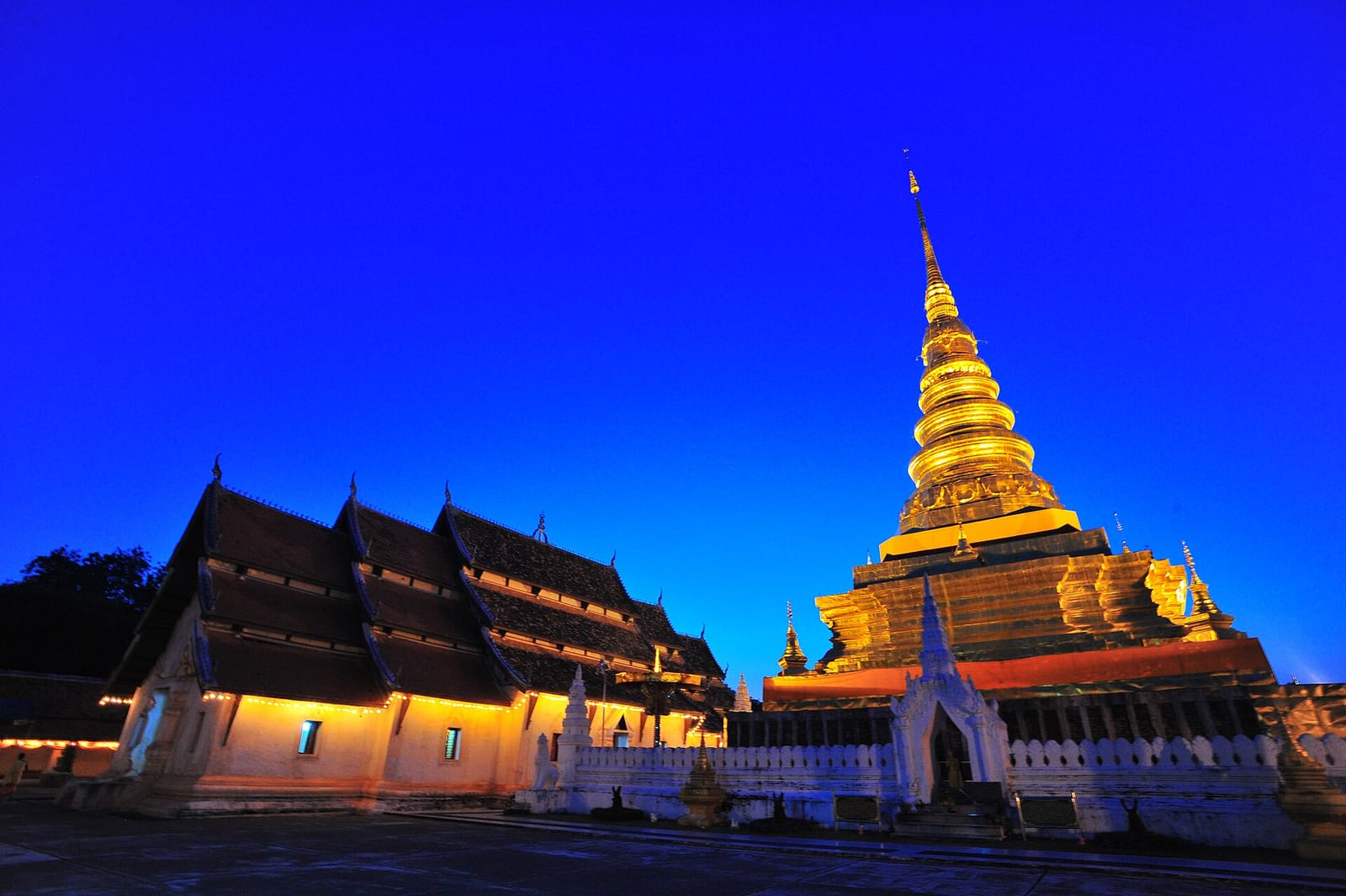
The other reason is the architecture. The stupa is a bell-shaped chedi about 55 metres tall, gilded all over with thong jangko (a brass-and-copper alloy with a golden sheen). When the sun hits it, it glows gold and you can see it from far away. The form is thought to draw on Wat Phra That Hariphunchai in Lamphun. The structure you see today has been restored several times, starting around 1454.
Want more out of Nan? Book tours & activities
Booking online ahead on Klook or GetYourGuide is usually cheaper than the gate and skips the queue. Pick only the experiences you actually want — prices and availability are shown live on each site.
Highlights not to miss
- The long naga staircase — the way up to the temple is a staircase flanked by two nagas. The serpent heads at the bottom rise about 4 metres, and their bodies wind all the way up to the stupa terrace. It's the first photo stop everyone makes.
- The golden stupa — walk clockwise around the chedi for good fortune. Late morning, when the sun catches the gold, is when it shines best.
- The main viharn — the Lanna-style assembly hall out front has a tiered roof and houses the principal Buddha image. Step inside to pay respects and rest out of the sun.
- Views over Nan — because the temple is on a hill, from the stupa terrace you can see rice fields and the town of Nan off in the distance. It's lovely on a clear evening.
On what to wear
This is still an active temple used for real ceremonies, so dress respectfully — no spaghetti straps, no shorts above the knee — and you'll need to take your shoes off before stepping onto the inner terrace and entering the viharn. The tiled floor gets very hot around midday, so bringing socks makes walking a lot more comfortable.
Opening hours · entry fee
- Opening hours: daily, roughly 6:00 AM–6:00 PM.
- Entry fee: free (there's a donation box if you wish).
- Best time: early morning 7:00–9:00 AM for fewer people and gentler sun, or late afternoon before closing for nice light on the gold.
- Time needed: about 30–45 minutes to walk the whole place.
Getting to Wat Phra That Chae Haeng
From the centre of Nan, drive across the Nan River bridge to the east bank, then follow Highway 1168 (the Nan–Mae Charim road) for about 3 kilometres. The temple entrance is on your right, clearly signposted.
Car / rented motorbike
The easiest option. It's about a 10-minute drive from town and there's free parking out front. Motorbike rentals in town start around ฿200–300/day.
Bicycle
At 3 km it's doable if you don't mind the sun, and the road is fairly flat. Good for anyone staying in the old town who wants to take it slow.
Songthaew / charter
There's no fixed route straight to the temple. Most people charter a songthaew or hired car for the round trip, so agree on the price before you get in.
The Hok Peng festival
If you want to see the temple at its liveliest, come during the Hok Peng festival honouring Phra That Chae Haeng. It falls on the full moon of the sixth northern lunar month, which usually lands around February–March each year (in 2026 it runs roughly 25 Feb–3 Mar). The festival includes the bathing of the stupa, alms-giving, candle processions, parades of ceremonial offerings, and folk performances. Both Nan locals and out-of-towners turn out in big numbers, so if you don't like crowds, avoid this period.
Pair it with
The temple is on the same side as the road out to Mae Charim, so if you have half a day, visit here in the morning, then loop back into the old town to carry on to Wat Phumin and the Nan museum — easy to do all in one day.
Plan your whole Nan trip without missing the best spots
See the Nan travel guide →