🔄 Updated 21 Jun 2026
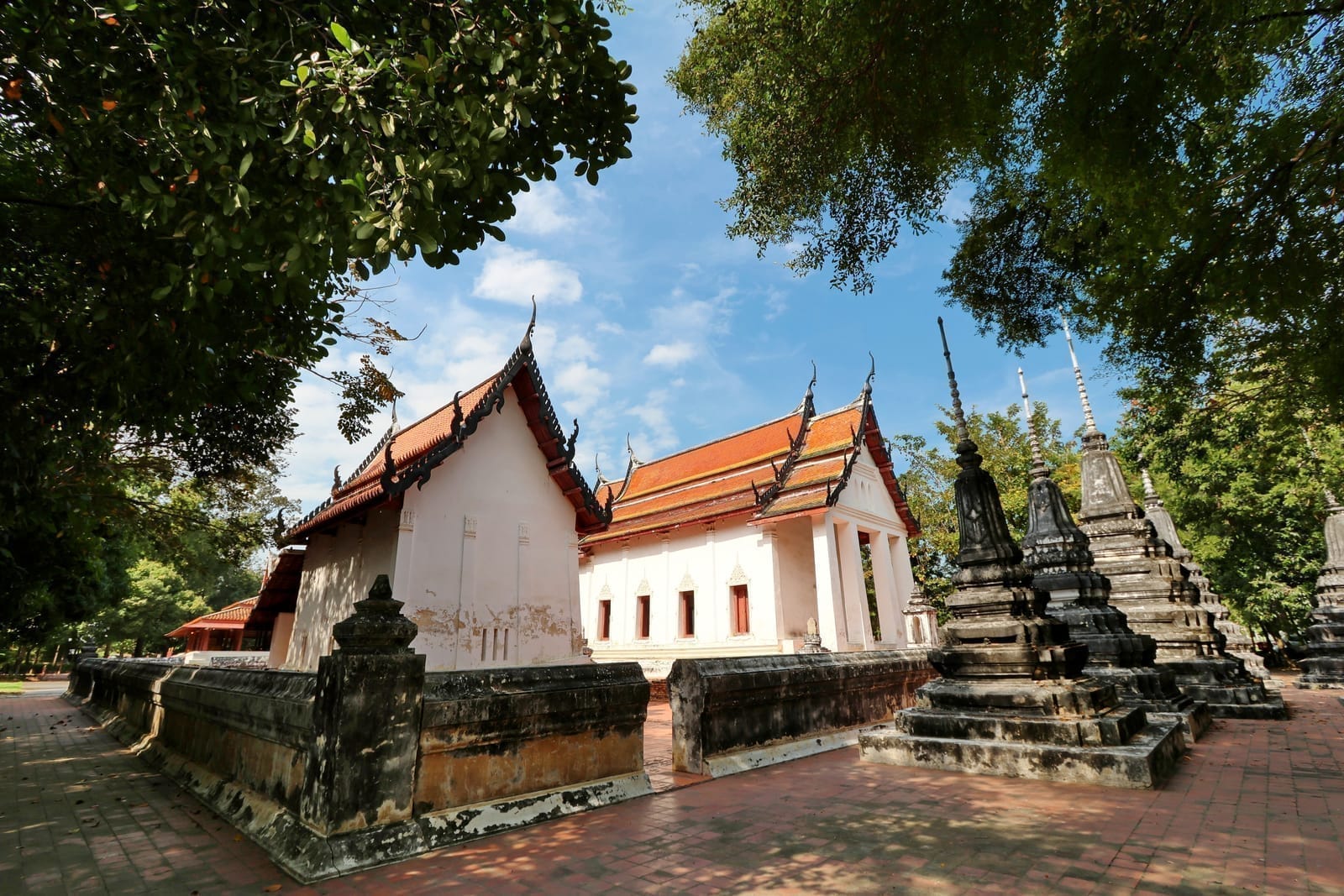
Wat Sing sits in Samkhok subdistrict, Samkhok district, Pathum Thani, on the west bank of the Chao Phraya River. It's a Maha Nikaya temple of the Mon community that settled in this area from the late Ayutthaya period into the early Rattanakosin era. It's believed to have started as an abandoned Ayutthaya-era temple that Mon settlers later restored, turning it into the Mon temple you see today. The draw here isn't grandeur — it's that the place is genuinely old, with a riverside atmosphere that hasn't been over-renovated into something it never was.
Why come to Wat Sing
If you're tired of temples that have been repainted until they all look the same, Wat Sing is a different kind of place. It still has an ordination hall, an old vihara, a chedi, and an earthen pavilion that all carry real signs of age. You get three things in one stop here: making merit before old Buddha images, looking at Ayutthaya–Mon craftsmanship, and strolling along the Chao Phraya to catch the breeze. It suits Bangkok folks who want an easy day trip close to the city — out in the morning, back by evening.
- A genuine riverside Mon temple — it still carries the feel of Samkhok's Raman (Mon) community, not a recently rebuilt temple
- Antiques that are centuries old — the ordination hall, the principal Buddha image, the chedi, and the urns of Mon monks, each with a real story behind it
- The Samkhok water-jar site — the area around the temple was once a kiln site for the pottery that made Samkhok's name
- Quiet and uncrowded — good for anyone who wants a calm atmosphere without fighting for a photo angle
Want more out of Pathum Thani? Book tours & activities
Booking online ahead on Klook or GetYourGuide is usually cheaper than the gate and skips the queue. Pick only the experiences you actually want — prices and availability are shown live on each site.
Old pieces in the temple you shouldn't miss
The old ordination hall is built in the traditional Thai architectural style, around 8.5 x 18 metres, and it's the place to go in and pay respects to the principal Buddha image before anything else. There are several more old pieces with stories around it — taking your time and walking from one spot to the next is more rewarding than rushing.
Luang Pho To / the principal Buddha image in the ordination hall
An old Buddha image that Samkhok locals have long held in faith. Go in and pay your respects in the hall as your first stop.
Luang Pho Dam
A Buddha image carved from red sandstone by an old craftsman, one of the key pieces people coming to Wat Sing often seek out.
The Phaya Krai urn
A cylindrical, flared-mouth urn of brick and plaster holding the relics of a Mon monk who migrated from Mottama (Martaban). It tells the community's Mon roots clearly.
Chedi, vihara, and earthen pavilion
A cluster of old structures from when the temple was built. You can walk around the whole grounds — these are the corners where you see real signs of time.
Tip
If you want to understand the temple's pieces better, try striking up a chat with a monk or one of the temple caretakers and ask about the history. Most are friendly and can tell you more about Samkhok's Mon community in far more detail than any information sign.
Samkhok water jars — what put this district on the map
Samkhok's Mon people settled along the Chao Phraya and made their living from pottery, becoming well known for it. Most people call the jars 'Samkhok water jars' (tum Samkhok), while the Raman community call them 'i-leung'. They're large vessels — dense, thick, red, and unglazed — once used across the river basin to store water and goods. Beyond the jars, the kilns around here also fired pots, jars, large water urns, and basins.
The area near Wat Sing was once a kiln site for Samkhok water jars. Today the traces are reduced to earthen mounds where you can still find scattered pottery shards. If you learn the story of the Samkhok water jars before you arrive, you'll see the temple and this district differently — because you understand why the name 'Samkhok' has always been tied to pottery.
How to get to Wat Sing
- By private car — from Bangkok, take the Pathum Thani–Samkhok road on the west side of the Chao Phraya. There's parking at the temple, and this is the easiest option since public transport out here isn't frequent.
- Starting from Pathum Thani town — drive along the river up toward Samkhok district; it's not far, and it pairs well with visiting several riverside temples on the same route.
- As a day trip from Bangkok — take the Red Line train to Rangsit and continue by road, or just drive out yourself for an easy out-in-the-morning, back-by-evening trip.
Best time to go
Come from early morning to mid-morning for softer sun and a cooler breeze off the river. In the rainy season, some stretches of the riverside road can get muddy, so drive a little carefully — and it's worth packing an umbrella.
Where to go next around Samkhok
The nice thing about Samkhok is that the old temples and the Mon way of life line up along the river, so you can pair Wat Sing with other stops in a single day. I'd plan it as a route that follows the river.
Wat Sala Daeng Nuea
A Mon temple with a handsome Mon-style chedi and a museum section keeping old everyday objects from the Mon boat community — another clear look at the Raman way of life.
Wat Pa Ngiu
Another old riverside temple in the Samkhok area, good for a follow-up merit-making stop along the same riverside route.
Old market by the Chao Phraya
Wander for local food and Mon sweets, then sit and catch the breeze by the river to wrap up the trip at an easy pace.
Visiting Wat Sing at the right pace
Wat Sing takes about 45 minutes to an hour to walk through. It works well as the starting point of a half-day route along the Samkhok riverside. Here's a half-day itinerary that comes together nicely.
Temple–Mon–riverside trip around Samkhok
Plan a full day exploring more of Pathum Thani
See the Pathum Thani travel guide →