🔄 Updated 21 Jun 2026
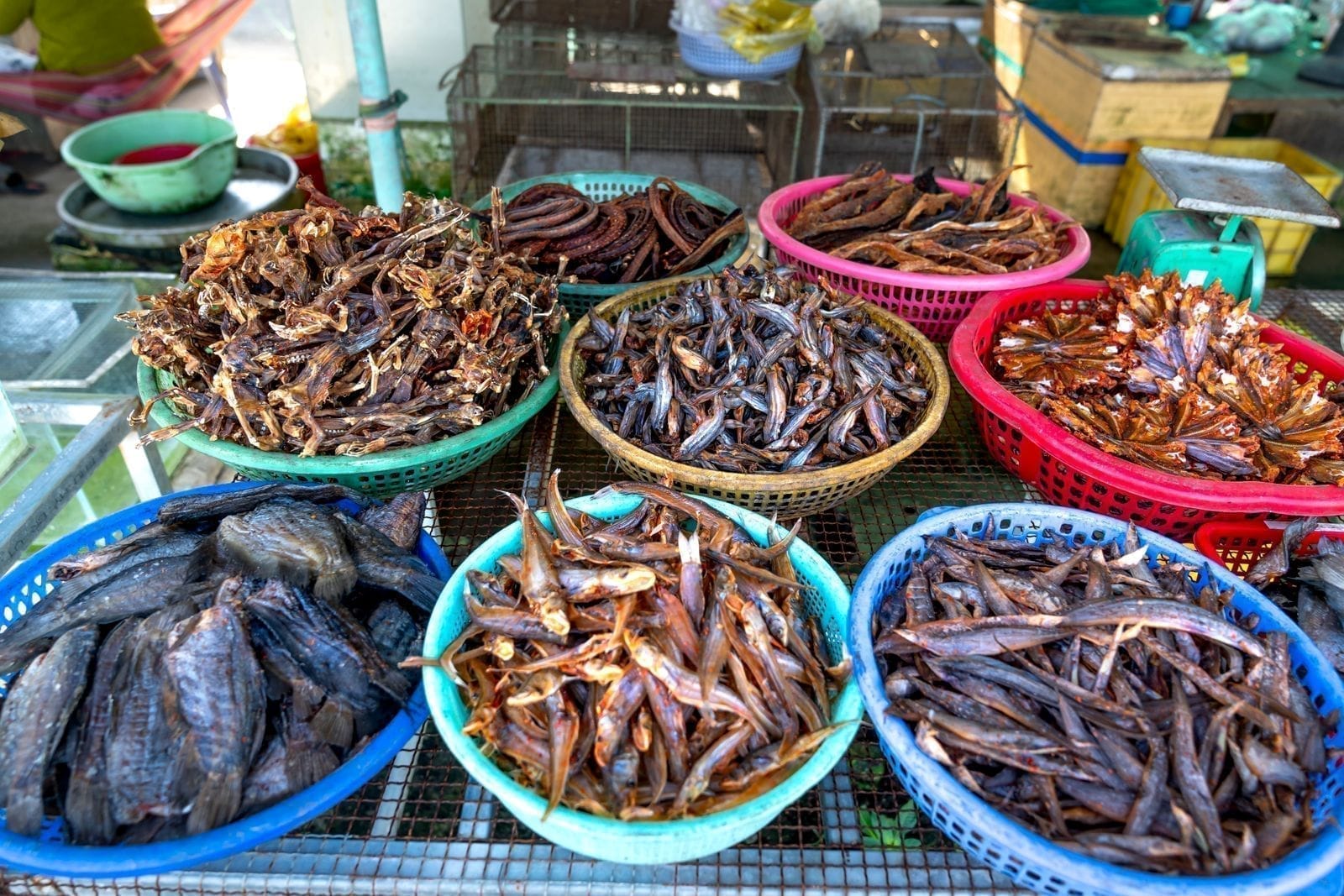
Before fridges, the people living by the reservoir preserved fish with salt, rice, and sun. Pla som is fish fermented with salt and rice until it turns mildly sour, while pla daet diao is fish given a light salt rub and dried under strong sun for just one day until the surface is half-dry, so that frying it leaves it fragrant and crisp outside, tender inside. Both are ways to keep fish edible longer the way Yala folk have done for generations, and that's why so many of the city's souvenirs are some form of processed fish.
Why Yala's pla som and sun-dried fish come from Bang Lang Dam
Bang Lang Dam is a large hydropower dam in the Pattani River basin, mostly within Than To district, holding back the water into a wide lake behind it. It's one of southern Thailand's important freshwater fisheries, with barb, tilapia, jullien's mud carp, and even the occasional giant Mekong catfish big enough to make the local news when someone lands one. When the fish run heavy, the fishing families around the dam — especially the Ban Kok Chang community in Mae Wat, Than To district — turn the catch into pla som and sun-dried fish to sell for a living. That's how pla som became Than To's signature food, right up to today.
A note before you plan the trip
Yala sits in Thailand's deep-south border region, so before you actually set out it's always worth checking the news and the latest safety advisories for the areas you're heading to — especially the routes up to Bang Lang Dam and the outer districts — so you can plan your days and roads with peace of mind. Most travelers go during the daytime and travel in groups.
Want to taste deeper? Try a Yala food tour or cooking class
Half a day with a local who knows the lanes — or cooking a dish yourself — teaches you more than just eating. Book ahead on Klook or GetYourGuide.
How pla som differs from sun-dried fish
People mix these two up a lot. Both are made from freshwater fish, but the way they're kept and how they taste go in different directions. Pick the right one before you buy and you'll end up with what you actually like.
- Pla som (sour fermented fish) — whole fish or cut pieces, rubbed with salt, steamed sticky rice, and garlic, then left to ferment for around 2–3 days up to a week until it turns mildly sour and the flesh goes tender. It's fermented, not cooked, so you have to fry or steam it before eating.
- Pla daet diao (sun-dried fish) — fish butterflied open, given a light salt rub (some vendors add pepper), then dried under strong sun for just one day until the surface is half-dry. It isn't fermented sour — the taste is salty and savory, and once fried it's crisp outside, tender inside.
- Pla riu / dried fish — dried longer than pla daet diao, so the flesh is drier and keeps longer, which makes it good for carrying far. The trade-off is chewier flesh that isn't as juicy as the one-day-dried version.
- Boneless pla som — some makers debone the pla som for you, which makes it easier for kids and anyone who struggles with bones. It costs a little more than whole-fish pla som.
Know this before you buy
Pla som is fermented, not cooked — you always have to fry, steam, or boil it until done before eating. Sun-dried fish needs to be fried through as well. If you're not sure whether a particular vendor's product can be eaten raw or has to be cooked, just ask the seller straight out — it's safer that way.
Kok Chang pla som — Than To's famous fermented fish
When you talk about the pla som that made Yala's name, locals think of Ban Kok Chang pla som in Mae Wat, Than To district. This community sits right by the Bang Lang Dam area, and the villagers were originally people resettled when the dam was built around 1976. Living next to the water, they took up fishing and fish processing for a living, so Kok Chang pla som is a community product fermented from fresh dam fish — they don't have to buy market fish to ferment. The standout is the mild sourness, firm flesh, and the fact that it keeps for several months without any preservatives.
The community's method is a homestyle recipe: it starts with scaling, gutting, and washing the blood out thoroughly so there's no fishy edge, then rubbing the fish with salt and rice before fermenting it in a sealed container kept out of the sun. A few days later it has just the right sourness. To eat, you simply fry it crisp and have it with hot rice, chili dip, and fresh vegetables — a simple, tasty meal that has plenty of people buying it home as a gift for their parents and elders.
If you want to buy at the source
Ban Kok Chang is in Mae Wat, Than To district, along the way from Yala city up toward Bang Lang Dam and Betong. It's a community by the reservoir, not a big storefront, so if you want to go all the way there it's best to ask the villagers around there, or check with the community enterprise or the district office first. During low-fish stretches the stock may sell out faster than it can be fermented, so it's worth asking ahead — and check the route and local situation before you set off.
Yala's standout pla som, sun-dried fish, and fish souvenirs
The ranking below is based on how well-known each item is within the province and how easy it is to find right now. It isn't pure pla som — it also takes in sun-dried fish, processed fish, and the side items people tend to buy alongside, because if you're making the trip to Yala and Than To anyway, buying the full set is better value. Prices are rough ranges; the real thing moves up and down with the fishing season and pack size.
Ban Kok Chang pla som (Mae Wat, Than To district)
A community product from the edge of Bang Lang Dam, fermented from fresh dam fish — mildly sour, firm-fleshed, no fishy edge, keeping for several months without preservatives. Just fry it crisp and eat it with rice and chili dip. This is the most famous pla som in the province.
Sun-dried Bang Lang Dam fish
Freshwater fish from the dam, butterflied open, salt-rubbed, and dried under strong sun for one day until half-dry. Fry it and it's crisp outside, tender inside, salty and fragrant — good with rice soup or plain rice alike. You'll find it at stalls by the reservoir and markets in town.
Barb pla som
Good-looking barb fish from the province's waters, fermented into pla som the traditional way. A bit bony but the flesh is sweet, and older folks love it because it's the pla som taste they grew up with. Fry it good and crisp and the bones become much easier to eat.
Boneless pla som
Pla som with the bones already taken out, easy for kids and anyone who struggles with bones. Fry it crisp and dip it in jaew sauce or squeeze on some lime — it works as a snack or a proper dish. Good to buy as a gift for elders wary of fish bones. Costs a little more than whole-fish pla som.
Pla riu–dried Bang Lang Dam fish
Fish dried longer than pla daet diao, so the flesh is dry and keeps a long time — easy to carry far without refrigeration. Fry it crisp as a snack, or pound it into chili dip. It's the fish souvenir that's easiest to take on a bus or plane.
Grilled-fish chili dip–skewered-shrimp chili dip
The natural partner to fried pla som — a southern-style chili dip pounded with grilled fish or skewered shrimp. It keeps well and you can spoon it over rice and fresh vegetables for a whole meal. Buy some home and you'll get that southern-food taste any day you like.
Sun-dried tilapia
Tilapia from ponds and from the dam, butterflied open and sun-dried for a day. The flesh is thick, frying up firm, and it's easy to eat because the bones are big and simple to pick out. It's the sun-dried fish that people who don't get on with small bones tend to choose.
Ready-fried pla som (ready to eat)
Some shops fry pla som crisp and bag it ready to eat, so you don't have to fry it yourself at home. Good to grab and eat on the road, or to give to someone who can't easily fry. But it keeps shorter than raw pla som — eat it within a few days.
Straight talk
Yala isn't yet a place where pla som and sun-dried fish come with big brands and fancy storefronts. Most of it is community-made or sold by market vendors who make it themselves. The prices given here are rough ranges from what we found — the real thing moves up and down with the dam's fishing season and pack size. The best move is to ask the seller straight out and pick a vendor whose stock turns over fast and looks fresh and clean.
Where to buy pla som and sun-dried fish
If you don't drive all the way up to Kok Chang, there are still plenty of places to find pla som and sun-dried fish in Yala town and along the way. Most locals buy from the markets too.
Yala Old Market (in town)
A fresh market in the center of Yala. Come early and you'll find stalls of fresh fish, pla som, sun-dried fish, and processed goods from local vendors. Local prices, pick your own, and you can ask the seller how to cook it through right there.
Yala New Town Market
Another big market in the city, with both fresh produce and souvenir stalls. Good to stop in for pla som, sun-dried fish, and chili dip to grab back to your room or take home.
Roadside stalls on the way up to Bang Lang Dam–Than To
Along the route from town up toward the dam and Betong, villagers run stalls selling sun-dried fish, pla som, and seasonal forest products. Buy on the way up or on the way back — it's fresh from the source.
Ban Kok Chang community enterprise
The source of Than To's famous pla som. If you want the real thing straight from the source and in larger quantities, it's best to contact the community ahead of time — it's a community group, not a shop that's open all the time.
Frying pla som and sun-dried fish well — what to eat them with
Once you've bought it home and want to eat it the Yala way, both pla som and sun-dried fish are handled much the same: fry them crisp and eat them with bold-flavored sides.
- Fry in hot oil over medium heat — pat the fish dry before it goes in, and get the oil hot enough so the fish turns out crisp rather than oil-soaked. Fry pla som until golden and crisp; fry sun-dried fish just until the surface crisps while the flesh stays tender.
- Eat with hot rice — fried pla som with plain rice and shrimp-paste chili dip or grilled-fish chili dip is the simple meal southern folks eat all the time.
- Squeeze lime, slice shallots and chili — fried sun-dried fish with a squeeze of lime, sliced shallots, and bird's eye chili cuts the richness nicely.
- Jaew dip–seafood sauce — fried boneless pla som dipped in jaew or seafood sauce works as a snack to nibble or as a proper dish.
- Paired with fresh vegetables — cucumber, yardlong beans, and local greens help balance the meal so it isn't too salty.
A small trick
If the pla som is more sour than you like, rinse it lightly and pat it dry before frying to bring the sourness down. If the sun-dried fish is too salty, soaking it in water for a moment before frying helps too. And don't fry over too high a heat — the rice clinging to the pla som burns quickly.
How to carry pla som and sun-dried fish home without the smell escaping
- Ask for vacuum sealing — many vendors can vacuum-seal it or put it in a sealed box. Tell the seller you're taking it far by bus or plane, and it'll best keep the smell in and stop leaks.
- Use double zip-lock bags — pla som has a fermented smell, so double-bag it and tie it tight to keep the smell from escaping in your luggage. Jars of chili dip should be double-bagged against leaks too.
- Keep it cold if it's a long way — pla som and sun-dried fish are fresh products, so for trips over half a day you should bring a cooler bag or ice. Pla riu dried fish holds up better and carries easily.
- Choose dried fish if you're flying — if you're flying and don't want the hassle of keeping things cold, pla riu and dried fish are easier to manage than fresh pla som. If you do carry pla som, check it into the hold and pack it well against leaks.
Plan a full Yala–Betong eat-and-explore trip
See the Yala travel guide →