🔄 Updated 21 Jun 2026
Drive out of Yasothon town in any direction and within a few minutes you'll hit rice fields. Almost all of the province is flat lowland along the Chi River and its tributaries, the Lam Sebai and Lam Sebok. The southern part of the province is also part of Thung Kula Ronghai, a vast plain of over two million rai that spans five provinces. The charm here isn't a single landmark — it's the feel of rice paddies running off in every direction.
Thung Kula Ronghai, the plain that became a jasmine rice bowl
The name "Thung Kula Ronghai" (literally "the plain where the Kula weep") comes from a legend about Kula traders who trekked across this plain peddling goods until they were so exhausted they nearly wept, because the plain stretched on without end. It was once dry, sandy, slightly salty land where almost nothing grew well — but it turned out jasmine rice loves exactly this kind of soil, and the plain once written off as worthless became a source of top-quality jasmine rice, now GI-registered as Thung Kula Ronghai jasmine rice. Yasothon is one of the five provinces sitting on this plain, especially around Kho Wang and Maha Chana Chai districts in the south.
What makes Thung Kula worth visiting is that it's a rice field that actually "works" — not a staged check-in spot. Drive through and you'll see farmers transplanting seedlings, harvesting, drying straw, water buffalo grazing, and old rice barns by the road. It's a slice of Isan country life that gets harder to find every year.
Want more out of Yasothon? Book tours & activities
Booking online ahead on Klook or GetYourGuide is usually cheaper than the gate and skips the queue. Pick only the experiences you actually want — prices and availability are shown live on each site.
When the fields look best, following the rain-fed rice season
Rice around Thung Kula is rain-fed and grown once a year, so the view of the fields changes with the rice cycle. If you have a particular shot in mind, you need to time your trip to match.
- Late rainy season, roughly Aug–Oct — the rice is growing tall and the fields are lush green to the horizon, with clear skies after the rain. Many people rate this the most beautiful window for green-paddy photos.
- Early cool season, roughly Nov–early Dec — the rice starts to ear and turns a green-gold color, the air is cool and pleasant, and thin mist drifts over the fields in the morning. This is the best window for a visit and for early-morning photos.
- Late cool season, Dec–Jan — harvest time, when the whole plain turns gold and you can watch farmers cutting rice and drying straw. It's a lively look at real farm life.
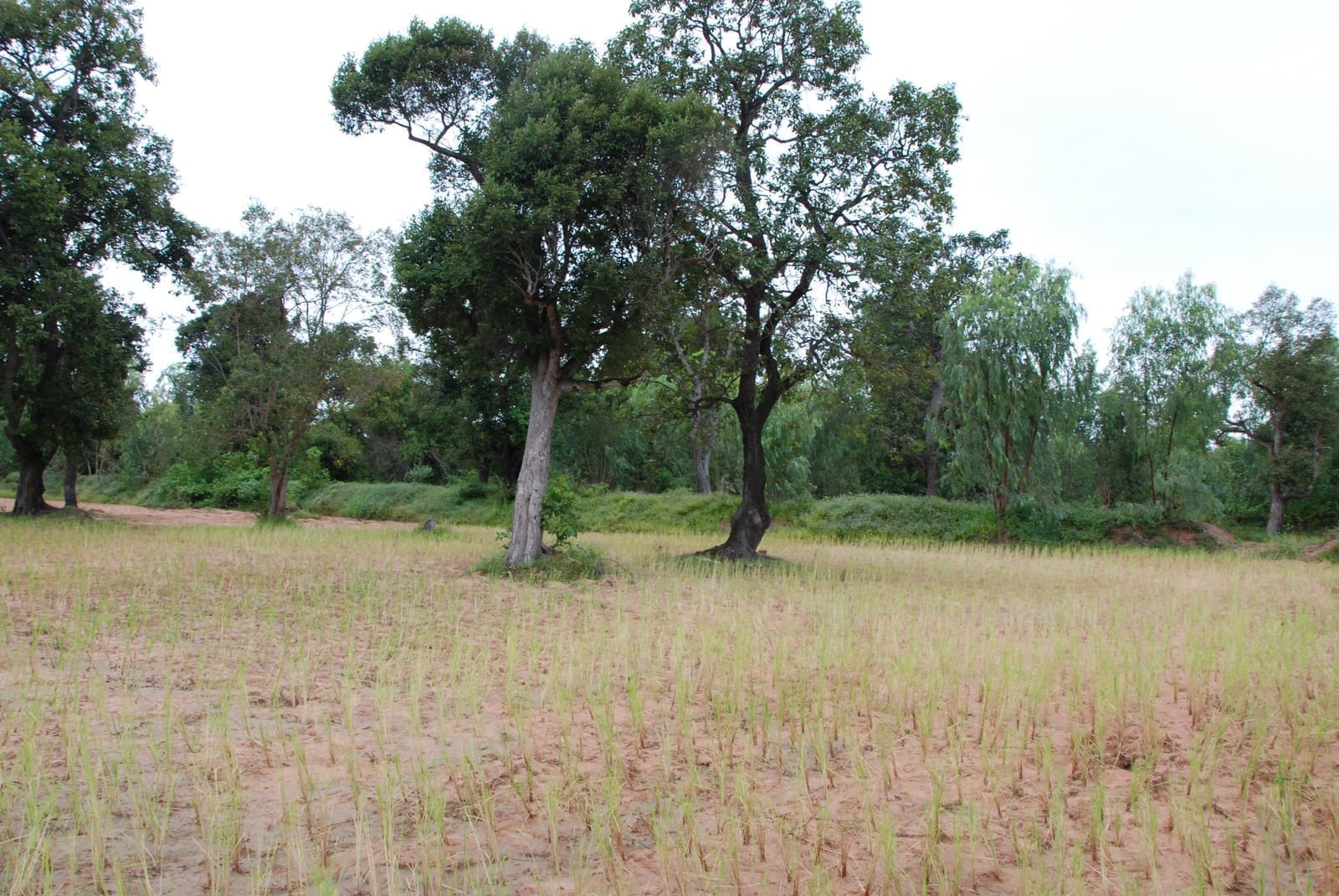
- Dry season, Mar–May — the fields are bare after harvest, just stubble and dry earth, with an open brown-toned view. Good for minimalist big-sky shots, but not the green-paddy scene many people come looking for.
Tips for getting a good shot of the fields
The light is best just after sunrise and before sunset, when the fields turn a soft gold with long shadows. If you come in the early cool season, head out early to catch the thin mist over the paddies. Don't forget a light jacket — Isan mornings in the cool season are colder than you'd expect.
Photo spots and field views you can actually reach
Yasothon doesn't have signposted viewpoints like the flower fields in some other provinces. The charm is driving the country roads and finding your own angle. Below are the areas and spots people like to stop and shoot, plus places with a rice-field atmosphere where you can just sit and relax.
Country roads through Thung Kula (Kho Wang–Maha Chana Chai)
Drive the back roads in the south of the province, with rice fields on both sides as far as you can see, plus paddy dikes, rice barns, and sugar palms as a backdrop. Plenty of roadside angles to pull over and shoot — great for people who like finding their own frame.
Rice fields along the Chi River and Lam Sebai
The lowlands along the Chi River and Lam Sebai are green paddies broken up by lines of riverside trees. Mornings often bring mist and soft light, great for shooting fields beside water. Easy to stop at on the way to the outer districts.
Cafes in the fields around town
Yasothon has several cafes set in the fields or overlooking rice paddies in the areas around town and Kham Khuean Kaeo. Sip coffee and take in the green paddies in comfort — ideal if you want a pretty field view without trudging along the dikes.
Farms and organic plots open to visitors
Several organic rice groups and farms in Yasothon open their plots to visitors, so you can walk the paddy dikes, photograph real rice plants, and see chemical-free farming up close. It's best to contact the group ahead of time.
Experience organic farm life, not just photos
Yasothon has driven organic farming for so long that it has become part of the province's identity. Several groups of farmers have given up chemicals and gone seriously into organic rice, and some have built on that to become agro-tourism stops where city folk can come and learn about rice farming. This is the angle that gives a visit to the Yasothon rice fields more substance than just taking photos.
- Organic rice groups and community enterprises — for example, groups around Ban Kham Noi in Nam Om subdistrict, Kho Wang district, and the "farmers of virtue" network growing organic Thung Kula jasmine rice. Many are happy to let you visit the plots and tell you about chemical-free farming.
- Farm-stays with a farming way of life — there's a network of farm-stays in the province where you stay out in the fields, try farm activities, transplant or harvest rice in season, or join workshops on processing the harvest. Great for families who want their kids to see the real thing.
- Seasonal activities — the transplanting season (around Jun–Jul) and the harvest season (around Nov–Dec) are the times you can actually get into the fields. Some communities hold merit-making events and communal-labor activities you can join.
- Souvenirs from the fields — pick up organic Thung Kula jasmine rice to take home straight from the farmers. It's a souvenir with a real story behind it, and it supports the community directly.
Get in touch before you go and it goes smoother
Most organic plots and farm-stays are run by local villagers and aren't set up like regular tourist sites. If you want to visit the plots or join an activity, contact the group or the community's page about 1–2 days ahead so they can arrange someone to show you around and prepare the activities in time.
A half-day driving route through the fields
If you have a car and want to soak up the rice fields and country life without rushing, try a half-day morning like this. Adjust it to the season and the stops you want to make.
Driving through Thung Kula south of town
If you come during the late-year harvest, switch the goal to golden fields and shots of farmers cutting rice. If you come in the rainy season, focus on green paddies and clear post-rain skies. Same route, a completely different mood.
Enjoy the Yasothon rice fields and respect the place
- Your own vehicle is by far the easiest — the rice-field spots are scattered outside town and public transport barely reaches them, so renting a car or driving yourself is much more convenient.
- Ask before stepping into a field — rice paddies are villagers' livelihood. If you want to shoot inside a field, ask the owner first and walk on the dikes, don't trample the rice.
- Bring sun and mosquito protection — the open fields get strong sun in the late morning, while mornings and evenings bring mosquitoes and insects, so pack a hat, sunscreen, and repellent.
- Check the season before you travel — come in the late rainy season for green paddies, or at harvest time for golden fields; come in the dry season and you'll find bare fields, so set your expectations to match the season.
- Pair it with other sights in town — see the fields in the morning, then follow up with the Ban Singha Tha old town, temples, or a city cafe in the afternoon for a well-rounded trip in a single day.
The Yasothon rice fields may not be a flashy attraction, but they're a place that lets you slow down and breathe deep. Wide-open skies, green paddies, and a living farming way of life — that's a charm that gets rarer all the time. If you want a calm trip with good photos and a real sense of Isan farm life, this place delivers.
Plan the rest of your Yasothon trip in full
See the Yasothon travel guide →