🔄 Updated 21 Jun 2026
Anoru isn't a staged old town built just for tourist photos — it's a quarter where people still live and trade for real. Some units are old grocery shops, some are homes that have stayed in the same family for four or five generations, and then there are buildings a younger crowd has turned into cafes, galleries and creative spaces. What makes it fun to walk is that it's an old town that's still breathing, not frozen into a museum. Half a day here gives you the full feel of the old port city.
Before you plan the trip
Pattani is one of Thailand's three southern border provinces. Before you go, check the latest news and safety advisories from official government sources and local media, then choose your timing and route based on the situation. Most travellers explore the town centre and old quarter without trouble, but updating your information before you set off is always worth doing. The quarter mixes Chinese shrines with Muslim-Malay communities, so dress modestly and stay respectful when entering any place of worship.
Where Anoru is and why it's worth the walk
Pattani's old quarter sits in Anoru sub-district, Mueang Pattani, on the flatland along the Pattani River just before it meets the bay. In the old days junks could sail in to trade, so Hokkien Chinese settlers put down roots and built up the trade from the reign of Rama III, until it became the market quarter people called Kue Da Jeenor — literally "Chinese market". It was the city's first economic district, before it spread out along the two neighbouring streets. The charm here is the layering of architecture from several eras still standing together — Sino-Portuguese shophouses, Chinese-style wooden homes, and buildings that mix in local craftsmanship. Walking it feels like reading the city's history through the faces of its buildings.
Want more out of Pattani? Book tours & activities
Booking online ahead on Klook or GetYourGuide is usually cheaper than the gate and skips the queue. Pick only the experiences you actually want — prices and availability are shown live on each site.
The three streets of the old quarter
The heart of the quarter is three streets that run parallel and connect to one another, so you can walk them all in a single loop. Each has a slightly different character.
- Anoru Road — the oldest street and the starting point of the Chinese market community. It's home to Leng Chu Kiang Shrine and many old shophouse units, and it's where you'll see the clearest traces of the original trade.
- Pattani Phirom Road — the street that runs along the Pattani River, pleasantly cool thanks to the breeze off the water. This is where the riverside cafes and newer galleries cluster, along with Khun Phithak Raya House, a century-old home.
- Ruedi Road — the street that links the other two. It has homes and old shops with a quieter atmosphere, good for slowly taking in the details of the buildings.
Where the nickname 'A-Rom-Dee' comes from
Locals and the creative community took the first syllables of the three street names — Anoru, Pattani Phirom, Ruedi — and played them into the phrase "A-Rom-Dee", a cute nickname for the quarter that sounds like the Thai for "good mood", suggesting a walk here puts you in a good one. It's a handy trick for remembering all three streets.
The Sino-Portuguese shophouses and wooden homes to stop for
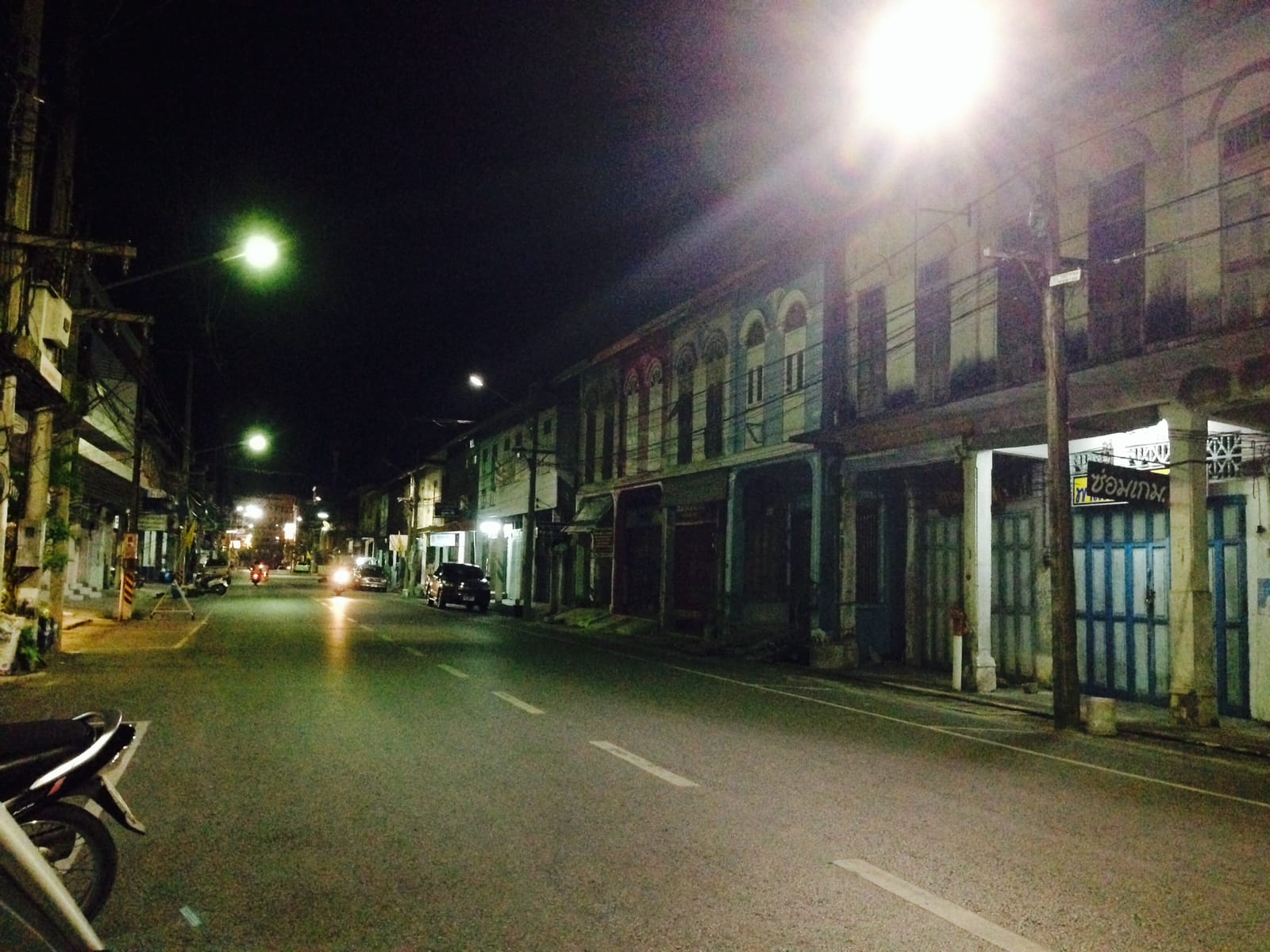
The highlight of the walk is the faces of the buildings. The Sino-Portuguese shophouses here have arched openings, folding wooden shutters, moulded plaster above the doors, and old shop signs with lettering that's faded but still legible. Some units are two-storey wooden homes that blend Chinese and local craftsmanship. What makes it fun is that they aren't all lined up neatly in one style — they alternate by the era they were built, so walking slowly and looking at one building at a time reveals a lot of detail.
Khun Phithak Raya House
An old home, roughly 90-100 years old, on Pattani Phirom Road in the heart of the old Chinese market area. It's a two-storey, two-unit row house that blends Chinese architecture with local craftsmanship, passed down through several generations. It's one of the best-preserved examples of the quarter's Sino-style homes.
Sino-Portuguese shophouses, Anoru Road
A run of old shophouse units along Anoru Road, with arched openings, wooden window shutters and original shop signs. Some units are still grocery shops or long-running old businesses. This is the spot where you'll catch the old port-town atmosphere most clearly for photos.
Riverside homes on Pattani Phirom
The side that runs along the river has wooden homes and old buildings facing the water. Some have become cafes and galleries, so walking this stretch gives you old buildings and river views at the same time.
Leng Chu Kiang Shrine, the spiritual heart of the quarter
A walk through Anoru has to include Leng Chu Kiang Shrine, better known to most people as the Lim Ko Niao Shrine. It stands at 63 Anoru Road and is an old Chinese shrine that has been part of this quarter for a long time. It was originally called Su Kong Shrine and is a centre of faith for Thai-Chinese communities in Pattani and nearby provinces, with people coming to pray for fortune and success. What gives the shrine its national reputation is the Lim Ko Niao festival around Chinese New Year — the procession starts from the shrine right here on Anoru Road, with fire-walking and water-walking rites that draw people from across the country.
- Location — 63 Anoru Road, Anoru sub-district, Mueang Pattani, in the centre of the old quarter.
- Highlight — the Lim Ko Niao festival around Chinese New Year (roughly February-March each year), with a procession plus fire-walking and water-walking rites.
- Etiquette — it's a place of worship, so be composed, remove your shoes where required, and ask permission before photographing people who are praying.
- Keep walking — it's on the same street as the old buildings and cafes, so you can do it all in one loop.
Cafes and galleries inside the old buildings
What brought Anoru back to life in recent years is the younger generation reopening cafes and creative spaces inside the old riverside buildings. Many are halal, welcoming both Muslim and non-Muslim visitors, and you can easily sit with a coffee or tea inside a century-old building with a river view. Here are the spots that are genuinely open in the quarter and that people stop by often.
IN_T_AF Café & Gallery
A cafe and gallery inside an old building on the Pattani River, run as an exchange space by the city's younger generation. The name comes from spelling "Fatoni" backwards. It serves coffee and tea and has a corner for showing art — a quiet spot, good for working or browsing the work at the same time.
P.ART.Y Gallery Cafe
A burgundy riverside cafe on Pattani Phirom Road, decorated with art, offering drinks, bakery and a learning space. It has a prayer room, a library and a meeting room you can use — a favourite spot for chilling by the river.
Rapt
A cafe on Pattani Phirom Road with a Coffee & Friends concept that leans into a relaxed atmosphere. It's 100% halal, a good stop while you're walking the old quarter from late morning into the evening.
Onyx Café
A halal cafe in an old building in the heart of the quarter — another spot that's taken an original building and turned it into a place to sip coffee. Good for anyone who wants a quiet corner to rest their legs between buildings.
A tip about timing
The opening hours of the small cafes here change often — some close on weekdays or adjust their hours by season. Checking the shop's Facebook or Instagram again before you go is the safer bet. And if you want the best atmosphere and light for photographing the old buildings, go in the morning or late afternoon when the sun isn't harsh.
A creative district and its festivals
Another reason Anoru is interesting is that it's become a creative district, with local groups like Malayu Living and Prince of Songkla University's Pattani campus helping to revive the old buildings into new working spaces. There's an annual festival, Pattani Decoded, that pulls the younger generation from the three southern border provinces together around design, food and music. If your trip lines up with the festival, the quarter gets especially lively, with many old buildings opening to visitors and activity filling the streets.
How to walk Anoru fully in one loop
The quarter is small and entirely walkable — no car needed. Park in one spot and loop the three streets easily. We've laid out two half-day routes; pick whichever suits a morning or an afternoon.
Old buildings, the shrine, finishing at a cafe
Cafe first, then buildings, catching the evening light
What to know about getting here
Pattani has no airport of its own. Most people fly into Hat Yai and continue by road for around 1.5-2 hours, or take a coach or train to Pattani. The old quarter sits within the municipal area and you can walk the whole thing on foot, with parking along the roadsides. You can easily pair it with the Pattani Central Mosque or a trip out to Talo Kapo Beach in the same day — and never forget to check local safety news before every trip.
Plan where to stay and a full Pattani trip
See the Pattani travel guide →