🔄 Updated 21 Jun 2026
The name "Sao Nak" comes from the northern Thai dialect and means a large, sturdy pillar. This house rests on 116 thick teak pillars, which is exactly where the name comes from. It was built around 1895 by Maung Chan Ong, a Burmese timber merchant and founder of the Chantarawiroj family, back when Lampang was a booming teak-trading town with many Burmese craftsmen at work. The house is now well over a century old, but the teak frame is still standing strong.
What makes it worth a stop
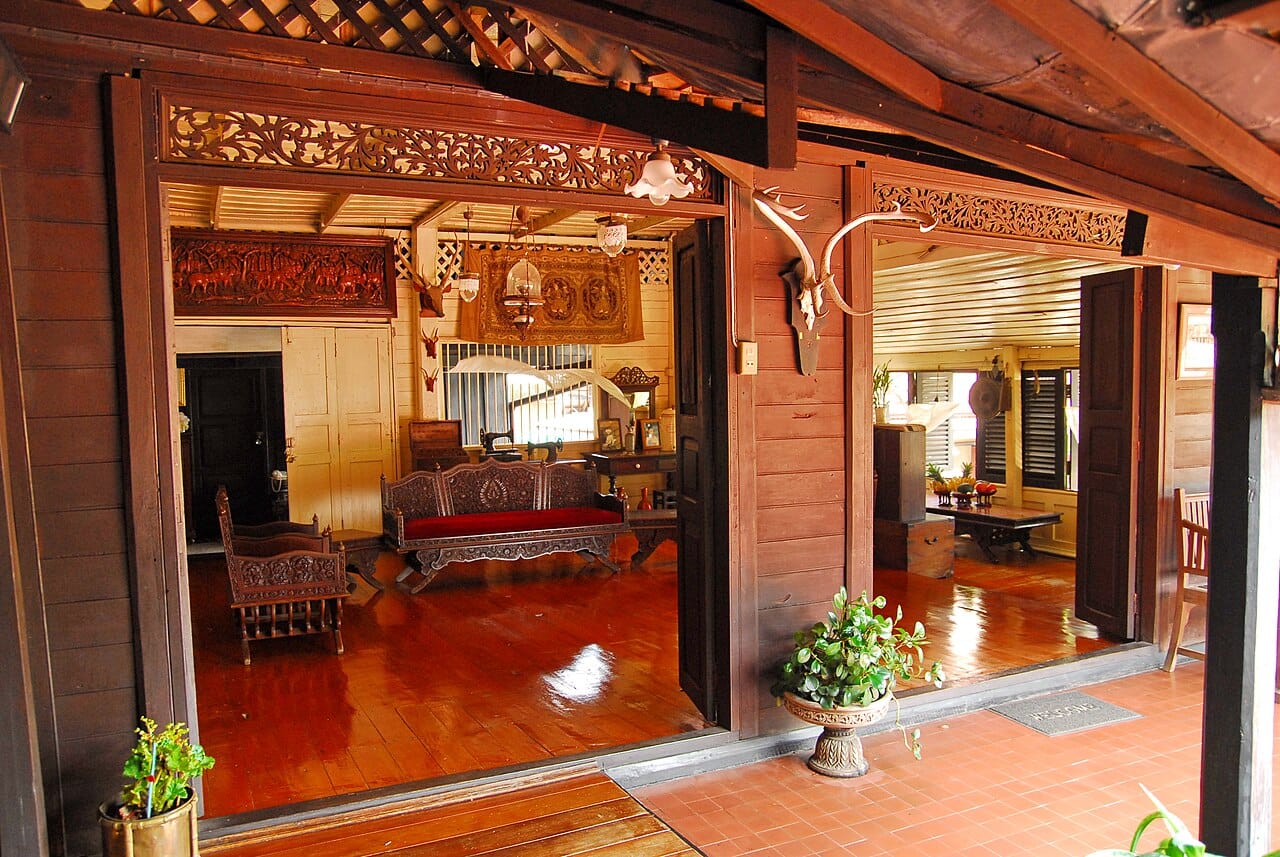
Baan Sao Nak is a rare surviving example of an old merchant-noble's timber home that fuses two building traditions. The gabled roof and the structure follow Lanna style, but the verandahs, fretwork, and the way the space is laid out show a clear Burmese influence. The house is painted black with wood-oil in the way of old timber homes. Climb up into the residence and you'll find the family's collection on display across the rooms: antique chests, silverware, a howdah (the seat carried on an elephant's back), and everyday Lanna objects.
- 116 teak pillars — the heart of the house. Walk underneath and you'll see how genuinely massive they are; several are too wide to wrap your arms around.
- Mixed architecture — a Lanna roof and frame with Burmese verandahs and fretwork, one of only a handful of such hybrid houses left in the north.
- The collection inside — old chests, silverware, an elephant howdah, and old family photos that tell the story of Lampang in its timber-trading days.
- The great Saraphi tree — a large tree on the grounds that is said to be even older than the house itself.
Want more out of Lampang? Book tours & activities
Booking online ahead on Klook or GetYourGuide is usually cheaper than the gate and skips the queue. Pick only the experiences you actually want — prices and availability are shown live on each site.
Opening hours, entry fee, and what you get
When it is open for normal visits, Baan Sao Nak opens daily, roughly 10:00–17:00. Entry is around 30 THB for Thais and about 50–100 THB for foreigners. Children, monks, and students in uniform usually enter free. The ticket includes one drink, and at some times you'll also get a taste of puffed-rice snacks. There used to be a small coffee corner under the house where you could sit and rest after looking around.
Always check before you go
To be straight with you, the opening status of Baan Sao Nak is unpredictable. After the COVID period the owners closed the old residence and put the house and land up for sale, since the building had become run-down and hard to maintain. So at times it only opens for private events or closes temporarily. Before you travel, call ahead on 054-227653 or 054-224636, or ask locals first, so you don't make the trip for nothing.
How to get there and where it sits in town
Baan Sao Nak is at 6 Ratwattana Road, Wiang Nuea subdistrict, Mueang Lampang, on the same side as the old town and the Kad Kong Ta market, all within easy walking distance of each other. From Kad Kong Ta it's just a few minutes by car or horse-drawn carriage. If you park around the old town, you can simply walk over. Touring Lampang without a car? The famous horse-drawn carriages run right through this neighborhood, so you can hop off to photograph the front of the house.
Kad Kong Ta
An old riverside street along the Wang River, lined with heritage buildings and a weekend walking street. Right near Baan Sao Nak, easy to combine on foot.
Temple nearbyWat Phra Kaew Don Tao
An old temple paired with Lampang's history, once home to the Emerald Buddha. Same Lanna-Burmese art, also on the Wiang Nuea side.
ActivityLampang horse carriage
Lampang's signature ride that no other town has. Tour the old town past Baan Sao Nak and the temples all in one loop.
When to go and how to get good photos
- Late afternoon — low light slants onto the wooden verandahs, making the teak look warm and full of depth, with lovely fretwork shadows in the frame.
- Cool season (Nov–Feb) — Lampang's weather is just right for long old-town walks all day without the heat.
- Earth tones or Thai dress — they suit the old timber house, and plenty of people come here for pre-wedding and vintage-style shoots.
- Respect the space — this is a fragile old house, so tread lightly, don't lean on the timber frame, and check the signs for where photos aren't allowed.
Set aside half a day
The house itself takes about 30–45 minutes to walk through. But the surrounding Wiang Nuea quarter has temples, Kad Kong Ta, and old-town cafes too, so set aside about half a day and keep wandering from here. It's far better value than coming for just one spot.
Want a full plan for the Lampang old town with all the key stops? Check out our Lampang travel guide.
See the Lampang travel guide →