🔄 Updated 21 Jun 2026
When people think of Phitsanulok, most picture Phra Buddha Chinnarat at Wat Yai first. But less than two kilometres north of Wat Yai, on the same side of the Nan River, sits a site that matters a great deal to Thai history — Chan Palace, the ancient royal residence believed to be the birthplace and home of King Naresuan the Great during the years his family ruled Phitsanulok. Entry is free, it's an easy walk around, and there's an air-conditioned history centre where you can escape the heat and learn the story of the town in about an hour.
Why Chan Palace matters
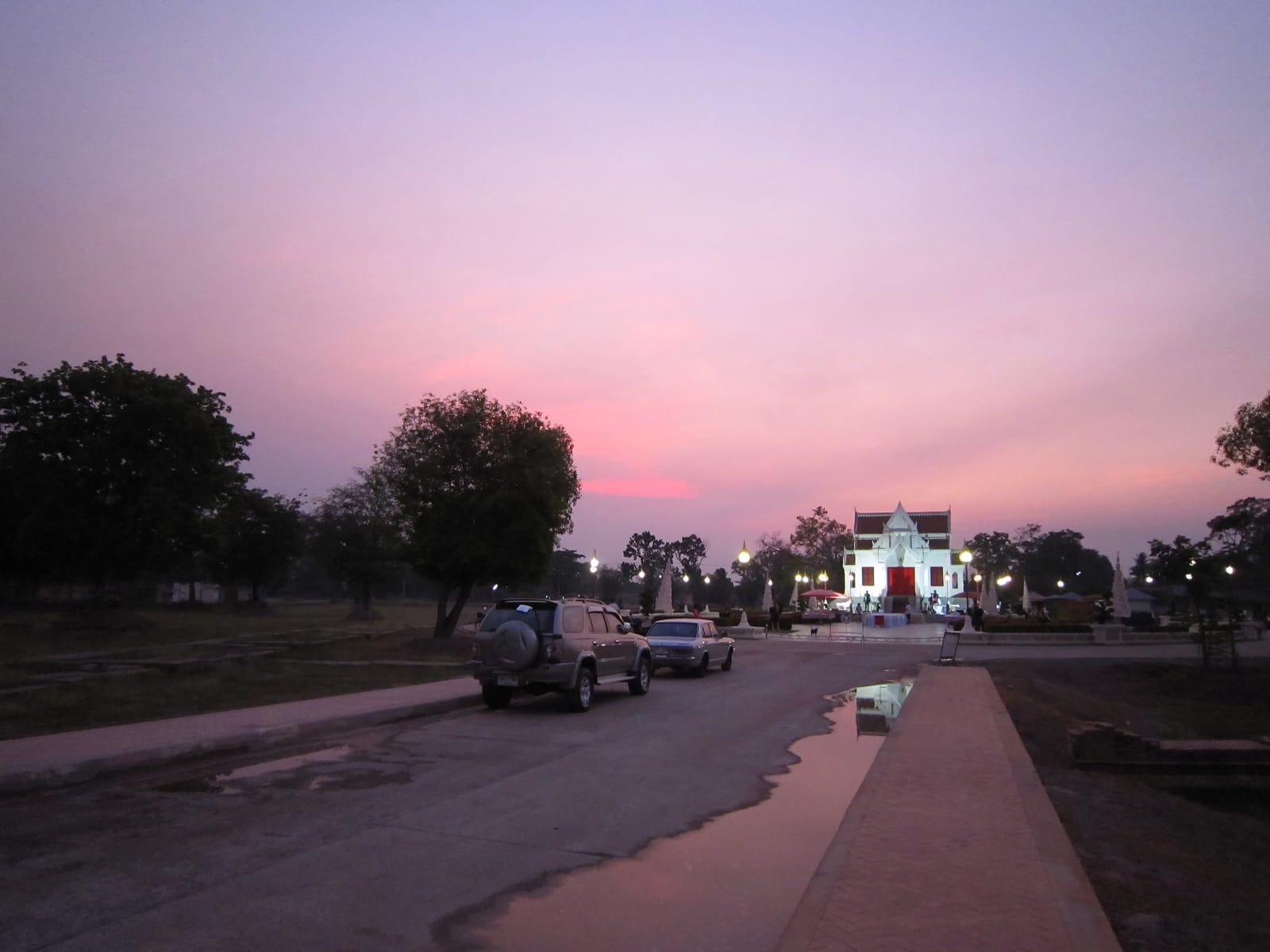
Chan Palace was built on a low mound on the west bank of the Nan River as far back as the Sukhothai era, used as a royal residence whenever a king came to rule or stay in Phitsanulok — at the time a key frontier town. What makes this palace special is that it's where King Naresuan was born, during the period his father, King Maha Thammaracha, governed the twin-river town. The boy who would later win back the kingdom's independence and fight the famous elephant-back duel grew up on this very ground, which is why people in Phitsanulok feel such a strong tie to it as the root of their town.
Later, in the early Rattanakosin period, King Rama I ordered the walls and palace dismantled to concentrate the kingdom's strength in Bangkok during wartime. The area was abandoned and forgotten for a long time, until 1992, when construction workers dug up lines of old foundation bricks. The Fine Arts Department came in to excavate and registered the site as a historical monument in 1993. So what you see today is the real wall lines and foundations, only brought back into view for our generation within the last few decades.
Something many people don't realise
The original palace doesn't survive as a building you can walk inside. What you see are the excavated ground-level brick foundations — the outer and inner walls, the gates and the bases of the buildings. Once you understand you're looking at the roots of a palace that's hundreds of years old, walking around gets a lot more interesting. We'd suggest going into the history centre first, then coming out to explore the actual grounds.
Want more out of Phitsanulok? Book tours & activities
Booking online ahead on Klook or GetYourGuide is usually cheaper than the gate and skips the queue. Pick only the experiences you actually want — prices and availability are shown live on each site.
What there is to see on the grounds
The conserved area covers more than a hundred rai, right next to Somdet Phra Naresuan Maharat military camp. You can wander it point by point at an easy pace, no need to rush.
Foundations of the ancient palace
The brick lines of the outer and inner walls, the palace gates and the building bases that the Fine Arts Department excavated, displayed in the open so you can walk all the way around. Information boards mark each spot, and you get a clear picture of how the old palace was laid out.
King Naresuan monument and shrine
The royal statue and shrine to King Naresuan, where locals and travellers alike come to pay respects and ask for victory, success and good fortune at work. It's a popular spot for photos and lighting incense.
Chan Palace History Centre
An air-conditioned exhibition hall telling the story of the twin-river town, Chan Palace, and the life of King Naresuan through models, multimedia and artefacts dug up on site. It's easy to follow and good for bringing kids along to learn.
- The palace layout at a glance — follow the paths through the grounds and you'll see how the palace was positioned along the Nan River, good for wide-angle photos.
- Information boards throughout — each part of the foundations has a sign explaining it, so you come away knowing what used to stand where.
- Shady riverside atmosphere — there are big trees for shade, and in the evening a cool breeze comes off the river, so you can stroll without getting too hot.
Opening hours, entry fee and getting there
Everything here is free to visit, which makes it great value for a town with this much history. But the opening hours for the outdoor grounds and the history centre aren't the same, so it pays to plan a little.
- The historical grounds (outdoors) — open daily, roughly 08:00–17:00. You can walk around the palace foundations and the King Naresuan shrine.
- Chan Palace History Centre — open Tuesday–Sunday, 09:00–16:00, closed Mondays. If you're set on seeing the centre, avoid Mondays.
- Entry fee — free for both the outdoor grounds and the history centre.
- Location — Wang Chan Road, Nai Mueang sub-district, Mueang Phitsanulok district, next to Somdet Phra Naresuan Maharat military camp, on the west bank of the Nan.
- Getting there — it's in the town centre, just a few minutes' drive or motorbike taxi from Wat Yai, with parking on site.
Tips for timing your visit
If you want both the history centre and a walk around the grounds, come mid-morning Tuesday through Sunday. Do the centre first while it's still cool, then head out to the foundations. Around midday the sun is fairly strong since the grounds are open, so bring an umbrella or hat and some water. Late afternoon before closing is lovely for photos, but the centre may shut earlier.
Where to go next in the same area
The handy thing about Chan Palace is that it's right in the centre of town by the river, so you can easily walk or drive on to other spots in half a day. It slots straight into an in-town itinerary.
Wat Yai (Phra Buddha Chinnarat)
The town's signature temple and a must-see, on the same side of the Nan less than two kilometres away. Pay respects to Phra Buddha Chinnarat first, then carry on to the palace — the timing works out nicely.
Local favouriteDangling-legs noodles by the Nan
The town's signature dish — sit with your legs dangling over the Nan River and eat noodles. The famous shop is near the front of Wat Yai, perfect for lunch before or after the palace.
In town · eveningStrolling the Nan riverside in town
In the evening the Nan riverside has a public park for walking and cycling in the breeze, plus a riverside night market for snacks and sun-dried bananas to take home.
Who it suits and how long to set aside
Chan Palace suits history buffs, anyone wanting to ask King Naresuan for a blessing, and families looking to teach the kids about the town in a way that isn't dull. Set aside around 45 minutes to an hour and a half, depending on how thoroughly you go through the history centre. If you're in Phitsanulok for just a day, it fits perfectly as your second stop after Wat Yai — it won't eat up the whole day, but you'll see the roots of this twin-river town that plenty of people miss.
Plan a full day in central Phitsanulok — temples, food and the riverside
See the Phitsanulok guide →