🔄 Updated 21 Jun 2026
What's great about Khao Yai is how close it is to Bangkok — just a few hours by car — yet once you cross into the park it feels like another world. Dense green rainforest, several big waterfalls, grassy clearings where deer wander out in the evening, and peaks where you wake up to mist drifting through the valleys. This plan has you sleeping outside the park on the Pak Chong side for 2 nights and driving in and out each day, so you don't have to haul gear up to camp in the forest (but if you do want to pitch a tent inside the park, there's an option for that at the end of the article).
Read before you set off
The roads inside Khao Yai wind up and down the mountains, and wildlife can cross at any time — deer, wild boar, and in some stretches wild elephants come out to feed. Drive slowly, don't honk to scare animals off, don't feed them, and if you meet an elephant, stop and wait at a distance — don't rush past. Avoid driving in the park after dark unless you really have to.
Overview: 3 days, 2 nights
- Day 1 — Drive from Bangkok to Pak Chong, check in, then head into the park in the afternoon via the Nern Hom gate (Prachinburi) or the Pak Chong gate. Visit Heo Suwat waterfall, walk the Pha Kluai Mai trail, and watch for wildlife in the grasslands at dusk.
- Day 2 — A full day in the park: hike down to Heo Narok waterfall, stop at the viewpoints, walk to the Nong Pak Chi wildlife tower, and close the evening at the deer field or Pha Trom Jai.
- Day 3 — Wake before dawn for the sea of mist at Pha Diao Dai / a viewpoint, then take it easy at the cafes and vineyards around Pak Chong before heading back to Bangkok.
Book the activities in your Khao Yai trip ahead
Booking online ahead on Klook or GetYourGuide is usually cheaper than the gate and skips the queue. Pick only the experiences you actually want — prices and availability are shown live on each site.
Day 1 — Into the park, Heo Suwat waterfall, evening wildlife
Khao Yai National Park spans four provinces and has two main entrance gates: the Pak Chong gate (Nakhon Ratchasima), the way up to Khao Khiao, and the Nern Hom gate (Prachinburi). Most people staying on the Pak Chong side enter through the Pak Chong gate. Entry is 40 THB for Thai adults and 20 THB for children (foreigners pay more), plus a vehicle fee per the park's rules. Keep your ticket — you'll need to show it during the day.
Pak Chong – Heo Suwat waterfall – wildlife watching
Day 1 tips
Evenings up on Khao Khiao cool down quickly and there may be light rain. Keep a windbreaker and an umbrella in the car. After rain the rocks around Heo Suwat get very slippery — stay on the marked paths and keep an eye on children near the water's edge.
Day 2 — Heo Narok waterfall, viewpoints, Nong Pak Chi wildlife tower
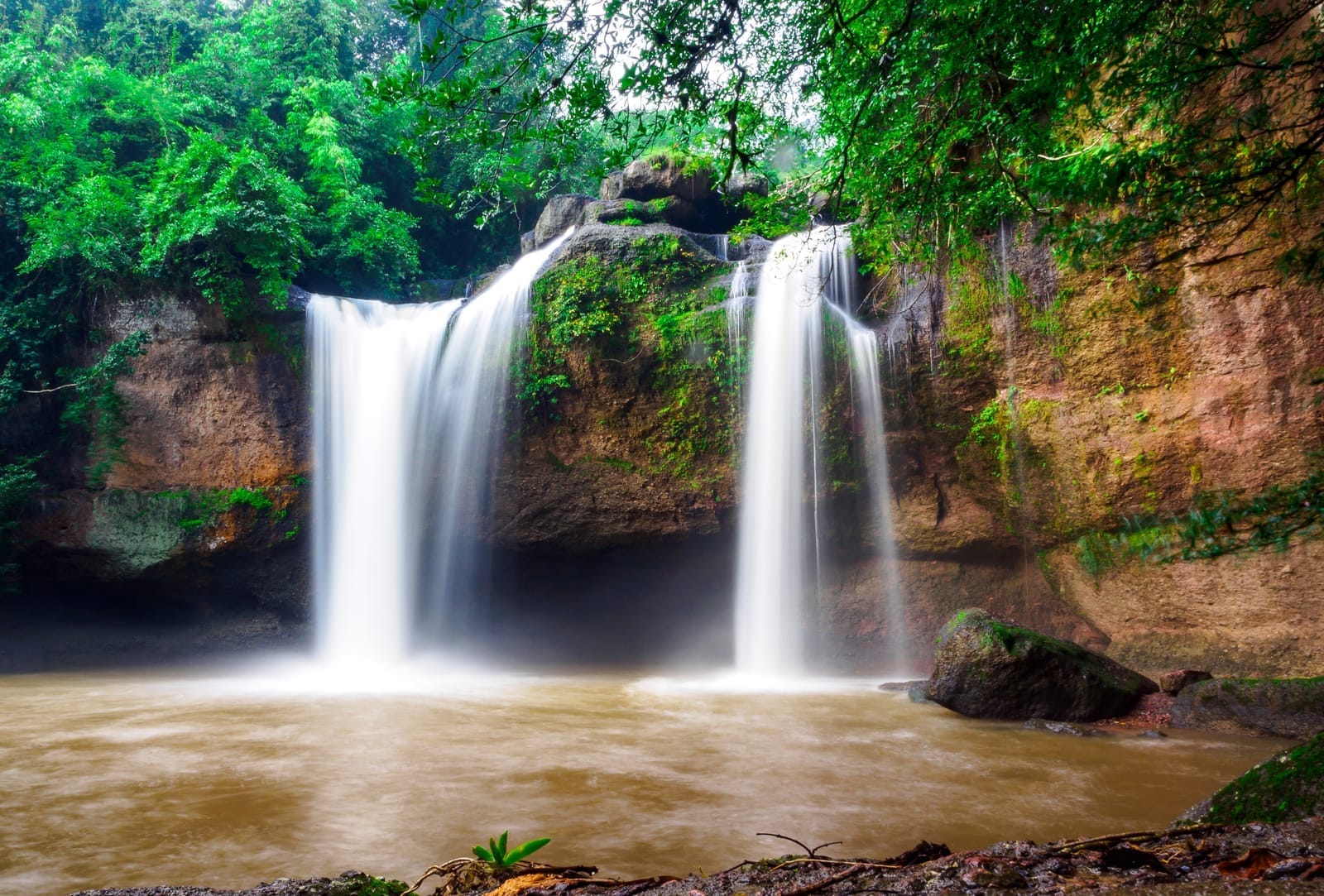
Today is a full day in the park. The highlight is Heo Narok waterfall, a big three-tier fall that's one of the tallest and most powerful in Khao Yai. From the car park you hike down about 1 kilometer through the forest to the viewpoint — stairs and slopes, fairly tiring but worth it. In the afternoon, head to the wildlife tower and wait for animals to emerge in the evening.
Heo Narok – viewpoints – wildlife tower
An honest note on wildlife watching
Seeing wild animals comes down to luck and the season — there's no guarantee you'll spot an elephant or gaur every time. Deer and barking deer are the easiest to find in the evening. If you want to improve your odds, there's a night safari run in park vehicles with rangers — book it at the visitor center. Don't go spotlighting animals on your own; it disturbs them and is against the rules.
Day 3 — Sea of mist at Pha Diao Dai, then cafes and vineyards before heading home
The trip's closing highlight is waking before dawn for the sea of mist. The popular spot is Pha Diao Dai, a cliff about 900 meters up that's open for watching the sunrise and the morning mist. The mist is at its prettiest and thickest from November to February, especially on mornings after a rainy night or a very cold spell. Afterward, head down to the cafes and vineyards on the Pak Chong side before driving back to Bangkok.
Sea of mist – cafes – heading home
Entry fees and opening hours for key stops (updated 2026)
- Khao Yai National Park — 40 THB for Thai adults, 20 THB for children (foreigners pay more), plus a vehicle fee per the rules. Gates open from morning to evening.
- Heo Suwat waterfall — included in the park entry fee, an easy walk from the car park.
- Heo Narok waterfall — included in the park entry fee; you hike down about 1 km through the forest to the viewpoint.
- Nong Pak Chi wildlife tower — included in the park entry fee, open roughly 06:00–18:00, about a 1 km walk in.
- Pha Diao Dai / Pha Trom Jai — included in the park entry fee, ideal for sunrise and the morning sea of mist.
- Camping in the park (Lam Takhong / Pha Kluai Mai) — there's a site fee plus tent rental. Book in advance through the Department of National Parks' nps.dnp.go.th system.
An honest note on costs
Entry and vehicle fees can change per the Department of National Parks' rules, so check the Khao Yai National Park website / page before you go — especially on long holidays when it's packed and parking at some spots fills up fast. On long weekends like New Year or Songkran, Pak Chong accommodation books out quickly and prices climb, so reserve several weeks ahead.
Want to sleep in the forest? Camping in the park
If you'd love to wake up to deer outside your tent and skip the daily drive in and out, the park has two main campgrounds: Lam Takhong (near the stream, with a spot to cool off in the water, where deer often wander through the grounds day and night) and Pha Kluai Mai (near the Heo Suwat waterfall trail). Both have restrooms and food nearby.
Lam Takhong campground
A wide ground near the stream with a great atmosphere; deer often walk through. Good for families and beginners, with tents for rent and space to bring your own.
Pha Kluai Mai campground
Smaller and shadier, near the Heo Suwat waterfall trail, so it's easy to walk over to the falls.
Camping requires advance booking
Khao Yai's campgrounds must be booked in advance through the Department of National Parks system (nps.dnp.go.th), especially in winter and on long holidays when they fill up fast. Pack out all your trash, store food sealed so animals can't smell it, and never feed the wildlife.
Getting ready — what to pack
Hiking shoes
The Heo Narok and Nong Pak Chi trails are stairs and dirt paths that get slippery in the rainy season. Sneakers or hiking shoes with deep tread help a lot.
Warm / windproof jacket
Before dawn on the peaks and at the sea-of-mist spots it gets very cold — late rainy season / early winter can dip below 15°C some days, so bring a jacket.
A road-ready car
The park roads are steep and winding. Check your brakes and tires before you go, use low gear on the descents, and drive slowly, watching for wildlife crossing.
Cash + snacks
Signal is patchy in spots and shops are limited inside the park. Bring cash, drinking water, and snacks along.
Looking for a place to stay in Pak Chong–Khao Yai for this trip? See the options that real reviewers rate.
See the Top 10 Khao Yai hotels →