🔄 Updated 21 Jun 2026
The charm of this trip is getting two styles of old Lanna city in one go. Lampang is Thailand's only horse-cart city, with one of the most complete Lanna teakwood temples, old buildings along the Wang River, and the famous rooster-bowl ceramics. Lamphun, meanwhile, is the thousand-year-old city of Hariphunchai, home to Phra That Hariphunchai — the stupa for people born in the Year of the Rooster — and Thailand's largest longan-growing area, so longan dishes have become a local specialty. Both are second-tier cities that travellers haven't fully discovered, and they string together nicely in a single drive.
Before you set off
Driving yourself is by far the easiest way to do this trip, because Lampang's key temple — Wat Phra That Lampang Luang — sits outside town toward Ko Kha district, and connecting there by public transport is a hassle. If you don't have your own car, rent one in downtown Lampang, or take a northern-line train to Lampang station and rent from there. Within Lampang's old town, a horse cart makes a nice add-on for sightseeing.
Day 1 — Lampang, the horse-cart city
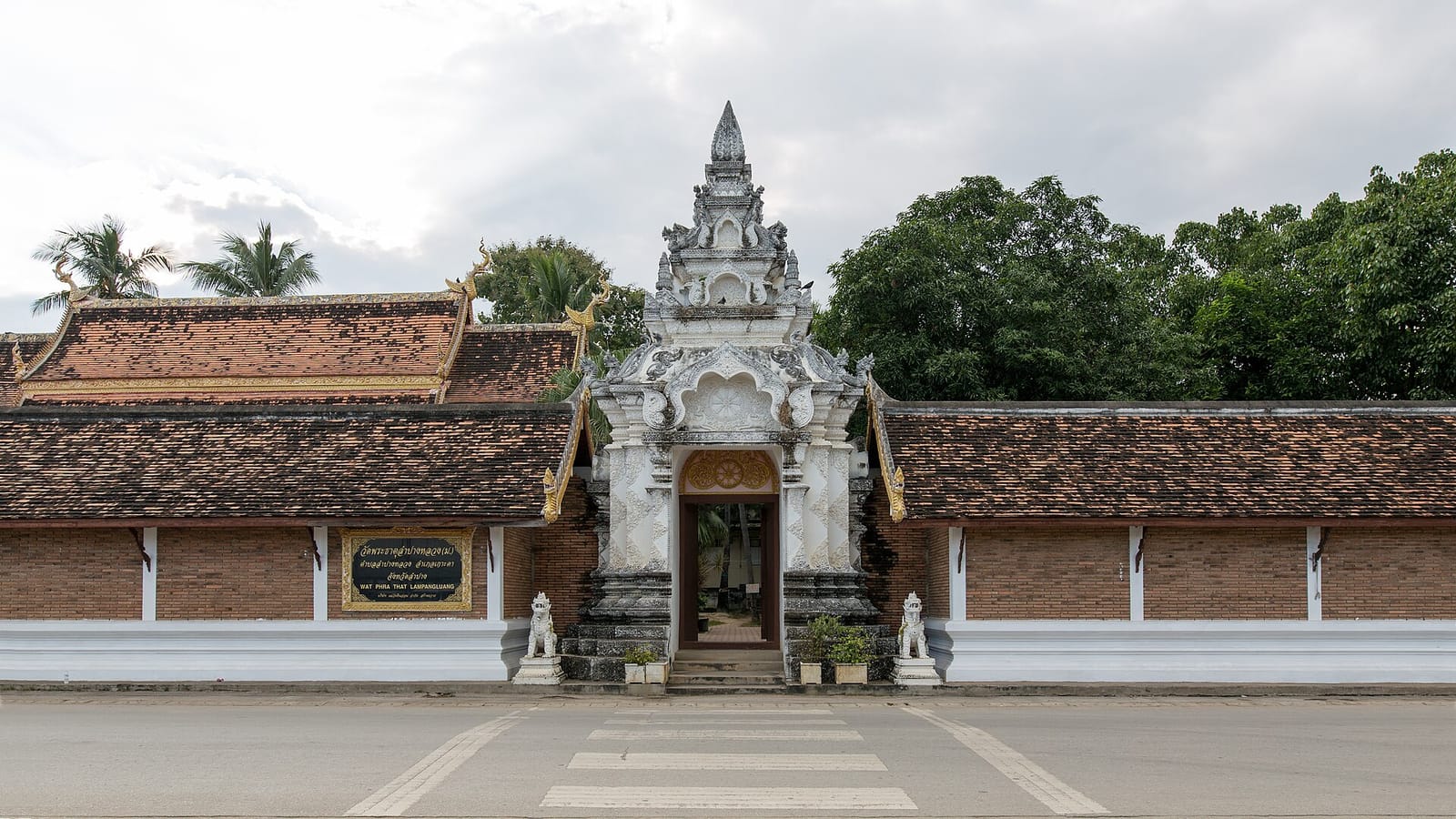
Day one focuses on downtown Lampang and Wat Phra That Lampang Luang in Ko Kha district, about 18 km from town. Head out to the temple in the morning before the sun gets harsh, then loop back into town to walk the old quarter and Kad Kong Ta in the evening. Wat Phra That Lampang Luang is free to enter — dress modestly — and its highlight is the inverted reflection of the stupa projected inside the viharn.
Lampang, the old city on the Wang River
Where to stay tonight
Spending the first night in downtown Lampang is the most convenient, since you can drive straight down to Lamphun the next morning. The area near Kad Kong Ta and the Wang River ranges from budget guesthouses in old buildings to mid-town hotels. Picking a spot in town means you can walk out for dinner and a stroll.
Book the activities in your Lampang trip ahead
Booking online ahead on Klook or GetYourGuide is usually cheaper than the gate and skips the queue. Pick only the experiences you actually want — prices and availability are shown live on each site.
Day 2 — Lamphun, the city of Hariphunchai
On the morning of day two, leave Lampang and head down to Lamphun. The distance from downtown Lampang to downtown Lamphun is about 70 km along the Lampang–Chiang Mai highway, roughly an hour's drive. Lamphun is a small, easy-to-walk city, with its main temples clustered close together in the old town — park once and you can walk to several. Almost all of them are free to enter.
Lampang → Lamphun
Don't-miss spots in both cities
Wat Phra That Lampang Luang (Lampang)
One of the most complete Lanna teakwood temples in Thailand and the stupa for people born in the Year of the Ox. The highlight is the inverted reflection of the stupa projected inside the viharn — the image of Lampang everyone wants to capture.
Wat Phra That Hariphunchai (Lamphun)
Lamphun's signature temple, over a thousand years old and the stupa for people born in the Year of the Rooster. Its gilded golden stupa stands out in the old town and is a centre of faith for northern Thais.
Kad Kong Ta (Lampang)
An old market on the Wang River set in century-old buildings that mix Thai, Chinese, Burmese, and European architecture. It runs as a walking street on Saturday and Sunday nights, with local food and crafts.
Wat Chamthewi (Lamphun)
An ancient temple, the site of the ku enshrining the relics of Queen Chamthewi, the first ruler of Hariphunchai. Its square mondop-style chedi in the Hariphunchai style is one of only a few left in Thailand — quiet and calm.
Horse-cart ride in Lampang
Lampang is the only city in Thailand that still runs horse carts. Ride one around the old town and along the Wang River for an old-world feel. The stands are near the clock-tower five-way intersection — agree on the price before you get on.
Ku Chang–Ku Ma (Lamphun)
Two old monuments standing side by side outside the old city wall, believed to be the burial sites of the war elephant and royal horse of a Hariphunchai king. Locals come to make wishes here — a quick stop.
Routes and getting around
- Getting to Lampang — from Bangkok, take a northern-line train to Lampang station, or drive / take a coach. From Chiang Mai it's about 100 km down to Lampang. In town, rent a car or use a horse cart to see the old quarter.
- Around Lampang — Wat Phra That Lampang Luang is in Ko Kha district, about 18 km from town, while the in-town temples and Kad Kong Ta are close together. A private car is by far the smoothest — budget about 50–60 km of driving a day.
- Lampang → Lamphun — about 70 km on the Lampang–Chiang Mai highway, roughly an hour's drive, with stretches of longan orchards and rice fields along the way.
- Lamphun → Chiang Mai or the trip home — from Lamphun it's only about 40 minutes up to Chiang Mai, so it pairs well with a Chiang Mai trip, or you can loop back south through Lampang onto the northern highway to Bangkok.
Pace it right
Don't cram in more than 5–6 stops a day, because both cities reward slowing down and soaking up the old-town atmosphere rather than just stopping for photos. If you only have one day, trim it to Wat Phra That Lampang Luang and Kad Kong Ta on the Lampang side, then Wat Phra That Hariphunchai and Wat Chamthewi on the Lamphun side as the highlights.
Tweak the plan to your style
Temple-and-merit route
Focus on birth-year stupas: pay respects at Wat Phra That Lampang Luang (Year of the Ox), then Phra That Hariphunchai (Year of the Rooster), then stop by Wat Chamthewi and Ku Chang–Ku Ma to round out the old-city circuit.
Old-town photo route
Focus on the old-world feel: ride a Lampang horse cart, walk the old buildings of Kad Kong Ta, then capture the golden stupa at Hariphunchai and the Ku Kut chedi at Wat Chamthewi.
Onward-to-Chiang-Mai route
Use Lampang–Lamphun as a stopover on the way up to Chiang Mai, catching each city's highlights in half a day. From Lamphun it's only 40 minutes up to Chiang Mai — perfect for stringing into a longer northern trip.
Plan a full Lampang trip — see all the places to stay and visit
See the Lampang travel guide →