🔄 Updated 21 Jun 2026
If you want a beach that's part of the town itself, Narathat is probably the clearest example in Thailand's deep south. It doesn't sit out beyond the edge of town like most beaches do; it runs parallel to Narathiwat town. Head out from the town center along Phichit Bamrung Road for about 1 kilometer and you reach the sand. That's why Narathiwat locals treat it as an everyday hangout. In the evenings you'll see people coming out to catch the breeze, jog, bring the kids down to play in the sand, and snack along the shore. It's a real local scene, not a beach dressed up for tourists.
Read before you go
Narathiwat is in Thailand's deep-south border region. Before you travel, check the latest news and official safety advisories, and plan to do your sightseeing mostly in daylight. This is a Malay Muslim town, so dress modestly, skip revealing swimwear when going in the water in public, and respect local customs. You'll have a much more relaxed time that way.
A 5 km stretch of sand in the middle of town
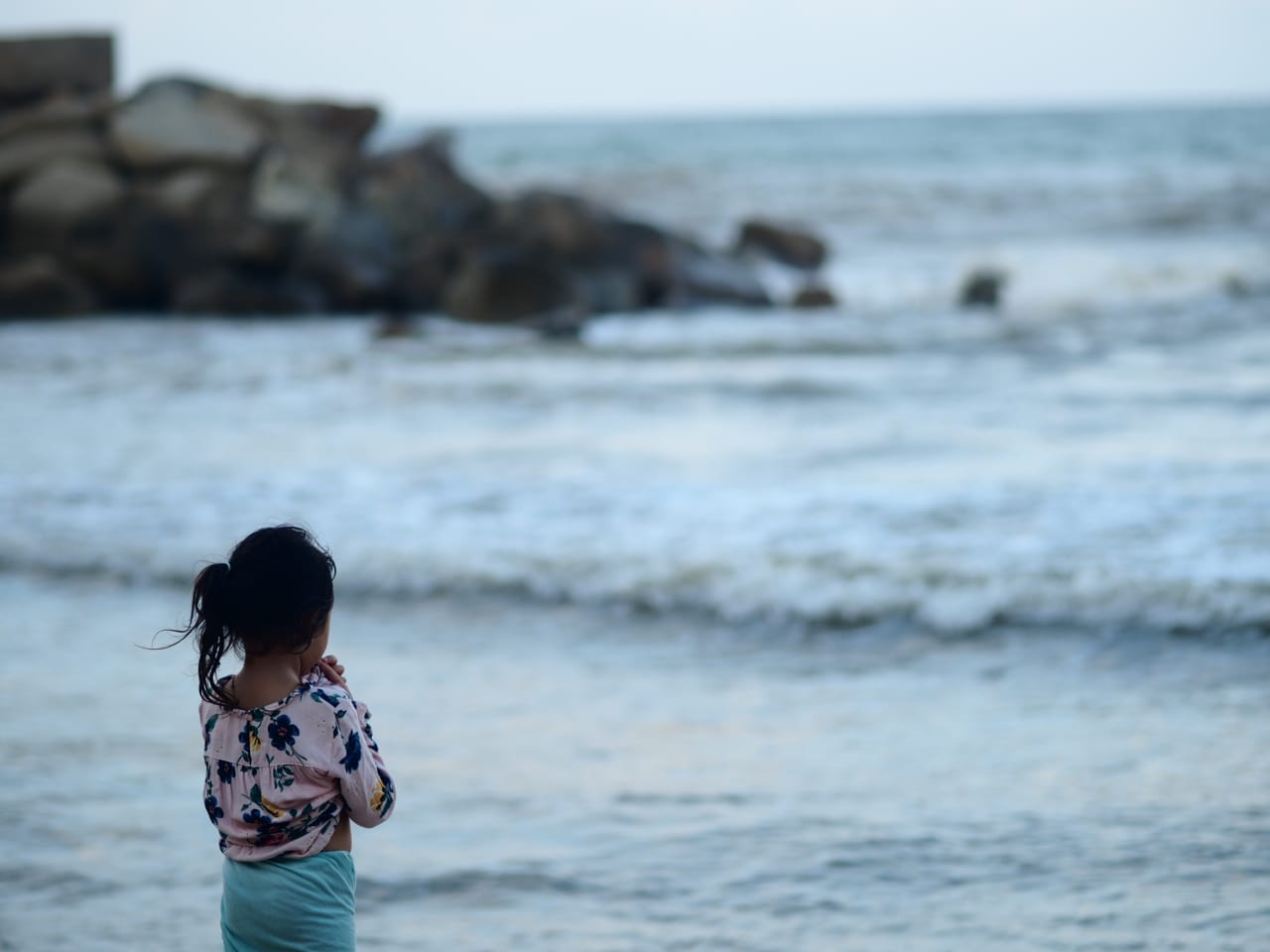
Narathat Beach is a long, gently curving stretch of sand running about 5 kilometers. The sand is fairly fine and light brown, and a line of casuarina (sea pine) trees runs the length of the shore for shade. Under those pines is where people like to lay out a mat, pitch a tent, or just park and sit a while. The surf here isn't strong in normal conditions, but this is open Gulf of Thailand water, so at times there are waves, wind, and currents. If you go in, stick to the shallows and keep an eye on the warning signs.
- Beach length — about 5 km, running parallel to town, with the southern end meeting the Bang Nara rivermouth
- Pine line — a row of casuarina trees gives shade along the whole beach, good for resting and pitching a tent
- Atmosphere — quiet, a beach for locals, not crowded, busiest in the early evening
Want more out of Narathiwat? Book tours & activities
Booking online ahead on Klook or GetYourGuide is usually cheaper than the gate and skips the queue. Pick only the experiences you actually want — prices and availability are shown live on each site.
The Bang Nara rivermouth and the fishing village
What sets Narathat Beach apart from other beaches is its southern end, where it meets the Bang Nara rivermouth. There you'll find an old Malay Muslim fishing community, with fishing boats filling the cove by the river. In the morning you'll see boats coming in one after another with their catch, and by mid-morning they sit moored in rows. It's a genuine sea-people way of life, not staged for show. If you like documentary-style photography of everyday life, there are plenty of angles to work with here.
Photograph with respect
The fishing village is where real people live and work. Before you photograph someone, their boat, or a house up close, smile, say hello, and ask first. Plenty of people are friendly and happy to be photographed, but asking first is the courtesy that keeps everyone comfortable.
Kolae boats, the signature of this place
The kolae is the traditional fishing boat of the Malay people around Narathiwat and Pattani. The hull is long and slender, with the bow and stern curving high. The standout feature is the color: the whole boat is painted with intricate designs — Thai kanok flame motifs, Malay patterns, and creatures from folklore like the singha-bird and the naga serpent — in bold, contrasting colors. They were originally used for real fishing, and while most working boats now run on engines, fully painted kolae boats can still be found around the Bang Nara rivermouth and the fishing communities nearby. They've become a symbol of Narathiwat itself.
Another place known for kolae boat-building is Ban Thon in Khok Khian sub-district, north of town. It's a village of kolae boat builders who have passed the craft down over several generations. If you're into this kind of handwork, you can stop by to watch boats being built and pick up a miniature kolae boat as a souvenir.
- Designs — Thai kanok motifs, Malay patterns, singha-birds and naga serpents, painted in bold contrasting colors
- Where to see them — the Bang Nara rivermouth cove at the southern end of Narathat Beach, and fishing communities around town
- Boat-building village — Ban Thon in Khok Khian sub-district, a long-established home of kolae boat builders
The royal kolae boat races
If you come in September, Narathiwat holds the Khong Di Mueang Nara festival, with kolae boat, longboat, and yok-kong boat races competing for royal trophies along the Tha Phraya Sai embankment by the Bang Nara River, near the rivermouth. The tradition traces back to Muslim fishermen who would stop going out to sea during the Hari Raya festival and race their boats instead. The province later revived it as an annual event around 1975, and some years teams from across the border in Malaysia come over to join. If the timing lines up, watching fully painted kolae boats actually race is a rare sight.
Check the festival dates first
The dates for the Khong Di Mueang Nara festival and the boat races shift from year to year. If you're set on seeing the races, check the latest schedule from the Narathiwat provincial PR page or TAT before planning your trip.
Viewpoints and the best times to go
Narathat Beach is at its best and most alive in the evening: the sea breeze cools down, the light softens, and locals come out to stroll. It's the moment to catch the boats and the sea in good light. Early in the morning, if you can manage it, you'll see the fishing boats coming in and the small fish-market scene by the rivermouth. If you like things quiet, those are the two windows I'd pick. Midday sun is fairly harsh in this southern stretch, so find shade under the pines and rest.
- Evening (4:00–6:30 PM) — cool breeze, lovely light, plenty of locals out, good for a stroll and photos
- Early morning — fishing boats coming in, sea-people life by the Bang Nara rivermouth
- Midday — strong sun, find shade under the pines, avoid going in the water at peak sun
Beachside food and places to stay
Along Narathat Beach there are several restaurants and snack stalls. Most serve fresh seafood — fish, shrimp, and crab from local boats — alongside fried snacks, grilled bites, and cold drinks, easy to sit and enjoy with the sea breeze. It's a simple meal at local prices, nothing pricey. If you want to stay close to the beach, there are bungalows and beachfront places at a few spots, plus the open ground under the pines where some people pitch a tent and fall asleep to the waves.
About food and drink
Most places around here are Muslim-run, serving halal food, with no pork and no alcohol — that's normal for the area. Expect that and respect the custom, and your eating and exploring will go smoothly.
Getting to Narathat Beach
Narathat Beach is right next to town and the easiest of Narathiwat's attractions to reach. From the town center, head along Phichit Bamrung Road for about 1 kilometer and you're at the sand. If you're staying in town you can easily walk or cycle over. Without your own vehicle, you can flag a motorcycle taxi, a pedal trishaw, or a small songthaew from town. Fares are cheap because it's so close. If you drive yourself, there's parking along the beach at various points.
- From town — about 1 km along Phichit Bamrung Road; walk, cycle, or a short ride
- Hired transport — motorcycle taxis, pedal trishaws, and small songthaews available in town
- Own vehicle — most convenient if you plan to chain together other spots in the province; parking along the beach
Want a full Narathiwat itinerary — beach, palace, mosques, and Malay food all in one trip?
See the Narathiwat travel guide →