🔄 Updated 21 Jun 2026
Budu is the fermented fish sauce of Thailand's far south, made from small sea fish like anchovies or whitebait. They're packed with salt in clay jars or cement tanks and left for several months up to a year, until you get a thick dark-brown liquid with a distinctive salty fragrance. The truly traditional recipe is just fresh fish and salt, nothing added. Narathiwat is one of the budu-making areas that southerners respect for both taste and aroma.
People from outside the region might be put off by the smell at first, but once they try a finished budu chili dip poured over rice and eaten with fresh vegetables, most change their minds. It's a salty-sweet-sour balance that's rounder and more mellow than you'd expect.
What budu is, and where it comes from
Budu is a food-preservation tradition of the Malay-Muslim communities along the deep south. In the old days, when sea fish came in faster than people could eat them, they fermented the surplus to have it all year round. The ratio villagers typically use is roughly 30 kilograms of salt to 100 kilograms of fish, left to ferment so the microbes work slowly until the fish breaks itself down into a thick, fragrant liquid.
- Clear budu — thin and milder in smell, good for first-timers; use it for dipping sauces or to mix into khao yam rice salad
- Medium budu — moderately thick with a slightly stronger taste, versatile for all sorts of dishes
- Thick budu — the most concentrated, with the strongest aroma; this is what hardcore southerners like to turn into budu chili dip
No two makers' budu taste the same. It depends on the fish used, the salt ratio, and the fermenting time. Many traditional shops ferment for a year or more so the aroma rounds out and it isn't overly salty.
Want to taste deeper? Try a Narathiwat food tour or cooking class
Half a day with a local who knows the lanes — or cooking a dish yourself — teaches you more than just eating. Book ahead on Klook or GetYourGuide.
Ban Bakhe, the original home of Narathiwat budu
If you want to track budu down at its source, locals in Narathiwat tend to point you to the fishing community of Ban Bakhe, in Khok Khian subdistrict, Mueang district — a seaside village that has made and sold budu since their ancestors' time. Most villagers catch the fish themselves and ferment the budu themselves, so they control the flavor from the very start.
Bakhe has the full range to choose from — clear, medium, and thick — in both bottles and bags. What brings people back is that the budu here sticks to the traditional recipe, using only fish and salt with no other seasonings mixed in, so the aroma comes through as its own thing and it isn't sharply salty.
How to buy good budu
Pick a maker who can tell you how long it was fermented and what fish was used. Good budu smells fragrant rather than fishy, with a natural dark-brown color. If you're buying it to make chili dip, go for the thick kind; if you're just starting out, begin with the clear one.
How to eat budu chili dip the right way
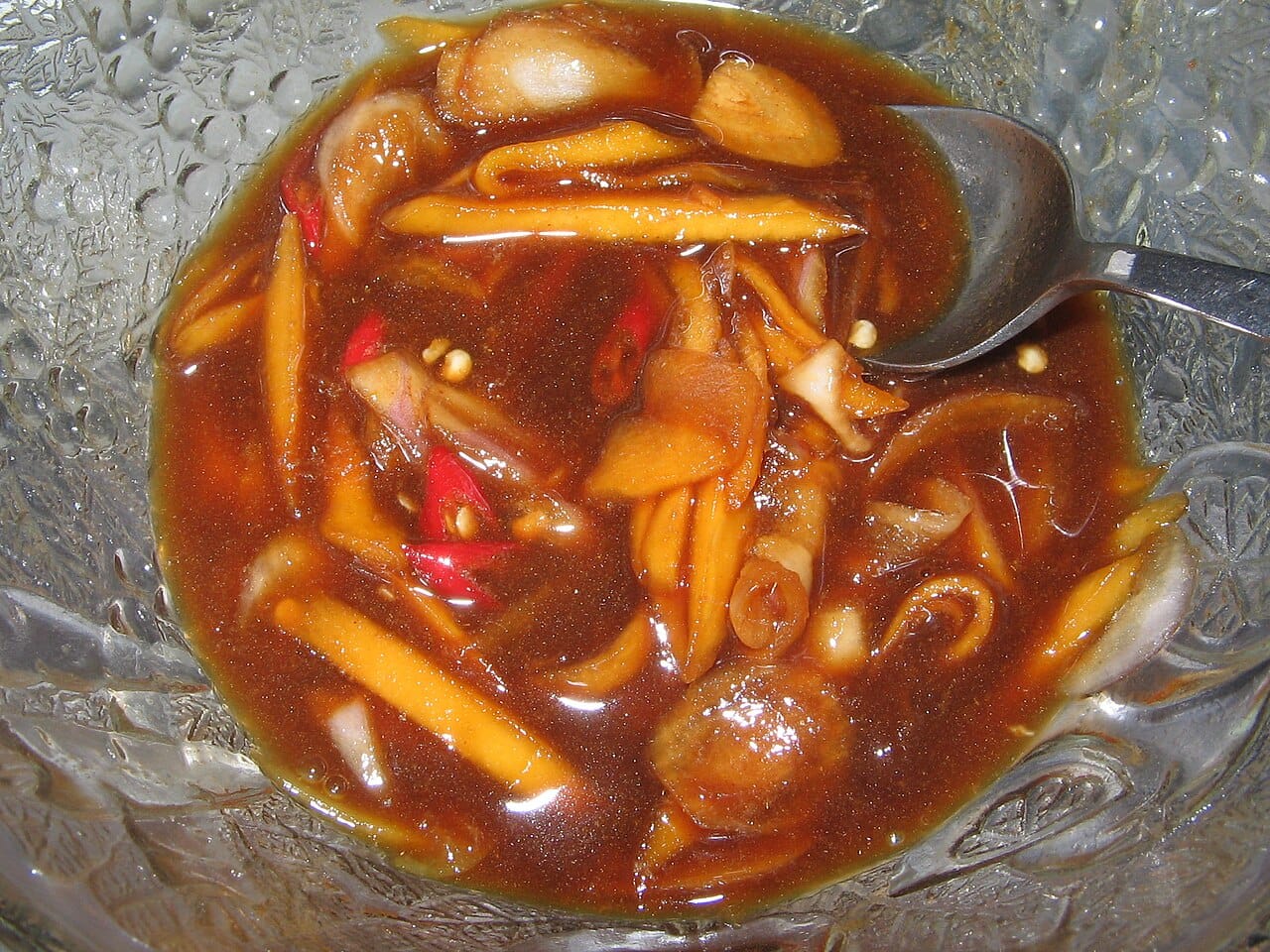
Budu chili dip — some people call it 'dressed-up budu' — is made by simmering budu liquid with palm sugar, tamarind paste, lemongrass, kaffir lime leaves, and shallots, then seasoning it to a balanced salty-sweet-sour. Squeeze in some lime, add sliced bird's eye chilies, and eat it with fresh vegetables and something fried. It's a spread that any household in Narathiwat can put together.
- Vegetables that pair well — cucumber, yard-long beans, winged beans, Thai eggplant, pennywort, sator (stink beans), niang beans, cashew shoots
- Fried sides for the plate — fried mackerel, crispy fried fish, boiled eggs, fried shrimp; they cut the saltiness of the dip
- Eat it with hot steamed rice — spooning the budu dip over rice and tossing it with the veggies and fish is how locals actually eat it
Another dish that can't go without budu is khao yam: rice cooked with turmeric or butterfly-pea flower, tossed with toasted coconut, finely shredded vegetables, dried shrimp, and pomelo, then dressed with budu that's been simmered down sweet and fragrant. This is the plate that makes a lot of people understand why southerners love budu so much.
Southern restaurants in Narathiwat still open today
Beyond cooking it at home, downtown Narathiwat still has southern restaurants serving budu dishes and local southern flavors worth a try. We've picked a few based on the information we could find — we'd suggest calling ahead to check the hours, since local shops sometimes adjust their times around religious holidays.
Mangkon Thong Restaurant
A long-running southern restaurant on the Bang Nara River, on Phupha Phakdi Road in Bang Nak subdistrict. It serves gaeng tai pla (fish-organ curry), fiddlehead fern salad, melinjo leaves fried with egg, and Tak Bai gulao fish. It's the place Narathiwat locals bring visiting guests to.
Narathiwat-Style Khao Yam
A khao yam shop loaded with toppings in the local style — fragrant toasted coconut and house-simmered budu. It's a dish that lets you try budu in an easy-going version for beginners, found at breakfast spots and markets around town.
Local Southern Eateries Around Town
Southern home-style spots where budu chili dip, sour fish curry, and rice topped with mackerel and budu dip are regular menu items. Good for trying budu fully cooked, served with vegetables on the side.
A note before you travel
Narathiwat sits in Thailand's deep south, so before you plan an actual trip it's worth checking the latest news and official safety advisories in case you need to adjust your plans. And since this is a Malay-Muslim cultural area, dressing modestly and behaving respectfully toward locals will keep your trip smooth and earn you a warm welcome.
Budu souvenirs you can actually carry home
Budu keeps for a long time and captures the taste of Narathiwat well. A bottle of traditional budu from Ban Bakhe or from local women's groups is what locals recommend. There's also ready-made bottled budu chili dip you can open and eat straight away — handy for people who want to try it without simmering their own.
- Bottled budu — choose the strength (clear / medium / thick) for whatever you'll make; with a tight lid the smell stays contained
- Ready-made budu chili dip — open and eat it with rice and vegetables right away, a great souvenir for anyone who wants the real flavor
- Fried fish / salted gulao fish — a good budu companion to bring home; Tak Bai is famous for its gulao fish
Bringing budu on a plane or in the car
Budu has a strong smell, so for a long trip home choose a glass bottle or a plastic one with a tight screw cap, then put it in a sealed zip bag as a second layer to contain the odor and prevent spills. If you're flying, check it in the hold since it counts as a liquid.
Making your first budu fun
If you're new to it, don't start by eating budu raw. Begin with a cooked dish like khao yam or dressed-up budu chili dip, taste a little at a time, and grab some fresh vegetables and fried fish to eat alongside — it rounds the flavor out. Once you get used to the smell, plenty of people end up hooked enough to carry a bottle home.
Plan a full-flavored eating-and-touring trip in Narathiwat
See the Narathiwat travel guide →