🔄 Updated 21 Jun 2026
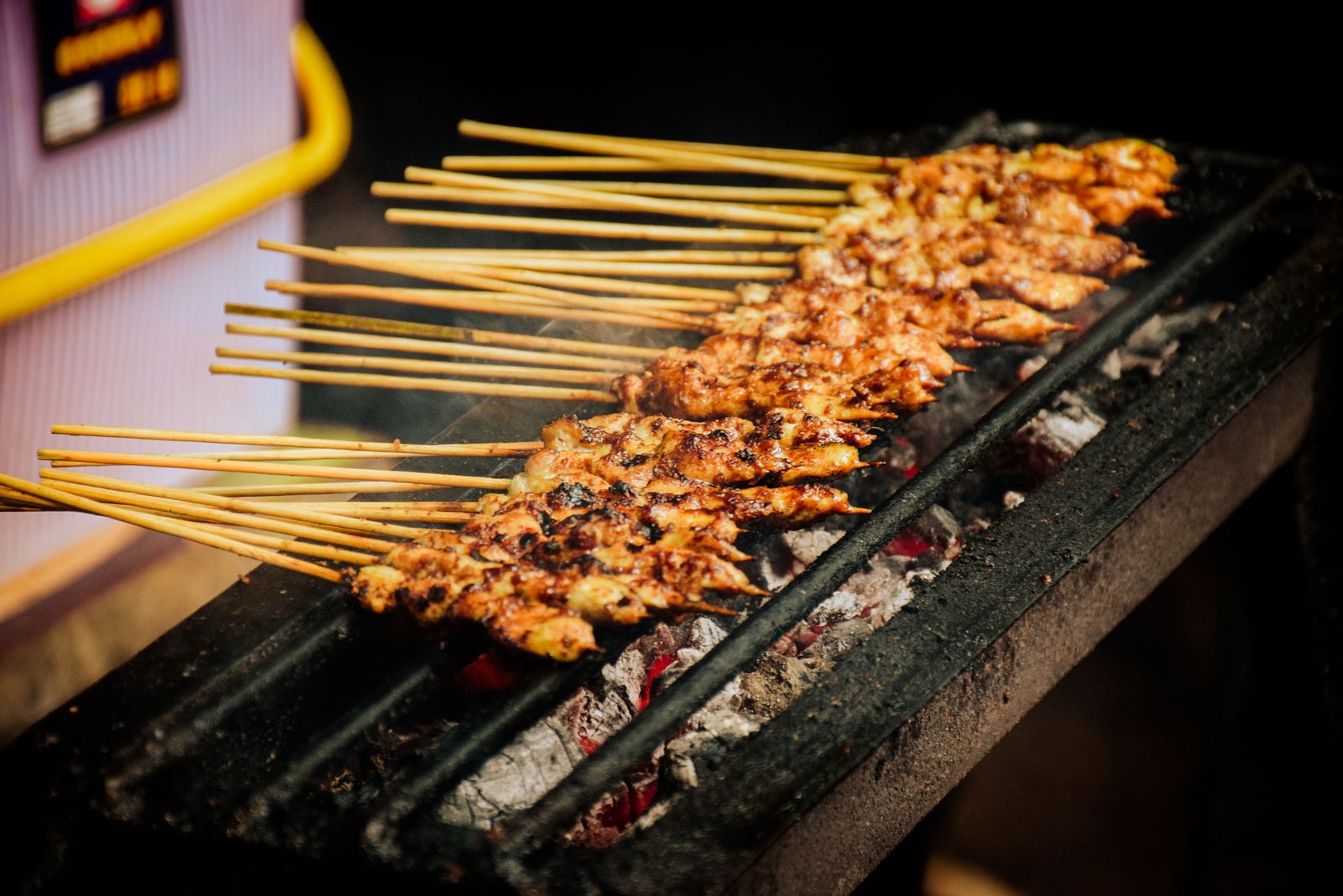
The word kolae (golek) in the local Malay dialect means to "sway, to roll back and forth" which is exactly how this dish is made. Cooks take chicken that has been grilled until nearly done, baste or dip it in the spiced coconut curry, then set it back on the grill and roll it around, brushing on more coconut sauce in layers until the curry coats the meat with a deep aroma and a pretty reddish-orange color. It's a southern Malay dish that everyone in Thailand's three southern border provinces knows well, usually eaten with sticky rice or steamed rice.
The magic of kai kolae is in the coconut curry. Many old-school shops use freshly pressed coconut milk with no flour added, seasoned with dried chili, shallots, ginger and Malay spices. The rich sweetness of the coconut plays against the spice and a faint smoky char from the charcoal grill, and dipped with hot freshly steamed sticky rice it all balances out just right. If you like it punchy, ask for extra dipping sauce or chili to taste.
What is kai kolae and how to eat it well
- Kai kolae — grilled chicken basted in spiced coconut curry, the meat tender and juicy with sauce, a pretty reddish-orange color, the star of the plate.
- Sticky rice — the constant sidekick, steamed hot and wrapped in banana leaf or bagged, just a few baht a bag, and a perfect match dipped in the chicken's curry.
- Turmeric grilled chicken / fried chicken — many shops sell these alongside; the fried chicken comes straight off the pan, crisp outside and juicy inside, great to alternate with the kolae.
- How to eat it — pull off a bite of sticky rice, dip it in the coconut curry clinging to the chicken, and eat while still hot to get the full hit of spice.
Know before you go
Many of the famous kai kolae shops sell out fast — some only fire up the grill for a few hours before everything's gone. If you've got your heart set on a well-known shop, go from late morning to early afternoon, and be ready to wait in line or find they've sold out before closing time.
Want to taste deeper? Try a Narathiwat food tour or cooking class
Half a day with a local who knows the lanes — or cooking a dish yourself — teaches you more than just eating. Book ahead on Klook or GetYourGuide.
Kai kolae and Malay food where Narathiwat locals actually go
Picked from real reviews and shops locals mention often, ordered by how well-known and easy to reach they are. Prices are rough ranges and may shift with ingredients and timing — it's worth a call before you go if it's a long drive.
Kai Kolae Wong Wian Nok (the old shop)
The legend of kai kolae in Narathiwat city, tucked into a small junction near the Wong Wian Nok roundabout, selling under a big tree. Both Thai Buddhist and Muslim customers wait from the moment the grill opens; people say it sells out in about three hours. The chicken is basted in a rich, spice-fragrant coconut sauce, and plenty of locals call it the best in the area.
Kai Yang Kanah (the old shop), Ban Khai
An old-recipe shop on the Narathiwat–Tak Bai road, beside Nurani Mosque in Ban Khai, Kaluwo subdistrict. The standout is the coconut sauce made from freshly pressed milk with no flour, handed down from grandmother's recipe. Kai kolae is 20 baht a skewer, turmeric grilled chicken 10–15 baht a skewer, sticky rice 5 baht a bag — easy on the wallet and a good stop on the way to Tak Bai.
Traditional Kai Kolae, Rueso district
A good thing out of town: the original Rueso-style kai kolae, registered as a local specialty. Heavy on the spices, with the full, punchy taste of authentic Malay cooking — great if you're passing through Rueso or chasing down the original recipe.
Yakang Photchana
A homestyle Muslim restaurant in Narathiwat city with very good reviews — southern curries, khao yam, and Malay one-plate dishes. Good for a proper sit-down meal rather than just takeaway. If you want to try several Malay dishes in one sitting, this place has you covered.
AKHOO by Nasir
A Malay–Malaysian style spot with nasi dagae (Malay-style rice) and Malay dishes, in a slightly more modern setting. Good if you want to try food from the Malaysian side on top of your kai kolae.
Sayid Chicken Rice
A halal chicken rice shop in town that people in Narathiwat know well — fragrant rice, tender chicken, and a Malay-style dipping sauce. A good breakfast or lunch before you head out to hunt down kai kolae later in the morning.
Nat Phop Yung Thong, Tak Bai
A well-known spot in the Tak Bai area, famous for its mango salad and the prized salted gulao fish. If you're already swinging by Tak Bai or Kanah grilled chicken, come here for a proper sit-down meal — plenty of seafood and southern flavors.
Tam Laek Branch 2, Tanyong Mat
Not kai kolae, but a well-known spot for the people of Tanyong Mat. The standout is the seafood tam laek platter — a mix of seafood on one tray for a few hundred baht, sharp and punchy in flavor. Near Tanyong Mat Hospital in Rangae district, great for anyone who loves the sour-spicy som tam style.
A note on prices and shops
All prices are rough ranges drawn from reviews and local news, and can change with timing and ingredients. Many street shops don't keep fixed hours and sell out fast — it's best to check the shop's page or ask a local before traveling far.
Other Malay dishes worth trying alongside
Khao yam (southern herb rice salad)
Rice tossed with herbs and budu sauce plus several fresh vegetables, sour-sweet-salty and balanced — a light breakfast that goes with the Deep South.
Malay foodNasi dagae
Malay-style coconut rice eaten with fish or chicken curry, a popular breakfast on the Malaysian side and across the Deep South.
dessert/drinksRoti & teh tarik
Finish your meal with roti — crisp outside, soft inside — and hot pulled tea, in the Malay-style tea shops you'll find all over town.
Eating your way through Narathiwat with respect
Narathiwat is a warm Muslim–Malay city with a culture all its own. Most restaurants are halal and don't serve alcohol. Dressing modestly, greeting people with a smile, and respecting the shop's prayer times will keep your food trip smooth and win over the locals.
Before you travel, check the latest situation
Narathiwat is in Thailand's Deep South border region. Before you firm up plans, follow the latest news and safety/travel advisories from government agencies and the Tourism Authority of Thailand, and ask your accommodation or locals as well. Most of the city center and popular food spots can be reached as usual — just plan your route and timing sensibly and you can eat your way around with peace of mind.