🔄 Updated 21 Jun 2026
A lot of people never think to visit Narathiwat and Yala, assuming they're far away and part of the deep south. In reality the two provinces connect smoothly, by road or by train, with about 80 km of road taking roughly 1.5 hours. What you get in return is a Malay culture you won't find anywhere else in Thailand — the mosque architecture, batik fabric, regional food and the friendliness of the locals. This plan starts in Narathiwat because it has an airport with flights from Bangkok, then winds down to finish in Yala.
Check the situation before you go
Narathiwat and Yala are in Thailand's deep south. Most town centres and main attractions are perfectly reachable, but before you actually set off you should follow the news and safety announcements from local government agencies, and ask your accommodation or locals about any routes to avoid. Always carry your ID, since there are checkpoints along the way, and planning to travel during daylight will give you more peace of mind.
Trip overview: 3 days and how to get around
The rough outline is: day one in Narathiwat town (central mosque, Narathat Beach, Thaksin Ratchaniwet Palace), day two visiting the 300-year-old Taloh Manoh mosque in the morning, then taking the road across to Yala and into the city, and day three walking the circular Yala city plan, the central mosque and a Malay meal before heading home. If you have more time, you can continue on to Betong, about 2.5–3 hours from Yala town.
- Flying in: Narathiwat Airport (NAW) — daily flights from Bangkok (Don Muang), or fly into Hat Yai and continue by road/train
- Crossing provinces: Narathiwat–Yala minivans/buses take about 1.5 hours, fares around 100–150 THB, or the southern railway line, which passes through both towns in similar time
- In town: renting a car/motorbike is easiest since the sights are spread out — some, like the 300-year-old mosque, are outside town and public transport within the city is limited
- Heading home: fly out of Narathiwat Airport, or continue by road / fly from Hat Yai, depending on your flight
Respect Muslim–Malay culture
Most people here are Muslim, so dress modestly with shoulders and knees covered, especially when entering a mosque. Women should carry a headscarf, take off your shoes before going in, avoid prayer times, and ask before photographing people. Many restaurants are halal and serve no alcohol. Show respect for local customs and you'll get a warm welcome in return.
Book the activities in your Narathiwat trip ahead
Booking online ahead on Klook or GetYourGuide is usually cheaper than the gate and skips the queue. Pick only the experiences you actually want — prices and availability are shown live on each site.
Day 1 — Narathiwat town, central mosque, Narathat Beach
Spend the first day in Narathiwat town. The centre sits beside the sea and the mouth of the Bang Nara River, with a nice riverside to stroll along. There's a colourful central mosque as a landmark, Narathat Beach right next to town, and Thaksin Ratchaniwet Palace up on Tanyong Hill with a wide sea view. Cap the day off with seafood by the beach.
Riverside town–central mosque–Narathat Beach
Day 2 — The 300-year-old Taloh Manoh mosque, then across to Yala
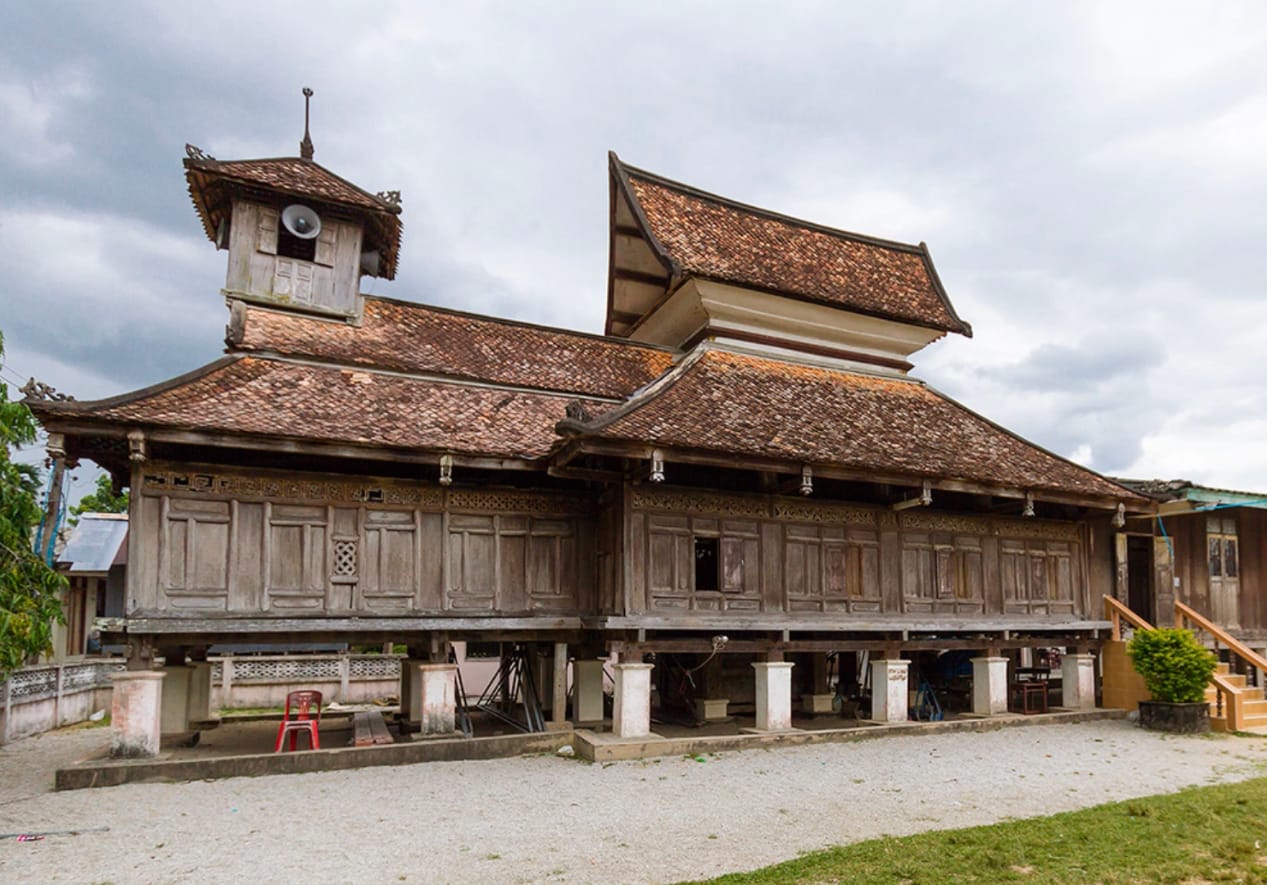
Today is the cross-province day, but before leaving Narathiwat you should stop at the 300-year-old mosque (Wadi Al-Husen, or Taloh Manoh) in Bacho district. It's built entirely of teak, dating back to 1624, using wooden pegs instead of nails and blending Thai, Chinese and Malay art — a rare piece of cultural heritage. From there, take the road on to Yala, about 1.5 hours, arriving in town in the afternoon.
Wooden-mosque heritage–crossing provinces–into Yala
Taking the southern railway as an alternative
The southern railway runs through both Narathiwat (Tanyong Mat station) and Yala. If you want the experience of riding through paddy fields and rubber plantations, pick a daytime train. Tickets are cheaper than minivans, but the schedule is limited and may not run exactly on time, so check the railway timetable (railway.co.th) in advance. Minivans/buses are more flexible on timing.
Day 3 — Yala's circular city plan, central mosque, Malay food
Yala is famous for a city plan laid out as the most beautifully ordered set of concentric circles in Thailand. At the centre is the main traffic circle and the city pillar shrine, with roads radiating outward — pleasant to walk or drive around. There's Yala's central mosque (Ibrahim Mosque), a landmark with grand domed Islamic architecture. Start the morning with dim sum, which is part of the breakfast culture for the people of Yala.
Morning dim sum–walking the circular plan–central mosque–heading home
Want to add on Betong?
If you have an extra 1–2 days, Betong is the southernmost district of Yala and worth adding on. It has the Aiyerweng sea of mist, street art, the Betong Mongkol Rit tunnel, a giant mailbox, and a blend of Chinese–Malay food. But the distance from Yala town to Betong is about 140 km of winding mountain road taking 2.5–3 hours, so allow extra time and drive in daylight. If time is tight on this trip, save it for next time.
Rough budget per person
These figures assume a relaxed, not-too-luxurious trip and cover the main unavoidable costs. Accommodation depends on the hotel level you choose. Overall, the cost of living in Narathiwat–Yala is noticeably cheaper than in the main tourist cities.
- Narathiwat–Yala cross-province transport: minivan/bus around 100–150 THB/person, or the train, which is cheaper
- Car/motorbike rental in town: motorbike around 250–300 THB/day, car around 1,000–1,500 THB/day (the sights are spread out, so renting is easiest)
- Entry fees: the 300-year-old Taloh Manoh mosque and central mosques have no entry fee · Thaksin Ratchaniwet Palace is free to visit when open
- Food: a curry-over-rice/regional meal 50–120 THB · morning dim sum 80–150 THB · seafood 200–400 THB per meal
- Souvenirs: batik fabric, local sweets, keropok — budget to taste
When to go
This side of the south gets heavy rain late in the year, with the heaviest rainy season from November to January, when the surf is rough and rain is frequent. The best weather and most comfortable time to travel is February to May, with good sun so you can fully enjoy the sea and outdoor spots. If you plan to come during Ramadan, some daytime restaurants may be closed and open in the evening–night instead, so check the Islamic calendar and ask your accommodation in advance to make meal planning easier.
See the full Narathiwat accommodation and travel guide before planning your cross-province trip
See the Narathiwat travel guide →