Home Destinations Nong Bua Lamphu 🧭 Plan Your Trip 🔎 Search About
HomeThailandNong Bua LamphuNong Bua Lamphu in 3 Days, 2 Nights Town · Temples · Phu Kao-Phu Phan Kham · Reservoir
⛰️ Nong Bua Lamphu Itinerary

Nong Bua Lamphu in 3 Days, 2 Nights
Town · Temples · Phu Kao-Phu Phan Kham · Reservoir

Nong Bua Lamphu is a small province in the upper Isan region that plenty of people drive straight through on their way to Udon Thani or Loei without ever stopping. But give it three days and the town has just the right amount to see — from paying respects at Wat Tham Klong Phen under a giant boulder, to walking the town along Nong Bua lake by the King Naresuan shrine, riding up Phu Kao-Phu Phan Kham National Park for views over the lake above Ubolratana Dam, and ending the day catching the cool breeze by the reservoir. This is a 3-day, 2-night plan you can actually follow, paced so you can take it slow rather than racing down a checklist.

🛕 Wat Tham Klong Phen⛰️ Phu Kao-Phu Phan Kham💧 Ubolratana Reservoir
Nong Bua Lamphu in 3 Days, 2 Nights Town · Temples · Phu Kao-Phu Phan Kham · Reservoir

🔄 Updated 21 Jun 2026

This three-day trip splits into clear rhythms. Day one covers the in-town stops, the merit-making spots, and the lakeside at Nong Bua. Day two heads out of town for nature and mountains at Phu Kao-Phu Phan Kham National Park, plus the viewpoints over Ubolratana Reservoir. Day three takes it slow with a forest temple, local woven textiles, and souvenirs before you leave. Most of the sights sit within a 40-minute drive of the town centre. The charm of Nong Bua Lamphu is how quiet and slow it is, so we've built in time to sit down for a meal, sip a coffee, and linger at each place — it's about the time you spend, not the number of stops you tick off.

Before you start: Nong Bua Lamphu has no airport and limited transport within town. The smoothest way around is to have your own car or rent a car/motorbike for the whole trip. If you're flying in, most people land at Udon Thani Airport (about 45–50 km from Nong Bua Lamphu town, roughly a 50-minute drive) and rent a car from there, since the sights are spread across different districts — especially Phu Kao-Phu Phan Kham National Park down south by Ubolratana Dam.

Trip overview — 3 days, 2 nights

  • Day 1 — town, merit-making, lakeside: Pay respects at the King Naresuan shrine in the middle of town, stroll along Nong Bua lake, visit temples in town, and close the day with the evening market and Isan eats.
  • Day 2 — mountains, lake, viewpoints: Ride up Phu Kao-Phu Phan Kham National Park, take in the Phu Phan Kham view over the lake above Ubolratana Dam, stop at the Chong Khao Khat viewpoint, then come down to relax by the reservoir in the evening.
  • Day 3 — forest temple, weaving, souvenirs: Pay respects at Wat Tham Klong Phen under its giant boulder, drop by Erawan Cave or the Petrified Shell Fossil Museum, pick up local woven textiles, and sit at a café before heading home.
  • Rough budget: Almost all the main sights have no entry fee (Phu Kao-Phu Phan Kham charges a park service fee of a few tens of baht per person). The main costs are 2 nights' accommodation (around ฿500–1,200/night), food, and fuel. Budget-style, expect roughly ฿2,000–3,500 per person for the whole trip.
🎟️

Book the activities in your Nong Bua Lamphu trip ahead

Booking online ahead on Klook or GetYourGuide is usually cheaper than the gate and skips the queue. Pick only the experiences you actually want — prices and availability are shown live on each site.

🎟️ See all Nong Bua Lamphu tours & activities (Klook)

Day 1 — town, King Naresuan shrine, Nong Bua lakeside

The first day covers the main stops in town. Start at the town's guardian shrine, move on to Nong Bua lake — the reservoir in the middle of town — then visit a couple of temples before evening. Today's spots are close together, mostly under a 10-minute drive between them, perfect for an easy wander while you settle into the rhythm of a small town.

Day 1

Around town — merit-making and the lakeside

08:00
Breakfast at the municipal fresh marketCharcoal-grilled khao ji (grilled sticky rice), grilled pork with sticky rice, or khanom jeen with curry sauce, washed down with old-school filter coffee or oliang to wake you up. Isan breakfast eats are easy to find around the town market.
09:00
King Naresuan the Great shrineLocated at Naresuan Field in front of the Mueang district office, built to commemorate King Naresuan's encampment at Nong Bua Lamphu in 1574. It's the town's guardian shrine, open all day, no entry fee.
10:00
Stroll along Nong Bua lakeThe reservoir in the middle of town that gives the province its name, with shaded walking paths and exercise areas by the water — good for photos and sitting in the breeze. Quiet and easy, the feel of a secondary town.
11:30
Visit temples in townDrop by the important in-town temples such as Wat Si Khun Mueang or the town's main temple to pay your respects for good fortune. Dress modestly.
12:30
Lunch — Isan food in townTry a punchy som tam pla ra (papaya salad with fermented fish), salt-crusted grilled fish, or stir-fried larb. A local Isan spot like Som Tam Bun Rod is known for homestyle papaya salad and tender grilled fish.
14:00
Check in — afternoon breakMost accommodation sits within the town municipality. Stay in town both nights since you can drive out to the sights in every direction. Take a break out of the afternoon sun.
15:30
Café time — Belief Cafe & GardenA pretty garden café that locals in Nong Bua Lamphu share a lot, with flowering plants across several zones. The menu runs from Isan dishes to Western food and freshly baked croissants. A chilled afternoon coffee stop.
18:00
Dinner — evening marketWalk the town's evening market: grilled chicken and pork skewers, papaya salad, fried snacks, and sweets, all at friendly prices. Or settle into an Isan restaurant in town, whatever suits you.

Pace the day right

There's no rush on day one — the in-town sights are all close together, just a few minutes' walk or drive apart. Use today to settle into the slow rhythm of a small town and save your energy for day two, when you'll be driving up into the hills and walking the park for a while.

Day 2 — Phu Kao-Phu Phan Kham and Ubolratana Reservoir

Today is a full day in nature. Head out in the morning to Phu Kao-Phu Phan Kham National Park, the province's main natural attraction, covering more than 320 square kilometres. It splits into two parts: Phu Kao (a tangled cluster of nine hills to the south) and Phu Phan Kham, the ridge along the lake above Ubolratana Dam. The highlight is the wide view over the water. In the afternoon, come down to sit by the reservoir and catch the cool breeze. Start a little early, since you'll be driving up into the hills and walking exposed viewpoints with no shade.

Day 2

Nature — mountains, lake, waterside

07:30
Breakfast — get ready to set offEat a full breakfast, fill up on fuel, and grab drinking water and snacks for the car, since shops up on the mountain are limited.
08:30
Drive to Phu Kao-Phu Phan Kham National ParkThe Phu Phan Kham park headquarters sits in the south of the province, right by the lake above Ubolratana Dam, about a 40-minute drive from town. Some stretches of the mountain road are winding, so drive carefully.
09:30
Phu Phan Kham viewpoint — above Ubolratana ReservoirThe park headquarters sits by the lake, a viewpoint over a vast stretch of water, with the Chong Khao Khat gap framing the view of the dam. There are short nature trails — check in at the visitor centre. Open roughly 08:30–16:30.
11:30
Chong Khao Khat viewpoint — stop for photosA viewpoint just before the park entrance, looking out over the line of hills and the wide expanse of water. It's a popular sunset spot in Nong Bua Lamphu, and the late-morning light is still soft and good for photos.
12:30
Down the mountain — lunch by the waterAround Ubolratana Dam there are waterside restaurants. Order grilled fish, tom yum, and papaya salad and sit in the breeze by the lake. Prices vary by spot — these are local places.
14:30
Ubolratana Reservoir — relaxing by the waterA large reservoir damming the Nam Phong river. Popular activities are floating-raft rides, sitting by the water, and watching the sunset in peace. You can walk along the dam crest. The atmosphere is calm.
17:00
Watch the sunset by the damFind a spot along the reservoir or head back up to the Chong Khao Khat viewpoint to watch the evening light catch the water — the prettiest moment of the day.
18:30
Back to town — rest upDrive back to your accommodation in town, find a light dinner, and save your energy for the final day.

What to know before heading up Phu Kao-Phu Phan Kham

The park is a natural area, and some viewpoints mean walking across rock slabs with no shade, with paths that can be slippery in the rainy season. Wear sneakers or grippy shoes, bring your own water and a hat, fill up on fuel before heading up, and check the visitor centre's opening hours (roughly 08:30–16:30). If it's raining hard, it's best to skip it, since the mountain roads get wet and slick.

Day 3 — Wat Tham Klong Phen, caves, weaving, souvenirs

The last day is for slowly wrapping things up before you head home. Start the morning with a forest temple that's a major landmark for the province — Wat Tham Klong Phen, where Luang Pu Khao Analayo once stayed for the rains retreat — then stop by a nearby nature site or museum before picking out local woven textiles as souvenirs. Close the trip with a café and some souvenirs before you set off.

Day 3

Forest temple — caves, weaving, souvenirs

07:30
Breakfast at the fresh market — last of the morning eatsKhao ji, khao piak sen (rice noodle soup), local sweets, and old-school coffee before heading out to the forest temple.
08:30
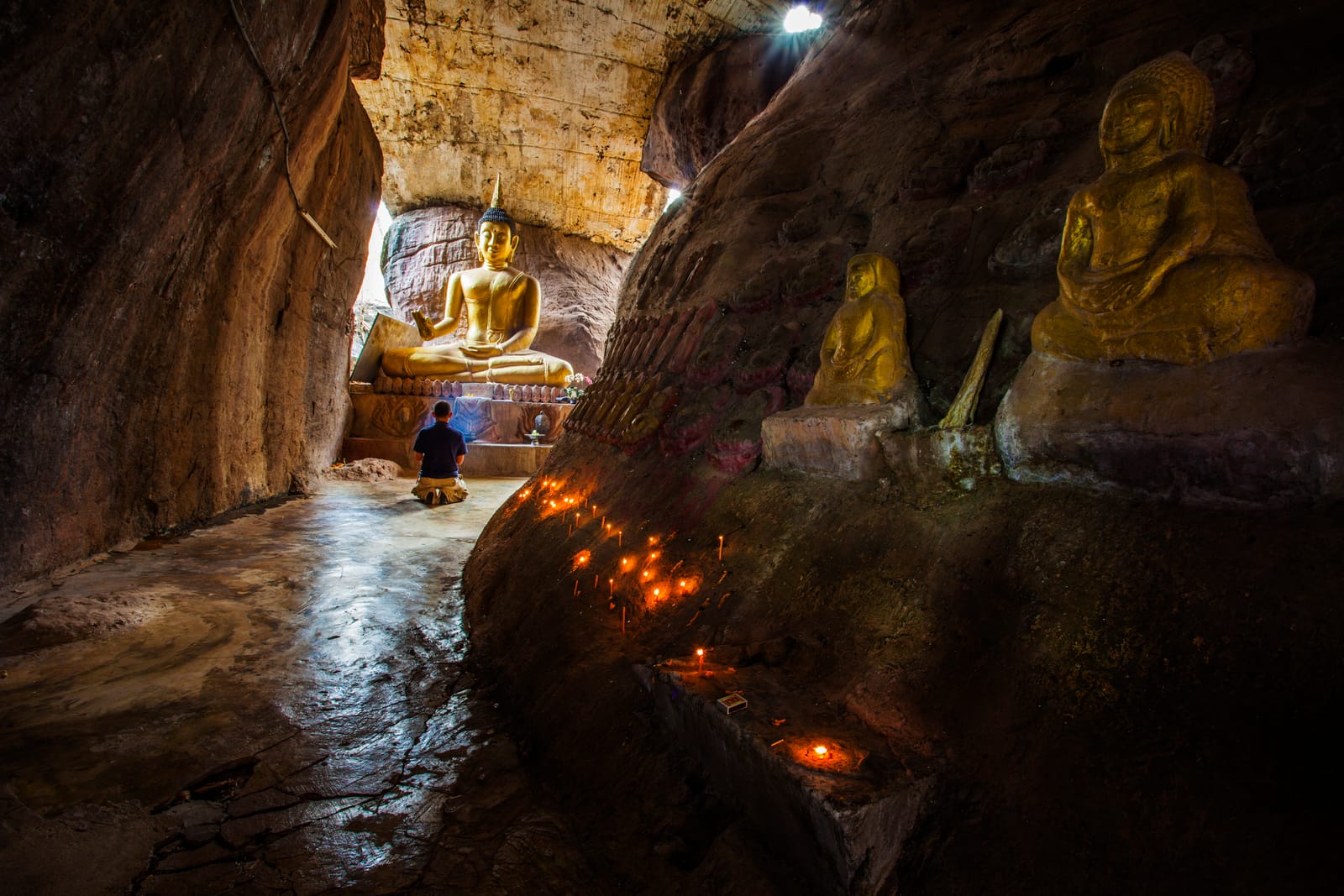
Wat Tham Klong PhenAn old forest temple at the foot of the Phu Phan range, where Luang Pu Khao Analayo once stayed for the rains retreat and practised insight meditation. The highlight is a hall beneath a giant natural boulder, with a concrete roof built to join the rocks together. Inside are an ancient double-headed drum (klong phen) and the Luang Pu Khao museum. Dress modestly.
10:00
Erawan Cave or the 150-Million-Year Petrified Shell Fossil MuseumPick whichever you prefer. Erawan Cave is a large cave on a hill with Buddha images and steps up to a viewpoint. The fossil museum in Non Than subdistrict has shell fossils and ancient remains — good if you're bringing kids.
12:00
Lunch — Isan food to close the tripPick an Isan restaurant in town you haven't tried yet — larb, nam tok, papaya salad, grilled fish — and eat your fill before you go.
13:30
Shop for local woven textilesNong Bua Lamphu has hand-woven cotton and silk made by local communities. Watch the weaving and pick up a pha khao ma, a sarong, or a scarf — souvenirs with a story behind them. Buying straight from the community gets you a better price.
15:00
Café time — a break before you travelIn town there are relaxed cafés like The Chato Cafe, with mountain views and reasonable prices. Sit with a coffee and look back on the trip before you set off.
16:00
Buy souvenirs — set offPick up local souvenirs such as Suwan Farm honey from Si Bun Ruang, sticky rice, pla som (fermented fish), naem, and woven textiles before driving home or catching onward transport via Udon Thani.

About the weaving and souvenirs

If you're set on visiting a weaving village specifically, it's worth calling the community or the local subdistrict office ahead, since on some days the villagers may be tied up with rice farming or a temple event. Going on a weekday morning, you'll usually find more people weaving. As for Suwan Farm honey, it's a good product from a beekeepers' group in Si Bun Ruang district, and makes a nice souvenir.

Where to stay in Nong Bua Lamphu

Most accommodation in Nong Bua Lamphu is clustered within the town municipality — small to mid-size hotels and resorts at friendly prices, well placed for driving out to the sights. We'd suggest staying in town both nights, since you can reach everything in all directions from there, both Wat Tham Klong Phen to the west and Phu Kao-Phu Phan Kham National Park to the south.

In town

Hotels within the town municipality

Hotels in the centre of town, easy to get around, near the market and restaurants, at standard prices — a good base for touring the province.

Outskirts

Small resorts on the edge of town

Resorts with leafy garden surroundings just outside the town, with clean, quiet rooms — good for those who like a bit of privacy.

Near the park

Roadside stays near the park access

Budget stays for those who want an early start up Phu Phan Kham, well placed near the southbound route to Ubolratana Dam.

See all Nong Bua Lamphu hotels and compare prices before you book

See Nong Bua Lamphu hotels →

Getting to Nong Bua Lamphu

  • By car: About 570 km from Bangkok, via Nakhon Ratchasima–Khon Kaen–Udon Thani, then on into Nong Bua Lamphu — roughly a 7–8 hour drive.
  • Via Udon Thani: Udon Thani has both an airport and a train station. From Udon city it's about 45–50 km to Nong Bua Lamphu, around 50 minutes — the easiest way in if you're flying.
  • By bus: There are coaches from Bangkok (Mo Chit) to Nong Bua Lamphu, taking around 9–10 hours, or you can take a bus to Udon and transfer into Nong Bua Lamphu.
  • Around the province: Public transport in town is limited, so you'll want your own car or a rented car/motorbike, since the sights are spread across different districts — especially Phu Kao-Phu Phan Kham to the south by Ubolratana Dam.

The best time to visit

The most comfortable time to visit is late rainy season into early winter, roughly November to February, when the weather is pleasantly cool — ideal for heading up Phu Phan Kham and sitting by the reservoir. The lake above the dam is at its prettiest then, with a cool breeze. Hot season (March to May) brings strong sun, and walking the viewpoints in the middle of the day gets hot. The rainy season (June to October) turns the landscape lush and green, but the mountain roads can get slippery, so check the weather before heading up to the park.

FAQ

Is 3 days and 2 nights enough for Nong Bua Lamphu?

It's just right. Nong Bua Lamphu is a small province, and three days is enough to cover the town and merit-making on day one, the nature at Phu Kao-Phu Phan Kham and Ubolratana Reservoir on day two, and the forest temple and weaving on day three, all without rushing. Any less and you'll only manage the town and the nearby temples.

What should I prepare for Phu Kao-Phu Phan Kham National Park?

It's a natural area, so wear sneakers or grippy shoes, bring your own water and a hat, fill up on fuel before heading up, check the visitor centre's opening hours (roughly 08:30–16:30), and check the weather. If it's raining hard, it's best to skip it, since the mountain roads get wet and slick.

Do I need my own car to explore Nong Bua Lamphu?

We'd recommend it. Nong Bua Lamphu has no airport and limited public transport in town, and the sights are spread across different districts — both Wat Tham Klong Phen to the west and Phu Kao-Phu Phan Kham to the south. The most convenient way is to drive yourself or fly into Udon Thani and rent a car (about 50 minutes away).

What is Wat Tham Klong Phen, and is it worth visiting?

It's an old forest temple at the foot of the Phu Phan range where Luang Pu Khao Analayo once stayed for the rains retreat. The highlight is a large hall beneath a giant natural boulder, with an ancient double-headed drum (klong phen) and the Luang Pu Khao museum inside. It's a merit-making landmark you shouldn't skip in the province. Dress modestly when you enter the temple.

Do the sights in Nong Bua Lamphu charge an entry fee?

The main sights — the King Naresuan shrine, Wat Tham Klong Phen, Nong Bua lake, and the viewpoints by Ubolratana Dam — have no entry fee. Phu Kao-Phu Phan Kham National Park charges a park service fee of a few tens of baht per person. The main costs of the trip are accommodation, food, and fuel.

Copyright & Image Takedown Policy

Thailandaddict is created to review and share travel experiences. Where an image is sourced from elsewhere, we credit the source. If you are the copyright owner and prefer that your image not appear on this site, please contact us and we will gladly remove the image or correct the information.