🔄 Updated 21 Jun 2026
Sangyod isn't an easy rice to grow, and it doesn't yield much, but people in Phatthalung have grown it for generations because it's the rice of home. Families used to plant it to cook for themselves, to make merit, and to keep aside as a gift for elders they respected. Once it earned its GI status in 2006, the name Sangyod became a signature of the province that the whole country recognises.
What is Sangyod rice, and why is it special?
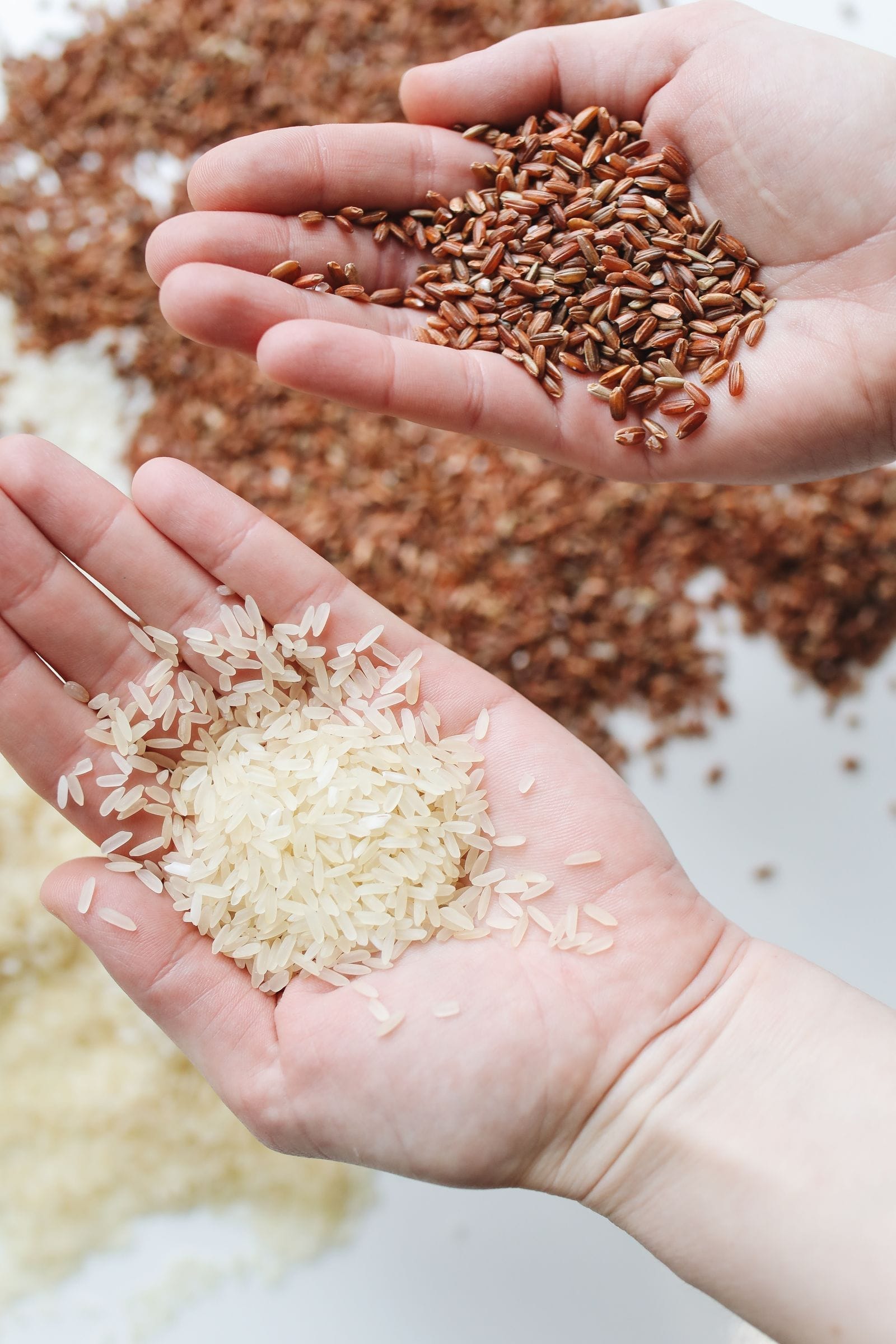
Sangyod is a non-glutinous heirloom rice from Phatthalung, with small, slender grains that taper to a slightly curved tip. What sets it apart from ordinary rice is that the bran layer is red — from a soft pinkish-red through to deep red when it's left as brown rice. That red colour comes from anthocyanins, a natural group of antioxidants, which is why people like to eat it as a health rice.
- Naturally red — the colour comes from the bran layer, not dye. The less it's milled (brown rice / hand-pounded), the deeper the colour and the more nutritious it is.
- Lightly fragrant — it gives off a distinctive aroma when cooked, never sharp or overpowering.
- Soft texture — even as brown rice, cooked the right way it comes out softer than ordinary brown rice, not coarse.
- High nutritional value — more fibre, iron, phosphorus, and protein than polished white rice.
How to tell if it's the real Sangyod
Genuine Sangyod has small, slender grains with a red colour that isn't perfectly even from grain to grain (because it's natural). If every single grain is exactly the same deep red, be a little suspicious. Look for the GI mark or the name of a community enterprise on the bag — that's the safer bet.
Want to taste deeper? Try a Phatthalung food tour or cooking class
Half a day with a local who knows the lanes — or cooking a dish yourself — teaches you more than just eating. Book ahead on Klook or GetYourGuide.
Thailand's first GI rice — where it comes from
Sangyod Muang Phatthalung was registered as a Geographical Indication (GI) product by the Department of Intellectual Property on 23 June 2006, making it the first Thai rice to earn that registration. What GI means here is that any rice sold under this name has to be grown in the Phatthalung area and follow a set process — a guarantee that you're getting the real thing from the right place.
The best-known growing area is the Ban Khao Klang community in Pantae subdistrict, Khuan Khanun district, where farmers have banded together as a community enterprise to grow and mill Sangyod themselves since 2005. Beyond that, there are farmer groups and community enterprises spread across Khuan Khanun, Khao Chaison, Pa Bon, and Mueang district, growing under GAP/organic systems — so you'll find brown rice, hand-pounded rice, and some partially milled rice to choose from.
How to cook it soft and fragrant, not coarse
Sangyod is a brown rice, so you cook it a little differently from white rice. Cook it like white rice and it'll come out hard, but follow these steps and you'll get rice that's soft and nicely fragrant.
- Rinse gently, once — a quick wash is enough. Don't scrub hard or rinse over and over, so you keep the nutritious bran layer.
- Add more water than for white rice — let the water sit about a knuckle's depth above the rice (roughly 1 part rice to 1.3–1.5 parts water). Adjust to taste; add more water if you like it softer.
- Soak the rice for 20–30 minutes before cooking — this helps the grains take up water and noticeably softens the cooked result. (Not required, but it really does help.)
- Let it rest once it's done — leave it in the pot another 5–10 minutes before fluffing, so the grains soften evenly throughout.
What to eat it with
Sangyod goes brilliantly with punchy Southern dishes like tai pla curry, sour curry, and the fresh raw vegetables (phak nao) served alongside. The red of the rice plays nicely against the food, and health-minded folk often pair it with fried fish, boiled egg, and fresh veg for a light meal.
Where to buy genuine Sangyod rice
If you make it to Phatthalung yourself, buying straight from a community enterprise or local market gets you the freshest product at the best price. But if you're far away, there are trustworthy online channels too.
Ban Khao Klang Community Enterprise (Pantae, Khuan Khanun)
The province's most famous Sangyod-growing area, with the group's own rice mill. Buy straight from the community and you know it's genuine. Ideal if you're already road-tripping around Khuan Khanun and Thale Noi.
Tai Nod Market (Lard Tai Nod), Khuan Khanun
A weekend market under the sugar palms, open Sundays from morning to afternoon, with Sangyod rice and Phatthalung local products on offer. Lovely atmosphere, and you can graze on snacks as you wander. Well worth it if you time your visit right.
Souvenir / OTOP shops in Phatthalung town
Souvenir and OTOP shops around town stock Sangyod in nicely packed bags, ready to give as gifts. Many use hand-woven cloth bags to dress it up. Convenient if you want to grab some before heading home.
Hand-pounded / organic groups in Khao Chaison–Pa Bon
Several subdistricts in Khao Chaison and Pa Bon have groups producing hand-pounded and organic rice. Good for anyone who wants minimally milled rice — the deeper the colour, the higher the nutritional value. Most take orders through the group's Facebook page.
Golden Place / community-product stores
If you want Sangyod you can be confident about the source, several Golden Place branches stock it in hand-woven cloth bags — a tidy-looking gift option with a traceable origin.
Online — Lazada / Shopee
Search "Sangyod rice Phatthalung" and you'll find plenty of shops — brown rice, soft-cooking, chemical-free, and organic. Pick a shop that clearly states the growing area and has lots of reviews. Handy if you're far away and want to reorder.
Wet markets / morning markets in town
Plenty of rice vendors at Phatthalung's morning markets scoop out Sangyod by the kilo. Good if you just want enough to cook for yourself rather than a gift pack. Ask the vendor about the growing area while you're at it.
Treat the prices as a rough range, not a fixed figure, since they depend on the type (brown / hand-pounded / milled) and the harvest season. Generally, a 1-kilogram bag of Sangyod runs around 70–90 THB, while gift packs in hand-woven cloth bags cost a little more depending on the packaging. As GI Sangyod has grown more popular, the paddy price at the mill has crept up as well.
How to store it so it keeps
Sangyod brown rice has natural bran oils, so it doesn't keep as long as white rice. Store it in an airtight container somewhere dry and cool, or portion it into boxes in the fridge if you've bought a lot — that does a better job of keeping rancidity and weevils at bay.
What to pair this gift with
Sangyod rice + processed products
Some groups sell Sangyod rice drink, Sangyod rice tea, or sweets made from Sangyod alongside the rice itself. Pick them up together for a more interesting gift set.
Sangyod rice + Southern eats
Buy the rice along with a Southern curry paste or local chilli dip, and take home everything for a full-flavoured Southern meal — a gift people will actually use.
Plan a full Phatthalung trip — food, sights, and souvenirs
See the Phatthalung travel guide →