🔄 Updated 21 Jun 2026
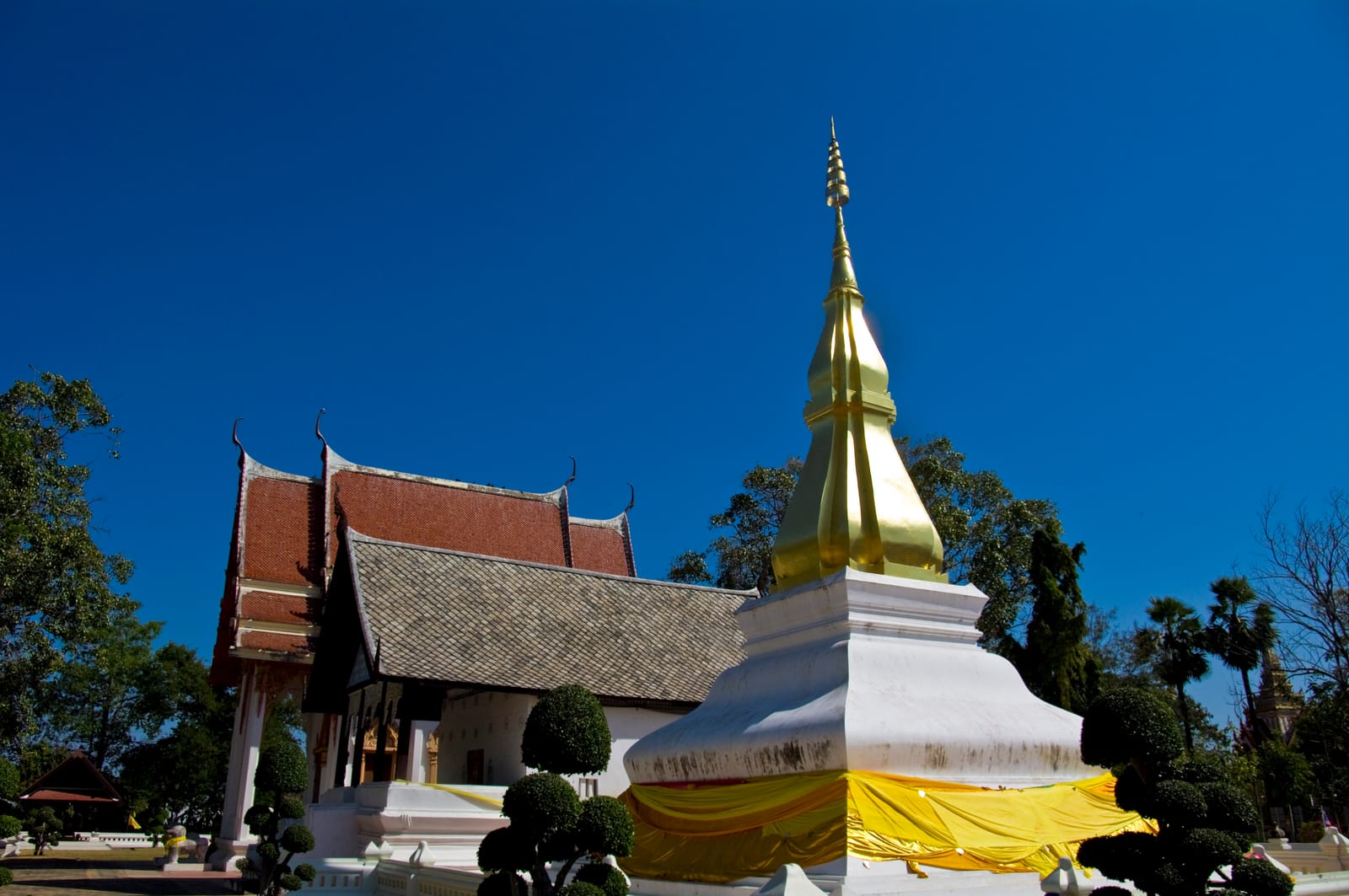
Phra That Kham Kaen sits inside Wat Chetiyaphum in Ban Kham village, Moo 1, Ban Kham sub-district, Nam Phong district, roughly 25–30 km north of central Khon Kaen. It's a lotus-bud-shaped stupa on a square base, about 25 metres tall, built in a Lan Xang architectural style. Across Isan people regard it as one of the region's sacred stupas, and what locals are especially proud of is that the name "Khon Kaen" is a direct corruption of "Kham Kaen" — right here.
The tamarind-tree legend and where the name Khon Kaen comes from
The story passed down goes like this: long ago, when the Phra Urangkhathat (the Buddha's breastbone relic) was being carried to enshrine at Phu Kamphra — today's Phra That Phanom — a group led by Phraya Lang Khiao set out afterward carrying the Phra Angkhan relic (the cremated ashes). But they arrived late: Phra That Phanom was already finished and sealed. On the way back, the group stopped to rest at the same tamarind mound where they had camped on the way out, and found that a large tamarind tree that had collapsed and died, leaving only its heartwood, had sprouted fresh green leaves and new branches.
Taking it as a good omen, the group decided to build a stupa over that tamarind heartwood and enshrine the Phra Angkhan relic inside it. They called it "Phra That Kham Kaen" — after the tamarind that had died yet whose core came back to life. Later, when Phia Mueang Phaen led his people to settle and found a town around Ban Kham, the name of the town drifted from "Kham Kaen" to "Khon Kaen," the way it's said today.
Why this place matters to people in Khon Kaen
Phra That Kham Kaen is written into the province's official motto (the line "Phra That Kham Kaen"), almost like living proof of where the city's name came from. Many locals make a point of coming to pay respects at least once in their lives, especially during the annual festival.
Want more out of Khon Kaen? Book tours & activities
Booking online ahead on Klook or GetYourGuide is usually cheaper than the gate and skips the queue. Pick only the experiences you actually want — prices and availability are shown live on each site.
What people come here to pray for
Because of what the name means — something dead that came back to life — people often come to pray for fresh starts, for recovery after hard times, for a life that had stalled to turn green again. Some come to ask for stability in family and work, since tamarind heartwood stands for being solid and slow to rot. After paying respects, most people walk in a circle around the stupa and apply gold leaf at the spots the temple has set aside.
- Offerings of flowers, incense and candles — there are stalls selling offering sets in front of the temple, just a few tens of THB per set, so you don't have to bring your own.
- Walk the pradakshina — circle the stupa clockwise three times as is the custom; this is when people focus on their prayers.
- Apply gold leaf — there are spots to gild a replica and the areas the temple designates; you don't apply gold leaf directly onto the actual stupa.
- Make a donation as you can — there are donation boxes that support the temple and the stupa; give as your faith moves you.
The annual Phra That Kham Kaen worship festival
If you want to see the stupa at its liveliest, come during the Phra That Kham Kaen worship festival, held every year on the 15th day of the waxing moon of the 6th lunar month (around May, coinciding with Visakha Bucha; the date shifts each year with the lunar calendar). The festival includes stupa worship rituals, merit-making and alms-giving, Isan folk performances, and stalls selling food and local souvenirs. People come from all over Nam Phong and the city, and it genuinely feels like a local merit fair rather than something staged for tourists.
Straight talk
Outside the annual festival, it's pretty quiet here — a calm rural temple out of town, without the range of facilities you'd get at a temple in the city. If you come expecting a dramatic photo spot, it might feel plain. But if you come to pay respects and trace where the city's name came from, the appeal here is historical value rather than spectacle.
Opening hours, entry fee, what to wear
The temple is open for worship every day, roughly 08:00–17:00 like most temples. Entry is free — no admission fee, just donation boxes. We'd suggest coming from morning to late afternoon, since it's a temple out of town; in the evening there are fewer people and getting back is harder.
- Dress — this is a sacred stupa, so dress modestly: no spaghetti straps or very short shorts and skirts.
- Remove your shoes — some parts of the terrace around the stupa require you to take off your shoes, so easy-to-remove footwear is more convenient.
- Parking — there's a lot inside the temple; it's open on weekdays, but on festival days it gets crowded so allow extra time.
- Food and toilets — there are stalls and toilets within the temple grounds, but the options are limited, so it's worth bringing water in the car.
More to do around Nam Phong
Because Phra That Kham Kaen is out of town toward Nam Phong district, it pairs well with the nature spots in the north of the province — ideal for a half-day to full-day trip out of the city.
Ubolratana Dam
A big dam with a wide reservoir view, up past Nam Phong, with viewpoints, riverside restaurants and fish-farm rafts you can sit and eat on. A good follow-on after paying respects at the stupa.
HikingPhu Kao–Phu Phan Kham National Park
Mountains with views over Ubolratana Dam, loved by hikers and campers. It's in the same zone as the dam, just a short drive further on.
LearningPhu Wiang Dinosaur Museum
If you want to add something educational, the dinosaur fossils discovered in Khon Kaen are at Phu Wiang. It's in a slightly different direction from Nam Phong, but it still works as part of one out-of-town trip.
How to get to Phra That Kham Kaen
From central Khon Kaen, your own vehicle is easiest. Drive out on Mittraphap Road (Highway 2) toward Udon Thani, then turn off into Nam Phong district heading for Ban Kham — about 25–30 km in total, around 30–40 minutes. Without a car, take a van or a Khon Kaen–Nam Phong bus and get off near the district, then continue by motorbike taxi or a hired car to the temple. You can also charter a car or call a Grab from the city for a round trip, since public transport to the temple itself isn't frequent.
Planning your time
Paying respects and walking around the stupa itself takes maybe 30–45 minutes. If you come only for this one spot you'll have plenty of time left over, so we'd suggest tacking on Ubolratana Dam or another Nam Phong spot in the same trip — it makes the fuel and travel time more worthwhile.
Plan a full trip around Khon Kaen
See the Khon Kaen travel guide →