🔄 Updated 21 Jun 2026
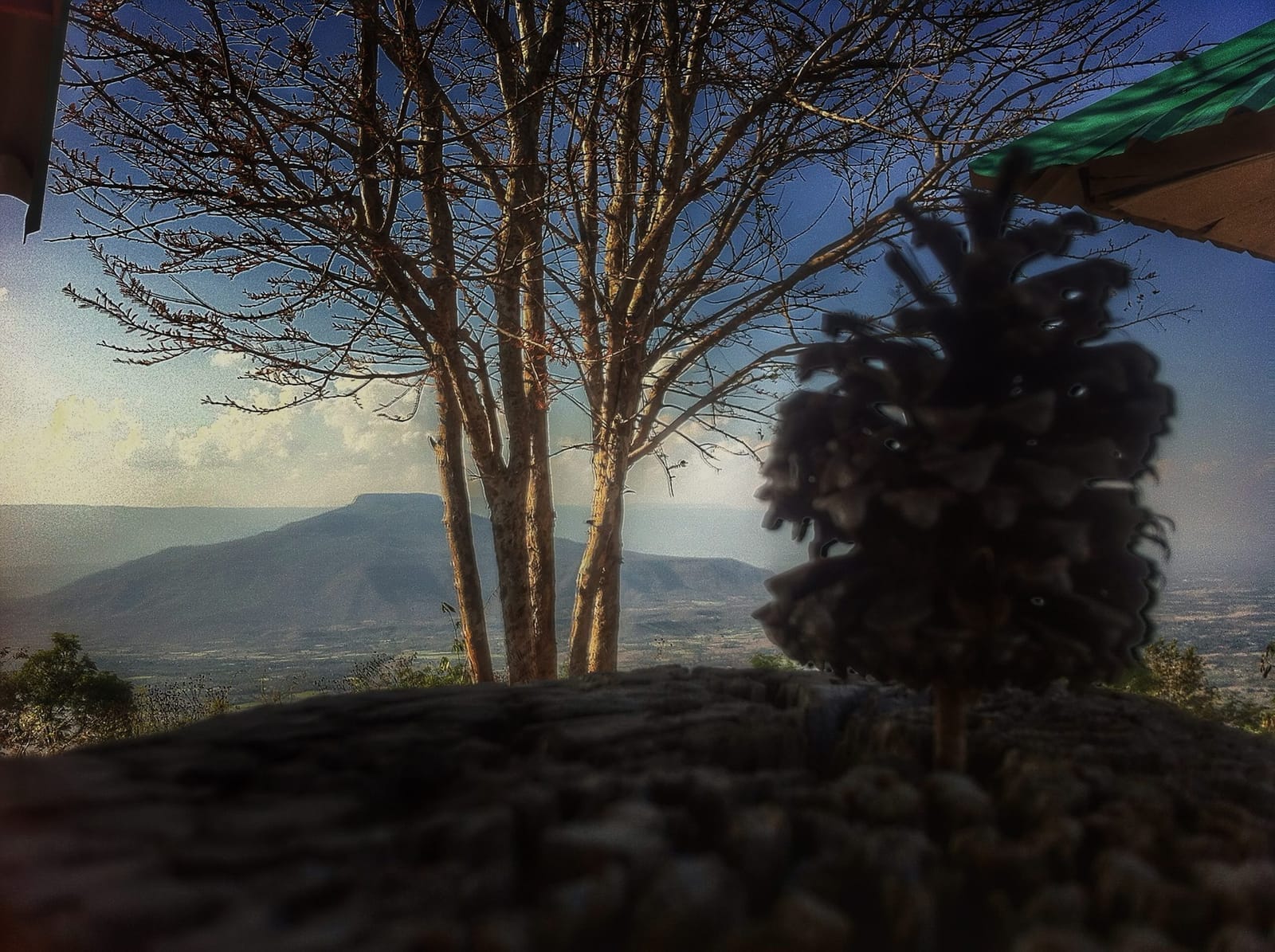
Phu Pa Po sits at Ban Pha Wai, Puan Phu subdistrict, Nong Hin district, in the south of Loei province. The viewpoint runs along a ridge that faces Phu Hor, the flat-topped triangular mountain whose shape resembles Fuji and gives this place its nickname. What makes Phu Pa Po stand out is the open 360-degree view: in winter a white sea of mist wraps around Phu Hor, in the rainy season it turns into green fields, and in the hot season it becomes golden grassland — the mood changes with the seasons.
What makes Phu Pa Po special, and why locals call it Loei's Fuji
The name Loei's Fuji doesn't come from Phu Pa Po itself, but from Phu Hor, the mountain across from it that you look out at from Phu Pa Po. Phu Hor is a flat-topped triangular peak, and when a white sea of mist covers its base, the scene looks like Fuji under snow. So many people photograph this angle that it has turned into a popular check-in spot. Phu Pa Po has several viewpoints, each facing a slightly different direction, so you get both clean shots of Phu Hor on its own and shots of the mountains stacked in layers.
- The Fuji-shaped Phu Hor angle — the main shot everyone comes for: a flat-topped triangular peak with mist drifting at its base on cold mornings.
- 360-degree view — from the highest point you see mountains in every direction, what locals call the Loei panorama.
- Mountains stacked in layers — some angles show ranges receding into the distance, best shot in the early morning light.
- Fields that change color by season — green in the rainy season, golden grassland in the hot season; it's not only worth visiting in winter.
Want more out of Loei? Book tours & activities
Booking online ahead on Klook or GetYourGuide is usually cheaper than the gate and skips the queue. Pick only the experiences you actually want — prices and availability are shown live on each site.
The 4 viewpoints and the farm-tractor ride
The track up Phu Pa Po is very steep and unpaved dirt, so cars and private vehicles can't make it on their own. You have to ride the villagers' farm tractors, modified specifically to handle the steep climb. The ride up the hill is an experience in itself — many people find it fun. The tractor stops at each viewpoint so you can get off and take photos one spot at a time. There are around 4 viewpoints at the top, each about 200–300 m apart and walkable between them. Viewpoint 4 is the highlight, with the most open view in every direction and the clearest shot of Phu Hor.
Viewpoints 1–2 (the first stop after getting off)
The first spot the tractor brings you to, where the view starts to open up onto distant ranges. It's a warm-up before you walk on to the next points, and people usually stop here for group photos first.
Viewpoint 3 (the Phu Hor angle)
The angle that faces Phu Hor more clearly — the most popular spot for the Loei's Fuji shot. On cold winter mornings the mist sits right at the foot of Phu Hor.
Viewpoint 4 (360-degree panorama)
The highest point, with a full 360-degree view in every direction — you can see both Phu Hor and the ranges stacked behind it. People say the climb is tiring but worth it; the best photos are here.
About the farm tractors
Since 2024, the round-trip farm-tractor fare is 60 THB per person, and everyone is covered by insurance. If you come solo you can still charter a tractor up. The boarding point is at the Phu Pa Po tourist service center run by the Ban Pha Wai community. Park your own car below and continue up by tractor. Bring cash, since some points don't accept transfers.
When to go and what time it opens
Phu Pa Po is open daily, with the farm-tractor service running roughly 05:30–19:00. But if you're set on seeing the sea of mist, you need to arrive at early dawn before the sky brightens, because the mist only drifts in the early morning and slowly fades once the sun is up. The season for thick mist and cool air is winter, around November to February. In the rainy and hot seasons you can still go up and the view is beautiful in its own way — there just won't be any mist.
Winter (Nov–Feb)
The busiest period. The air is cool and a sea of mist covers Phu Hor at early dawn — the Loei's Fuji shot is at its best now. Arrive before the sky brightens.
Rainy season (Jun–Oct)
Fresh green fields and clear skies after the rain, with mist on some days after a downpour. But the track gets slippery, so check the weather first and go up with the villagers' tractors.
Hot season (Mar–May)
The grassland turns golden, with fewer people and open skies — good for minimalist photos. But there's no mist and the daytime is fairly hot.
Getting to Phu Pa Po
Phu Pa Po is in Nong Hin district, about 50 km from Loei town, roughly a 1-hour drive. The main route is the Loei–Khon Kaen road (Highway 201): pass through Nong Hin district, then turn off toward Ban Pha Wai following the signs. The last stretch is a short hill climb before you reach the parking area and the community's tourist service center.
- Drive yourself / rent a car — the most flexible option, since public transport doesn't reach it easily. Park at the service center, then continue up by farm tractor.
- Charter a local car — if you're staying in Loei town or Chiang Khan, you can hire a car for the day to do Phu Pa Po and Suan Hin Pha Ngam in one trip.
- Pair it with Suan Hin Pha Ngam — both are close together in Nong Hin district. Do Phu Pa Po in the morning, then easily continue to Suan Hin Pha Ngam in the late morning.
Before you head up
In winter the top is windy and cold, so bring a warm jacket and a hat. Wear shoes you can walk on dirt tracks in, since you'll walk between the viewpoints. Leave enough time to arrive before the sky brightens if you want to see the mist. If you get carsick easily, prepare for it, because the tractor ride up the hill is fairly bumpy.
More to see nearby in the Nong Hin area
The good thing about Phu Pa Po is that it doesn't take long — head up for photos and the view, come back down, and you still have time to keep exploring. The Nong Hin area has several other nature spots you can pair into the same day.
Suan Hin Pha Ngam (Loei's Kunming)
A maze of sharp limestone ridges that looks like Kunming's stone forest. Explore on foot along the trails or ride a farm tractor in. It's very close to Phu Pa Po.
Suan Hom Waterfall
A limestone waterfall about 30 m tall with a pool you can wade into. A good stop to cool off after coming down from Phu Pa Po, from the rainy season into early winter.
Ban Pha Wai community eateries
Around the parking area there are made-to-order eateries and local snacks run by villagers, plus community souvenirs. Stop for breakfast before or after heading up.
Try planning a trip like this
Phu Pa Po works best as a morning activity on a day exploring the Nong Hin area, since the mist and early light are at their best, then you continue to other spots in the late morning. Below is a sample two-day plan that pairs Phu Pa Po with Chiang Khan — adjust the times to fit your own pace.
Nong Hin: Phu Pa Po & Suan Hin Pha Ngam
Chiang Khan, the town on the Mekong
Want a full day-by-day plan for Loei
See the Loei travel guide →