📝 Written 1 Jul 2026 · ✅ Fact-checked 3 Jul 2026 · prices and schedules can change — check with the operator before booking
Before choosing, think about three things: how many days you have, whether you have your own vehicle or need to rely on a tour, and whether you want an easy, crowd-friendly visit or a quiet atmosphere where you can walk the whole old town almost alone. That's because these three parks sit in different directions — Sukhothai Historical Park is in the old town area closest to Sukhothai's new town, Si Satchanalai is about fifty kilometers north, and Kamphaeng Phet is in a different province to the south. Plan poorly and you may spend more time traveling than actually walking around the sites.
Overall, if you only have one day and want to make the most of the highlights, Sukhothai Historical Park delivers the fullest experience and is the easiest to reach. If you've already walked Sukhothai and want a quiet old town with beautiful elephant-base chedis, add Si Satchanalai next. And if you enjoy a shaded, peaceful atmosphere with almost no tourists and laterite-carved standing Buddha images, Kamphaeng Phet is the overlooked gem that's well worth the trip. The table below sums up the overview, then we'll go into detail on each one.
| Park | Known for | Distance from Sukhothai town | Convenience | Best for | Entry fee range |
|---|---|---|---|---|---|
| Sukhothai Historical Park | Wat Mahathat, lotus-bud chedi, Wat Sa Si, Phra Achana | ~12 km (old town) | High — bicycles/trams easy to rent, plenty of shops | People short on time who want to hit all the highlights easily | ฿20 (Thai) / ฿100 (foreigner) per zone |
| Si Satchanalai | Wat Chang Lom, elephant-base chedi, Wat Chedi Chet Thaeo, quiet old town | ~50 km (north) | Moderate — few shops, need a car/tour | Those who've already walked Sukhothai and want a quiet town for relaxed photos | ฿20 (Thai) / ฿100 (foreigner) + ฿50 vehicle entry fee |
| Kamphaeng Phet | Laterite Buddha images, Wat Phra Si Iriyabot, Wat Chang Rop, shaded grounds | ~75 km (separate province, south) | Moderate — very few visitors, need a car/tour | History enthusiasts who want a quiet, shaded spot with almost no crowds | ฿20 (Thai) / ฿100 (foreigner) per zone |
Sukhothai Historical Park Tour (central zone, Wat Mahathat + Wat Sa Si — UNESCO)

Sukhothai Historical Park is the heart of this World Heritage group and the easiest of the three to reach, since it sits within the old town, just about twelve kilometers from new Sukhothai town, with buses and songthaews running there. The central zone within the city walls brings the major temples close together. The centerpiece is Wat Mahathat, the royal temple at the heart of the city, with its distinctive lotus-bud-shaped main chedi — a signature of Sukhothai art — surrounded by smaller chedis and a large principal Buddha image still seated calmly in the middle of the temple courtyard. Next is Wat Sa Si, set on an island in the middle of a pond, where you can look across the lotus flowers to see a Sri Lankan-style chedi reflected in the water — an iconic shot many visitors come specifically to capture. In the northern zone, the large Phra Achana Buddha image inside the mondop at Wat Si Chum is also worth a stop.
The charm of this park lies in how well-kept and convenient it is. The grounds are maintained with neat green lawns, and there are bicycle and tram rental shops right at the entrance, plus restaurants and drink stalls nearby for a break. It's ideal for those with limited time who still want to see all the highlights in a single trip. The park itself holds a high review score of around 4.7 out of 5 on Tripadvisor, with visitors consistently praising the spacious, occasionally shaded grounds that are pleasant to explore on foot or by bicycle — especially in the early morning or evening light, when the brick and chedis take on a warm golden glow. Whether you rent a bicycle and explore on your own or book a guided tour that explains the history, the choice comes down to your budget and time.
One thing to keep in mind honestly: this is the most crowded of the three parks, especially during long holidays and the Loy Krathong candle-lit festival period when it gets particularly packed. Sukhothai's midday heat is intense, and most of the area is open ground with very little shade, so walking around at noon can be tiring — bring a hat, umbrella, water, and sunscreen. The park is also divided into several zones — central, north, and west — each charged separately, not covered by a single all-access ticket, so plan which zones you actually want to see. And since this is a sacred site, dress modestly with shoulders and knees covered, and don't climb on the ancient structures.
- The easiest of the three parks to reach — close to Sukhothai town, accessible by bus or songthaew
- You can see all the highlight temples in one trip, including Wat Mahathat, Wat Sa Si, and Phra Achana at Wat Si Chum
- Great facilities — bicycle rental, trams, restaurants, and drink stalls are all easy to find around the park
- The lotus-bud chedi and Wat Sa Si on its island are unforgettable sights that many visitors love, especially at sunset
- The busiest of the three parks, especially during long holidays and the Loy Krathong candle-lit festival
- Intense heat and mostly open, shadeless ground — bring a hat, water, and sunscreen
- Divided into multiple zones with separate entry fees, not a single all-access ticket
Si Satchanalai Historical Park Tour (Wat Chang Lom + Wat Chedi Chet Thaeo — UNESCO)

Si Satchanalai was a secondary royal city of the Sukhothai kingdom, sitting along the Yom River about fifty kilometers north of Sukhothai town. It's now part of the same World Heritage listing as Sukhothai and Kamphaeng Phet, but draws far fewer visitors, so it has kept its calm old-town atmosphere intact. The cluster of ruins at the town's center starts with Wat Chang Lom, home to a large Sri Lankan-style chedi set on a base ringed on all four sides with stucco elephant sculptures — the origin of the temple's name and one of the park's most memorable sights. Next door is Wat Chedi Chet Thaeo, with a row of chedis in a variety of styles, reflecting the combined influence of Sukhothai, Sri Lankan, and Khmer art in a single site.
The charm that visitors consistently mention is the quiet. This park isn't nearly as busy as the main Sukhothai site — at times you can walk around feeling like you have the whole old town to yourself, photographing the elephant-base chedi without waiting for a clear shot or dodging other people. Large trees provide shade in places, making it a more comfortable walk than the more open grounds of Sukhothai. Having a guide helps explain why this city mattered — from the sangkhalok ceramic kilns that once exported wares far afield, to the differences in craftsmanship between temples — details that are easy to miss if you just wander through on your own. Many tours also pair Si Satchanalai with the nearby kiln sites or a stop at a village famous for its teen jok woven textiles, all in one itinerary.
One thing to keep in mind honestly: it's about an hour's drive each way from Sukhothai town, so without your own vehicle you'll pretty much need a tour or rental car, since public transport isn't convenient. The park grounds are large and spread out, and facilities like restaurants or drink stalls are much sparser than around Sukhothai, so bring your own water and snacks. The area gets hot with strong sun, and many of the ruins sit in open ground, so midday visits can be tiring — bring a hat, umbrella, and sunscreen. The quiet that makes this place special also means some spots have no staff on duty. And since this is a sacred historical site, dress modestly and don't climb on the ruins.
- The elephant-base chedi at Wat Chang Lom and the row of chedis at Wat Chedi Chet Thaeo are highlights rarely seen elsewhere
- Far fewer people and much quieter than the main Sukhothai park — easy to explore and photograph without waiting in line
- A guide can explain the secondary royal city, the sangkhalok kilns, and each temple's craftsmanship — more insight than exploring alone
- Many tours pair it with a teen jok weaving village or kiln sites in the same district
- About 50 km from Sukhothai town, roughly an hour's drive each way — without a car you'll need a tour or rental
- Facilities like restaurants and drink stalls are sparser than around Sukhothai — bring your own water and snacks
- Intense heat with many ruins in open ground, making midday visits tiring — bring sun protection
Kamphaeng Phet Historical Park Tour (Wat Phra Si Iriyabot + Wat Chang Rop, Aranyik zone — UNESCO)
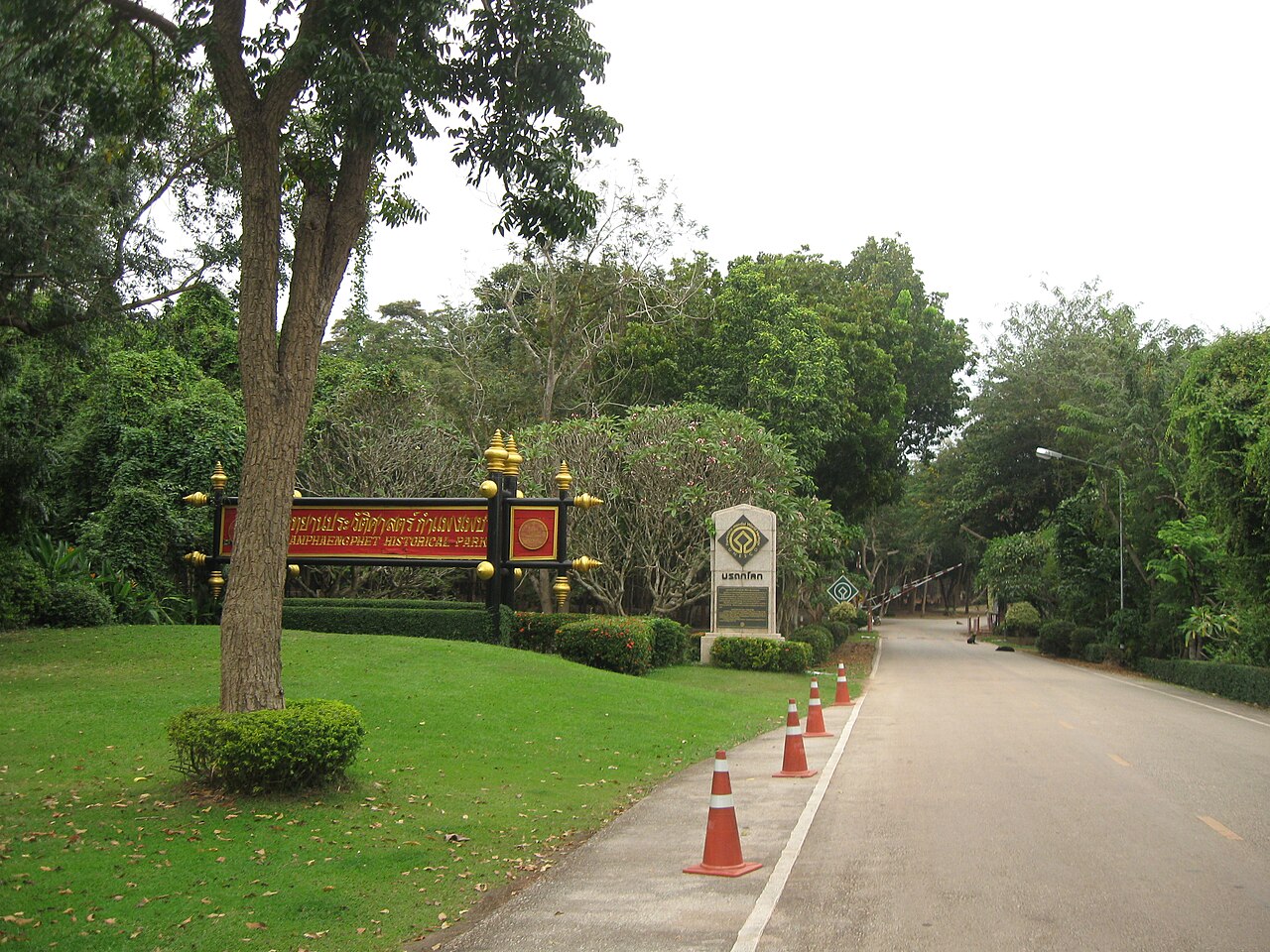
Kamphaeng Phet is another city in the same World Heritage group as Sukhothai and Si Satchanalai, but sits in a different province, about seventy-five kilometers south of Sukhothai town. It's the most overlooked of the three by tourists, even though its ruins are beautiful and its atmosphere is distinctly different from the other two. The park's signature feature is construction in reddish-brown laterite rather than brick, along with the Aranyik zone — a cluster of forest temples outside the city walls, shaded by large trees. The highlights are Wat Phra Si Iriyabot, with a mondop housing Buddha images in four postures — standing, walking, sitting, and reclining, with the large standing figure still clearly recognizable — and Wat Chang Rop, whose chedi base is ringed with laterite elephant sculptures, evoking Si Satchanalai's Wat Chang Lom but in a different material.
The charm that visitors consistently mention is the quiet and shade. The Aranyik zone's large trees make for a far more comfortable walk than Sukhothai's open ground, and at times you'll barely encounter another visitor. It suits history enthusiasts who want to slowly take in the details and photograph without competing for angles. Within the old walled city there's also Wat Phra Kaew and Wat Phra That, the city's main royal temples, along with the Kamphaeng Phet National Museum nearby for anyone who wants an overview before exploring. A guide or tour can help explain how Kamphaeng Phet served as a frontier city for Sukhothai, and why its craftsmen favored laterite as the primary building material.
Honestly, one thing to know before going: Kamphaeng Phet is the farthest from Sukhothai town of the three parks, and it's in a different province — without your own vehicle, getting there is fairly involved and mostly requires a tour or rental car. Combining Kamphaeng Phet with Sukhothai in a single day is tiring and eats up a lot of time on the road, so it's best treated as a separate trip or a stop along the way when driving through. The park is also split into the walled-city zone and the Aranyik zone with separate entry fees, and the sites are spread fairly far apart, so having a car or bicycle to move between zones helps. Facilities on-site are limited, so bring your own water, and since this is a sacred historical site, dress modestly and don't climb on the ruins.
- The quietest of the three parks — peaceful, with room to explore and photograph without competing for angles
- The shaded Aranyik zone, with its large trees, is far more comfortable to walk than the open grounds of Sukhothai and Si Satchanalai
- The laterite Buddha images and construction at Wat Phra Si Iriyabot and Wat Chang Rop are unique and hard to find elsewhere
- The Kamphaeng Phet National Museum nearby helps give context before you start exploring
- The farthest away and in a different province, about 75 km from Sukhothai — without a car you'll need a tour or rental
- Combining it with Sukhothai in one day is tiring and costs a lot of travel time — better as a separate trip
- Split into the walled-city zone and Aranyik zone with separate entry fees, sites spread out, and limited facilities
How to get around — bicycle / tram / guided tour at Sukhothai Historical Park

Whichever of the three parks you choose, the next question is how to get around, since all of them are large enough that walking alone gets tiring. The most commonly recommended method for Sukhothai and Si Satchanalai is renting a bicycle, at around thirty to fifty baht a day — you can cover the whole area and soak up the atmosphere, and the roads within the old city walls are smooth with little traffic, making it great for exploring at your own pace. For those who can't manage cycling, or who are traveling with elderly family members or young children, a tourist tram loops through Sukhothai Historical Park on a set schedule, offering a comfortable seated ride with narrated stops along the way. For those who want a deeper understanding of the history without having to plan a route themselves, booking a guided tour with transfer is the most convenient option — especially for Si Satchanalai or Kamphaeng Phet, where public transport isn't practical.
Entry fees are worth understanding before you go, since all three parks charge separately by zone or district rather than a single all-access ticket. Sukhothai Historical Park is divided into central, north, and west zones, each charging around twenty baht for Thai nationals and one hundred baht for foreign visitors; combined tickets are available for those planning to visit multiple zones. Bringing a bicycle or vehicle into a zone adds a small additional vehicle fee. Si Satchanalai and Kamphaeng Phet follow a similar structure. Bring cash to pay on-site, as some points don't accept cards, and check in advance whether your booked tour price already includes park entry fees, so your budget doesn't run over.
- Bicycle rental costs just a few dozen baht a day and lets you cover the whole area while soaking up the atmosphere — great for Sukhothai and Si Satchanalai
- A tourist tram runs through Sukhothai Historical Park for those who can't cycle or are traveling with elderly family or young children
- A guided tour with transfer is the most convenient option for Si Satchanalai and Kamphaeng Phet, where public transport isn't practical
- Combined tickets are available for those visiting multiple zones — better value than paying for each zone separately
- Every park charges entry separately by zone or district rather than a single all-access ticket — budget accordingly
- Bringing a bicycle or vehicle into a zone adds an extra fee, and some points only accept cash
- Check in advance whether your booked tour price already includes park entry, or your budget may run over on-site
Quick summary — which park should you visit
If you only have one day and want the best value on highlights, choose Sukhothai Historical Park. It's the easiest to reach, close to town, and lets you rent a bicycle to see Wat Mahathat, Wat Sa Si, and Phra Achana at Wat Si Chum all in one trip. Just accept that it's the busiest of the three.
If you've already walked Sukhothai and want a quiet town with beautiful elephant-base chedis, add Si Satchanalai next. It's far less crowded, and you can photograph Wat Chang Lom comfortably without waiting in line — but you'll need a car or tour since it's about an hour away.
If you're a history enthusiast who wants a quiet, shaded spot with almost no crowds, go to Kamphaeng Phet. The Aranyik zone is shaded by large trees, with Buddha images and laterite craftsmanship rarely seen elsewhere — but it's in a different province and the farthest away, so it's best treated as a separate trip.
If you want to see all three, allow at least two to three days and have your own vehicle or book tours, since all three sit in different directions. Cramming them into one day will be tiring and cost you more time on the road than time actually spent exploring.
Book tours & tickets in advance
Popular park tours and activities — booking online in advance is more convenient, especially for options that include transfers.
Visiting Sukhothai — where should you stay?
Choose a hotel near the old town or in town to use as a base for trips to all three parks. Compare prices across 3 sites before booking.
Search hotels on AgodaOnce you've picked the right park, don't forget to book a well-located hotel as your base for the trip. See our price-compared hotel picks here.
See great-location Sukhothai hotels →