🔄 Updated 21 Jun 2026
If you've never been to Surin and aren't sure how to string a trip together, this is a 3-day, 2-night plan that covers the town's four main themes in one go: elephants, temples, silk, and the in-town spots. The route is mapped so the driving makes sense and you're not doubling back. Day one picks off the places close to town first, day two takes the longer drive out to the elephant village, and the last day runs the temple trail before looping back. Short on time? Drop day three and do it as a two-day trip. If you've got your own car, that's the smoothest way to do it.
Let's clear up something important before we start. Surin's main sights — the elephant village, Sikhoraphum temple, Ban Tha Sawang, and the in-town spots — are not on the border line and are open as usual. What you need to avoid right now is the Ta Muen temple group and Chong Chom market, which sit right on the Thai–Cambodian border. We've left those two out of the main plan, but we'll fill you in on where things stand at the end so you can plan around the real situation.
The 3-day, 2-night trip at a glance
Before the day-by-day detail, here's the big picture of what each day focuses on and how far you'll be driving, so you can see the overall rhythm first and then tweak it around your own schedule.
- Day 1 — In town + silk + nature close to the city The shortest distances, no more than 20 km from the centre. Good for the day you arrive.
- Day 2 — Ban Ta Klang elephant village The longest drive, around 60 km out to Tha Tum district. You need an early start to make the elephant show.
- Day 3 — Khmer temples and history Around 35 km to Sikhoraphum temple, then loop back for the museum and a city café before you head home.
Pick a base that keeps you moving
Staying in central Surin makes the best base — it sits midway between everything, so each direction is a balanced drive, and it's close to the train station and restaurants. Book somewhere in town first, then drive out to the outlying spots in loops. It saves a lot of time compared with changing where you sleep each night.
Book the activities in your Surin trip ahead
Booking online ahead on Klook or GetYourGuide is usually cheaper than the gate and skips the queue. Pick only the experiences you actually want — prices and availability are shown live on each site.
Day 1 — In town, silk, and nature near the city
Day one is usually the day you've just arrived, so we keep it close to town with no long drives. Start at the city's central landmark, move on to the Ban Tha Sawang silk village just over ten kilometres away, then close out with a breezy nature spot in the evening. It's an easy day to settle into the town's pace.
In town + silk + nature near the city
Visit Ban Tha Sawang mid-morning
The weavers tend to start work mid-morning and break for lunch, so going around 10–11am catches them mid-weave and you'll see the gold-brocade loom in action far more clearly than in the late afternoon. Antique-pattern gold-brocade silk runs from a few thousand to tens of thousands of THB depending on the detail. On a tight budget, start with a scarf or a small piece of cloth.
Day 2 — Ban Ta Klang elephant village
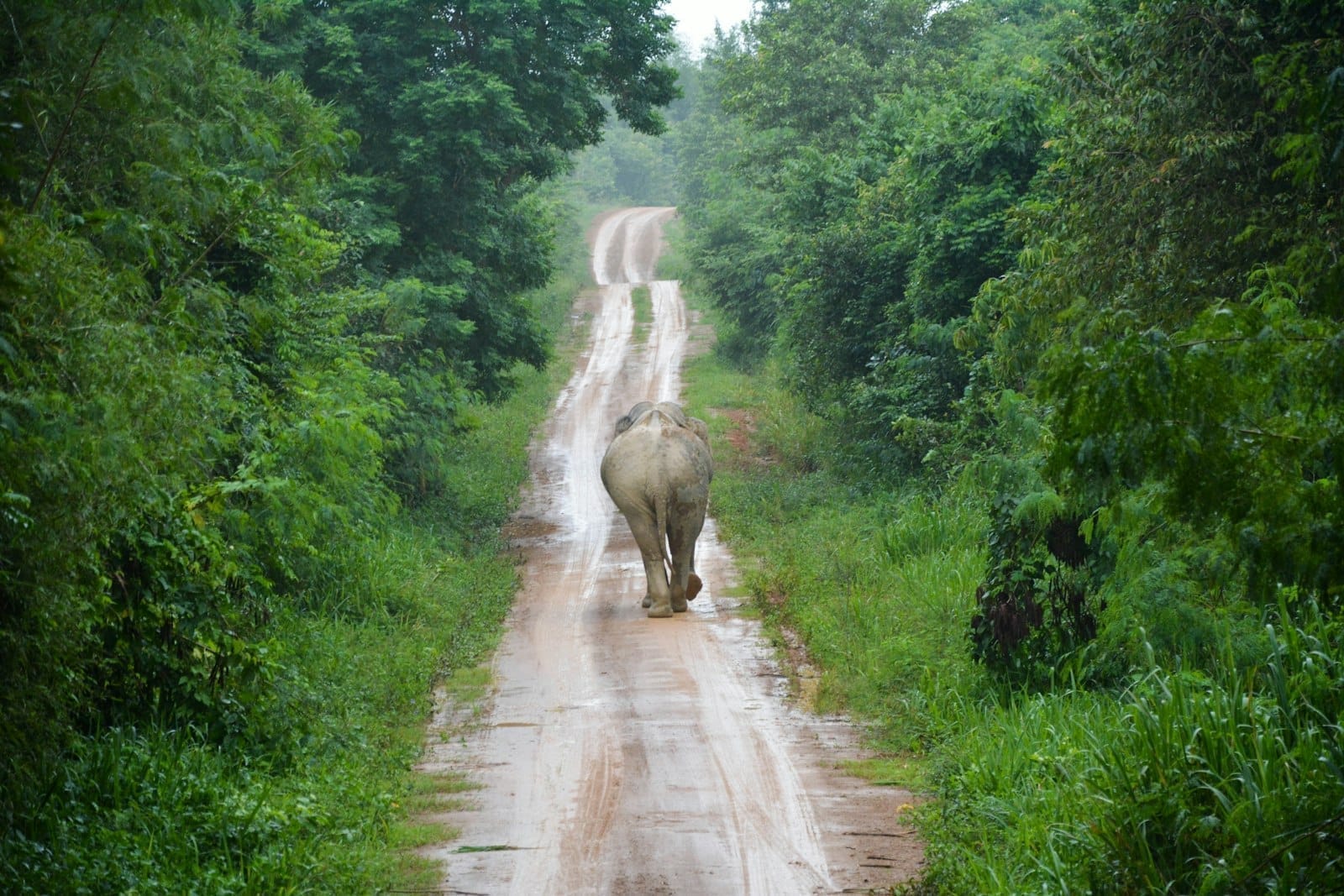
Today is the highlight of the trip. Ban Ta Klang elephant village is in Krapho subdistrict, Tha Tum district, around 60 kilometres from town — a bit over an hour's drive. It's a Kuy community that has raised elephants from generation to generation, not a staged elephant camp. The Elephant Study Centre has an elephant show, an elephant museum, an elephant graveyard, and a spot where you can feed the elephants up close. Because it's far and the show runs on a schedule, you'll want to leave early.
Ban Ta Klang — see the elephants, feed them, the Kuy way of life
Come prepared for the elephants
The show arena is open ground in full sun, and it gets very hot from mid-morning into the afternoon — bring a hat, sunglasses, and drinking water. Wear comfortable shoes, since you'll be walking the dirt arena and around the village. Carry small cash for entry, sugarcane, and the donation boxes for elephant care, as many spots in the village still only take cash. If you care about animal welfare, choosing activities that let the elephants stay in a natural setting feels far better than ones that push them.
Day 3 — Khmer temples and the rest of the city
The last day is the Khmer history day. The main stop is Sikhoraphum temple in Sikhoraphum district, about 35 kilometres from town — the easiest-to-reach and most beautiful Khmer temple in Surin. Go in the morning when the light is good and photos are easy, then loop back into town for the museum and a café before you split. Adjust the timing to catch your train or coach home.
Sikhoraphum temple + museum + a city café
Food you have to try in Surin town
Three days in Surin is tastier than you'd expect. The town is known for lower-Isan food, a style of Vietnamese kuay jab that's hard to find elsewhere, and souvenirs like Chinese sausage and jasmine rice. These are the places and dishes locals actually go for, picked so you can slot them into each meal of the trip. Prices are rough ranges and may shift on the day.
Kuay Jab Phon Suwan
The Vietnamese kuay jab in the city centre that Surin locals rate as the big name. The rolled rice-sheet noodles are chewy and soft, the broth is rich and dotted with seaweed, and there's plenty to choose from — Vietnamese pork sausage, stewed pork bones, chicken drumsticks, chicken feet, and quail eggs.
BARNYARD
A shady, relaxed restaurant along the irrigation canal opposite Suan Mai, strong on punchy Isan dishes — Luang Prabang-style papaya salad, pineapple som tam, crab-mashed rice, and khanom jeen with crab curry. Good for a laid-back lunch.
Thip Rot Surin
A long-established spot on Thanasan Road that's been open for years. The regulars order the 'three-cut pork rice', clear soup, and kuay jab — the same hand that locals have eaten for generations.
Rad Na Nueang
A noodle spot in town famous for rad na. The standouts are the 'millionaire' clay-pot rad na and the marinated-pork clay-pot version, with a thick, savoury gravy. There's also shrimp fried rice and plenty of other noodle dishes.
Khanom Jeen Nam Ya in town
A breakfast dish locals genuinely eat, with Lao-style curry, sweet chilli sauce, and as many vegetables as you like. Easy on the wallet — finish with sweet, cold bua loy.
Som tam, larb, koi — lower Isan
The heart of Surin's food, bold and full-on: papaya salad with fermented fish, beef larb, koi, and bamboo-shoot soup, eaten with hot sticky rice. You'll find it all over town, at sit-down places and roadside stalls alike.
Chicken biryani / chicken rice in town
An easy, lighter lunch option that's simple to find in town. Fragrant seasoned rice served with tender chicken and a well-balanced dipping sauce — a quick meal between sights.
SATI HANDCRAFT
A city café leaning on open glass and real greenery, with coffee, drinks, bakery, and savoury food. Good for an afternoon break on the last day before you leave.
5-Dao Chinese Sausage, Surin
An OTOP-level local souvenir that's all meat, not fat, in several recipes — traditional Cantonese pork, featherback fish, chicken, and a 'two friends' blend. There are samples before you buy and easy parking.
Surin jasmine rice + kalamae
Round it off with the town's signature souvenirs: Surin jasmine rice, known for its soft fragrance, and kalamae, a chewy sticky toffee. Easy to pick up at souvenir shops in town before you head home.
Time your meals to the trip's rhythm
Vietnamese kuay jab and khanom jeen nam ya are morning-to-mid-day dishes, and many shops sell out before the afternoon, so go early if you want them. Save souvenirs like Chinese sausage and jasmine rice for the last day before you leave, so you're not lugging them around the whole trip. And plenty of shops in town still only take cash, so keep small notes on you.
The border temples and Chong Chom market — where things stand now
The Ta Muen temple group and Chong Chom market used to be among Surin's most popular sights, but we'll be straight with you: right now the area along the Thai–Cambodian border still isn't back to normal. The Ta Muen temple group in Phanom Dong Rak district is under military control and not generally open. The Chong Chom crossing in Kap Choeng district has been limited to just a few days a week for short windows, so the Thai-side market is much quieter than before. That's why we've left these two spots out of the main plan.
Check first if you want the border zone
Don't rely on old information from blogs written years ago — the border situation changes in waves. If you're set on visiting the Ta Muen temple group or Chong Chom market, check the latest area announcements and crossing-opening news with local authorities before you set out, every time. If it's still closed, save it for next trip and focus on the spots in the province you can visit safely in this plan instead.
A rough budget for 3 days and 2 nights
A Surin trip is fairly easy on the wallet, since entry fees are cheap and the food isn't pricey. The biggest costs are usually transport and accommodation. Here's a per-person estimate for a comfortable, not-too-fancy trip — adjust up or down to your style.
- Accommodation, 2 nights — a mid-range city hotel runs around ฿600–1,200/night, so about ฿1,200–2,400 for two nights
- Transport — driving yourself, reckon on around ฿800–1,200 in fuel for the whole trip; renting a car adds a daily rate of around ฿1,000–1,500/day
- Entry fees — the Elephant Study Centre is around ฿50, Sikhoraphum temple is in the low tens of THB, the museum is modest, and Ban Tha Sawang and Phanom Sawai are free, for under ฿200 total
- Food — around ฿60–200 per meal, so roughly ฿600–1,200 over three days including snacks and coffee
- Souvenirs — Chinese sausage, jasmine rice, a small piece of silk; set aside around ฿300–1,000 as you like
How to get to Surin, and is it easy to get around?
There are several ways into Surin. The lower-Isan train line drops you at Surin station right in the centre, which is very convenient. A coach from Bangkok gets you in around morning. Or you can fly into Buriram and connect to Surin by car in a bit over an hour. In town you can walk to the main sights, but for the outlying spots like Ban Ta Klang, Sikhoraphum, and Ban Tha Sawang you'll want a car. If you're not driving in, renting a car or hiring one by the day from town is the smoothest way to cover the outlying spots and makes the most of this three-day plan.
Plan your Surin stay and food to round out the trip
See the Surin travel guide →