🔄 Updated 21 Jun 2026
This plan suits anyone who wants elephants as the backbone of a Surin trip but doesn't want the whole thing to be only elephants. So we've worked in the Kuy elephant keepers at Ban Ta Klang, the gold-brocade silk culture, and the old-town corners and Lower Isan food. Three days is just about right, full but not exhausting. Driving yourself or renting a car is by far the easiest way to get around, since several of the key spots sit outside town.
Before you start, here's the lay of the land. Ban Ta Klang and the Elephant Study Center are in Krapho subdistrict, Tha Tum district, about 50–60 km from the city center, a little over an hour's drive. The elephant show runs twice daily, at 10.00 and 14.00, with entry usually around 50 THB for adults and 20 THB for children. Check the latest show times and opening days on the center's page before you head out, since some days have special events or no show at all.
The 3-day elephant & culture plan at a glance
- Day 1 — Arrive, tick off landmarks and food ease into the rhythm of the elephant city, pay respects at the town's main temple, and eat your way through Lower Isan.
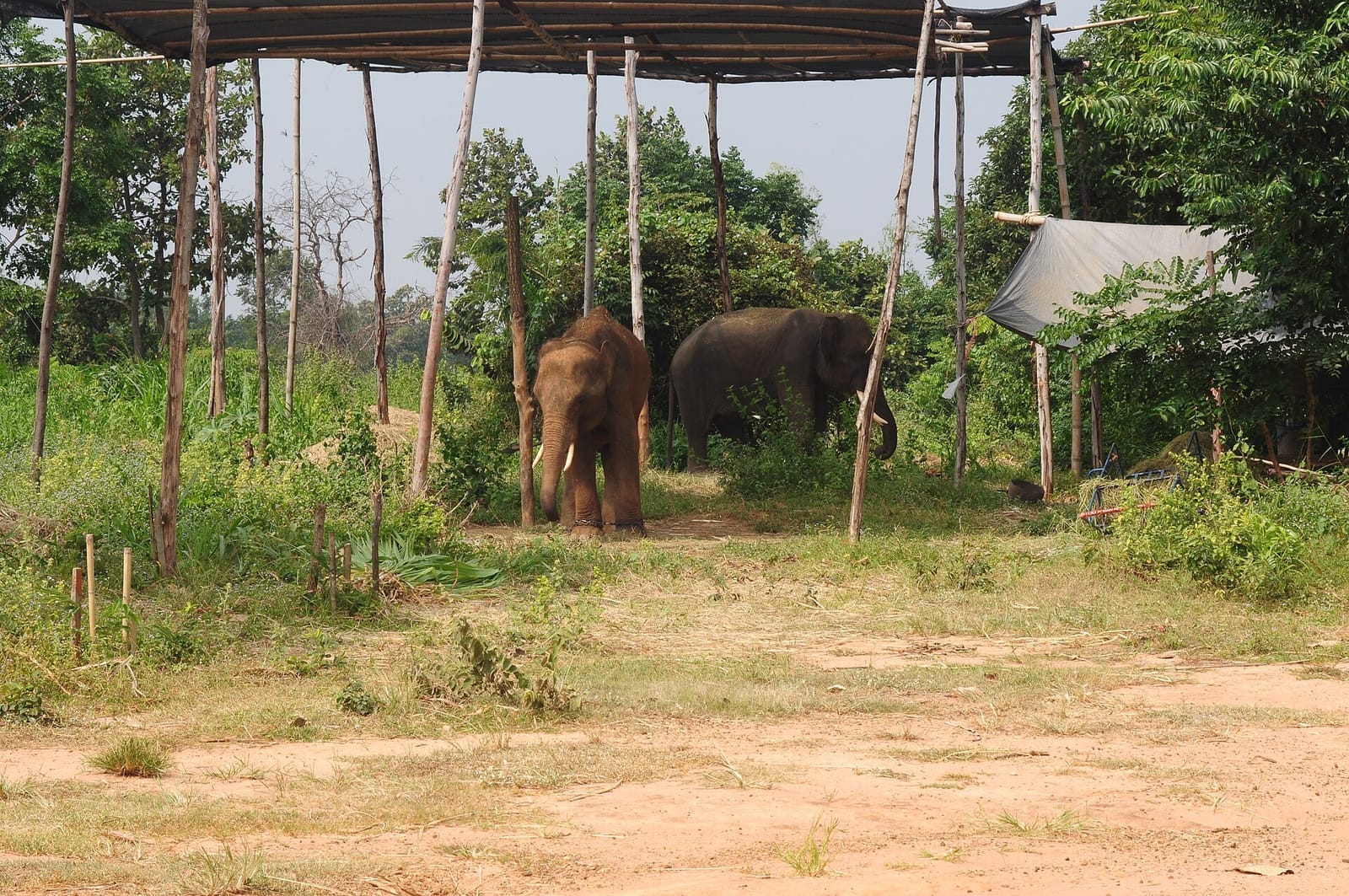
- Day 2 — A full day at Ban Ta Klang and the Elephant Study Center catch the morning elephant show, walk the elephant museum, feed the elephants, and finish with elephants bathing at Wang Thalu.
- Day 3 — Silk culture and temples watch gold-brocade weaving at Ban Tha Sawang, visit the city museum, then pick up souvenirs before heading home.
Book the activities in your Surin trip ahead
Booking online ahead on Klook or GetYourGuide is usually cheaper than the gate and skips the queue. Pick only the experiences you actually want — prices and availability are shown live on each site.
Day 1 — Settling into Surin city
Don't rush the first day. Take the city first and find your feet. Surin is a compact town where the main landmarks are a short walk or drive apart. Start at the monument to Phraya Surin Phakdi Si Narong Changwang, the first governor, cast riding a war elephant with a sword raised, which captures the elephant city nicely. Then move on to Wat Burapharam in the center of town, where the revered monk Luang Pu Dulya is honored.
Arrive, tick off landmarks and Lower Isan food
Keep day one light
Day two starts early and runs all day at Ban Ta Klang, so don't load the first day with anything far from town. Save your energy and turn in early, then leave first thing the next morning and you'll comfortably make the 10am elephant show.
Surin city food spots worth slotting into the plan
Surin's Lower Isan food is boldly flavored and has local specialties like Vietnamese kuay jab and khanom jeen with curry. These are the kinds of places locals actually go, lined up so you can pick by meal. Prices are rough estimates, and it's worth checking each spot's opening days before you go.
Larb Lung Sit
A bold-flavored Isan larb spot Surin locals know well, known for koi suea khua, soi ju and slow-braised beef in a hotpot. Great for anyone who wants the real, full-on Isan taste.
Khrua Nong Khwan Khao
A punchy Lower Isan restaurant that people travel to after seeing it on TV. A wide range of local dishes, comfortable seating, good for groups.
Vietnamese kuay jab in town
Vietnamese kuay jab is a Surin specialty: chewy rolled noodles in a well-rounded broth, loaded with mu yo, egg and toppings. Perfect for breakfast or a light meal.
Khanom jeen nam ya pa
Lower Isan-style khanom jeen with a deep, intense curry, eaten with plenty of fresh greens. A local breakfast that's easy to find at markets and shops around town.
Local som tam shop in town
Som tam pounded fresh by Lower Isan hands, made to order: tam Thai, tam pla ra, tam sua. Order it with grilled chicken and sticky rice for a light lunch.
Ran Pranit pork noodles
A long-running pork noodle shop that's been at it for over twenty years, a familiar flavor with a well-rounded broth. A good light bite while you wander around town.
Mu krata in town
The dinner Surin locals meet up over. There are several mu krata buffet spots around town, filling and good value on a small budget, an easy way to close out the day.
City-center cafe
Coffee and bakery for a midday break, photogenic enough to enjoy, good for an afternoon stop before your next stretch or for planning the following day.
Day 2 — A full day at Ban Ta Klang and the Elephant Study Center
Today is the heart of the trip. Ban Ta Klang is a Kuy community that has kept and lived alongside elephants for generations. In the same area sit the Elephant Study Center and the World of Elephants project, which Surin's provincial administration developed across roughly 500 rai, including an elephant museum, a show arena, feeding points and a look at the keepers' way of life. There are over 200 elephants in care here. Leave the city early to make the 10am show, then take the whole day to wander slowly.
Ban Ta Klang – Elephant Study Center – Wang Thalu
Enjoy the elephants in a way that's easy on everyone
If you're an animal lover, choose activities that let you see elephants in a natural setting, like feeding them and watching them bathe at Wang Thalu, which feels better than anything that forces the animals. Wang Thalu in the evening, when the elephants get into the water in their real daily routine, is the prettiest and most natural part of the day. Check with the center whether they'll be bringing elephants down to bathe that day before you lock in the timing.
Day 3 — Silk culture and the city's old temples
The last day shifts to culture. Surin is a genuine silk town, especially for the gold-brocade silk made at Ban Tha Sawang in Mueang district, about 10 km from the city. This village is home to the Chantra Soma group, who once wove ancient gold-brocade patterns as royal commissions. The weaving uses large looms worked by several people at once. You can watch them weave, talk with the artisans, and pick up silk as a souvenir.
Ban Tha Sawang – city museum – souvenirs
Adjust the plan if you have less time
If you only have two days, drop the first day and combine the city and silk into one, leaving the other day fully for Ban Ta Klang. If you truly only have one day, focus mainly on Ban Ta Klang and the Elephant Study Center, leave early to make the 10am show, then drop into town in the evening for whatever you can fit.
How to get to Surin, and is getting around easy?
There are several ways into Surin. The Lower Isan rail line drops you at Surin station right in the center, which is very handy. Buses from Bangkok arrive in the morning. Or you can fly into Buriram and transfer to Surin in a little over an hour. In town you can walk to the main sights, but this plan includes Ban Ta Klang and Ban Tha Sawang outside the city, so you'll want a vehicle. If you're not driving in, renting a car or hiring one by the day from town is the easiest way to get around, especially on day two when you go to Tha Tum and on to Wang Thalu.
On timing, the big Surin Elephant Round-Up takes over the city around November, with a procession of hundreds of elephants and performances. Come then and you'll get a completely different atmosphere, but it's crowded and rooms fill fast, so book ahead. The rest of the year is more relaxed with shorter queues.
Plan your Surin stays and food to round out the trip
See the Surin travel guide →