🔄 Updated 21 Jun 2026
Before getting into specific spots, there's one key thing to know while planning: Tak splits into two big sides divided by mountains. Tak town and Bhumibol Dam sit on the east along the Asia Highway, while Mae Sot and Umphang are on the western side of the range. Driving from Tak town to Mae Sot takes around 1.5–2 hours, then from Mae Sot down to Umphang is another 3.5–4 hours on Route 1090, which has over a thousand curves. So if you want to see it all, set aside at least 3 days or more.
Nature — waterfalls and seas of mist in Umphang
If you ask why people travel so far to Tak, more than half come for the nature on the Umphang side. The waterfalls here are bigger and wilder than most, but you pay for it with travel that takes real effort and time. The standout spots are these.
Thi Lo Su Waterfall
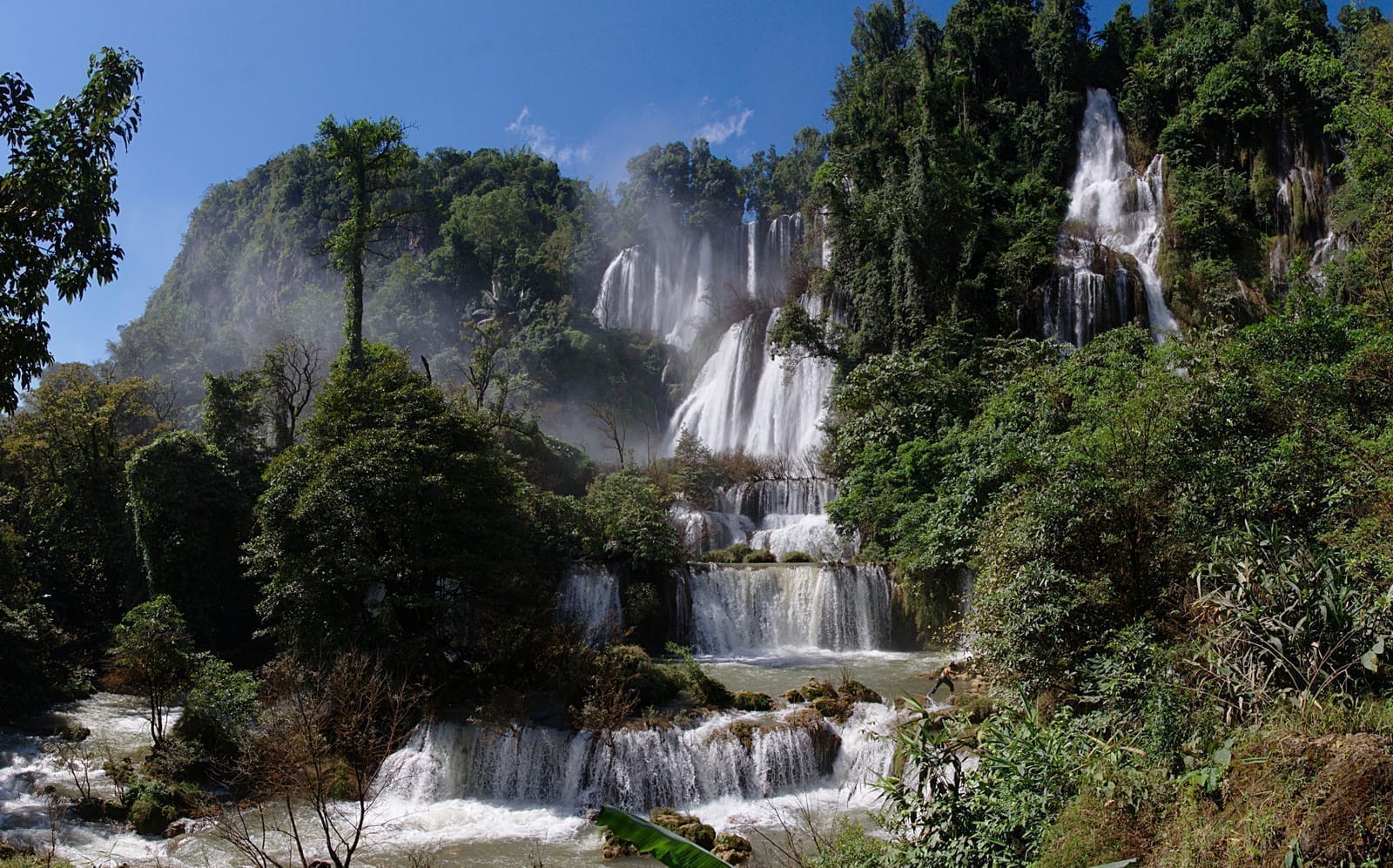
A huge limestone waterfall inside the Umphang Wildlife Sanctuary, with a face over 500 metres wide cascading down nearly 300 metres in tiers. Thi Lo Su is a Karen name often said to mean black waterfall. It's at its most dramatic when full after the rains, and you'll need to go on a tour or with a guide.
Doi Hua Mot
A bald, treeless summit you climb for a 360-degree sunrise over a sea of mist. People like to go before dawn on the last day of a trip before driving home. The air is cold and the views are wide open.
Mae Klong rafting & Sai Rung Waterfall
Popular Thi Lo Su trips usually start with a rubber-raft float down the Mae Klong River. Along the way you pass Sai Rung Waterfall, which streams down the cliff in long ribbons. Late morning, when the sun hits, you can see a rainbow across it.
Pha Charoen Waterfall
On the Mae Sot–Phop Phra side, far easier to reach than Thi Lo Su. It's one big limestone tier that then cascades into smaller steps, around 97 levels in total. Nearby there are natural hot springs for a foot soak. Good for anyone who wants to see a waterfall without a hard jungle hike.
Seasons you need to know before going to Thi Lo Su
The vehicle road into Thi Lo Su Waterfall opens around 1 October and runs to the end of May, then closes during the rainy season, roughly June–September, because the trails get slippery and the water floods. If you want to see the falls at their fullest, go right at the start of the open season (October–November). The sea of mist at Doi Hua Mot is best in late rainy season into early winter. Check the sanctuary's announcement year by year, since the open and close dates shift with the weather.
Want more out of Tak? Book tours & activities
Booking online ahead on Klook or GetYourGuide is usually cheaper than the gate and skips the queue. Pick only the experiences you actually want — prices and availability are shown live on each site.
Nature on the Tak town side — Bhumibol Dam and Doi Musoe
The Tak town side isn't just the town itself. The surrounding area has nature that's easy to reach and suits anyone who doesn't want to travel all the way to Umphang.
- Bhumibol Dam — the largest concrete arch dam in Thailand, with a crest nearly 500 metres long. Above the dam stretches the vast Mae Ping reservoir, with both viewpoints along the crest and trips on a houseboat to spend the night out on the water. It's about a 1-hour drive from Tak town.
- Doi Musoe (Doi Luang Tak) — a viewpoint along the Tak–Mae Sot road. On a clear day you can see all the way to Bhumibol Dam. The very top needs a four-wheel-drive and permission from the forest protection unit first, while the roadside Doi Musoe market is an easy stop for cool-climate vegetables and coffee.
- Musoe Market — a hill-tribe market along Highway 105 selling seasonal fruit, mountain vegetables, forest produce and coffee. A good rest stop while driving over the mountains to Mae Sot.
Town and culture — Mae Sot, a border town of two cultures
Mae Sot is the town with the clearest cultural mix in Tak, because it sits right next to Myawaddy in Myanmar. Thai, Shan and Burmese people live side by side, so the temples, markets and food all blend several heritages. Half a day strolling around town is already fun.
Wat Thai Wattanaram
An old Shan temple close to a hundred years old, standing out with a golden hall covered in cut-metal patterns and a Mon-Burmese-style chedi. It's a beautiful temple and photogenic from every angle, sitting not far from the border.
Rim Moei Market
A border market along the Moei River that divides Thailand and Myanmar, selling goods from both sides — dried seafood, herbs, Burmese skincare, jade and all sorts of unusual snacks. Fun to browse and a real look at border life.
Tham Si Fa (Blue Cave)
A cave within the Tham Phra monastery grounds, where the rock walls have streaks of white, grey and blue alternating, along with stalactites and stalagmites. It's an off-the-radar spot that not many people reach yet — good for cave lovers and unusual photos.
Mae Sot Morning Market
A fresh market in town bringing together Thai, Burmese and Shan food — sticky rice with custard, roti, Burmese sweets and unusual ingredients. A great way to start the morning and see the local Mae Sot way of life up close.
Town and culture — Trok Ban Chin, old Tak town
In Tak town along the Ping River there's an old quarter that still has plenty of charm. Trok Ban Chin is an old Chinese community that settled and traded here for generations, and the wooden shophouses, shrines and old coffee shops are still standing. You can walk and photograph the whole lane; late afternoon in soft light is the prettiest. At times there's also an old-quarter market that adds to the atmosphere.
- Trok Ban Chin — an old Chinese-community lane in the centre of Tak town, with wooden buildings, shrines and old coffee shops. An easy, relaxed walk for photos.
- Ping Riverside, Tak town — there's a riverside walkway and the Rattanakosin 200th Anniversary suspension bridge, a favourite evening stroll for locals.
- King Taksin the Great Shrine — a central landmark that Tak locals deeply revere. Stop to pay respects and walk the grounds around it.
A tip on planning your route
If you're short on time, pick one side first. Tak town and Bhumibol Dam work as a 1–2 day round trip, while Mae Sot and Umphang deserve a separate 2–3 days, because you lose a lot of time driving over the mountains and down the descents. Cramming everything into one short trip usually ends up more tiring than fun.
How to plan a Tak trip — a sample 3 days, 2 nights
If you want to cover all three zones without rushing too much, here's a rough framework that actually works. Add or trim to match your energy and time.
Tak town to Mae Sot
Umphang and conquering Thi Lo Su
Doi Hua Mot, then head back
Best time of year to visit Tak
- November–February (cool season) — peak time for Umphang. The sea of mist at Doi Hua Mot is beautiful, the waterfalls still have good water, and the air is just cool. But it's crowded and accommodation fills fast, so book ahead.
- October–early November — the Thi Lo Su road has just opened and the falls are at their fullest and most dramatic, though the trail may still be damp.
- March–May (hot season) — the waterfalls start to thin out, but it's quieter and you can enjoy Tak town and Mae Sot comfortably.
- June–September (rainy season) — the vehicle road into Thi Lo Su is closed, so focus on Tak town, Mae Sot and the easier-to-reach waterfalls instead.
Want a well-located base for exploring Tak
See Top 10 places to stay in Tak →