🔄 Updated 21 Jun 2026
When people think of Tak, they usually picture Mae Sot and the border — but the real charm of this province is its forests and waterfalls, which are still in remarkable shape. Tak holds huge protected areas like the Umphang Wildlife Sanctuary and Thung Yai Naresuan, the source of some of Thailand's most legendary waterfalls. We've sorted out which spots suit who, because at some you can drive right up to the falls, while others mean a full day of off-road trucks and rubber-raft trips.
Waterfalls Worth Seeing Once
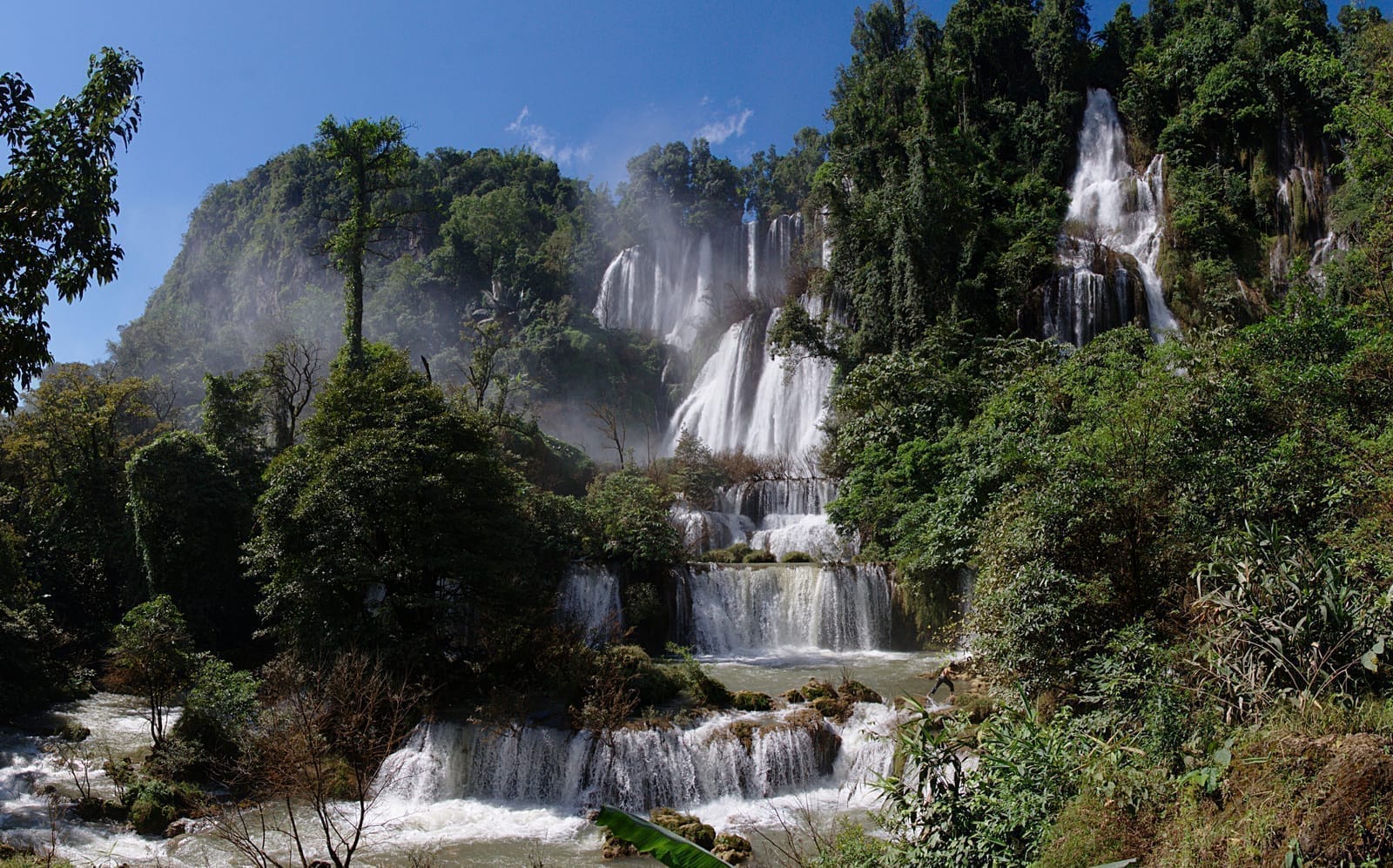
Thi Lo Su Waterfall (Umphang)
The largest limestone waterfall in Thailand — roughly 500 metres wide and around 300 metres tall, cascading down in a broad curtain in the middle of the rainforest inside the Umphang Wildlife Sanctuary. This is the kind of waterfall people travel for days to see once. From the car park, it's about another 1.5 km hike on foot.
Pha Charoen Waterfall (Phop Phra)
A 97-tier limestone waterfall that flows all year, the water spilling over limestone steps in a gorgeous staircase. It sits in Pha Charoen Waterfall National Park, about 35 km from Mae Sot along Highway 1090, and you can drive right up to the falls. Great if you want a big waterfall without the hard slog.
Lan Sang Waterfall (Mueang Tak)
The waterfall in Lan Sang National Park, the closest to Tak town — only about half an hour's drive from the centre. There are nature trails, camping grounds, and several tiers you can swim in. A good pick for families or anyone with half a day to spare.
Nang Kruan Waterfall (Phop Phra)
A medium-sized waterfall that drops through small tiers in shady forest in Phop Phra district. The water is clear and swimmable, and locals like coming here to relax in the hot season. A quiet stop that doesn't get as crowded as the famous falls.
Sai Rung–Palatha Falls (rafting route)
Waterfalls that pour over cliffs along the Mae Klong River, seen while rafting in to Thi Lo Su on the route that combines boats and trucks. In the morning, when the sun hits, you can catch a rainbow stretching across the spray — a lovely bonus along the adventure.
What to Know About the Seasons
Thi Lo Su is easiest to reach by vehicle roughly from December to May. During the rainy season (June–November) the water is heaviest and the curtain looks its best, but the access is tougher and parts of the trip require rubber rafts. Always check the wildlife sanctuary's seasonal open/close announcements before you set off.
Want more out of Tak? Book tours & activities
Booking online ahead on Klook or GetYourGuide is usually cheaper than the gate and skips the queue. Pick only the experiences you actually want — prices and availability are shown live on each site.
Viewpoints, Sea of Fog & Mountains
Tak isn't just waterfalls. If you can drag yourself up early, you'll catch a sea of fog that makes the lost sleep worth it — especially around Umphang, which sits at altitude and stays cool almost all year.
Doi Hua Mot (Umphang)
Umphang's most famous spot for sunrise and the sea of fog. Head up before dawn and you'll see white mist filling the whole valley. The golden window is roughly 5:00–6:00 a.m., before the sun climbs.
Lan Sang National Park
Beyond the waterfall, there are nature trails and riverside camping grounds — a good place to sleep out and feel the forest air close to town.
Highway 1090 (Mae Sot–Umphang)
A winding mountain road famous for its endless bends, with viewpoints and waterfalls to stop at along the way. A genuine nature route for road-trip lovers.
Take Care Driving Highway 1090
Highway 1090 from Mae Sot to Umphang has hundreds of bends and steep grades. Drive during the day, fill up on fuel before heading into the mountains, and check your brakes carefully. If you're not confident on mountain roads, taking a local minivan or coach is the safer call.
How to Plan a Tak Nature Trip Worth It
Tak's waterfalls are spread far apart, especially Umphang, which is the deepest in and takes real travel time. We've broken the plan down by number of days to keep it simple.
The easy-access side: Mae Sot–Phop Phra
Into Umphang: sea of fog & Thi Lo Su
The adventure route: rubber rafting
Entry Fees and What to Pack
- Park / wildlife sanctuary fees — waterfalls inside protected areas charge an entry fee, usually a few tens of baht for Thais plus a vehicle fee, with higher rates for foreigners. Bring cash, since many spots have no online payment signal.
- Trucks and guides for Thi Lo Su — in the dry season you'll need a local operator's off-road truck, while the rainy season is a multi-day rubber-raft trip. Prices depend on group size and number of days, so book through a trusted local tour.
- Shoes and clothing — non-slip or hiking shoes, a warm layer for the pre-dawn cold on Doi Hua Mot, and clothes you don't mind getting wet for the waterfalls.
- Food and supplies — shops are limited around Umphang, so bring enough drinking water, snacks, and any personal medication.
- Pack out your trash — every spot here is a protected area, so help out by not littering and not taking anything out of the forest.
Always Book Ahead
Thi Lo Su caps the number of visitors per day to protect the environment. During the cool-season high season it gets very busy, so book your tour and lodging in advance — don't just drive out there and try to sort it on arrival.
Plan your whole Tak trip
See the Tak travel guide →