🔄 Updated 21 Jun 2026
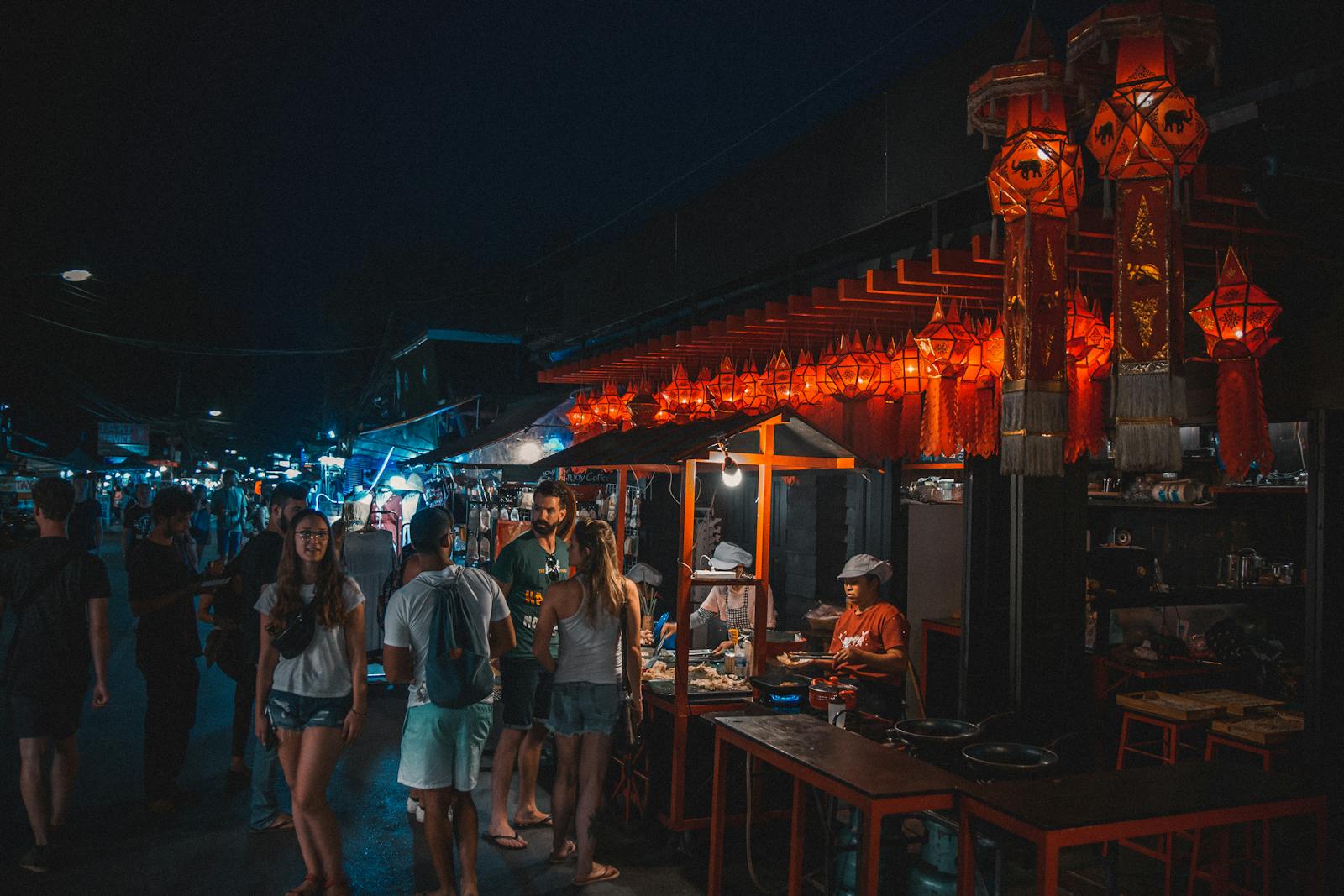
Tak's walking street isn't a kilometre-long affair like Chiang Mai's, but it has a charm all its own. The market stretches along the Ping River in front of the Provincial Governor's Residence, near the Somphot Krung Rattanakosin 200 Years Bridge (Tak's wooden suspension bridge). The signature touch is vendors setting their wares on low bamboo platforms, so shoppers squat down to chat as they buy — hence the name "Kad Nang Yong, Klong Yam". The food is genuine Tak local fare with a Shan and Burmese accent you won't taste anywhere else.
What days and hours is Tak walking street open?
The riverside walking street is open Saturday and Sunday evenings, roughly 4:00–9:00 PM. It's busiest after sunset, from about 6:00 PM onward, when the air cools, walking is comfortable, and the lights along the bamboo platforms glow just right. On weekdays this market doesn't open, but Trok Ban Jin (the old community along Taksin Road) has lunch spots open every day — keep it as a backup plan.
Time it well
Several of the most popular bites — like seng phao and krabong jo — sell out fast because they're made fresh. If you're coming specifically for a certain dish, aim for 5:30–7:00 PM so you catch more of it before the late-evening rush clears the stalls.
Want to taste deeper? Try a Tak food tour or cooking class
Half a day with a local who knows the lanes — or cooking a dish yourself — teaches you more than just eating. Book ahead on Klook or GetYourGuide.
Snacks you have to try
Krabong jo
Tak's most famous Shan snack: pumpkin, white gourd and papaya battered and fried until crisp outside, soft inside, eaten with a dipping sauce of ground peanut, palm sugar, tamarind, chilli and garlic — a balanced sour-sweet-salty mix. One bite and you understand why people in Tak are so proud of this one.
Khao kan jin
Steamed rice mixed with pork blood and fresh pork, lightly seasoned, wrapped in banana leaf and steamed through. It's served topped with fried garlic, fresh garlic, coriander and fried dried chilli, alongside crispy pork crackling — a Shan dish that's both filling and fragrant, and easy on the wallet.
Miang Tak / miang jup
Tak-style miang wrapped in tea leaves or fresh greens, loaded with the works — toasted coconut, peanuts, ginger, shallot and lime — and drizzled with a well-rounded miang sauce. A sour-sweet snack that's fun to chew as you wander, and you can grab some to take home too.
Sai ua, pork crackling & chilli dips
Tak borders the North, so northern staples like fragrant grilled sai ua sausage, crispy pork crackling, and nam phrik num and nam phrik ong dips line the stalls in a row. Buy them as snacks or take them home to eat with sticky rice.
Grilled pork, chicken & meatball skewers
The basic grilled skewers you'll find at every walking street, but Tak's grilled pork stands out for its fragrant marinade, eaten with hot sticky rice. A few baht a stick, it keeps you snacking all night as you stroll.
Sukhothai noodles
Tak borders Sukhothai, so this local dish made the trip over: a clear, sweet-leaning broth with sliced long beans, ground peanut, lime and red pork. A warming bowl to slurp down as you walk the market in the cool of the evening.
Local sweets and desserts
Tak's sweets carry a clear Shan influence, many made from sticky rice, palm sugar and coconut — homestyle, rich and sweet, and the kind of thing a lot of younger Thais have never even tried. Since you're at the walking street, don't skip these desserts.
Seng phao
A Shan sweet that looks a bit like red sticky rice, made from sticky rice, palm sugar and coconut milk, topped with thick coconut cream then grilled or baked until the surface is fragrantly caramelised. Rich and deeply sweet, it's a sweet you can only find in a handful of places in Thailand — and Tak is one of them.
Toasted-coconut sticky rice / khao kaeb
Sticky rice tossed with fragrant toasted coconut, plus thin crisp sheets of khao kaeb — light, cheap snacks. One bag keeps you chewing for a good while.
Khanom ja san / halawa
Hard-to-find Shan-Burmese sweets: ja san has a chewy, springy texture, while halawa is a thick, rich, sweet candied confection. Some stalls only carry them now and then, so if you spot them, give them a try — not every market has them.
How to eat your way through in one night
The market isn't big — you can comfortably walk the whole thing in about 1–2 hours. Plan your eating order a little so you finish pleasantly full rather than stuffed too soon.
One loop, all the flavours
Trok Ban Jin — the weekday backup
If you're in Tak on a weekday when the walking street isn't open, swing by Trok Ban Jin, an old community along Taksin Road near the same Somphot bridge. Old wooden houses mixed with European-style buildings from the reign of King Rama V make for a pleasant photo walk. The standout is Trok Ban Jin pad thai — old-school pad thai at 20–25 baht a plate, open for lunch roughly 8:00 AM–4:00 PM, with noodle soup and wonton noodles too.
Trok Ban Jin pad thai
Old-school pad thai at an easy price, in an old wooden house with a retro feel. Open for lunch every day.
Khanom jin nam ngiao at the walking street
A stall serving authentic northern khanom jin nam ngiao — another spot locals point you to when talking about food in this area.
Cash and parking
Nearly all the stalls take cash, so bring plenty of small notes. As for driving, the area by the Governor's Residence gets fairly packed in the evening — better to find parking in the side streets around it and walk in than to circle for a spot right by the market.
Plan a full Tak trip — food and where to stay
See the Tak travel guide →