📝 Written 3 Jul 2026 · ✅ Fact-checked 3 Jul 2026 · prices and schedules can change — check with the operator before booking
Kamphaeng Phet sits in the lower north along the Ping River, one of the World Heritage cities alongside Sukhothai and Si Satchanalai. The highlight is Kamphaeng Phet Historical Park, home to Sukhothai-era ruins including Wat Phra Kaeo in the old city center and the group of temples in the Aranyik zone, such as Wat Chang Rop and Wat Phra Si Iriyabot. There's also the natural beauty of Khlong Lan Waterfall and Mae Wong National Park, and the Phra Ruang hot springs (Bo Sam Muen).
Below we've picked the activities and attractions most often mentioned in reviews, along with the best times to visit and things to know before you go. The ruins are outdoor sites best seen in the morning or late afternoon, so bring sun protection. Khlong Lan and Mae Wong waterfalls are at their best from the rainy season into early winter. We also have a separate, more detailed guide to the historical park if you want to read more.
Kamphaeng Phet Historical Park, Inner Zone (Wat Phra Kaeo–Wat Phra That)

Kamphaeng Phet Historical Park has been a UNESCO World Heritage Site together with Sukhothai and Si Satchanalai since 1991. The area is split into two main zones: the inner zone in the middle of the old city along the Ping River, and the Aranyik zone outside the city wall to the north. The inner zone is the one most visitors stop at, since it packs the major ruins close together and within easy walking distance of one another. Wat Phra Kaeo is the large central temple next to the old palace grounds, with a lion-base principal chedi, a round chedi with elephant reliefs at its base, a viharn, a mondop, and laterite Buddha images whose outlines are still clearly visible. Further east is Wat Phra That, centered on a square-based chedi. Everything here is built from reddish-brown laterite, the signature material of this city, unlike the brick construction typical of Ayutthaya.
What sets this place apart from other historical parks is that it's still quiet and far less crowded than Sukhothai. You can wander at your own pace without jostling for photo spots. The wide grassy grounds are shaded by large trees, making it pleasant for a morning or evening stroll when the sun isn't too harsh. The centuries-old Buddha images and chedis have a raw, weathered charm, especially in the late-afternoon light when the laterite takes on a warm glow. Many reviewers agree that the restrooms are clean, parking is convenient, and the admission fee is a bargain for what you get to see. On review platforms like Tripadvisor, the site averages around 4.5 out of 5 from more than two hundred reviews, with most praise going to the tranquility, the well-preserved ruins, and the overall value.
A few honest things to know before you go. First, the site is almost entirely outdoors with limited shade, and midday sun can get intense — it's best to come before 10am or after 3pm, and bring a hat, sunglasses, and water. Second, signage and information at some points is sparse, so it's easy to get turned around about which ruin is which. If you want to understand the history properly, stop by the nearby Kamphaeng Phet National Museum first, or hire a local guide. Third, the inner zone and the Aranyik zone are separate areas with separate admission fees — if you want to see both, budget extra time and money. Walking between the two also takes a fair amount of time; those who can't manage the walk can drive in and park nearby, though there's an extra vehicle fee, and it's worth carrying cash since some points don't accept transfers.
- A well-preserved World Heritage site — Wat Phra Kaeo, Sa Mon Pond, and Wat Phra That all sit close together in the inner zone, so you can see everything in half a day
- Quiet and far less crowded than Sukhothai, so you can stroll and photograph the chedis and laterite Buddha images without competing for the shot
- Cheap admission and convenient parking — real Tripadvisor reviews average around 4.5 out of 5 from more than two hundred reviews
- Located in the old city center right along the Ping River, easy to reach, and pairs well with the nearby Kamphaeng Phet National Museum
- Almost entirely outdoors with uneven shade — midday sun gets intense, so it's best to avoid visiting around noon
- Signage and information are sparse in some spots, which can make it confusing to know which ruin is which — a guide or a museum stop beforehand helps
- The inner zone and Aranyik zone are separate sites with separate admission fees, so budget extra time, money, and cash for vehicle entry
Aranyik Zone, Kamphaeng Phet Historical Park (Wat Chang Rop · Wat Phra Si Iriyabot · Forest Temple Group)

The Aranyik zone is the area outside the city wall to the north of Kamphaeng Phet Historical Park, set on a laterite hill covering roughly 1,600 rai. It was once home to a group of forest temples used by forest-dwelling monks for meditation practice during the Sukhothai period. Dozens of ruins have been surveyed here. The main temples visitors stop at are Wat Chang Rop, Wat Phra Si Iriyabot, Wat Phra Non, and Wat Awat Yai. The most talked-about is Wat Chang Rop, sitting atop the highest point in the zone, with a large bell-shaped principal chedi on a square base ringed by 68 half-body stucco elephants, with staircases on all four sides. Wat Phra Si Iriyabot has a mondop enshrining Buddha images in four postures — standing, walking, sitting, and reclining — carved from laterite in Sukhothai style. Even though only the standing Buddha remains largely intact, the craftsmanship is still clearly beautiful.
The charm of the Aranyik zone lies in its shaded, tranquil atmosphere. Large trees cover much of the area, making it comfortable to walk or cycle around even under strong sun. The park rents out inexpensive bicycles, and there are paved paths linking the various temples so you can cycle a full loop in half a day. Kamphaeng Phet is one of three World Heritage cities alongside Sukhothai and Si Satchanalai, but draws far fewer visitors, so you get to explore the ruins without competing with anyone for a photo spot. Most reviews praise how peaceful it is, how photogenic it is, and how well-maintained it is. Signs are in both Thai and English. The most comfortable times to visit are before 10am or in the late afternoon, when the sun softens and the light is ideal for photographing the chedis against the trees.
A few honest things to keep in mind before you go: the stucco elephants around the chedi at Wat Chang Rop have weathered considerably over time, and many of the trunks have broken off entirely. Visitors expecting fully intact elephant figures may find only outlines remain, but viewed as traces of nearly 700 years of history, it's still impressive. The various points within the Aranyik zone are fairly spread out with uneven shade, so walking alone can be tiring and hot — renting a bicycle or driving in is worthwhile. Bring water, a hat, and sunscreen. Shops and restrooms are limited in this zone, so it's best to handle your needs at the visitor center first, and avoid the harshest midday sun for a more enjoyable visit.
- A tranquil, shaded group of forest temples with far fewer visitors than Sukhothai — you can explore without competing for photo spots
- The 68-elephant chedi at Wat Chang Rop and the Sukhothai-style four-postured Buddha images at Wat Phra Si Iriyabot are craftsmanship you won't find in many other places
- Very cheap admission, with affordable bicycle rentals, so you can cycle a loop past the main temples in half a day
- Part of the same World Heritage listing as Sukhothai-Si Satchanalai, with bilingual Thai-English signage and good upkeep — most reviews praise the atmosphere
- The stucco elephants around the chedi at Wat Chang Rop have weathered over time, with most trunks broken off — those expecting intact elephant figures may be disappointed
- The temples in the Aranyik zone are spread apart with uneven shade — walking alone can be tiring and hot, so a bicycle or car is recommended
- Shops and restrooms in the zone are limited, and admission is charged separately from the inner zone, so bring your own water and cash
Phra Ruang Hot Springs (Bo Sam Muen) — Natural Mineral Hot Spring Soak, Mueang Kamphaeng Phet

Phra Ruang Hot Springs, known locally as Bo Sam Muen, is Kamphaeng Phet's natural mineral hot spring, located in Lan Dokmai subdistrict, Mueang district, about thirteen kilometers from town via Highway 101. Hot water bubbles up from underground at several points in the area, with water temperatures ranging from roughly 40 to 65 degrees Celsius. The provincial administration has developed the site as a recreation area, with foot-soaking pools, resting pavilions, and private mineral bath rooms for rent. The grounds are landscaped with shaded gardens, pleasant for strolling — ideal for anyone driving through Kamphaeng Phet who wants to stretch their legs and soak away the aches for half a day.
The most popular spots are the foot-soaking pools and the private mineral bath rooms. The heat from the mineral water helps relax sore muscles. Real reviews across several travel websites consistently note that the site is clean, well-organized, and reasonably priced, and that it's less crowded than the famous hot springs up north, giving it a quieter, more relaxed atmosphere. Many recommend bringing a swimsuit or clothes you don't mind getting wet, so you can soak fully; those who'd rather stay dry can simply soak their feet at the edge of the pool. Fees are split between general admission and the extra charge for private mineral bath rooms, so it's worth checking the latest rates on site since prices can vary by season. The site is open daily from around 8am to 5pm.
A few honest things to keep in mind before you go. First, the water in some pools is genuinely hot, hot enough in places that you can't soak for long — ease in gradually and test the temperature first. Anyone with heart conditions or high blood pressure should be cautious and avoid long soaks. Second, the facilities are simple, typical of a provincial public park rather than a luxury resort spa — anyone expecting hotel-spa-level service may find it plain. Third, the site is outside town with no convenient public transport, so you'll need your own car or a rental. Since it's an open-air hot spring, midday can feel muggy in the hot season, so mornings or late afternoons are more comfortable. Bring a towel, drinking water, and cash, as shops and payment options on site are limited.
- A genuine natural mineral hot spring at around 40-65 degrees, good for relaxing sore muscles, with both foot-soaking pools and private mineral bath rooms
- Reasonably priced and far less crowded than the famous hot springs up north, giving it a quieter atmosphere
- Real reviews across multiple sites consistently note the site is clean, well-organized, and landscaped with shaded gardens to stroll through
- Right along Highway 101, only about 13 km from town — a convenient half-day stop to unwind while passing through
- Some pools are genuinely too hot to soak in for long, so anyone with heart conditions or high blood pressure needs to be careful
- The facilities are simple, more like a provincial public park than a luxury resort spa
- It's outside town with no convenient public transport, so you'll need your own car or a rental
Khlong Lan National Park (Khlong Lan Waterfall) — Pay Admission to Walk to a Big Waterfall in the Forest

Khlong Lan Waterfall is the standout feature of Khlong Lan National Park, in the western part of Kamphaeng Phet province along the mountain range. The waterfall drops from a rock cliff roughly 90-100 meters tall, spreading into a wide sheet into a large pool below. What people love is how easy it is to reach — just a 5-10 minute walk on a level path from the parking area to the waterfall itself, no climbing or difficult trails required. That makes it well suited to families with kids or older visitors. You can swim in the designated section of the pool below; the water runs cool and clear from the forest headwaters, and the surrounding area is shaded by large trees, making for great photos both of the full waterfall and close-up shots of the spray.
The best time to see the waterfall at its fullest and most impressive is during the rainy season into early winter, roughly July to November, when the water sheets fully across the cliff face with a loud roar. In the dry season, roughly March to May, the water thins out, exposing more of the rock face but with less drama. Entry requires paying the national park fee at the gate; Thai and foreign visitors pay different rates, plus a small extra vehicle fee. Inside the park there's a parking area, restrooms, a restaurant and welfare shop, as well as a campground and lodges for those who want to stay overnight. Day-trippers can view the waterfall, swim, and continue on comfortably, since the park sits right along the Kamphaeng Phet-Khlong Lan-Umphang route — a convenient break on a long drive.
A few honest things to know before you go: the rocks and paths near the pool are very slippery, especially in the rainy season when they're wet and mossy — wear shoes with good grip and watch every step. Don't climb up onto the rocks above the waterfall to take photos, since there have been slips before. In the rainy season the water can surge and change levels quickly, so only swim in areas the staff has approved and listen for announcements. On long holidays the crowds can be heavy, with parking and swimming spots getting full — arriving early helps. Since this is forest terrain, bring mosquito repellent, take your trash with you, and don't feed wild animals. Phone signal is weak in places, so check the route and the gate's opening hours before setting out.
- A large waterfall over a roughly 90-100 meter cliff, with just a 5-10 minute walk from the parking area to the falls — no climbing required, great for kids and older visitors alike
- You can swim in the pool below — the water is cool and clear from the forest headwaters, and the shaded surroundings make for great photos from both far and close up
- From the rainy season into early winter (Jul-Nov), the water is full and sheets across the cliff — a dramatic, loud display
- There's a parking area, restrooms, a restaurant, a campground, and lodges — visit for the day or stay overnight, right along the Umphang route
- The rocks and paths near the pool are very slippery, especially in the rainy season — you need grippy shoes and careful footing throughout
- In the rainy season the water can surge and change levels quickly, so swimming is limited to approved areas, and in the dry season the water thins out and looks less dramatic
- It's about 55 km from town, phone signal is weak in places, and on long holidays the crowds make parking and swimming spots fill up
Mae Wong National Park — Chong Yen Viewpoint, Sea of Mist on the Kamphaeng Phet Side

Mae Wong National Park straddles the border between Kamphaeng Phet and Nakhon Sawan, a stretch of western forest that remains largely intact and home to a wide range of wildlife. The point most visitors head for is Chong Yen, a viewpoint on a mountain ridge at roughly 1,300 meters elevation. The name Chong Yen ("cool gap") describes the place exactly — it's a gap between mountains where wind blows through constantly and the air stays cool nearly year-round. In cold season the temperature drops low enough to need a jacket, and on clear mornings you can see a sea of mist filling the valley below, a sight many people drive up and stay overnight specifically to catch. Along the way up there are several scenic stops for photos, and in the late rainy season into early cold season the forest turns at its greenest.
Getting there requires driving yourself. The park headquarters sits along Highway 1117 in Khlong Lan district; from Kamphaeng Phet town it's about an hour and a half to headquarters. After paying the park entrance fee at the gate, you continue driving up toward Chong Yen. The road up the mountain is paved but narrow, steep, and continuously winding — some sections are steep enough that small sedans or drivers unfamiliar with mountain roads need extra caution. Park staff usually recommend driving up during the day when visibility is good. Those hoping to catch the morning sea of mist typically drive up and stay overnight at the campground or park lodges above, then wake early to catch the mist at the viewpoint. It's worth booking a lodge or camping spot in advance during cold season, since it gets busy and space is limited.
A few honest things to keep in mind: Chong Yen is pure nature — there are no shops or many facilities up top, so bring your own water, food, and supplies. Phone signal is virtually nonexistent, and the sea of mist depends entirely on weather conditions — some mornings the sky stays overcast or it rains and there's no mist at all. The best chance of catching it is in cold season, roughly November to February; in the rainy season the roads are slippery and sections may close for safety. Check the park's opening status before setting out, bring a jacket, a flashlight, and fill your tank before heading up, since there's no gas station along the final stretch. Drive slowly and watch for wildlife that may cross the road, especially at dawn and dusk.
- Cool air nearly year-round on a ridge at roughly 1,300 meters elevation, with cold-season temperatures dropping enough to need a jacket
- On clear cold-season mornings there's a chance to see a sea of mist filling the valley from the Chong Yen viewpoint
- The western forest here is still lush and intact, with several scenic photo stops along the way up
- Cheap park admission, with a campground and lodges to stay overnight and catch the morning mist
- The road up to Chong Yen is narrow, steep, and winding — small cars or drivers unfamiliar with mountain roads need extra caution
- There are almost no shops or phone signal at the top, so you need to bring your own water, food, and supplies
- The sea of mist depends entirely on weather — some mornings the sky stays overcast and it doesn't appear, and rainy-season roads can be slippery or closed
Khlong Wang Chao National Park (Nang Nuan Waterfall – Nature Trekking)

Khlong Wang Chao National Park lies on the western edge of Kamphaeng Phet, overlapping into Wang Chao district in Tak province, covering roughly seven hundred square kilometers of forest. It's a watershed forest of the Ping River that remains intact and far less crowded than the famous parks up north. Most visitors stop at the waterfalls near headquarters, such as Khlong Wang Chao Waterfall and Khlong Samo Kluai Waterfall, both a short walk in. More challenging are Tao Dam Waterfall, a multi-tiered waterfall several hundred meters tall, and Nang Nuan Waterfall, which requires a fairly steep climb down to reach. Both of these require notifying park staff in advance and ideally having a guide, since the trails are deep and steep. Visitors generally fall into two groups: those visiting the waterfalls near headquarters for a half-day trip, and trekkers planning an overnight stay to tackle the longer routes.
The main activities here are forest trekking, waterfall dips, and camping in the forest. The late rainy season into cold season, roughly November to February, is the most popular time to visit, since the waterfalls still run full, the air is cool and pleasant, and it's the season when the trail up Doi Yen — a peak nearly two thousand meters tall requiring several days to climb — is open. Fit adventurers can catch a sea of mist and highland forest rarely found elsewhere in the upper central region. Those who don't want to trek hard can simply visit the waterfalls near headquarters, stay at the park lodges, or camp comfortably along the stream. Park admission is very cheap for what you get — adults pay just a small fee, children half, seniors free — plus a small vehicle fee, making it a great-value nature destination for self-drivers.
A few honest things to know before you go. First, this isn't a place you can book online — admission is paid in cash at the gate, and booking platforms can only help arrange accommodation and trekking tours in Kamphaeng Phet and Tak to pair with your visit. Second, Tao Dam and Nang Nuan waterfalls aren't easy to reach on your own — you need to notify the park in advance, some routes require a staff guide, and in the rainy season trails can be slippery and streams can run swift, so check conditions with staff by phone beforehand. Third, phone signal in the forest is limited, so bring food, supplies, a flashlight, mosquito repellent, and any personal medication you need. Fourth, in the dry season, roughly March to May, the waterfalls run noticeably lower — avoid this period if swimming is your main goal. And since this is an intact watershed forest, take your trash with you, avoid loud noise that disturbs wildlife, and don't light fires outside designated areas.
- An intact, uncrowded watershed forest with both easy-access waterfalls near headquarters and serious trekking routes like Tao Dam Waterfall, Nang Nuan Waterfall, and Doi Yen — something for every fitness level
- Very cheap admission — adults pay just a small fee, children half, seniors 60+ free, plus a small vehicle fee — great value for self-drivers
- Both park lodges and a campground are available, ideal for campers who want to sleep in the forest by the stream
- In the late rainy season into cold season the waterfalls run full and the air is cool — also the season when the trail to Doi Yen opens, offering a sea of mist and highland forest
- Tao Dam and Nang Nuan waterfalls aren't easy to reach independently — you need to notify staff in advance and some routes require a guide, with deep, steep trails especially in the rainy season
- In the dry season, roughly March to May, water levels drop noticeably, so plan your timing carefully if swimming is the goal
- Phone signal and shops in the forest are limited, admission is cash-only at the gate, and only accommodation and trekking tours can be booked online to pair with your visit
Old Nakhon Chum + Nakhon Chum Retro Market (Along the Ping River)

Nakhon Chum is an old community along the west bank of the Ping River, across from Kamphaeng Phet town, with a history stretching back hundreds of years to when it served as a sister frontier town to Kamphaeng Phet. Walking into the area, you'll find old wooden houses, timber shophouses lining the street, and Wat Phra Borom That, whose golden chedi serves as the community's landmark. The overall atmosphere still carries an unhurried old-town feel, pleasant for a leisurely stroll — ideal for anyone who wants to see genuine local life rather than a staged tourist attraction. What people talk about most is when the community holds its Nakhon Chum retro market: stalls stretch roughly 200 meters around the Nakhon Chum intersection, with many vendors dressed in traditional Thai clothing, some using banana leaves to wrap food and old-style serving ware, making a walk through feel like stepping back several decades.
Food is the heart of this place. Walking through, you'll find both savory and sweet local specialties that are hard to find in bigger cities — from Nakhon Chum-style khaeng khi lek (senna curry), to old-fashioned Thai sweets like khanom khrok, khanom bueang, and rice crepe snacks, to herbal drinks and old-style coffee. Most items cost just a few dozen baht up to around a hundred, so you can sample a bit of everything without spending much. Beyond food, there's also community handicraft work, such as bamboo weaving and palm-leaf crafts, worth browsing and buying as souvenirs. After the market, many visitors continue on to pay respects at the nearby Phra Borom That chedi, or stroll further to see the old wooden houses along the inner streets — a fitting way to end the evening with both a full stomach and a taste of the community's charm.
Before you go, check the day and time carefully, since the retro market only runs on certain days, starting in the late afternoon into the evening — it isn't open daily like a regular market. If you come on the wrong day, you'll just find a quiet community still worth strolling through and paying respects at the temple, but without the food stalls. Most feedback from visitors is positive about the atmosphere and local food, though some note that evenings on holidays get quite crowded and parking is hard to find, and some stalls sell out quickly if you arrive late. Daytime heat in Kamphaeng Phet can be intense, so it's best to come in the evening when it's cooler and more comfortable to walk. Carry small cash, since many small vendors don't accept transfers or cards, and give yourself plenty of unhurried time to soak in the old riverside community atmosphere.
- Free entry — you can sample plenty of Nakhon Chum local food for just a few hundred baht, a comfortable way to spend the evening
- A genuine old riverside community atmosphere, with old wooden houses and vendors in traditional dress — great photos and a nostalgic feel
- Hard-to-find local dishes like senna curry and old-fashioned Thai sweets, plus handicrafts like bamboo and palm-leaf weaving to bring home as souvenirs
- Close to Wat Phra Borom That Nakhon Chum and the town center — you can pay respects at the temple or continue sightseeing in the same trip
- The retro market only opens on certain days, starting in the late afternoon into evening — visit on the wrong day and there won't be food stalls
- Evenings on holidays get crowded and parking is hard to find, with some stalls selling out quickly if you arrive late
- It's a simple community market — many small vendors don't accept transfers or cards, so you'll need to carry cash
Kamphaeng Phet National Museum + Thai House Museum (Chakungrao) — Sukhothai-Kamphaeng Phet Artifacts and Local Thai Houses
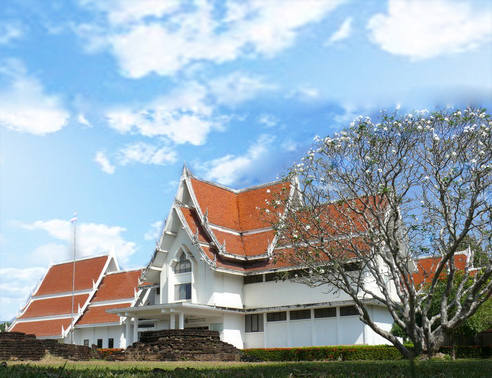
If you're visiting Kamphaeng Phet Historical Park and want to understand where the piles of brick and old chedis you're seeing came from, the Kamphaeng Phet National Museum is the place to stop first. The building sits right by the old city zone, so you can walk or drive on to see the ancient temples afterward with ease. Inside, it displays artifacts excavated in Kamphaeng Phet and the wider Sukhothai region, including pottery, Sangkhalok ceramics, Sukhothai-style Buddha images, and its centerpiece — a bronze Shiva statue found in this very city. Signage is in both Thai and English, so you can take it all in on your own. Many visitors say the staff are friendly and sometimes offer to walk you through and explain things at no extra charge.
Just a short walk from the National Museum is the Thai House Museum (sometimes called the Kamphaeng Phet Provincial Museum, Chalermphrakiat), which you can visit right after. This is a cluster of traditional wooden Thai houses raised on stilts, displaying the way of life, everyday household items, tools, and stories of Kamphaeng Phet's people in the past. The setting is shaded and photogenic, giving a real sense of how people here lived after the ancient city's era. Pairing the two sites in one trip works well — you get both artifacts behind glass and a tangible feel for the old wooden houses. Admission is very cheap for what you get to learn, and together they take about half a day at an unhurried pace.
A few honest things to know before you go: the National Museum is closed Mondays-Tuesdays and some public holidays, so check opening days carefully, especially if you're making a special trip just for this. The building itself isn't very large, and some of the displays look a bit dated — those expecting a modern, interactive museum experience may find it plain. Admission for foreigners and Thais is charged at different rates and is mostly cash-only, so bring cash for both sites. It's best to pair this trip with Kamphaeng Phet Historical Park on the same day, since they're in the same zone — renting a car or motorcycle in town is more convenient than waiting for public transport. Midday sun is strong, so visiting in the morning or late afternoon is more comfortable.
- Brings together Sukhothai-Kamphaeng Phet artifacts in one place, including a standout bronze Shiva statue and Sukhothai-style Buddha images
- Bilingual Thai-English signage makes it easy to follow on your own, and staff are friendly and sometimes offer to walk you through
- Right by Kamphaeng Phet Historical Park, so it pairs perfectly into one trip and helps set the context before seeing the ancient temples
- Very cheap admission for the amount you learn, plus a Thai House Museum next door to continue exploring in a shaded setting
- Closed Mondays-Tuesdays and some public holidays — check opening days before going, or you'll waste the trip
- The building isn't very large and some displays look dated — those wanting an interactive modern museum may find it plain
- Admission is mostly cash-only, with different rates for foreigners and Thais, so bring cash for both sites
Wat Phra Borom That Nakhon Chum (Gilded Burmese-Mon Style Chedi, Along the Ping River, Nakhon Chum Side)

Wat Phra Borom That Nakhon Chum sits on the west bank of the Ping River, in the Nakhon Chum area that was once an old town paired with Kamphaeng Phet itself. What everyone comes to see is the fully gilded Phra Borom That chedi, bell-shaped in Burmese-Mon style with a tall, pointed spire. Many visitors say it reminds them of the Shwedagon Pagoda in Myanmar. The chedi is believed to enshrine sacred Buddha relics brought here in ancient times, making it one of the most revered relic shrines tied to the city, long honored by the people of Kamphaeng Phet. The fully gilded form photographs beautifully both under strong sun and in the soft light of late afternoon. Within the temple grounds you'll also find a reclining Buddha viharn, an ubosot, and a large stone dharma wheel, all worth a look and a chance to pay respects in the same visit.
Getting there is easy since the temple isn't far from town — cross the Ping River bridge to the Nakhon Chum side and drive just a few more minutes. There's parking within the temple grounds, and those without their own vehicle can take a taxi or motorcycle taxi from town for just a few dozen baht. The temple is still active and open for worship every day, with free admission — those wishing to make merit can drop a donation in the box or buy flowers and incense at the entrance. The busiest times are on wan phra (Buddhist holy days) and major festivals like Makha Bucha, which comes with the province's Nop Phra Len Phleng tradition. For a quieter visit, go in the morning or on a weekday when it's less crowded and the sun isn't too strong yet.
A few honest things to know before you go: this is a temple and a sacred site, so dress modestly — no shorts above the knee, sleeveless tops, or sheer clothing — and remove your shoes before entering the viharn or any building marked accordingly. The chedi sits in an open courtyard with almost no shade, and midday sun can get quite strong, so bring a hat, sunglasses, and water. Parts of the courtyard are tiled and can get hot underfoot, so walking barefoot in the afternoon may sting. This temple emphasizes tranquility and worship rather than activities or food stalls, so it suits those who want to admire the architecture and make merit more than those looking for excitement. Keep your voice and behavior respectful, since people come here to pray and meditate at various times.
- The fully gilded Burmese-Mon style Phra Borom That chedi is highly photogenic and historically significant as a relic shrine tied to the city
- Free entry, and not far from Kamphaeng Phet town — just a few minutes across the Ping River, with parking available
- The temple grounds include a chedi, a reclining Buddha viharn, an ubosot, and a stone dharma wheel to explore and pay respects to in one visit
- A tranquil atmosphere, ideal for merit-makers and fans of old temple architecture — just half a day is enough to see it all
- The chedi courtyard is an open area with almost no shade — midday sun is strong and the tiled ground gets hot underfoot in the afternoon
- Modest dress and removing shoes are required by temple rules, which may not suit those dressed casually or in a rush for photos
- The focus is on tranquility and worship rather than activities or food stalls, so those seeking excitement may find it too quiet
Sirijit Park + Along the Ping River, Kamphaeng Phet (City-Center Public Park, Walk-Cycle-Exercise)

Sirijit Park is a riverside public park in the center of Kamphaeng Phet, covering about 170 rai, used by locals daily for relaxation and exercise. Inside there are walking and cycling paths along the river, a playground, a fitness area, resting pavilions, flower gardens, and a Thai cultural conservation area with traditional houses and an open-air stage for festivals and events. Many people love simply sitting to catch the evening breeze along the Ping, watching the water flow through town — a quieter, shadier spot than the streets in the city center. Entry is free with no admission fee, and parking is convenient, making it an easy stop for anyone visiting Kamphaeng Phet Historical Park who wants a place to sit and relax afterward.
The park comes alive most in the evening, roughly 4pm until dusk, when the air cools and locals come out to run, walk, cycle, and bring their kids to play. There's a football field and sports area nearby that locals share for exercise. Some days feature events or traditional Thai performances on the outdoor stage. For a quieter atmosphere, come in the morning instead, when you'll find just a few people exercising and the crisp riverside air. Another spot worth noting is across from the park along the Ping River, where foot massage services are available to unwind after a walk. Families can bring a mat and food for a relaxed picnic under the trees by the river.
A few honest things to know before you go: this is a city public park, not an attraction with dramatic highlights or lots of activities — its charm lies in its simplicity and the riverside atmosphere, so it suits those who want to slow down rather than chase a striking photo spot. Some areas of the park may not be maintained consistently year-round depending on budget and season. In the rainy season the ground can get muddy and mosquitoes can be heavy at dusk, so bring repellent and comfortable walking shoes. During flood season the Ping River's water level rises, and in some years water can overflow into the areas along the bank — check conditions before visiting in the rainy season. Overall, it's a worthwhile free stop that gives you a genuine taste of local life along the Ping River without needing much planning.
- Free entry with no admission fee and convenient parking — an easy, accessible spot for relaxation in the city center
- Walking and cycling paths along the Ping River, a playground, a fitness area, and a sports field for exercise
- A shaded, cool riverside atmosphere in the evening, great for families or couples to relax
- Conveniently located near the town center and Kamphaeng Phet Historical Park, easy to combine into one trip
- A simple public park with no dramatic highlights or activities — not a standout photo destination
- Some areas aren't maintained consistently year-round; in the rainy season the ground can get muddy and mosquitoes can be heavy at dusk
- During flood season the Ping River's water level rises and in some years may overflow into bank-side areas — check conditions before visiting
Where to stay in Kamphaeng Phet?
Pick a hotel in Kamphaeng Phet town near the historical park or along the Ping River, and compare prices across 3 sites before you book.
Search hotels on AgodaBook activities & tickets in advance
For a Kamphaeng Phet trip covering historical sites and nature, booking transport or a package in advance makes things easier.
💡 Know before you go to Kamphaeng Phet
Kamphaeng Phet Historical Park and the Aranyik zone are wide open spaces. Go in the morning or late afternoon, bring a hat, umbrella, and water; there's an admission fee and you can tour by bicycle.
The temple group in the Aranyik zone (Wat Chang Rop, Wat Phra Si Iriyabot) sits in shaded forest — great to explore by bicycle or by driving between sites.
Khlong Lan Waterfall and Mae Wong National Park are at their fullest and most beautiful from the rainy season into early winter. There's a park admission fee, so watch for slippery rocks and check trail conditions.
Phra Ruang Hot Springs (Bo Sam Muen) is a natural mineral hot spring with soaking pools and spa services. Check opening hours and fees ahead of time.
How to plan a Kamphaeng Phet trip that's worth it
With 2 days: spend day one at Kamphaeng Phet Historical Park — Wat Phra Kaeo in the old city and the temple group in the Aranyik zone (Wat Chang Rop, Wat Phra Si Iriyabot) — touring by bicycle. Spend day two on nature at Khlong Lan Waterfall or Phra Ruang Hot Springs, and you'll have covered the World Heritage sites, the temples, and the natural scenery. Kamphaeng Phet also pairs well with a trip to Sukhothai or Nakhon Sawan.
Ready to visit Kamphaeng Phet? Start by picking a hotel in town first.
See hotels in Kamphaeng Phet →