📝 Written 3 Jul 2026 · ✅ Fact-checked 3 Jul 2026 · prices and schedules can change — check with the operator before booking
Uttaradit sits in the lower North, right where the North meets the Isaan region — a province with mountains, a huge dam, ancient temples, and the old town of Lap Lae. The highlight is Phu Soi Dao National Park, with its pine meadow and naga-crest flower fields that bloom in the late rainy season. There's also Sirikit Dam, Thailand's largest earthen dam, the old town of Lap Lae with its legends and famous Long Lap Lae-Lin Lap Lae durian, and the Phra Thaen Sila At-Phra Borommathat Thung Yang temple cluster that draws devout visitors.
Below we've picked out the activities and sights people mention most often in reviews, along with the best times to go and what to know before you head out. Phu Soi Dao requires a long, steep 6.5-km hike, is only open from July 1 to January 10, and needs advance booking. The naga-crest flowers look best from late July to September. Sirikit Dam and Lap Lae old town can be visited year-round. Lap Lae durian season runs roughly May to August, and since many spots sit outside the city, having your own transport helps a lot.
Trek to the Pine Meadow at Phu Soi Dao National Park (naga-crest flower fields · three-needle pine forest)

Phu Soi Dao is one of the most talked-about overnight trekking routes in Thailand. The destination is the "pine meadow" (lan son), a plateau at roughly 1,600 meters elevation right on the border between Uttaradit province and Laos, in Nam Pat District. What makes it special is the field of purple naga-crest flowers that carpets the wide meadow beneath a stand of three-needle pines — blooming most beautifully in August (with the wider season running from late July to September). By day you walk through the flower fields and pine forest; by night you camp and stargaze; and at dawn there's a good chance of catching a sea of mist floating over the valley. Many say it's worth every bit of the effort, but it's important to understand from the start that this trip is for people who are genuinely fit — not a spot you can drive up to and stroll around casually.
What you need to know before going is the booking system and the open season. The park only allows access to the pine meadow from July 1 to January 10 each year; outside that window it's closed for ecological recovery. Visitors must book a slot in advance through the QueQ app (bookable up to 60 days ahead), since numbers are capped at around 300 people per day, split between advance bookings and walk-ins — so it pays to plan and book early, especially for weekends and the naga-crest bloom season when slots go fast. Park entry costs around 40 baht for Thai adults and 20 baht for children, plus a small accident insurance fee. If you don't want to carry heavy gear up yourself, you can hire a porter, charged by the weight of your load, and tents and sleeping bags can be rented at the park too.
To be straightforward about the difficulty of the trail: the climb from Phu Soi Dao Waterfall to the pine meadow runs about 6.5 kilometers, with several continuous steep sections that hikers nickname the "relative-sending hill" and "death hill," taking roughly 4-6 hours depending on fitness. If you go during the rainy season when the naga-crest flowers bloom, the trail turns to heavy mud — deep-treaded hiking shoes and trekking poles help a lot. You should train your body for at least a few weeks beforehand, bring warm clothing since nights on the plateau get very cold, and carry all your trash back down yourself, since there are no bins on the mountain and everyone needs to help preserve the flower fields. Anyone with knee or heart issues should consult a doctor and honestly assess their own condition before deciding to go.
- The purple naga-crest flower fields on the pine meadow are a rare sight, blooming most beautifully in August amid three-needle pine forest and morning sea-of-mist views
- The overnight camping experience at roughly 1,600 meters elevation delivers cold nights and clear stargazing — a full trekking experience
- Good support systems in place, including porters for hire, tent and sleeping bag rentals at the park, and a well-maintained trail
- Park entry fees are inexpensive — just tens of baht for Thai adults — good for a low-budget nature trip
- The steep 6.5-km trail takes 4-6 hours with several tough climbs, suited only to genuinely fit hikers — not for young children or the unfit
- You must book a slot in advance via the QueQ app, with a daily cap of around 300 people, and the pine meadow only opens July 1-January 10
- The naga-crest bloom season coincides with the rainy season, so trails get heavily muddy, nights are cold, and the mountain lacks full amenities
Sirikit Dam — suspension bridge over the Nan River, dam-crest viewpoint, and reservoir boat rides (Tha Pla District, Uttaradit)
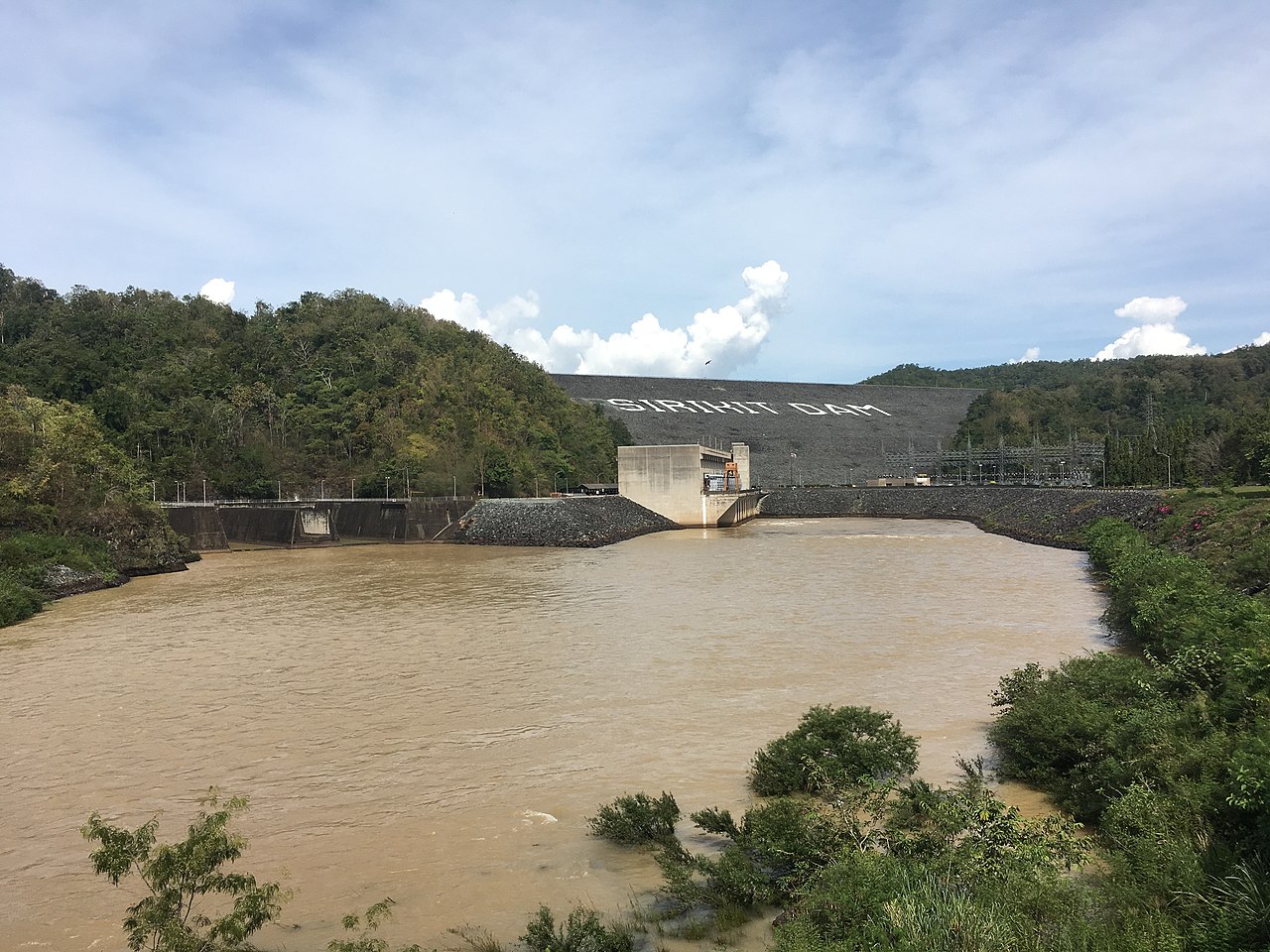
Sirikit Dam is Thailand's largest earthen dam, holding back the Nan River in Tha Pla District, Uttaradit, about an hour's drive from downtown. The spot most visitors head for is the long dam crest, where you can walk up and take in the vast reservoir framed by green mountain ridges — the still water reflecting the sky, especially beautiful in the morning and evening. Another popular photo spot is the yellow-and-blue suspension bridge that spans the Nan River just below the dam; you can walk across it and look down on the river and the surrounding gardens. The dam grounds are landscaped and shaded, with wide open lawns for strolling and resting, and entry is free — a great stop for anyone road-tripping through and wanting to pause for a scenic, unhurried break.
What sets Sirikit Dam apart from an ordinary dam is the option to hire a boat out onto the reservoir. At the pier, boats are available by the boat or by the trip, taking you out to view the lake, stop at small islands, and take in the surrounding mountains from the water. Prices are based on boat size and distance traveled — good for groups of family or friends splitting the cost. Along the reservoir there are also restaurants and floating rafts where you can sit and enjoy freshwater fish while taking in the view; many reviews praise the food as tasty and reasonably priced. The best times to visit are morning or late afternoon into evening, since midday sun can be quite strong and hot, while sunset at the dam crest brings beautiful light and cooler air. It's a year-round destination, though during the rainy season the reservoir fills up and turns especially lush green.
To be upfront about a few things before you go: the dam is far from the city and there's no convenient public transport, so having your own car or a rental is far more practical. Coming without a car means hiring a car or taxi, which can get expensive. Boat rental service isn't fixed at every hour — on quiet days you may need to wait to join a group or ask at the pier first, and you should confirm the price and timeslot clearly before boarding. Midday sun is strong with little shade on the dam crest, so bring a hat, sunscreen, and water. The dam grounds are managed by the Electricity Generating Authority of Thailand, so there are set opening hours and restricted access points — check the hours before you go and follow posted signage on site.
- Wide reservoir views framed by mountains, with calm water that photographs beautifully both in the morning and at sunset from the dam crest
- The yellow-and-blue suspension bridge over the Nan River is a standout photo spot, walkable, with shaded gardens all around
- Free entry to the dam area, with no admission fee — a great stop while road-tripping
- Boats are available to rent for touring the lake, and riverside restaurants get praise in reviews for tasty, affordable freshwater fish
- About 60 km from the city with no public transport access — you'll need your own car or a hired ride
- Boat rental service isn't fixed at every hour; on quiet days you may need to wait to join a group or check with the pier first
- Midday sun is strong with little shade on the dam crest, and as a government-managed site it has set opening hours and restricted access points
Lap Lae Old Town + Lap Lae City Museum (Muang Lap Lae old town & museum)

Lap Lae old town lies in Lap Lae District, about 8 kilometers west of downtown Uttaradit. It's a heritage quarter tied to the folktale that it's a "town where lying is forbidden," based on a local legend of a widow and a young man who wandered into a mysterious town. The first stop most visitors photograph is the Lap Lae city gate, a large archway built in Sukhothai style that serves as the district's symbolic entrance. Beside the gate stands a statue of the widow of Lap Lae, a reminder of the legend. Pass through the gate and you'll find an old community quarter that still has wooden houses, old-style shops, and local life on display for a leisurely stroll — ideal for anyone who likes to take a town in slowly, detail by detail.
Another spot worth a stop is the Lap Lae City Museum, which gathers everyday objects, photographs, and the history of the Lap Lae people into an easy-to-follow display — covering the town legend, local livelihoods, the tin chok woven sarongs that are a local craft, and famous local dishes like khao khaeb and mee phan noodles found around here. The museum is open daily from 9:00 AM to 4:00 PM with free entry, making it a natural stop to deepen your understanding either before or after walking the old quarter. With a bit of extra time, Lap Lae District also has old temples such as Wat Phra Borommathat Thung Yang to extend your route with temple visits and architecture, letting you cover legend, culture, and local food in a single trip.
To be upfront about a few things before you go: first, Lap Lae old town isn't a fully facility-equipped tourist attraction — its charm lies in the quiet atmosphere and genuine local life rather than flashy check-in spots, so anyone expecting grandeur may find it a bit plain. Second, the sights are spread out somewhat, from the city gate to the community quarter to the museum and temples, so having your own car or a rental is more convenient than waiting for infrequent public transport. Third, the museum closes at 4:00 PM, so plan to arrive before late afternoon to make it in time. And finally, midday can get quite hot, so walking the old quarter in the morning or evening is more comfortable — bring water and a hat to help.
- Free to walk the old town and photograph the Sukhothai-style Lap Lae city gate; the Lap Lae City Museum is also free to enter
- Learn the legend of the 'town where lying is forbidden,' local life, tin chok woven sarongs, and local food all in one place
- Only about 8 km from downtown Uttaradit — visit for half a day, then continue on to Wat Phra Borommathat Thung Yang
- A quiet, peaceful atmosphere for a genuinely slow-paced walk, suited to families and history-and-culture enthusiasts
- An old quarter focused on atmosphere and genuine local life, without full tourist facilities — those expecting grandeur may find it a bit plain
- Sights are spread out, so having your own car or a rental is more convenient than waiting for infrequent public transport
- The Lap Lae City Museum closes at 4:00 PM, so plan your timing carefully, and midday heat calls for water and a hat
Wat Phra Thaen Sila At, Royal Temple (Thung Yang, Lap Lae District, Uttaradit)

Wat Phra Thaen Sila At sits on Khao Tao (also called Khao Thong) hill in Thung Yang Subdistrict, Lap Lae District — an ancient temple originally named Wat Mahathat, with no clear record of who built it or when. The heart of the temple is the "Phra Thaen," a natural rectangular laterite slab roughly 8 feet wide, 10 feet long, and 3 feet high, its base decorated all around with lotus-petal carvings, enclosed within a Chiang Saen-style mondop inside the shrine hall. A belief passed down since ancient times holds that the Buddha once sat on this platform to meditate, which has made this a major pilgrimage site in the lower North for a long time. In 1770, King Taksin of Thonburi is said to have come to pay homage and hold a three-day celebration at the platform after suppressing the Chao Phra Fang rebellion.
Visitors typically walk into the shrine hall to pay respects to the stone platform beneath the mondop, then walk the temple grounds on the hilltop, which offer wide views over Thung Yang. The temple grounds also house a local museum with antiques and everyday artifacts on display. Today the temple holds the rank of a third-class royal temple under the Dhammayuttika order. What makes it worth the visit is its location within the cluster of ancient temples of Thung Yang — you can continue on to Wat Phra Yuen Phutthabat Yukhon and Wat Phra Borommathat Thung Yang along the same route, making it easy to plan a three-temple pilgrimage in half a day, especially during the Phra Thaen Sila At worship festival around the third lunar month, when the annual fair is in full swing.
To be upfront about a few things before you go: the temple sits on a hill, so you'll need to climb a fair number of stairs — elderly visitors or those with mobility issues should allow extra time and take it slow. The platform itself is enclosed by the mondop and a glass barrier, so you won't get as full a view of the stone slab as many expect — understand that this is a visit for paying respects to something sacred, not a flashy photo spot. On ordinary weekdays outside festival time it's fairly quiet, good for anyone wanting a peaceful atmosphere, while during the annual fair it gets crowded and hot — go in the morning and bring water. Dress modestly, since this is a royal temple grounds and sacred site that locals hold in high regard.
- The ancient laterite platform and Chiang Saen-style mondop are genuine artifacts rarely seen elsewhere, carrying real historical and devotional value
- Free entry, open every day year-round, and easy to reach from downtown Uttaradit, about 15 km away
- Part of the ancient temple cluster of Thung Yang — plan a three-temple pilgrimage in half a day along one continuous route
- The hilltop setting is calm and shaded, with wide views over Thung Yang, plus a local museum worth a stop
- Sits on a hilltop, requiring a climb up stairs — elderly visitors or those with mobility issues should allow extra time
- The platform is enclosed by the mondop and a glass barrier, so you won't see the stone slab in full — this is a devotional visit rather than a photo spot
- During the annual fair it gets crowded and hot, while on ordinary weekdays some may find it a bit too quiet
Ton Sak Yai National Park — home to Thailand's largest and oldest teak tree (Nam Pat District, Uttaradit)

The giant teak tree at Ton Sak Yai National Park is the star attraction of Nam Pat District, Uttaradit, drawing many visitors who drive a long way specifically to see it. Its trunk measures over 10 meters around, stands roughly 47 meters tall, and is estimated to be at least 1,500 years old — earning it the title of the largest and oldest living teak tree in Thailand. The tree stands at the end of a boardwalk trail through shaded forest, a short walk in from the parking area, with a gentle, easy trail suitable for children, the elderly, and anyone who doesn't want a strenuous hike. Standing at the base of the actual tree, you'll find it far bigger than photos suggest — a photo spot that really conveys the grandeur of nature.
Many reviews highlight the free entry for both Thai and foreign visitors, the shaded, green-canopied path leading to the tree, the cool air especially in the cool season, and the well-maintained grounds kept in order by park staff. Beyond the giant teak, the park has other natural attractions to combine into your visit, including Huai Niam Waterfall, Mon Kaeo Waterfall, cave clusters like Tham Chan and Tham Chedi, and Doi Phu Miang peak for trekkers — making it well suited to a half-day to full-day trip rather than just a quick stop at the tree. Anyone wanting to stay overnight can book park lodges or camping grounds in advance. The best time to visit is the cool season (November to February), when the weather is pleasant and the forest is at its greenest.
To be upfront about a few things before you go: the park is fairly far from downtown Uttaradit, and the final stretch of road winds through hills, so fill up on fuel and check your car's condition beforehand — there's no convenient public transport, making your own car or a rental the most practical option. The giant teak itself is a single stop that doesn't take long once you arrive; some reviewers note that despite the long drive, the main attraction is over quickly, so plan to combine it with other spots in the park or elsewhere around Nam Pat to make the trip worthwhile. There are few restaurants or shops in the area, so bring water, snacks, and insect repellent. During the rainy season the trail can get slippery with more insects around, so wear shoes with good grip and take extra care.
- See Thailand's largest and oldest teak tree (over 10 m around, 1,500+ years old) — standing at its base in person is far more impressive than in photos
- Free entry for both Thai and foreign visitors, with an easy, shaded boardwalk trail suitable for children and the elderly alike
- Several other sights to combine within the park, including Huai Niam-Mon Kaeo waterfalls, cave clusters, and Doi Phu Miang for trekkers
- Cool, pleasant air especially in the cool season, well-kept grounds, and lodges/camping grounds available for overnight stays
- Far from downtown Uttaradit, with a winding hillside road on the final stretch and no convenient public transport
- The giant teak itself is a single stop that's quick to see — some reviewers note the long drive isn't matched by much time at the main attraction, so plan extra stops
- Few restaurants or shops in the area; during the rainy season trails can be slippery with more insects, so come prepared
Phraya Phichai Dap Hak Monument + Nam Phi Iron Sword Museum (in front of Uttaradit Provincial Hall)

The Phraya Phichai Dap Hak monument stands prominently in front of Uttaradit Provincial Hall — one of the landmarks people in Uttaradit feel most connected to. He was the general of Phichai city who fought the Burmese in 1773, his sword breaking in his hand mid-battle, earning him the title "Phraya Phichai Dap Hak" (the general whose sword broke). The statue depicts him gripping a sword in each hand, symbolizing the bravery of fighting on even after his blade broke. Anyone driving through the city center often stops to snap a photo beside the monument as a marker of having arrived in Uttaradit. Entry is free, you can walk around the base for photos, and morning or evening light — softer than midday — makes for better shots. Locals also come to pay respects here for courage and success, especially around Phraya Phichai Dap Hak Day in early January, when a large commemorative fair is held.
Right in the same grounds is the Nam Phi Iron Sword Museum, worth continuing on to. It tells the story of Nam Phi iron, a special-grade steel from the Nam Phi iron mines in Thong Saen Khan District, which people in ancient times believed was forged into fine swords and weapons — legend holds that Phraya Phichai's sword itself was made from this iron. The highlight many come to see is a giant Nam Phi iron sword measuring roughly 9.24 meters long, put on full display — a great photo spot that shows off its scale. Inside, there's also information on the smelting process, sword-forging techniques, and the history of Phichai city, ideal for anyone wanting to understand why Nam Phi iron became such a famous local product.
To be upfront about a few things: this is a city landmark and local museum rather than a large-scale attraction, and a proper visit doesn't take long — about 45 minutes to just over an hour covers it, making it more of a stop along the way than a full-day destination. The monument itself sits in open sun, and midday can get quite hot, so bring a hat or umbrella. As for the museum, check the opening hours in advance, since local museums sometimes close on Mondays or public holidays, and operating hours can be shorter than expected. Museum entry is typically tens of baht, or free at certain times — it's worth pairing this stop with a temple or another spot in downtown Uttaradit in the same trip to make the most of your time.
- Free entry to the monument, a genuine city landmark — a quick photo stop marking your arrival in Uttaradit
- Right in the heart of the city in front of the Provincial Hall, easy to reach, convenient parking, and quick to visit en route
- The Nam Phi Iron Sword Museum sits on the same grounds — see the giant 9.24-meter sword and learn about Nam Phi iron right after
- Covers local hero history and the Nam Phi iron legend in one spot, great for teaching kids
- A small landmark and museum, so a proper visit doesn't take long — better as a stop along the way than a full-day destination
- The monument itself sits in open sun, and midday gets hot, so avoid peak sun hours or bring a hat/umbrella
- Museum opening hours may be short and it can close on certain days, so check ahead to avoid missing the exhibits
Mae Phun Waterfall, Lap Lae, Uttaradit (Namtok Mae Phun, Mae Phun Subdistrict, Lap Lae District — a tiered limestone waterfall amid a fruit orchard)

Mae Phun Waterfall lies in Mae Phun Subdistrict, Lap Lae District, about eight to ten kilometers from downtown Lap Lae, and is one of the first waterfalls people in Uttaradit think of for an easy family day trip close to home. What sets it apart from a typical forest waterfall is that it's a limestone waterfall that's been shaped so the water cascades down in tiers across a wide rock face, resembling a white curtain of water flowing over pale-brown limestone. The surroundings are Lap Lae fruit orchards growing Long Lap Lae durian, langsat, and longkong, providing shade from large trees along the way. It's a short walk from the parking area to the waterfall itself, with no climbing or heavy forest trekking required, so both children and adults can enjoy it together comfortably.
Another appeal here is that it's free to visit — a public waterfall where locals regularly come to swim. On holidays, families lay out mats, eat by the water, and let kids splash in the shallow lower tiers. There are made-to-order food stalls and small snack shops along the way for a quick bite. Importantly, during fruit season roughly June to August, stalls selling freshly picked fruit spring up around the waterfall — langsat, longkong, and Lap Lae's native durian varieties — so many people plan a waterfall visit followed by a walk through Lap Lae market and fruit tasting in the same trip. Coming from downtown Uttaradit, driving yourself is most convenient, since public transport is hard to come by.
To be upfront about a few things before you go: first, water volume depends heavily on the season — the best time for full, strong flow over the rock face is the rainy season into early cool season, roughly July to November, while the dry season around March to May often leaves some tiers nearly dry. If you're set on photographing the water at full flow, avoid the dry season. Second, the limestone surface the water flows over gets very slippery, especially where moss builds up, so wear shoes with good grip and take care climbing the upper tiers — don't run on wet rock. Third, long holidays and festivals bring bigger crowds, parking may fill up, and the swimming area gets crowded — for a quieter atmosphere, go on a weekday morning, and remember to carry your trash out, since this waterfall is looked after by the local community.
- Free entry, no admission fee — a public waterfall where locals regularly come to swim
- A tiered limestone waterfall cascading wide across the rock face, a short walk from the parking area, easy for families to enjoy together
- Set amid Lap Lae's fruit orchards, shaded by large trees, with fresh langsat, longkong, and durian sold nearby during fruit season
- Combine with a walk through Lap Lae market and fruit tasting for a full-day trip along one route
- Water volume is seasonal — during the dry season roughly March to May, water often runs low and some tiers nearly dry up
- The limestone surface the water flows over gets very slippery, especially where moss builds up, so take care climbing the upper tiers
- Long holidays and festivals bring bigger crowds, parking may fill up, and the swimming area gets crowded — public transport is also hard to come by, so bring your own car
Wat Phra Borommathat Thung Yang (a stupa enshrining Buddha relics in the ancient town of Thung Yang)

Wat Phra Borommathat Thung Yang sits in central Thung Yang Subdistrict, Lap Lae District, about five kilometers from downtown Uttaradit. It's an ancient temple enshrining the Buddha relic stupa of Thung Yang, a historic town with traces of settlement dating back before the Sukhothai period. The temple is deeply tied to local history and counts as one of the key stops on the Uttaradit-Lap Lae pilgrimage route. Visitors come to pay respects at the bell-shaped Buddha relic stupa set on a multi-tiered square base, with four smaller subordinate chedis at each corner, believed to enshrine sacred Buddha relics inside — making this site both an ancient monument and a temple still actively used in the daily religious life of the people of Thung Yang.
Beyond the stupa, the temple's main shrine hall houses a large stucco Buddha image in the subduing-Mara posture that locals call Luang Pho To, visible even from the road outside the temple. There's also an ordination hall and older buildings reflecting craftsmanship from several eras. The stupa has been restored multiple times through the Rattanakosin period, giving its current form influences from Mon-Burmese architectural style, distinct from the classic Sukhothai lotus-bud chedis many are familiar with. Another highlight is the Atthami Bucha ceremony held on the eighth waning day of the sixth lunar month, when the temple recreates the cremation ceremony of the Buddha with a replica royal crematorium — an annual merit-making event that draws the whole district together. Visiting during that time means seeing the temple in an especially lively atmosphere.
To be upfront: Wat Phra Borommathat Thung Yang is free to enter and open daily, making it a good short stop on the way to Lap Lae market or Lap Lae old town rather than a destination for a full day, since the temple grounds aren't very large — walking around the stupa and paying respects in the shrine hall takes roughly forty-five minutes to an hour. Dress modestly, as this is a sacred site where people come to make genuine merit — remove your shoes and be respectful inside the shrine hall. Midday sun is fairly strong with limited shade on the temple grounds, so morning or late afternoon visits are more comfortable. Without your own car, the most convenient way to get here from downtown Uttaradit is to rent a car or motorbike, since public transport doesn't reach this spot often — plan to pair it with other sites in the Thung Yang-Lap Lae area in the same trip to make the most of your time.
- A temple enshrining the city's Buddha relic stupa in the ancient pre-Sukhothai town of Thung Yang — pay respects and take in local history in one place
- A bell-shaped stupa on a multi-tiered square base with subordinate chedis at each corner, plus a main shrine hall housing the large Luang Pho To Buddha image to pay respects to
- Free entry, open daily, small grounds that don't take long to see — a good stop for families and the elderly along the way
- In the same area as Lap Lae market and Lap Lae old town — plan a multi-stop trip in a single day, plus an annual Atthami Bucha festival worth catching
- The temple grounds aren't large, so a visit is quick — better as a stop along the way than a main destination for the day
- Limited shade on the temple grounds and fairly strong midday sun — avoid midday or bring a hat/umbrella
- Public transport rarely reaches here, so without your own car you'll need to rent a car or motorbike from downtown Uttaradit
Visit Long Lap Lae-Lin Lap Lae durian orchards + taste GI durian and langsat (Lap Lae Subdistrict, Lap Lae District, Uttaradit)

Lap Lae District in Uttaradit is home to the native durian varieties that durian fans seek out: Long Lap Lae and Lin Lap Lae. Both are registered as Geographical Indication (GI) products of the province. Their hallmark is relatively small fruit, deep yellow flesh, small shriveled seeds, smooth texture without fibers, and a milder aroma than common market varieties, with a well-balanced sweet, buttery flavor. Most orchards sit on hillsides around Mae Phun Subdistrict and the broader Lap Lae District, interplanted with langsat, longkong, and mangosteen. Visiting the orchards themselves means seeing the hillside farming life up close, hearing owners talk about the varieties and how to tell when a durian is ripe, and tasting fruit freshly cut that same day.
The appeal of coming here is getting it straight from the source, since Long Lap Lae and Lin Lap Lae have low annual yields, cost several times more than common durian, and are often snapped up early in the season. Many orchards let you walk in and look around free of charge, paying only for what you buy, while some offer a paid tasting set to sample several varieties at once. Beyond durian, Lap Lae's langsat and longkong are known for thin skin, juicy flesh, and a sweet-tart flavor, ripening in the same season. Roughly May to August each year, the province typically holds a Lap Lae fruit festival or Uttaradit durian fair, timed to when the fruit is at its peak and the most orchards are open to visitors.
To be upfront before you go: first, this is a purely seasonal activity — outside May to August there's no fruit to taste and many orchards close, so always check with the orchard or the province's page before traveling. Second, genuine Long Lap Lae and Lin Lap Lae durian is limited in supply and pricey, and some sellers may mix in other varieties, so buy from a trusted orchard and ask clearly for the variety name. Third, the road up to the orchards runs through hills, narrow and steep in places, so drivers of low-clearance sedans or those unfamiliar with hill roads should take extra care — and during festival time, traffic and parking can get tight. Fourth, bring cash, as many orchards don't accept card payments, and if you plan to buy durian to take home, ask about storage and how many days until it ripens fully so it doesn't spoil before you get there.
- Taste rare GI-registered durian varieties like Long Lap Lae and Lin Lap Lae straight from the orchard — smooth, fiberless flesh, small seeds, and mild aroma
- Many orchards are free to walk in, paying only for what you buy — see hillside farming life and hear owners explain the varieties and how to tell ripeness
- Thin-skinned, juicy langsat and longkong from Lap Lae ripen in the same season — taste several fruits in one trip
- From May to August the province typically holds a Lap Lae fruit festival, when fruit is at its peak and the most orchards are open
- A purely seasonal activity — outside May to August there's no fruit to taste and many orchards close, so check before every trip
- Genuine Long Lap Lae and Lin Lap Lae durian is limited and pricey, and some sellers may mix in other varieties — ask for the variety name and choose a trusted orchard
- The road up to the orchards runs through hills, narrow and steep in places, with traffic and tight parking during festival time, and many orchards accept cash only
Nam Phi Iron Mines + Nam Phi Iron Mines Museum (an ancient iron ore deposit and sword-forging history in Thong Saen Khan District)

The Nam Phi iron mines lie in Thong Saen Khan District, about 56 kilometers from downtown Uttaradit — a natural iron ore deposit tied to the legend of Nam Phi iron, a famous raw material that people in ancient times believed was forged into royal swords and weapons during the Ayutthaya period. The name "Nam Phi iron" comes from the iron ore found in the streams of this area, prized for its unusually tough, hard qualities, making it a favored material for skilled sword-makers. The area also has the "royal sword pit" and "royal blade pit," historically reserved solely for producing royal weapons and off-limits to ordinary digging — making this both a geology-learning site and a trace of Thailand's ironworking history in one place.
Right on the same grounds is the Nam Phi Iron Mines Museum, which displays everything from natural iron ore, the traditional smelting and forging process, to sample swords and knives made from Nam Phi iron. At certain times there are demonstrations showing the full journey from raw ore to finished sword — heating, hammering, and tempering — giving a clearer picture of traditional ironworking craft than reading placards alone. Nearby there's also a shrine to the guardian spirit of the iron mines that locals revere, and a small souvenir shop selling items made from Nam Phi iron, such as rings and amulets. It's open daily roughly 8:00 AM to 5:00 PM with no entry fee, making it a good spot for families wanting to give kids a hands-on learning experience, and for anyone who enjoys the history of traditional Thai craftsmanship.
To be upfront about a few things: the site is fairly far from the city, and the final stretch of road runs through rural terrain, so the most convenient way here is with your own car or a rental, since public transport is scarce and infrequent. The museum itself is a modest local learning site, with displays focused more on information and genuine artifacts than modern media — on days without a staff demonstration, you may only get to see the exhibits, so call ahead if you specifically want to see the ironworking demonstration. Midday in the hot season can get quite warm, so bring water and wear comfortable walking shoes. Allow roughly one to two hours to look around and take photos, then combine it with other stops along your Uttaradit route in the same day.
- Free entry, no admission fee — great for families and budget travelers wanting a genuine learning site
- Tied to the legend of Nam Phi iron and ancient sword-forging, with both real ore samples and sword examples to see in one place
- The museum helps you understand the full journey from iron ore to sword, with occasional demonstrations that make it clearer than reading placards alone
- Uncrowded, with a quiet atmosphere — walk around and take photos comfortably without competing for space
- About 56 km from the city with scarce public transport — you'll practically need your own car or a rental
- A modest local learning site, with displays focused more on information and genuine artifacts than modern media
- Ironworking demonstrations aren't held every day — some days you'll only see the exhibits, so call ahead to check
Where to stay in Uttaradit?
Choose a hotel in downtown Uttaradit for easy access, or the Lap Lae-Tha Pla area to stay closer to nature. Compare 3 sites before you book.
Search hotels on AgodaBook activities & tickets in advance
Phu Soi Dao requires booking a slot and planning ahead, while other sights are spread out around the province — booking a car or package in advance makes things easier.
💡 Know before you go to Uttaradit
The climb to the pine meadow runs about 6.5 km, steep and taking 4-6 hours — suited to those who are physically ready. It's only open July 1-January 10, and you must book a slot in advance via the QueQ app (daily cap applies). Porters and camping spots are available on the pine meadow — bring cold-weather/rain gear and a flashlight
The purple naga-crest flowers on the pine meadow bloom beautifully from late July to September, peaking around August, which is also the busiest time for hikers — book your slot and accommodation in advance
Sirikit Dam in Tha Pla District is Thailand's largest earthen dam, with a dam crest, suspension bridge, reservoir viewpoint, and scenic boat rides. Evening light is beautiful. Entry to the dam area is free; boat fees are separate
Wat Phra Thaen Sila At, Phra Borommathat Thung Yang, and Lap Lae old town all sit close together, about 8 km from the city, and can be visited as one loop. Dress modestly, and stop for Lap Lae durian and longkong from May to August
How to plan an Uttaradit trip worth it
If you have 2 days and are physically ready, dedicate day one to Phu Soi Dao (camp overnight on the pine meadow, book your slot in advance). If you're not trekking, take it easy instead: pay respects at Phra Thaen Sila At and Phra Borommathat Thung Yang in the morning, walk the Lap Lae old town and museum, then head to Sirikit Dam in the afternoon for the view and a boat ride. On day two, continue to the giant teak tree in Nam Pat District and Mae Phun Waterfall — from May to August, stop by the Long Lap Lae-Lin Lap Lae durian orchards. Uttaradit combines well with Phrae or Sukhothai for a longer trip.
Ready to visit Uttaradit? Start by picking a hotel in the city first
See Uttaradit hotels →